Greece/EU: Urgently Relocate Lone Children

Giorgos Moutafis for SolidarityNow

Refugee Camps Have Reached Breaking Point

Athens, March 4, 2020 – European Union (EU) Member States should urgently relocate unaccompanied children from the Greek islands to safety in their territory, while ensuring that the children’s best interests are taken into account, 65 human rights, humanitarian and civil society organizations said in a statement today. The groups warned of widespread violations of children’s rights and threats to their health and safety across the Aegean islands’ refugee hotspots. Action is all the more urgent in light of the escalating violence on Lesbos and as increased arrivals to the islands could lead to further deterioration of the dangerous conditions in the camps.

“The EU Hotspots on the Aegean islands are entirely unsuitable and in some cases life-threatening places for unaccompanied children,” said Stephanie Pope, EU policy and advocacy manager at Refugee Rights Europe. “Each EU state only needs to accept a small number of unaccompanied children to end the intolerable situation these children are in. We believe the EU can do better.”

Over 1,800 unaccompanied children are struggling to survive on the Greek islands, the groups said. Children are deprived of  their fundamental rights, such as access to shelter, water, food, medical, and psychosocial – mental health – care, as well as education. They are exposed to inhuman and degrading living conditions. Many children cannot secure a place in specialized accommodations for unaccompanied children because of lack of space, and are forced to face unsanitary and dangerous conditions, with many sleeping outdoors.

“Unaccompanied migrant children are some of the most vulnerable people in the world,” said Eva Cossé, Greece researcher at Human Rights Watch. “Yet lone children on the Greek islands are being deprived of the most basic necessities of life and living in inhuman conditions.” 

“Unaccompanied children stuck on the Greek islands must be urgently assisted. Exposed to multiple dangers, many are forced to sleep out in the open, without essential support to alleviate their suffering or uphold their rights. All the children must be protected. Those with family in other parts of Europe must be reunited with them. This can happen through existing reunification channels or new bilateral agreements between Member States and Greece,” added Dimitra Kalogeropoulou, Head of Office, IRC Greece.

Psychologists working with unaccompanied children on Lesbos have told the media that an increasing number of children are harming themselves and attempting suicide. Unaccompanied children interviewed by one of the groups reported anxiety, depression, recurrent headaches, and insomnia.

“In the absence of adequate protection measures, the unaccompanied children living on the Greek islands remain exposed to various forms of exploitation,” said Elina Sarantou, program coordinator, HIAS Greece. “Each additional day, each additional hour that these children remain in these conditions, means they are suffering additional exploitation and abuse.”

There are hardly any guardians for these children, as required under Greek law, further exacerbating the situation. A guardianship program spearheaded by the non-governmental organization METAdrasi ended in 2019 because funding ran out.

“Hundreds of children are stuck in a dangerous limbo,” said Lefteris Papagiannakis, head of advocacy, policy and research at Solidarity Now. “A child under 15 needs consent from a guardian to access legal support. But many children have no guardian, and no way to get the help they need. Many are trapped in terrifying conditions, unable to apply to reunite with family in other countries.”

Delays in the registration process, and the lack of representation and legal support for unaccompanied children in the hotspots, undermine their ability to reunite with family members in other EU countries. A three-month deadline for the submission of a family reunification request is often unmet because unaccompanied children are not identified during that period.

“Conditions on the Greek islands are overcrowded and inhumane,” said Giulia Cicoli, project coordinator at Still I Rise. “The camps have capacity for just over 6,000. Yet over 38,600 people are crowded into and around them. They are no place for a child.” 

EU countries should share responsibility and relocate unaccompanied children out of Greece while ensuring that their best interests are taken into account, and faciliate family reunification. Relocating unaccompanied children would contribute to securing durable solutions for them.

“There are empty spaces for unaccompanied children in other EU countries, with families waiting to be reunited with many of these children,” said Lora Pappa, founder and president of METAdrasi. “Many of these children might one day be European citizens, so we should inspire them from the outset with our core European values.”

EU countries should take into account the humanitarian emergency on the Greek islands when it comes to deadlines for submitting family reunification requests, say the organisations. For children who missed the deadline, they should make use of the “discretionary clause” of the Dublin III Regulation, that determines which EU Member State is responsible for the examination of an application for asylum.

“It is a disgrace to humanity and a stain on the conscience of Europe that vulnerable children are left sleeping rough in a living hell,” said Josie Naughton, CEO of Help Refugees. “This is absolutely within our power to change. We must find it in our hearts to act now.”

To read the full statement, please visit


Organizations Signing the Statement:

  • 100Million
  • ADP Amici dei Popoli
  • Better Days
  • Boat Refugee Foundation
  • Caritas Europa
  • Child Circle
  • Concord Italia
  • COP Piemonte
  • COSPE Onlus
  • CVCS
  • Danish Refugee Council (DRC)
  • Defence for Children International Greece
  • Defence for Children International Italia
  • Defence for Children International
  • Defence for Children the Netherlands
  • Défense des Enfants International – Belgique | Defence for Children International – Belgium
  • Destination Unknown
  • Diaconia ECCB – Center of Relief and Development
  • Dynamo International – Street Workers Network
  • Eurochild
  • FENIX Humanitarian Legal Aid
  • FOCSIV (partner of the project Faces of Migration)
  • Global Call to Action Against Poverty (GCAP) Europe
  • Greek Council for Refugees (GCR)
  • Help Refugees
  • HIAS Greece
  • Human Rights Watch
  • Immigrant Council of Ireland
  • International Catholic Migration Commission (ICMC) Europe
  • International Rescue Committee
  • Khora Legal
  • Kopin
  • Legal Centre Lesvos
  • Lesvos Solidarity
  • Lighthouse Relief (LHR)
  • MAIS
  • Médecins Sans Frontières
  • METAdrasi
  • Missing Children Europe
  • Mobile Info Team
  • Moviment Graffitti
  • Network for Children’s Rights (Greece)
  • Office of the Dean, Faculty for Education University of Malta
  • One Happy Family
  • Organising Bureau of European School Student Unions (OBESSU)
  • Organization Mondiale pour l’Éducation Préscolaire/ World Organization for Early Childhood Education
  • Oxfam
  • PAX
  • RE.TE Ong – Associazione di tecnici per la solidarietà e la cooperazione internazionale
  • Refugee Legal Support (UK)
  • Refugee Rescue
  • Refugee Rights Europe
  • Safe Passage International
  • Save the Children
  • SB OverSeas
  • Solidarity Now
  • Spark 15
  • Stichting Vluchteling
  • Still I Rise
  • Studenti Ħarsien Soċjali
  • Tampep Onlus
  • Terre des Hommes Greece
  • Terre des Hommes International Federation
  • Velos Youth
  • WeWorld Onlus

Background Information

The situation on the islands has grown more acute due to a spike in arrivals since July 2019, leading to extreme overcrowding in the hotspots. The situation is compounded by the Greek authorities’ containment policy to carry out the  EU-Turkey Statement, intended to return unsuccessful asylum seekers to Turkey. This has led to perpetual overcrowding on the islands.

On November 24, Greece’s prime minister announced a plan, No Child Alone, to protect unaccompanied children, including by creating more shelters. In keeping with the plan’s spirit, Greek authorities should urgently ensure that children have access to safe, humane accommodation where they can receive care, education, counseling, legal aid, guardianship, and other essential services, the groups said.

In October, Greece’s citizen protection minister, Michalis Chrisochoidis, sent a letter to all other European Union governments asking them to share responsibility by voluntarily relocating a total of  2,500 unaccompanied children from Greece. On November 6, he told the European Parliament’s Committee on Civil Liberties that only one country had responded.
World Day of Social Justice | #SocialJustice


#IHaveTheRight

SolidarityNow: Ensuring Social Justice

The World Day of Social Justice is celebrated every year on February 20th. Social justice is a continuous political and social claim. Many struggles have taken and taking place for social justice, as it gives rise to ideological and political oppositions.

But what is Social Justice? We can summarize its idea in some values ​​critical to an inclusive democracy: the general acceptance of the principle of Freedom for all, Equal and Fair treatment for all people without discrimination, Acceptance of the different and of inequalities, only as long as access to rights is open to all and only if it is intended to improve the lives of the most vulnerable and the less favored; social justice is the promotion of the basic social rights of people who are experiencing exclusion.

The erosion of the welfare state halts the access of all citizens to basic and inalienable rights such as Justice, Health, Housing, Employment, Education. SolidarityNow -through its Legal Services operating at the organization’s Solidarity Centers in Athens and Thessaloniki, but also with its Advocacy Department working to push for policy changes-, seeks to facilitate vulnerable social groups to claim their social and individual rights. And, at the same time, to criticize and put pressure on decision makers in order to limit the phenomena of favoritism.

On the occasion of the World Day for Social Justice we share the stories of Eleni, Mariam, Mohammed, Olga and Stefka, people who SolidarityNow supported, empowered and helped to reclaim their rights. To a degree, their struggle is an act of reclaiming Social Justice.


“Let’s taste their world. It’s delicious”!


SolidarityNow introduces a Cookbook with Recipes and Gastronomy Secrets

by Women Refugees in Greece


“One of the authentic cultural elements of a place is its gastronomy. The uniqueness of the cuisine of a region is often linked to the qualitative characteristics of its society, while also ‘revealing’ elements of its cultural and economic history.

At the same time, taste seems to be a way of communication; a way to ‘talk’ to someone else’s heart”.

With these words, Antigone Lyberaki, General Manager of SolidarityNow, introduces to the public the organization’s Cookbook entitled #TasteMyWorld, a multicultural edition aiming to ‘talk’ to the heart of everyone, through food and taste.

Cook, Hope, Love

The idea of collecting and putting recipes on paper, the ones cooked daily by women – beneficiaries of SolidarityNow at the Open Accommodation structures where the Child and Family Support Hubs* program is implemented, goes to Irene Polykreti, the Women Friendly Space Facilitator:

“The goal was not just an exchange of ideas and the mingling of recipes, but above all, for their creators to remember again how many things they can do in their own unique way and how much they can teach us. As we noted, the quantities and methods of execution, women narrated, either the importance of the dish to their culture or stories about significant events in their lives linked to the recipe”.

Women who cooked together at the Gastronomy Museum in Athens shared the importance of each dish for themselves, spoke** paving the way and the foundations for the creation of the Cookbook. “When I cook this dish, I feel so good because you can’t eat it on your own. You’re definitely expecting people to come”, says Zakia from Morocco. “The scent of Dorho in the neighborhood means that the festive period has arrived”, says Rout from Eritrea, while Bibi from Afghanistan remembers that the first time she ever cooked Kuku was for her husband, once they got married, and says that “you make Kuku when you feel like it”.

“Cooking connects the past with the future”, according to Irene Polykretis and taste is a sense and a way to communication, a way to connect us. Everyone -regardless of origin, gender, religion. And while exchanging culinary knowledge, traditions, stories, and even emotions are shared; all of which connect people and create the conditions for more open and tolerant societies.

The #TasteMyWorld Cookbook is available online (both in English and Greek):

https://www.solidaritynow.org/wp-content/uploads/2020/01/SN_TasteMyWorld-Web.pdf

https://issuu.com/solidaritynow/docs/sn_tastemyworld-issuu

Let’s all Taste their World by cooking SolidarityNow’s #TasteMyWorld recipes and travel the world through them!


*The Child and Family Support Hubs program is implemented by SolidarityNow with the support of UNICEF and IOM Greece and funded by the European Commission.

**”Η ενσωμάτωση στην ελληνική κοινωνία περνάει από το στομάχι | Μαγειρέματα στο Μουσείο Γαστρονομίας”, Article by Eva Tomara, Kathimerini, 2019


The Athens Solidarity Center continues its actions and stands by the side of the most vulnerable with the support of the EEA Grants


The Athens Solidarity Center (ASC) after 5 years of successful operation at the heart of the city supporting all those in need, is entering a new era with the support of the EEA Grants, and plans to keep supporting even more people in need of assistance.

The Center’s doors opened in December of 2014 and since then the Center is an exemplary best practice of cooperation between a public stakeholder (Athens Municipality), the local civil society and institutional funding bodies, such as the EEA Grants, that have supported the Center’s operation since its launch in 2014 until April of 2016.

From 2014 to 2019, more than 60.000 people have benefited from the services of the Athens Solidarity Center.

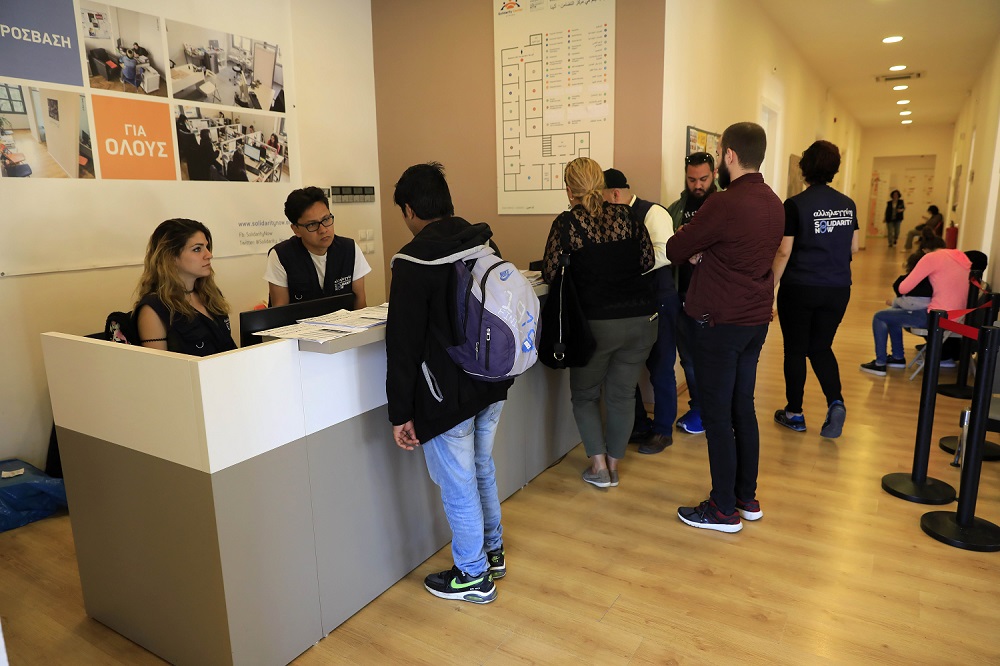
The Center follows an “open door policy” which means that it welcomes all regardless of nationality, origin, sexual orientation, religious or political belief. The only criterion that the Center has is vulnerability. The Center continues to serve hundreds who are in need on a daily basis, offering free services such as social, psychological, legal aid, employability counseling and accounting services.

“The Athens Solidarity Center has succeeded in embedding itself in the consciousness of people who often don’t have a lot of opportunities or options, as a space that can provide them with a solution or a way out of their multiple needs, which most times are urgent needs”, states Antigone Lyberaki, General Manager of SolidarityNow. “The EEA Grants have been companions of SolidarityNow for some time now, as they supported us when we first started our operations. They are standing by us again today, in order to support us in giving a bigger impetus to the services we offer at the Solidarity Center in order to be able to embrace even more people in a meaningful way: to solve with them their problems and concerns, but most importantly to empower them so they can reclaim their life again”.

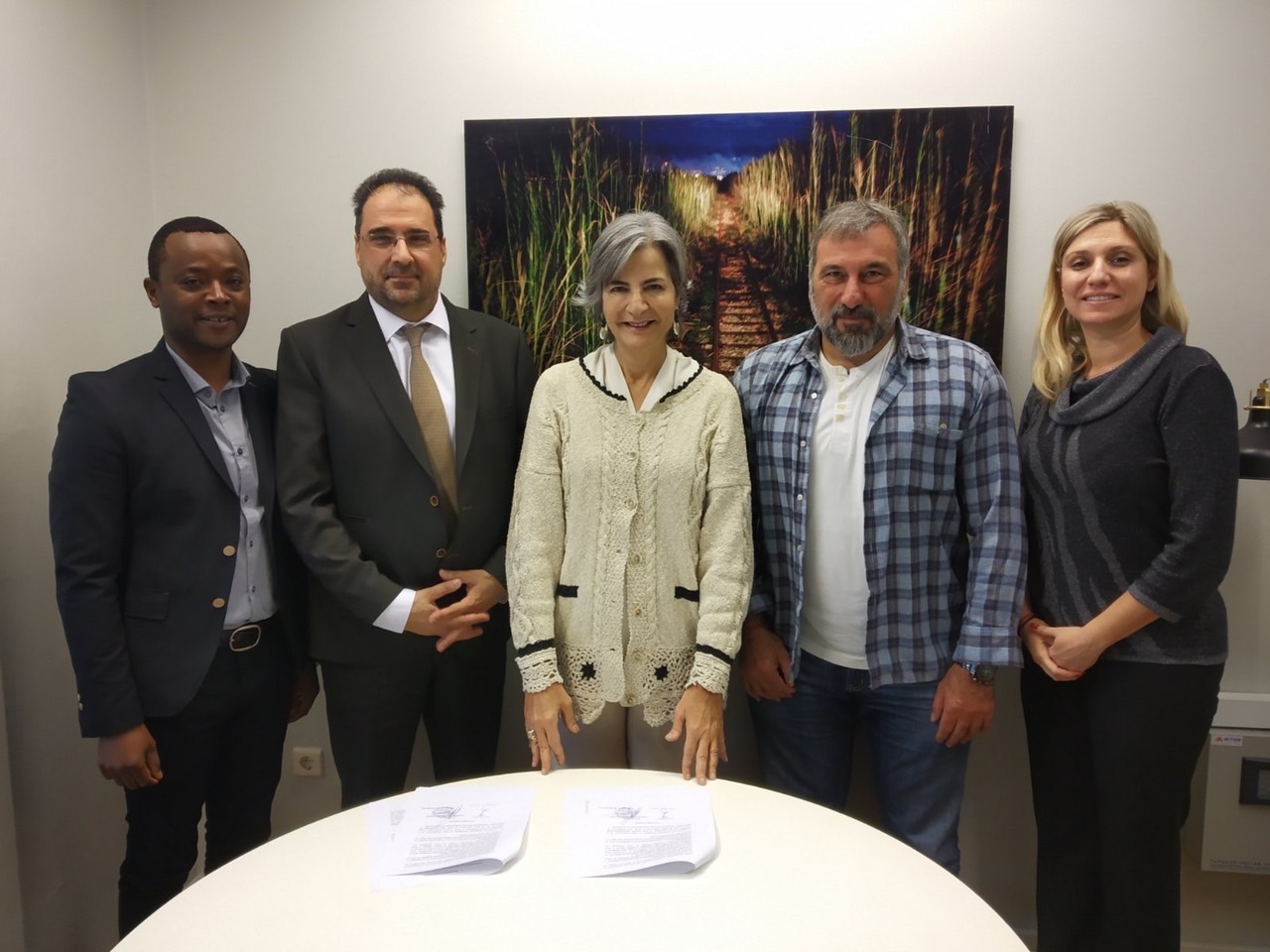
“SolidarityNow is a trusted partner of Norway and the EEA Grants. We are proud to have supported the Athens Solidarity Centre in its early stages and are impressed with the progress and results. The donors’ renewed support to the Athens Solidarity Centre demonstrates our continuous commitment to the objectives of reducing social and economic disparities in Greece by supporting solutions that have a clear and practical impact on the society”, states the Ambassador of Norway to Greece, H.E. Mr. Frode Overland Andersen.

The second phase of our partnership, 2019 – 2021

The EEA Grants are funding the operation of the Athens Solidarity Center, setting common goals with SolidarityNow in the provision of holistic support to persons in danger of social exclusion, their empowerment and re-integration in society.

The Solidarity Center today offers high quality services to anyone in need – Greeks, refugees, migrants, other vulnerable groups, expanding its important scope of work to include the following:

  • Social protection services
  • Psychological support and counselling
  • Legal service (counselling, court representation)
  • Employability service (counselling)
  • Accounting support
  • Center for the Child (by the NGO ‘Network for Children’s Rights’, for children 0-12 years old)

The services offered at the Athens Solidarity Center are presented in detail in a video that was prepared to showcase the new partnership with the EEA Grants, inviting anyone in need of support to reach out and visit the Center in order to receive the appropriate help or advise.

You can watch the video

*Since May 2019 the Athens Solidarity Center is supported by EEA and Norway Grants and the fund is operated by CROWE Greece and HumanRights360. The Center is also supported by the Municipality of Athens.

**Athens Solidarity Center was established through Open Society Foundations and the EEA Grants 2009 – 2014 (EEAGR08.02), in cooperation with the Municipality of Athens until 30.04.2016.

Sky School is launching its courses


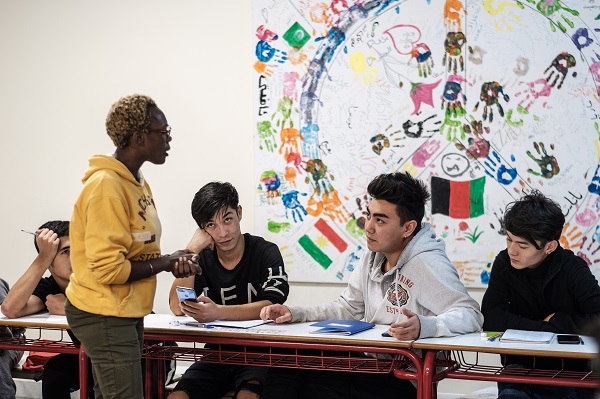
Sky School, in partnership with #SolidarityNow, is preparing to launch a second set of courses for displaced learners between 16 and 25 years old: 1) Ethical Leadership & 2) Living Peace. The language of instruction is English and we ask for roughly a B1 level. Each course combines 6 hours per week of in-class time and 4 hours of independent online work for a total duration of 10 weeks (up until mid April).

Courses will start in the week of 3rd February and will take place in the center of Athens.

Applications are open and can be found here: https://www.skyschool.world/apply

The deadline is 30th January.

Read the related material:

Ethical Leadership

Living Peace