Letter to the President of the European Commission


The European Commission Recommendation of 8 December 2016 to resume transfers of certain groups of asylum seekers to Greece as of 15 March 2017 under certain conditions and the Joint Action Plan adopted by the EU Coordinator for the implementation of the EU-Turkey Statement together with the Greek authorities raise fundamental questions relating to the functioning of and the future of the Common European Asylum System (CEAS).

SolidarityNow, jointly with Greek Council for Refugees and NGO Aitima, also members of the European Council for Refugees and Exiles, have addressed a letter to the President of the European Commission and the Greek Minister of Migration Policy.

Read the full text of the letter

“We support the non-extradition of the eight in Turkey. We cannot sacrifice our principles. It is dangerous” Conclusions of the Press Conference for the extradition of the eight Turkish Officials


PRESS RELEASE

“We cannot allow the eight to be extradited to Turkey. We can’t sacrifice our values because it’s dangerous”

Conclusions of the Press Conference with Regards to the Possible Extradition
of 8 Turkish Officials

Athens, 15th of December 2016
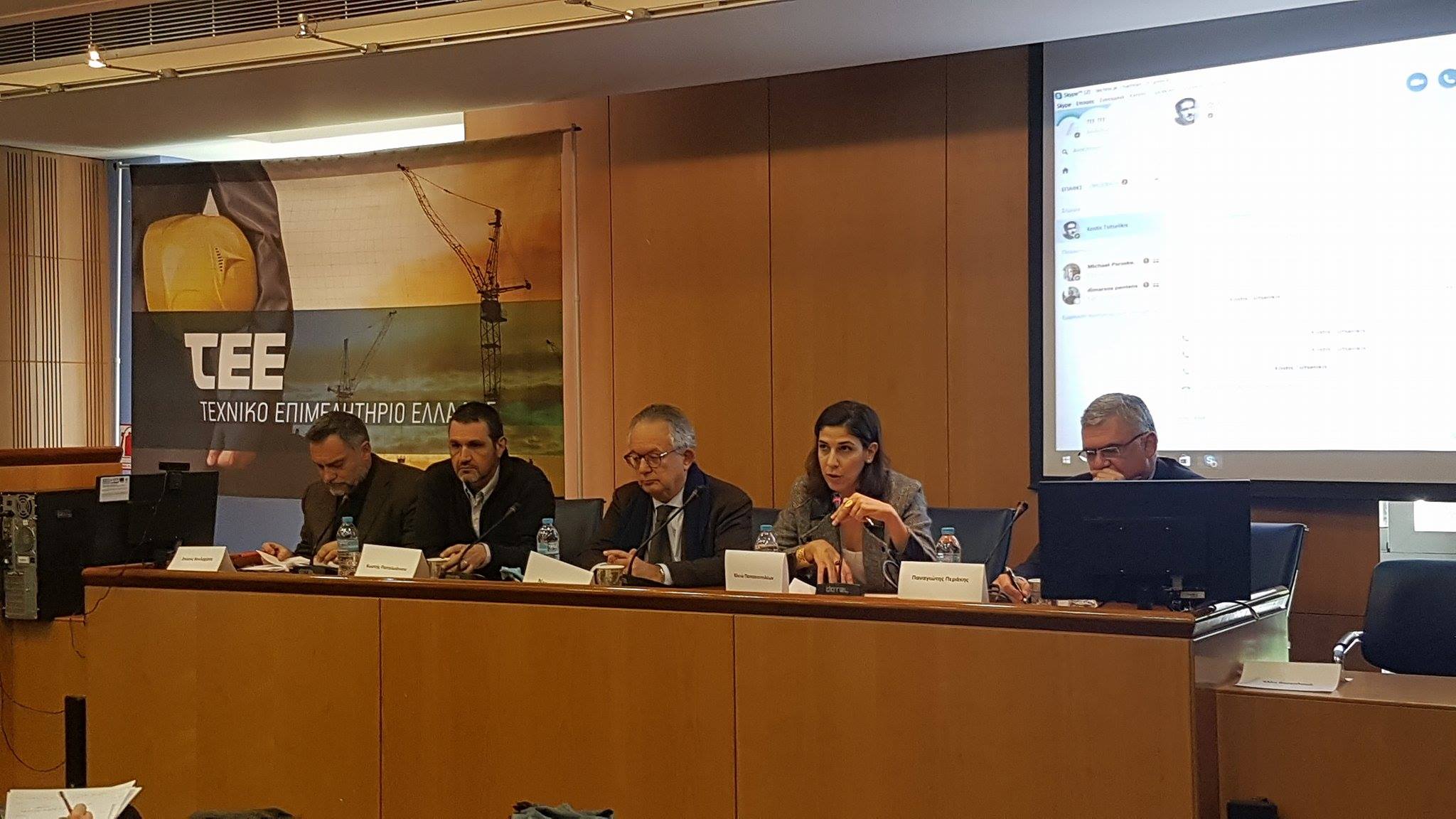
Highlighting the importance and necessity of the Turkish officers’ non-extradition, given the breakdown of the rule of law in Turkey and reasonable grounds that they will face persecution and inhuman treatment if they are extradited, a press conference was held today, the 15th of December 2016, in the Technical Chamber of Greece (TCG) on the subject: “The Rule of Law with Regards to the Possible Extradition of 8 Turkish Officials”. The Press Conference was jointly organized by the Hellenic League for Human Rights and SolidarityNow, with parallel interventions by prominent organizations of civil society, various institutions, and members of the academia.
At the beginning of the Press Conference, Clio Papapantoleon, lawyer and coordinator of today’s discussion, stressed that “I want to make clear that we’re not interested whether the requested persons are guilty or innocent, whether they participated or not in the coup attempt, if they are political friends or enemies of Gülen’s, etc. We’re not interested, this isn’t what this press conference is about. And that’s because in matters of human rights, you don’t ask what is the organization the persecuted parties belong to, so as to defend their rights only if you approve of it”.
Nikos Alivizatos, Professor Emeritus of Constitutional Law in the School of Law in the University of Athens, referred to the recent report by the European Commission for the Democracy through Law (an advisory body to the European Council), where it is noted that “the Turkish government interpreted too widely the extraordinary powers that it awarded itself, and put in effect measures that are far in extent of what is provided for in the Turkish Constitution. One of the main goals of a state of emergency, wherever it’s imposed, is the reinstatement of the democratic rule of law and it’s impermissible to extend it indefinitely for no reason. If a government exercises its power for a long time based on a state of emergency, it will unavoidably lose its democratic legitimacy, whereas it should be noted that there are rights that must never be repealed, such as the prohibition of torture”. Mr. Alivizatos stressed the need for the use of legal procedures in the European Court of Human Rights, including interim measures to prevent extradition.
Konstantinos Tsitselikis, President of the Hellenic League for Human Rights, reported that it is a matter crucial to the Greek legal order. The suspension of the European Convention for Human Rights by the Turkish government, according to Mr. Tsitselikis, dismantles the institutional framework that guarantees the protection of human rights in Turkey. “The situation as it stands today shows that a fair trial is impossible if the presumption of innocence is merely a pretext, the courts operate with prearranged compositions, and lawyers face persecution, or when there is absolutely no guarantee of humane treatment. On the contrary, there are testimonies of maltreatment and torture,” he stressed.
Kostis Papaioannou, former Secretary General of Transparency and Human Rights of the Ministry of Justice, pointed out that no one is contesting the sovereign right of the Turkish government to safeguard the rule of law. The extension of the state of emergency has caused multiple breaches to the respect of human rights. He said: «We aren’t interested in the degree of involvement of the requested persons in the coup attempt, we’re only interested in their fate at the hands of the Turkish authorities. Greek judges are called to reach a decision based on their conscience, and not on vague appeals to national interests. They are called to uphold the rule of law which can’t stand for courts staffed with judges of dubious independence, obstruction of access to a lawyer, the possibility of the death penalty, and the certainty of inhuman treatment in detainment”.
Panagiotis Perakis, a lawyer and Board Member of the Athens Bar Association and Head of the Committee for the Rights of Refugees and Migrants, connected the discussion with the agreement between EU and Turkey, mentioning that the Council of Bars and Law Societies of Europe (CCBE) has ruled that the agreement is not in accordance with the rule of law. Also, special mention has been made to the matter of the reinstatement of the death penalty in Turkey, while on the occasion of the world day for human rights, the CCBE issued a release that denounces the collapse of the rule of law in Turkey. He said: “The right of access to justice is put in doubt, and access and communication with a lawyer encounters numerous obstacles, and there are more than 300 lawyers and 3,000 judges under arrest.” It is evident, he stressed, “that we do not seek to forestall a personal judgment, we are merely calling on the Greek judges to reach their decision based on the evidence and the rule of law”.
Dimitris Christopoulos, President of the International Federation for Human Rights, sent a written announcement that was read to the audience present at the Press Conference, saying: “If there’s one thing that is still standing in this tottering Europe of our age then it’s a prestige that relates to –not the policies that it puts into effect– but a few foundational values that have made it what it is in modernity. These are the rule of law and human rights. […] The eight cannot be allowed to be extradited in Turkey. Not because we like them, but because we cannot afford to sacrifice the core of our values in the name of political expediency. Or else we’ll have no values. And that’s not only immoral, it’s also dangerous”.
Spyros Koulocheris stressed that if someone strips away the political importance of the matter, the case is legally unambiguous. Both national legislation and Supreme Court case law make clear that the requested Turkish officers cannot be extradited, «because their asylum applications are still pending, but also due to the fact that there are reasonable grounds to assume that they will face persecution due to their political activity”
Elli Varhalama, the representative of the General Confederation of Greek Workers (GSEE), mentioned the great and long solidarity and cooperation with the Turkish labor unions, as well as the turbulent history of union rights violations in Turkey, which have been confirmed by the European Court for Human Rights. “The Greek labor unions also call for the refusal of extradition of the 8 Turkish officials, given that their lives and safety, as well as those of their families’, are already threatened,” Ms. Varhalama noted.
Statements were made by the “Citizen Committee against the Extradition of the 8 Officials”, and by the officers’ defense counsel Mr. Omiros Zelios. Present at the Press Conference was the President of the Special Permanent Committee on Institutions and Transparency of the Greek Parliament, Ms. Anastasia Christodoulopoulou.Interventions were made by:
– Nikos Alivizatos, Professor emeritus of Constitutional Law at the University of Athens
– Konstantinos Tsitselikis, President of the Hellenic League for Human Rights and professor of Human Rights Law at the University of Macedonia
– Kostis Papaioannou, former Secretary General of Transparency and Human Rights of the Ministry of Justice
– Panagiotis Perakis, Board Member of the Athens Bar Association and Head of the Committee for the Rights of Refugees and Migrants
– Representative of the General Confederation of Greek Workers (GSEE)
– Dimitris Christopoulos, President of the International Federation for Human Rights and associate professor at Panteion University
– Spyros Koulocheris, Scientific Coordinator of the Greek Council for Refugees

Problems in opening bank accounts to asylum seekers


Given the difficulties asylum seekers face to open bank accounts, Solidarity Now’s General Manager, Epaminondas Farmakis, in a letter to the Ministries of Finance, Economy and Migration Policy on 8/12/2016, asked for their intervention in order for Greek banks to comply with the principle of legality and ensure the unhindered allocation of bank accounts to all people who meet the legal requirements in the country.


SolidarityNow  has welcomed the legislation on asylum seekers’ access to the labor market, a development for which we fought together with other organizations. In this context, we actively support the access of our beneficiaries in employment either in our own programs or in the wider labor market.

However, our financial services have recently faced the denial of certain banks to open a bank account for asylum seekers although they have all the necessary documents, under the pretext that the asylum seeker card has an expiry date. We note that banks do not have the right to deprive asylum seekers of the rights they have under the national and European legislation.

SolidarityNow sent out a letter to the competent authorities and requests to provide guidance in order the problem to be solved.

Επιστολή

JOINT STATEMENT: How many refugees must die before safety is guaranteed in Greece

Giorgos Moutafis for SolidarityNow

On 28 November 2016 due to the accident in Moria’s camp that took the  lives of two refugees, SolidarityNow and 22 other organizations made a joint statement about the living conditions and safety rules in the refugee camps around the country.


The recent accident at the Moria refugee camp on Lesvos that took the lives of two refugees was not just an unfortunate coincidence. It is linked to the living conditions that people are exposed to in a government-run facility which ought to adhere to specific safety standards. How can these standards be met though when the Ministry of Migration Policy has not shown any interest in drafting operational rules, which include security and fire safety policies, for any of the camps on the islands or mainland Greece? Moreover, these facilities, both open and closed, are managed by people appointed by the ministry through ad hoc procedures, without an open call, without any required qualifications or specific responsibilities, and of course without any regulations that managers can adhere to.

The situation in Greece’s camps, where safety is a crucial living condition, is beyond the limits of human endurance. Refugee safety should be a separate aspect of migration policy, as it is also important for wider Greek society. In this specific terrible incident, as well as in similar incidents that preceded it including the firebombing of refugee tents in Chios, the managers and the government bear responsibility. Those politically and administratively liable should assume their responsibility and address, even if retrospectively, these inadequacies. The investigation of criminal liability, which we expect to take place, will certainly bring a new dimension to this issue.


«SOLIDARITYNOW: The Greek citizenship is a matter of conscience and inclusion in the society

(Ελληνικά) Giorgos Moutafis for SolidarityNow

The granting of Citizenship to second generation migrant children was one of the main policy priorities of the Government from January 2015.

The relevant legislation was introduced on July 2015 and was widely praised by civil society organizations.

Sadly, the structure of the newly-found Ministry of Migration Policy does not reflect such prioritization, since it does not incorporate in its mandate the Department of Citizenship, which stays under the mandate of the Ministry if Interior.

SolidarityNow calls the Greek Government to revise this decision and incorporate the Department of Citizenship into the Ministry of Migration Policy, in order to reflect, both administratively and politically, the prioritization of granting citizenship to Second Generation migrant children.

Applicants for international protection face problems getting their Social Security Number (ΑΜΚΑ)


Whilst applicants for international protection have the right of access to the Greek labour market and to health care, and the necessary condition for the realization of these rights is the possession of a Social Security Number (AMKA), very often the relevant authorities do not grant Social Security Numbers for these people. For this reason, Solidarity Now, in a letter asked the responsible authorities to intervene in order to ensure the Administration’s compliance and the unhindered granting of AMKA to all people who meet the legal requirements throughout the country.

Social Security Number

How safe is Turkey and for whom?


Yesterday, the Turkish police raided houses and arrested leaders and MPs of the People’s Democratic Party (HDP), the second biggest opposition party of the country. Justice Minister Bekir Bozdag said the arrests were made in respect to the rule of law, although HDP claims that the detainees were refused access to lawyer, while social media are reportedly blocked since yesterday.

The situation in Turkey is extremely worrisome: from the suffocating restriction of the liberty of expression and of press, to the violent repression of demonstrations, the suspension of implementation of the European Convention for Human Rights, the massive dismissals of public servants, and the reported tortures against the detainees after the coup; Turkey is gradually violating all procedural guarantees of a democratic country.

Given that soon the question of the extradition of the eight Turkish military officers will be discussed before the Greek judiciary, SolidarityNow stresses that no European country until today has extradited people who are at risk of torture or inhumane and degrading treatment. Also, no European country until today has extradited people to a state that doesn’t adhere to the basic rules of a fair trial, i.e. the uninhibited access to legal counsel and judgment by an impartial court made up of judges with guaranteed personal and operational independence. It is clear that Greece cannot bypass basic human rights which comprise the core of human dignity in order to pursue political objectives.

Regarding the asylum process, the Greek Minister of Migration Policy stated today that “the question whether Turkey remains a safe country after the arrest of HDP official is not valid. Greece applies all the principles of the asylum system, which means that the examination of asylum claims is personal, ad hoc”. SolidarityNow reminds that the principle of the individualized asylum process means that the Greek authorities are obliged to examine the individual circumstances of each case, not that they can only examine cases that they believe are politically useful.

More than six months stranded – what now?

Giorgos Moutafis for SolidarityNow

October 2016 – With a joint policy brief on the situation for displaced persons in Greece, Solidarity Now and 11 more national and international organizations operating Greece explain the current situation for those stranded in the country for over six months since the closure of the northern border and introduction of the European Union (EU) – Turkey deal.

The undersigned organizations highlight some of the most pressing concerns contributing to the increased vulnerability of displaced persons stranded, and offer recommendations to relevant stakeholders for improving the delivery of the critical services and support they need.

More than Six Months Stranded – What Now – English

UN General Assembly Summit: Civil Society urges world leaders to adopt new deal for refugees and migrants


At the UN General Assembly Summit for Refugees and Migrants on 19 September 2016 all UN Member States agreed to cooperate in order to protect human rights of the relevant groups. However, despite the progress, if we want to see real change we need more concrete, effective and immediate commitments. Solidarity Now together with almost 100 civil society organizations urged states at the Summit to launch a real new deal for refugees and migrants and proposed seven actions to achieve success.

7 actions world leaders urgently need to take to make a new deal