INTERNATIONAL TEACHER’S DAY_“What I wish for my students is to never stop trying and never feel alone”


Maria Ninou, teacher, Integration Learning Center, Ioannina

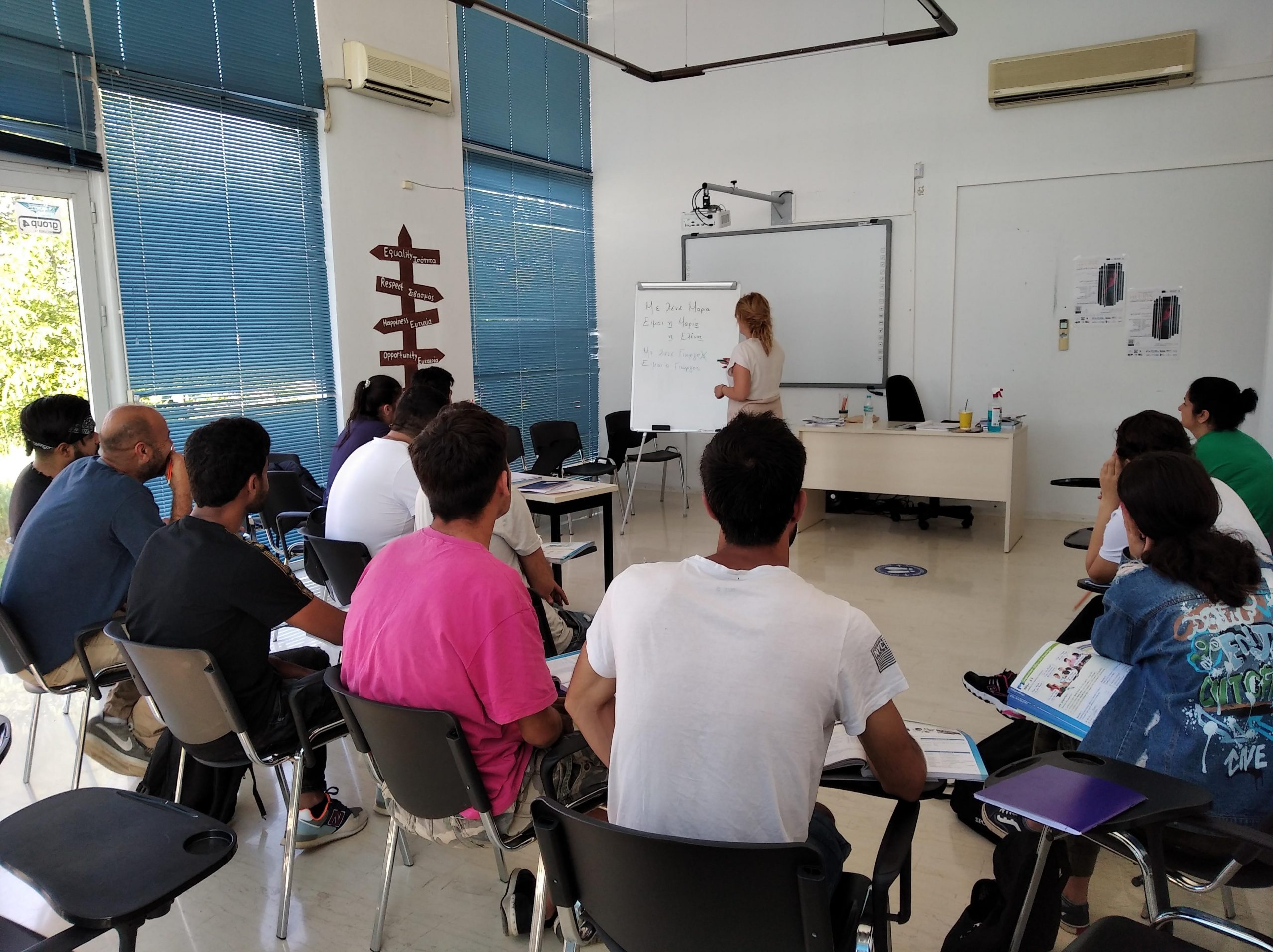
 Αt the other end of the telephone, Maria Ninou, language teacher, talks about the Greek lessons she gives to recognized adult refugees, at SolidarityNow’s Integration Learning Center (ILC) in Ioannina. “I will not talk about the course context” she tells us at the beginning of our discussion; indeed she prefers to talk about her students, her favorite B1 class where people are preparing to take Greek language exams in mid-October and about the large number of students who were forced to drop out of school.

Maria started working at SolidarityNow in January 2020 and begun her first language courses just before the quarantine caused by the new coronavirus. The classes were “continued” through social networks, where teachers shared educational material with their students. After this difficult but at the same time creative period, students and teachers returned to the classrooms. There, however, the teachers confronted a harsh truth. “Students with great potential, who would have succeeded in the exams, left the country”, Maria stresses and adds “that discourages us“. On the other hand, there are students who did not leave, who stayed here and are preparing to take exams. They are 3 brothers from Syria, a boy and two girls, who are also studying at the vocational school, and who in a short period of time covered a large and quite difficult part of the exam material. “They have made an excessive effort not only now, but from the first day they came to Greece. They are very dutiful and have great will”.

What Maria likes most about her job is “to motivate my students not to give up,” while what frustrates her are “the dropouts”.  She prefers to teach older students because there is another type of interaction. She tells us about one of her students, who is from Iraq and although he is very clever, he caused a lot of problems in the classroom with his behavior. “At the beginning he was disturbing us but has progressively changed; he has a tremendous development and he will definitely pass the A2 exam”, she notes. “What I wish for my students is to never stop trying and never feel alone. I want to tell my colleagues to do their job with love because students understand if you really care about them”, she concludes.


The HELIOS program

SolidarityNow in collaboration with the International Organization for Migration (IOM), and in the framework of the implementation of the HELIOS program organizes integration and information classes within its Integration Learning Centers established across Greece (Athens, Thessaloniki, Ioannina).

* SolidarityNow is a key implementing partner of the International Organization for Migration, in the framework of the “HELIOS” program, which is funded by the European Commission – Directorate General for Migration and Home Affairs (DG HOME).

  • Watch IOM’s new awareness campaign at the link below:

https://greece.iom.int/en/helios-national-sensitization-campaign
INTERNATIONAL TEACHER’S DAY_“What I try to convey to my students from all over the world is my love for learning”

SolidarityNow

Emmanouela, teacher, Integration Learning Center, Athens

She has just finished her course at the “HELIOS” Integration Learning Center* in Athens, and during her break she is happy to talk about her work and experience in this program, which in her opinion is indeed “a second sun”** for its beneficiaries.

Emmanuela is a language professor who teaches Greek to recognized adult refugees living in Greece. Her theoretical knowledge in teaching Greek as a second / foreign language was the means that led her to work in this field of education, but not only: “I always wanted to help people communicate. I also like the different cultures, customs, and traditions, and I always observed these differences that nonetheless make the lives of all of us so much more interesting. And the most important thing for me is that the more you observe and comprehend the differences, the more likely it is to find similarities among people” – this is how Emmanuela describes herself and answers to the question why she teaches Greek to refugees/migrants, choosing a professional path that is more difficult than the established one.

She shares many everyday stories of multicultural interaction, most of them enjoyable and funny. After all, whatever the composition of the class, in the end everyone laughs at the same things, even when they do not speak a common language. This is what moves her. She is very happy to belong to a group of people, such as that of “HELIOS”, and recognizes that “the contribution of all is essential for what we ultimately offer to our beneficiaries-students. For example, we learn a lot of interesting and especially useful tips of how to approach our students effectively, through our interaction with the interpreters. Thus, we all become a strong team, all carriers of distinct knowledge, which when combined offers the appropriate knowledge and guidance to people who need it.

Emmanuela smiles when asked to tell us about a special moment and remembers one of her students who “during the lesson, her phone rang, and she found out that she has just been fired. Her psychological collapse in the classroom upset all the students and I immediately referred her to the IOM work counselor, who is in the same working space. She then received advice from an accountant to get to know her rights; the whole process was followed as for her to be able to immediately look for another job and the entire situation altered. She continued attending classes, she calmed down and managed to continue”. According to Emmanuela, the above successful example became possible due to the well-organized and structured program that includes different and distinct directions. The cooperation of both educational and employment counselors, provides people with a supportive framework necessary to continue in the educational process, directly seeing the positive impact on their everyday life.

Emmanuela, is a happy teacher of many students from around the world and a lifelong learner – she is now learning Farsi, the fourth foreign language after English, Italian and French: “I love being a teacher. But what I try to convey to my students from all over the world is my love for learning. And maybe they become learning lovers too and understand that through education and knowledge they can improve their own lives and the lives of the people around them”.

—————————————–

The HELIOS program

SolidarityNow in collaboration with the International Organization for Migration (IOM), and in the framework of the implementation of the HELIOS program organizes integration and information classes within its Integration Learning Centers established across Greece (Athens, Thessaloniki, Ioannina).

* SolidarityNow is a key implementing partner of the International Organization for Migration, in the framework of the “HELIOS” program, which is funded by the European Commission – Directorate General for Migration and Home Affairs (DG HOME).

** “Education is the second sun for people”, Plato.


Watch IOM’s new awareness campaign at the link below:

https://greece.iom.int/en/helios-national-sensitization-campaign
 

INTERNATIONAL TEACHER’S DAY_”Education will help them have a better life”


INTERNATIONAL TEACHER’S DAY_5 OCTOBER

#education=integration

“Education will help them have a better life”

Chrysa Zizopoulou, teacher, Integration Learning Center, Thessaloniki

In one of the classrooms of SolidarityNow’s Integration Learning Center (ILC) in Thessaloniki, 33-year-old Chryssa Zizopoulou, language professor, teaches Greek to recognized adult refugees. Due to the pandemic the number of students in the class is now limited. Chryssa started working at the Center in February 2020 and she is responsible of the A1 class, for people who are learning Greek, as well as for illiterate persons.

We talk with Chryssa about the challenges she is called to face in her work. Men and women aged 19 to 48 years old from different countries, most of them parents, who have not any connection with the learning process – these are her students. “Adult students, compared to minors, are stiffer, they have a sense of shame, they have difficulties to open up. However, they are more consistent in their obligations. On the contrary, children create a social circle easily and as a result they practice Greek more“, Chryssa explains. Teaching adults, especially refugees, in addition to challenges, has many pleasant surprises. Chryssa tells us about the strong will of a single parent woman to learn Greek, as she comes to the class with her 2-year-old daughter. Her classmates without any resentment have welcomed her and her child. Besides that, another man who is illiterate has managed after a lot of effort to read the street signs, and the product labels in the supermarket.

“I love this job. When I’m in the classroom I feel a sense of belonging. And then the real reward is when you see the progress of these people, who in a short time articulate their first words. You build real relationships with these people,” Chrysa tells us and adds, “what I wish them is to understand how important education is for themselves and their children. Education will help them have a better life”. As for her fellow teachers, she would like to remind them “not to lose their motive and not to stop having expectations; do not be disappointed because the obstacles are many. They must have empathy, which is necessary in the classroom”.


The HELIOS program

SolidarityNow in collaboration with the International Organization for Migration (IOM), and in the framework of the implementation of the HELIOS program organizes integration and information classes within its Integration Learning Centers established across Greece (Athens, Thessaloniki, Ioannina).

* SolidarityNow is a key implementing partner of the International Organization for Migration, in the framework of the “HELIOS” program, which is funded by the European Commission – Directorate General for Migration and Home Affairs (DG HOME).

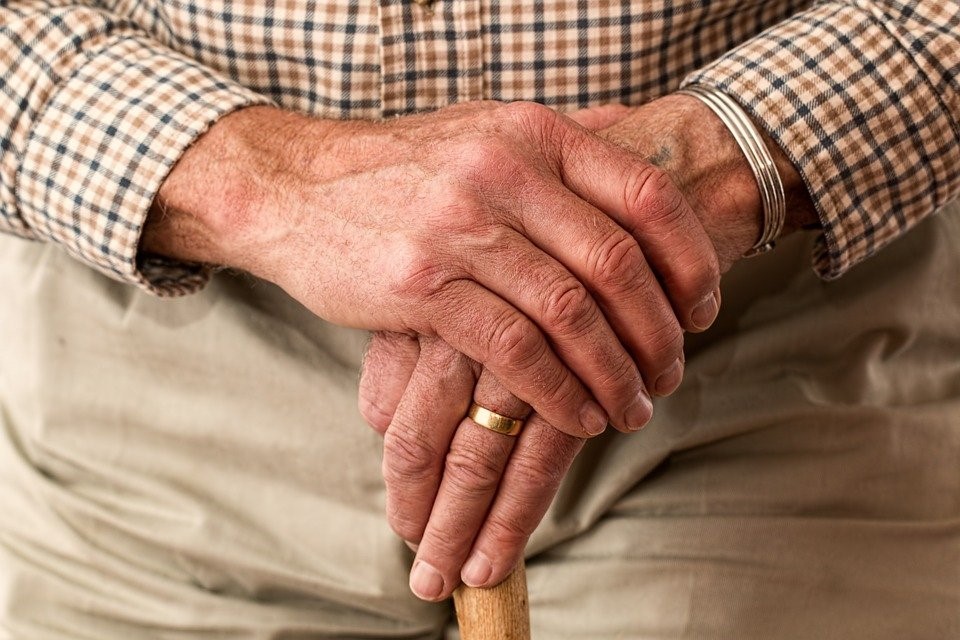
INTERNATIONAL DAY FOR OLDER PERSONS* | OCTOBER 1st_An 81-year-old fighter of life, Mr. Ali.


“Older yes, stronger though. As long as we live, we must move forward. I have always fought in my life and I will continue to do so, as long as I’m alive”.

On the International Day for Older Persons, we celebrate the 81-year-old Mr. Ali from Syria. He had to reach 78 to add one more property in his life; that of the refugee.

Mr. Ali followed his daughter’s family on their long trip away from Syria, which began shortly after a bomb exploded in the kitchen of the family while they were having lunch. He never thought doing otherwise – “I have no one else and I would do everything to protect my grandchildren. I don’t care where I will die”.

So, it happened. After Turkey and their temporary residence in the camp of Moria in Lesvos, the family moved to a SolidarityNow apartment in Athens, as part of the ESTIA** accommodation program. “I had heard that Greece is beautiful, and its people are friendly”, he says, and while smiling like a child behind his red presbyopia glasses, he adds: “Besides, I had never travelled outside Syria”.

Mr. Ali, a widower, and father of a daughter struggled to reach Greece. But even before that, he did not have an easy life. He is a man who worked hard and literally his hands eventually made him a successful businessman. These hands that from an early age seemed to have a talent for sewing. Thus, Mr. Ali escaped from his destiny of working as a servant, a fate determined in those years by his poor family.

Luck smiled on him and a friend suggested he worked with him on sewing handkerchiefs. He did it and with their hard work, they managed to become partners and eventually create together an industry exporting handmade silk products. While working he learned to read and write. His work enabled his family to live comfortably, something that was violently interrupted by the war.

Mr. Ali never lost his courage and still supports his daughter and her family in any way he can – emotionally, morally, financially. Today, he and the rest of the family are in Germany, where they managed to reunite with the family’s sixth child, the 17-year-old Sehrazat.

Ali is a living proof of the active role of the older persons by providing -among others- support to their children by taking care of their grandchildren. They are the ones who carry valuable experience and knowledge and help and encourage, in so many tangible and intangible ways the youngers.


* The International Day of Older Persons is observed on October 1 each year. On December 14, 1990, the United Nations General Assembly voted to establish October 1 as the International Day of Older Persons. It is a day to appreciate the contributions that older people make to society and to raise awareness about issues affecting the elderly.

**Mr. Ali and his family were beneficiaries of the SolidarityNow accommodation program as part of the ESTIA program implemented by the UNHCR and funded by the Asylum, Migration, and Integration Fund of the European Union.

A Story about World Refugee Day_Despite the adverse conditions, M. does not lay down arms; he has a plan and tries to implement it step by step


M. comes from Syria and lived with his family in Northern Greece, in an apartment rented by SolidarityNow, as part of the *ESTIA program. The social workers, who were responsible for M. and his family, tell us that he is a role model! They use his case as an example to the program’s beneficiaries, who are now trying to take the first steps and stand on their feet without depending on an organization or the state’s support.

From the first moment they entered the apartment, back in 2018, 27-year-old M. requested for a larger apartment for his family. They were transferred to the new apartment and then M. started seeking for a job. Together with a friend, they started working in flea markets selling fruits and vegetables. The nature of the work and the communication with the customers was an opportunity for him to learn Greek. And as things slowly got better, one of his children got sick. M. never stopped believing that everything would go well and strive for it. SolidarityNow arranged and organized visits to doctors and hospitals. In the midst of these challenges, another one was added; the announcement of the family’s exit from the ESTIA program at the end of May 2020.

The fear lasted for a while in the case of M. as he had to think logically and find a solution immediately. The appointment with the doctor for his child was scheduled after the end of the quarantine; now the issue of the house remained. He was informed by his social worker about the HELIOS** accommodation program and visited the International Organization for Migration offices alone; there he got informed about the rental apartments. M. called and found an apartment where it could meet his family’s needs. In order to convince the owner of the apartment, he referred him to SolidarityNow. Eventually, M. gained the trust, but also the admiration of the owner who wanted to offer both him and his wife a job in his restaurant, that due to Covid had remained closed.

Despite the adverse conditions, M. does not give up; he has a plan and implements it step by step. And as his social worker says, he is a good man, he wants only the best for himself and his family and he fights tough for it. He is a generous and warm man, and if you gain his trust, he can give you his heart. Today, M. continues to work in flea markets, but the income is not enough to cover his expenses, so he’s doing other jobs as well, believing that at some point he will find a better job so that he can support his family.

* ESTIA, the Emergency Support to Integration and Accommodation programme, is implemented by UNHCR and funded by the Asylum, Migration and Integration Fund of the European Union.

** The Hellenic Integration Support for Beneficiaries of International Protection (HELIOS) is implemented by IOM and funded by the Directorate General Migration and Home Affairs of the European Commission (DG HOME).