INTERNATIONAL WOMEN’S DAY_Antigone: “We women have a lot more power than other people think”

Giorgos Moutafis for SolidarityNow

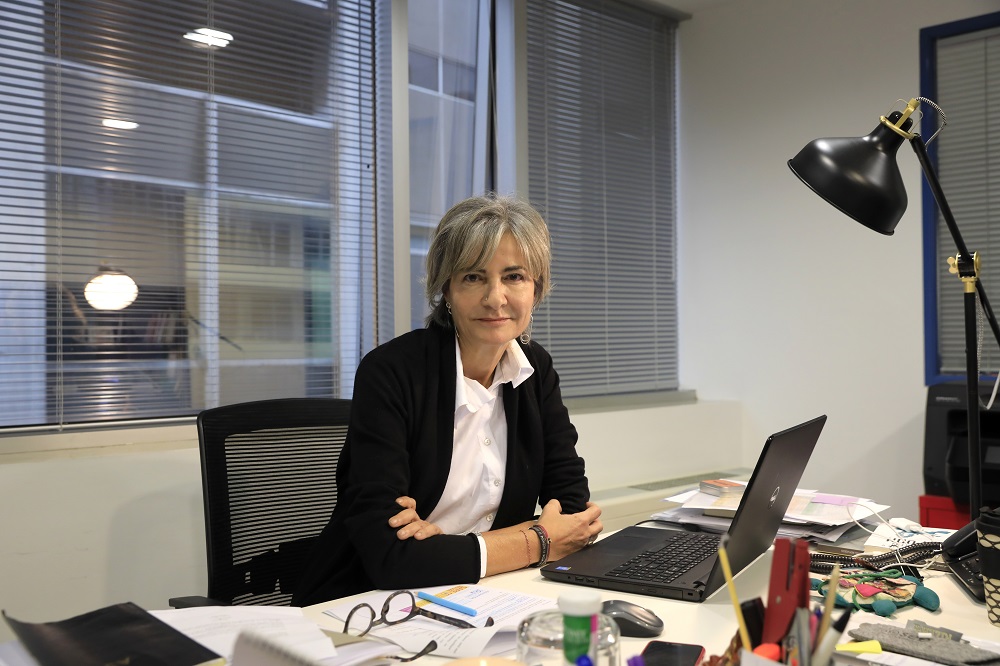
Antigone Lyberaki is a somewhat unorthodox economist and has been active in the field of activism for years. She is the General Manager of the organization for the past 1.5 years and is involved in “a creative, human puzzle of effort and solidarity”, as she says. “We have our brilliant moments, but we also have our sad moments. But we always do what we think is right. We help others and we receive from them strength. We are every single word and every single letter of SolidarityNow”.

At a time when, as she says, politics are running late, she is part of something that really has a positive impact on people’s lives. And through her passion for activism, she is also struggling for women’s rights while she is a member of the International Union for Feminist Economics. “Economic arguments in favor of strengthening the economic position of women are only part of the wider argument for equality: equality itself is a moral project, as it promotes justice and life opportunities for all”, she notes in her book “Women in Economy”.

On International Women’s Day, Antigone Lyberaki sends her message to all women: “One thing I’ve learned all these years at the University, in activism and in politics, is that we, women, have a lot more strength than other people think; but also, more strength than what we think we have. And we can use this strength”.
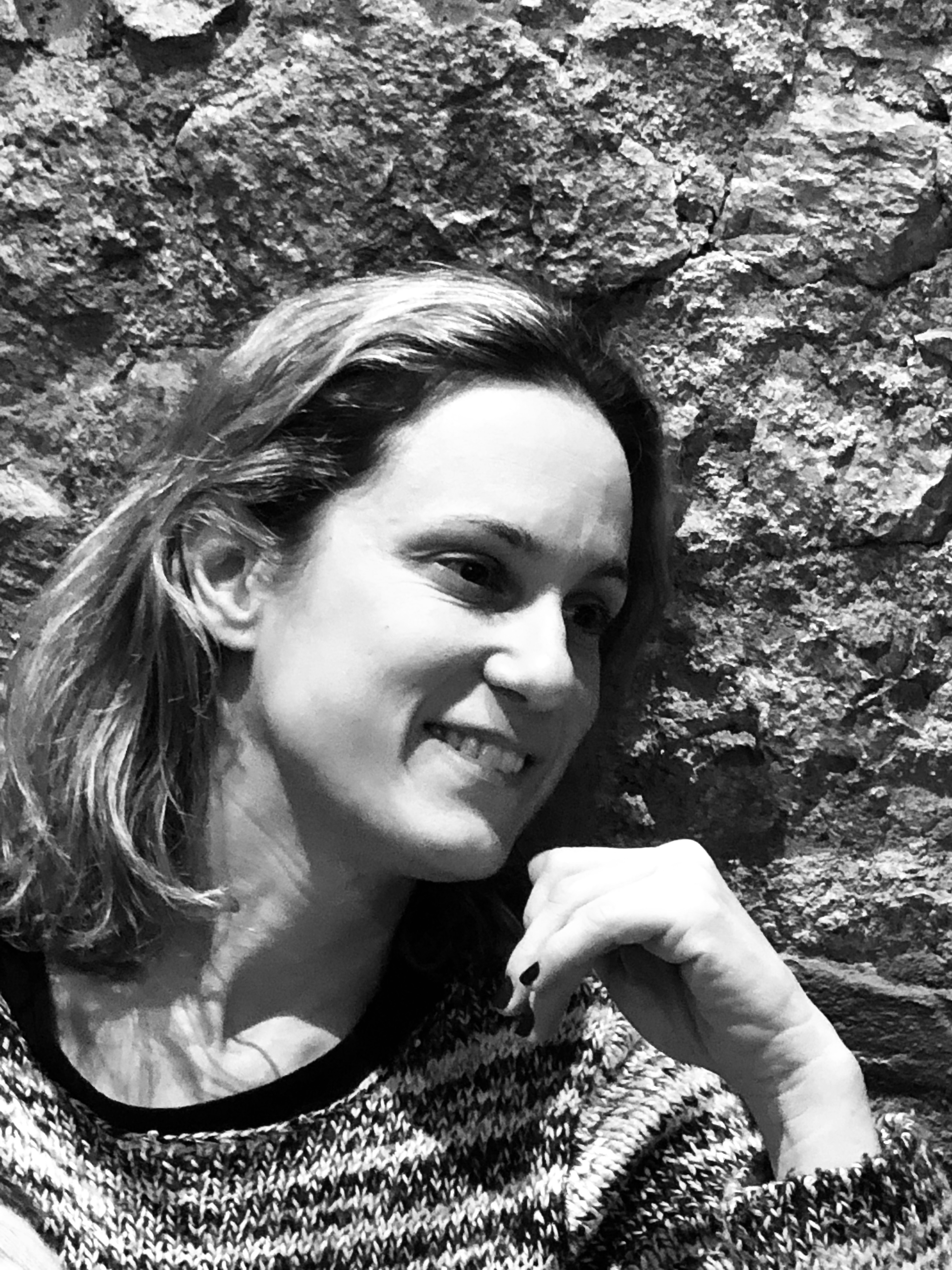
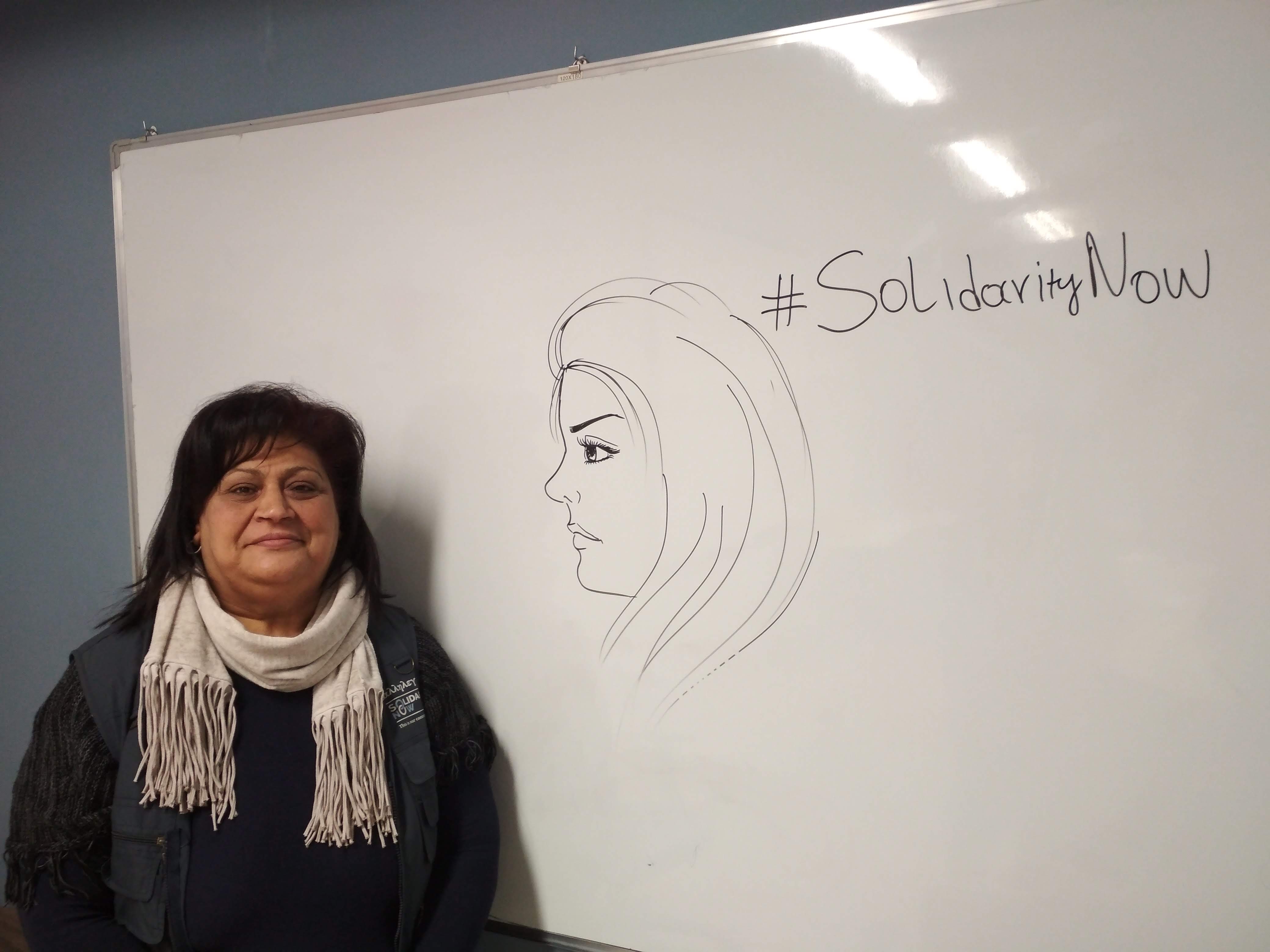
 

INTERNATIONAL WOMEN’S DAY_Marina: “We must accept ourselves and embrace our weaknesses”


Almost nothing had ever stopped her. The only thing that “halted” her, made her change direction and start something new. Her new-found purpose and direction come through her work as a lawyer at the Athens Solidarity Center of SolidarityNow: “Every day I interact with different people, learn new things and change“.

Marina at the age of 39, is not only a lawyer, but a wife and a mother of three children. She shares with us spontaneously moments and events from her life. Through her narration it becomes clear that Marina always challenged herself and questioned her choices; today, when looking back her life path so far seems to prove her right.

“We must accept ourselves and embrace our weaknesses“, Marina sums up in her message to all women on the International Women’s Day. This was the leading force and factor that defined her choices at a crucial time in her life, which at the same time was also crucial for Greek society as a whole. Marina, as an open minded and sensitive woman, who was active in a technocratic working environment back then, was unable to remain unaffected by issues such as the economic crisis, the refugee and migration crisis and the dire consequences on people’s lives. When these crises were taking place, she had a very good job, she had her family, but she realized her need for a change in her career orientation and she chose to take the leap and do it. She accepts and embraces her sensibilities, transforms her skills and puts at work her scientific major, as a tool in order to offer to those that are the most vulnerable. She quickly became a volunteer in a humanitarian organization “I was keeping company to refugee or migrant children while their parents received help from the organization’s services. This interaction with the children was redeeming. I offered the love I had, and I have; I was communicating with children through music and games, but mostly through love“.

Alongside her volunteering, she recalled her interest for human rights law courses when she was a postgraduate student. Her job as a lawyer at the organization’s Solidarity Center in Athens is what answered to Marina’s need for change and purpose. She started in her position as a lawyer in November 2016 and tells us that “I was very anxious at the beginning. On the one hand, because the subject was new and on the other hand because of the emotional transition from the Center’s microcosm and the stories of our beneficiaries, back to my own reality; this was difficult for me. But I gradually loved the nature of work, the new knowledge I acquired, the interaction with people, and the mental fulfilment when changing people’s lives.

I work with people who have urgent needs, but I also get strength through them. I admire them for their strength and endurance. I’ve changed. I am more adaptable, gentler, more open in accepting others as they are, and feeling overall emotionally fulfilled. I firmly believe that when you give love and show empathy, you receive it back. This is the world, I try to introduce to my children as well“.

*The Athens Solidarity Center has been financed by SolidarityNow and Open Society Foundations (OSF/OSIFE) and supported by the Municipality of Athens.

INTERNATIONAL WOMEN’S DAY_Fatma: “Women must discover the power within themselves”


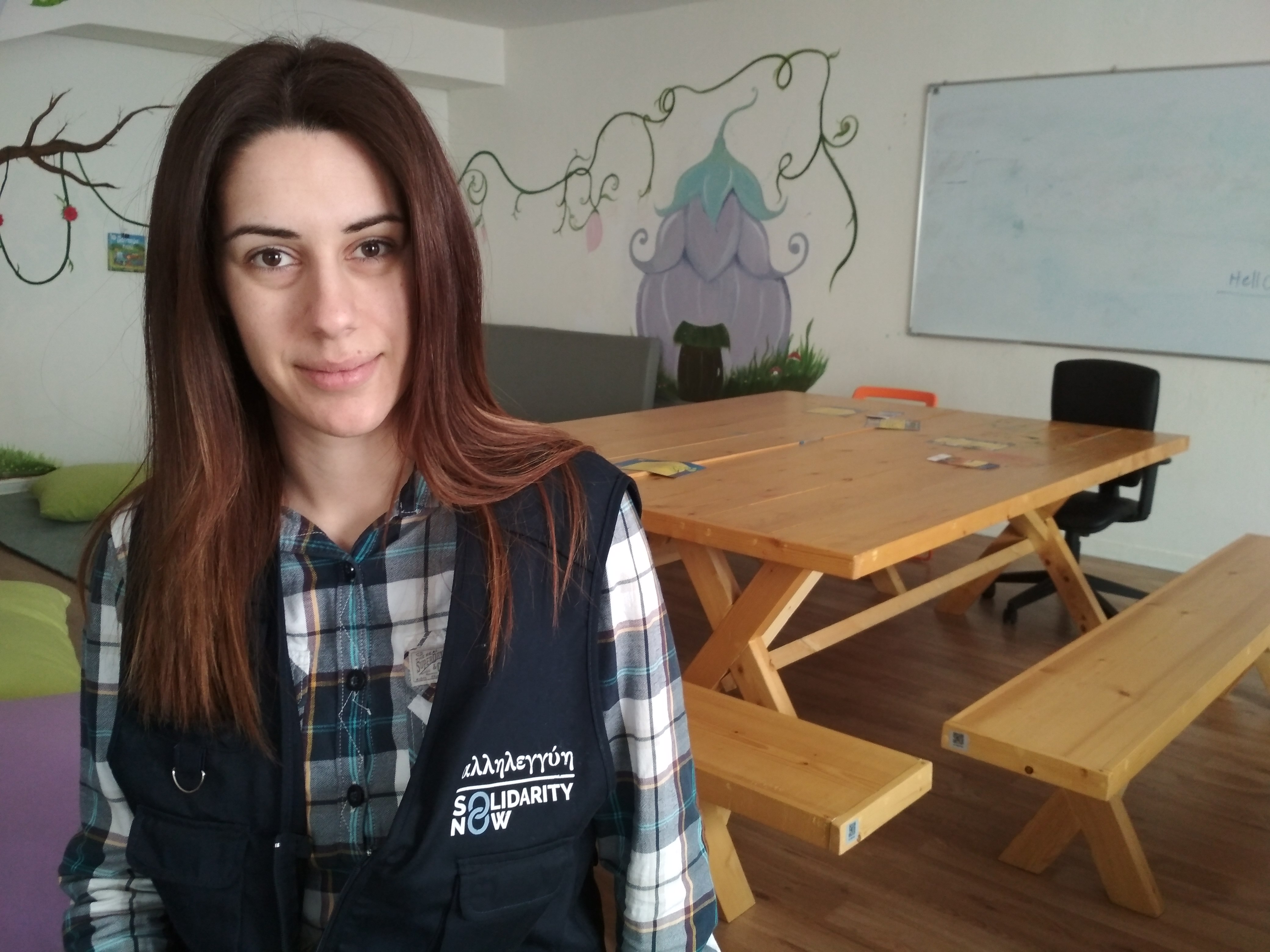
“Woman must discover the power within themselves”, says Fatma Abdelbadie, who works as a cultural mediator at Thessaloniki Solidarity Center. 61-year-old Fatma, is from Cairo and has been in Greece since 1983. She has been working with SolidarityNow for the past 2.5 years.

Fatma grew up in a closed society and only when she came to Greece, she began to discover her abilities. “I slowly discovered the strength I had within me. I was in a foreign country, with 3 children, one of them deaf. What I had to do was to stand up on my feet and say to myself: move on!”. And she stood up on her feet, she registered her son to a deaf school to “break his silence”, she learned the sign language, she found a job as a babysitter and raised not only her own children but also other’s children, which she considers as her own.

In the past she was volunteering for KETHEA by taking care of the women’s children who were in detoxification. Moreover, at the beginning of the refugee crisis, she was at Eidomeni, where she was helping as an interpreter. Life brought her to SolidarityNow. By chance, instead of pressing the elevator button that would lead her to the 6th floor, she found herself at the organization’s offices, where she was offered a job. And this way Fatma started working as an interpreter during therapy sessions for LGBTI and women refugees.

“I get emotional with my job. Women from Arab countries have an eager to express themselves; and by translating for them, I feel that I am helping them.

I identify myself with these women. I see how I was and where I am now.

So, I feel the need to help them even more“.


*Thessaloniki Solidarity Center is supported by Open Society Foundations (OSF/OSIFE).

INTERNATIONAL WOMEN’S DAY_ Eleni: “These girls are strong, they have passion to do things”


“I like this interaction with my students. It is a give and take relationship, not only with the girls, but also with their mothers. By seeing their gratitude written across their face, I get emotional. I feel happy by doing my job and it’s something that is transmitted to the children too. When I finish the lesson, I feel fulfilled”, says 30-year-old Eleni Kontou, who has been working for SolidarityNow as Education Officer for the last two years.

Eleni has studied Early Childhood Education and has done her Masters on Special Education. Before working with refugees, she had worked in the private sector as a kindergarten teacher. Two different worlds in which the teacher is called to respond to different needs. On one hand you have the nice environment of a school and on the other you have the lessons in refugee camps’ containers. On one hand, you have the native pupils and then a group of children carrying many traumas; for them education and knowledge are not priorities as much as survival, Eleni tells us.

However, the same children, despite the difficulties, don’t quit. Girls and moms are dynamic, they have not given up, they care for themselves. “I’m inspired and moved, and I feel more dynamic by watching them. These girls are strong, they have passion to do things, why don’t you do the same?”, notes Eleni. She has realized that girls, and especially teenagers, see their teachers as role-models, “like a person who can advise them on various topics. Likewise, their mothers feel happy when we talk to them”, she adds.

The message that Eleni Kontou wants to share with all women and girls is that we must always have dreams and goals. “You must try to achieve your dreams, because only then you will have a reason to continue fighting. The key is to feel that you can do it”.

*Thessaloniki Solidarity Center is supported by Open Society Foundations (OSF/OSIFE).

INTERNATIONAL WOMEN’S DAY_ Lena: No woman should feel inferior


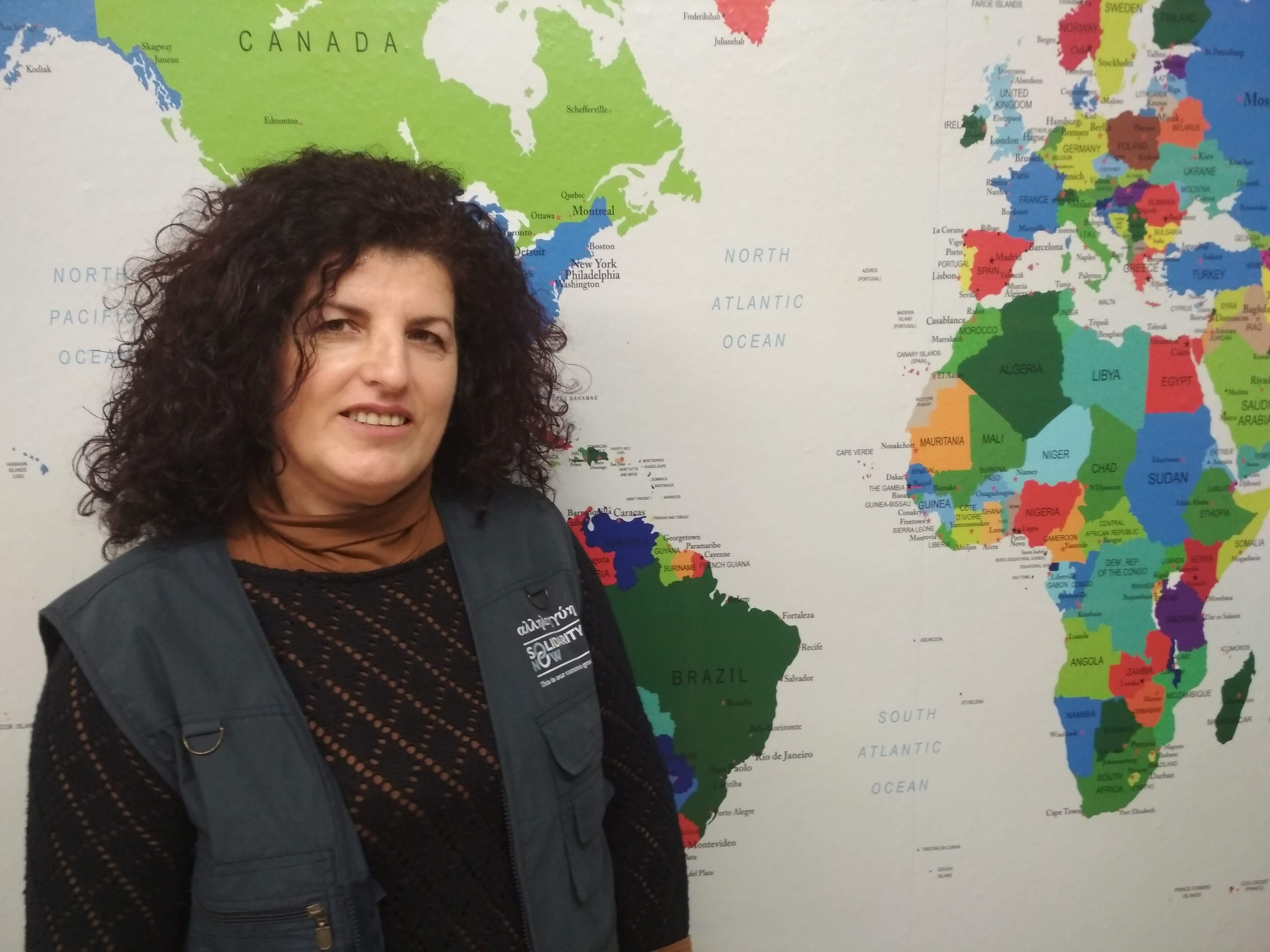
“No woman should feel inferior”, says Lena, who celebrated her 50nth birthday on February 13th. Lena Mrapshtija  comes from Albania and lives in Greece for the last 20 years. Today, she works as a part-time cleaner at the Thessaloniki Solidarity Center.

Lena was a good student and her dream was to study medicine, but she didn’t succeed because of her country’s political regime according to which only one child of each family had the opportunity to be enrolled at the University. “My brother studied medicine, but I was unlucky”, she says. In 1999 she came to Greece to find her husband, who had already been settled in our country and worked as a construction worker. At the beginning she found the Greek language difficult. “I understood Greek, but I couldn’t speak, because I was afraid of making mistakes”, she tells us. Her neighbor, who welcomed her as a family member, helped her with Greek, and that is something she will never forget.

She has done many different jobs. She has worked as a cleaner in a hospital, in taverns, in a flower shop, in fast foods and other places. In Thessaloniki Solidarity Center she has been working for the last year. For Lena every job -with its good and its bad moments- gives you a life-lesson. “But in these two jobs I have learned a lot. Here I have met people who have gone through a lot but at the same time they have found support and help. I am glad that they have this opportunity, because in the past I have gone through a lot and no one was there to help me”, she stresses.

But when you receive, you have to give back, this is Lena’s philosophy. She believes that NGO’s beneficiaries should try to adapt as much as possible to the Greek reality. She finds many things in common with these women, because she has also passed through a similar struggle.

“I do not know if I can help them, I wish I could”, she stresses. “I wish for these women to live a good life in the country they have come, to try not to feel inferior.

Because we women, we are not inferior.

I wish all their dreams come true. I wish the same for all women, especially those who are experiencing difficulties”.

 *Thessaloniki Solidarity Center was established and is supported by Open Society Foundations (OSF/OSIFE).

INTERNATIONAL WOMEN’S DAY: Women’s em(power)ment

Giorgos Moutafis for SolidarityNow

SolidarityNow, this year, on March 8th, unfolds a tribute to women under the title: “Women’s em(power)ment”. Through this tribute, we focus on the organizations’ female employees. Women of different origins -from Greece, Albania, Egypt, Sri Lanka and elsewhere- who are role-models and can empower other women through their experiences, personal stories and work. Women who have experienced and still experience difficulties, who might have lost their identity, their self-confidence and strength. This year’s tribute emphasizes on how the power you offer to others makes you stronger through the introduction of 8 women, whose work, expertise and stand make them capable of empowering other women; but also, how this procedure of empowerment becomes their own driving force.

SolidarityNow introduces, through its digital platforms, #8Women in #8Days, who share with us their own messages for the World Women’s Day, on 8th of March.

In these women, we recognize parts of ourselves, and most importantly, we draw strength, courage and inspiration to move forward.

Meet:

Antigone, General Manager of Solidarity Now, who says that women’s strength and capabilities, in a wide field of activity, are far greater than others imagine but mainly than women themselves imagine.

Fatma, interpreter, who found herself alone in a foreign country with three children but didn’t lose her hope.

Lena who works as a cleaner and motivates women with her actions to not feel inferior.

Christina, educator, who states that helping others does not make us stronger, love does.

Eleni, teacher, who talks about the essential relationship she has developed with her students.

Marina, lawyer, who invites women to accept themselves including their weaknesses.

Jennifer, interpreter, who asks women to dare and leave from where they don’t show them respect and

Eleni, a psychologist, who asks women to seek support so as to be able to make their own decisions on their life.

Above everything however, roles and characteristics, these eight women, are primarily… Women! The modern women’s roles are many, some socially imposed, and others conquered by struggles over the years. From the workers and feminist movements in North America and in Europe in the late 19th century, until the #metoo movement and the Women’s march in the US in 2017, women continue to claim their rights to this day.

“Bread and roses” and “Equality, freedom, brotherhood,” were some of the slogans that marked their fights. Activists, workers, ordinary women, have fought and still fight to gain financial security, voting rights, better quality of life, meritocracy, equality, control and choice in childbirth. World Women’s Day on the 8th of March reminds us of their struggles, courage and determination.

INTERNATIONAL WOMEN’S DAY

#WomenGoStrong

#8Stories8Women8March

“There Are Good Separations As Well”


by Evripidis Michail, Education Officer in SolidarityNow

During a parents’ meeting held some weeks ago at the Intercultural Gymnasium of Thessaloniki, Evripidis Michail, Education Officer in SolidarityNow, felt like to write about the relationships created between teachers and pupils, as well between teachers and parents. A text written from the heart and dedicated to all those involved in the challenges and the beauty of the educational process.


We come to a world that constantly changes fast and suddenly. Changes -small or large- affect our emotional world. Given this constant change –provoked by our own decisions or by fate- we feel ambivalent but at the same time emotions that run high, like anger and joy, sadness and happiness, pain and relief.

Changes could fill the pages of an empty book. If someone opened it and looked at its contents, his gaze would be immediately caught in the chapter “Human Relations” and the sub-chapter “Separation”. And then we would only feel pain. So, the question is: Is there a good separation?

The contact with refugee and migrant children and their parents, who travel together or alone until they anchor their hopes and dreams in a new home, has shown us that being separated from home, family, friends and all the things that provide us security, as well as the loss of childhood, leaves us indelible scars. Separation as a sentiment is intensified throughout the journey, only in the end you understand that it’s difficult to get over it. This feeling will also be experienced by those who will extend their hand for support and those who develop relationships of trust with them. Sooner or later, all who work in the field will experience the feeling of separation because people always leave.

Moments full of embarrassment, tight hugs, tears in the eyes, words of gratitude and silence and a wish “until the next time”. But you know- this sorrow is instantaneous. Nothing can be compared to what is left behind by this relationship, which in combination with the idea of giving, make you fill complete. Their life stories taught you valuable life lessons. They took traveled you away, to other cultures, other civilizations. They have taught you that love does not need any common language to be expressed, it just needs a hand in the heart and a gaze. They gave you the opportunity to feel the greatest satisfaction, helping them to dream again. You are blessed, because you are the “student of this school” and if you think you had more to give, think this: you have managed to give them the blue, they will now have the opportunity with the next one to learn the red and with the next one the yellow and so on. This is the only way for someone to become colorful and at the end will look like a Frida Kahlo’s painting.

There is a good separation, if it is accompanied by dream fulfillment and optimism.

And as a refugee father said, “human relationships are not aware of borders. If the doors of the heart open, they will always be open waiting for you”.

So, it does not matter where the roulette ball will stand, but the bet you put before the ball spins. If you bet on optimism and giving, you are the real winner.  


* Following a proposal by the Metropolitan Development Agency of Thessaloniki, SolidarityNow unites its forces with the Municipality of Thessaloniki and the YMCA to create a program for the education of refugee children in the center of Thessaloniki. The project «Dia-Drasis» is funded by Open Society Foundations.

#ReadyStudyGo!_Said


“I want to study and become something in life”


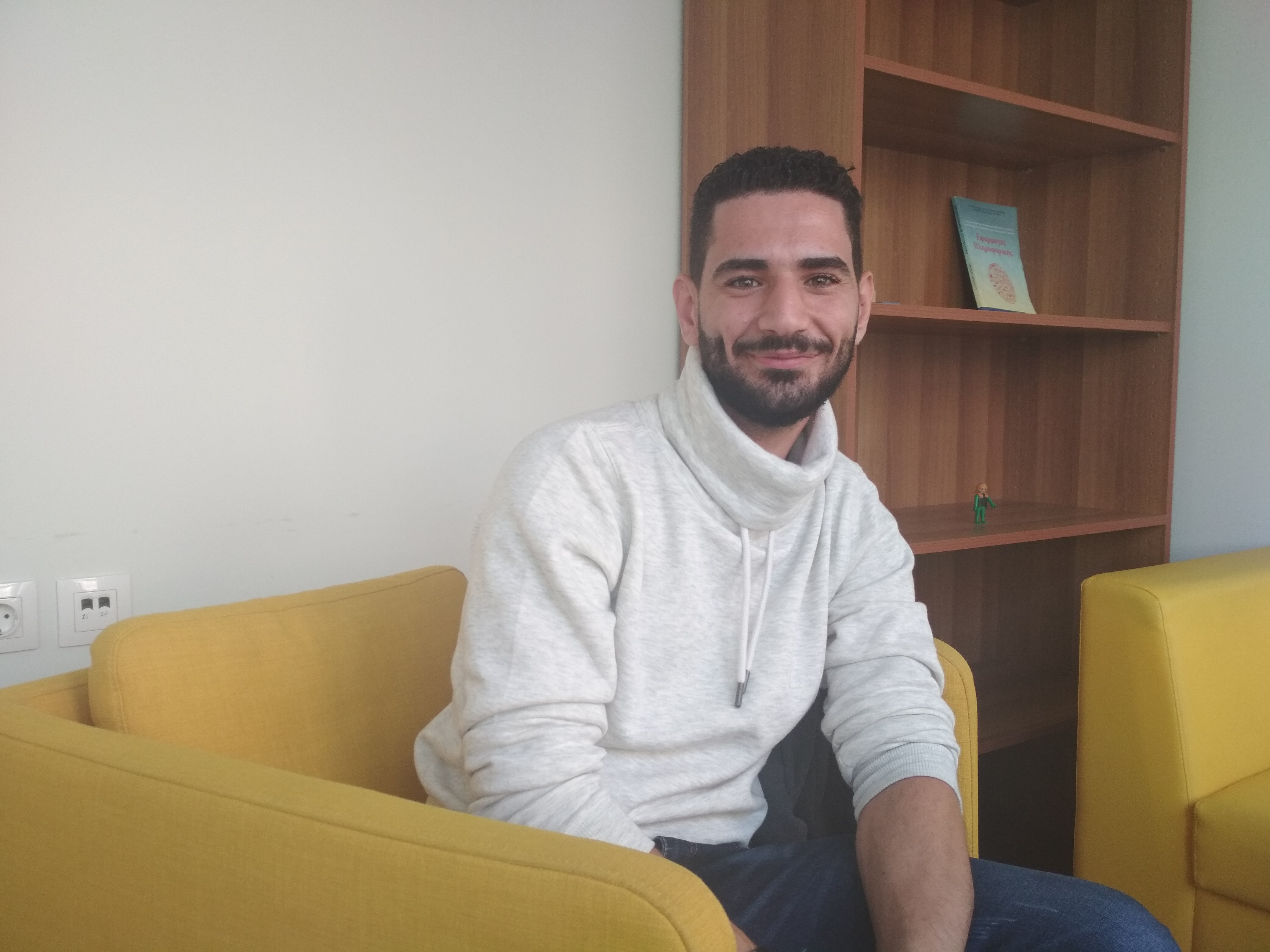
Said wears nothing but a smile. He is 26 years old and comes from Syria; he is supported through SolidarityNow’s Accommodation Program in Thessaloniki. “My name in Arabic means happiness”, he says. “Are you a happy person?”, we ask him. “Yes I am. I grew up like this. I try with my jokes to make people smile, in any case we only have this life to live”, he notes. In addition to this, Said has dreams and believes that people can achieve the impossible. One of his goals was to learn Greek, and he is already doing so.

It is Monday and we are at the Thessaloniki Solidarity Center. Said is on time for his interview with us. We sit on a red sofa and talk about Damascus, his place of origin, his life there, his family, his journey to Greece and his new start in Thessaloniki. Said has studied economics, but his great passion is computers. When he was living in Syria he had his own shop where he was repairing mobiles and computers. In fact, as he tells us, he has made his own electronic game. He was so absorbed by his passion that he was not eating, sleeping and even not attending his lessons at the University. He didn’t graduate on time, but as he says, he did it deliberately because in Syria during the war you only had 3 choices: to go to the army or to study or to leave the country. Said graduated and then fled from Syria.

Syria, Turkey, Greece and specifically Mytilene, and after living one year on the island, he went to Thessaloniki. This was the path that Said followed, a difficult path indeed, but our friend never lost his hope. “I want to live in Greece, that’s why I am learning Greek. I do not want to go back to Syria. Syria has finished for me”, he says. It has been 3 years since he came to Greece. During this time, he experienced various feelings, from despair and loneliness to optimism; that was what saved him. Today, he attends Greek courses at the School of Modern Greek Language of the Aristotle University of Thessaloniki. “Aphrodite, my social worker, helped me a lot. I told her that I want to learn Greek and with her assistance I was registered for the Greek classes. If you want to be helped, you have to ask for help», says Said, who is at A1 level. “I want to speak Greek, to be able to understand, I do not want to be in the shadow. I want to study and become something in life”, he adds.

His dream is to become a social worker. He believes that the knowledge of the arabic language and his experiences as a refugee, will help him. “I know the people who are coming here, I know their problems, I was one of them. I like to help them. Aphrodite helped me a lot and I want to be like her”, he underlines.

“You know … when you’re a good guy, good things will happen to you”, he adds with wisdom, while our conversation is coming to an end. “The Greeks are trying to help you, but you have to help yourself first. Life is ours; it is my life, I will live my life for me”.


*Said is hosted in the frame of SolidarityNow’s Accommodation structure in Thessaloniki operated under the ESTIA – the Emergency Support to Integration and Accommodation program, implemented by the UNHCR and funded by the European Civil Protection and Humanitarian Aid Operations (ECHO).

#ReadyStudyGo!_Mahram

Giorgos Moutafis for SolidarityNow

“If I get good grades, I want to study medicine!”

 “I do not know if I am the best student, but I’m doing my best. I want to find work and go to the University”

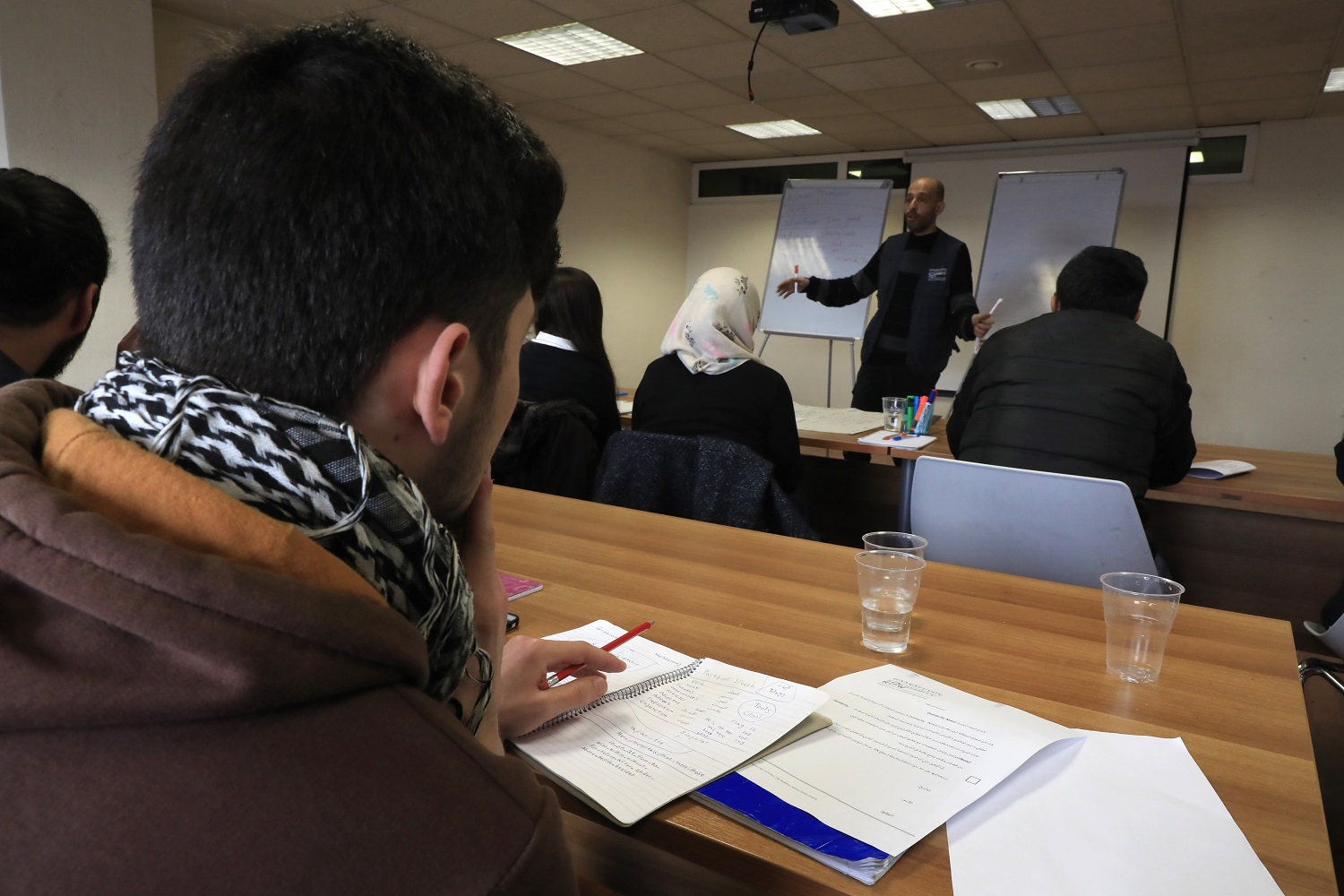
“When I was going school in Afghanistan, I didn’t like mathematics at all, so instead of concentrating on the lesson I was drawing houses and birds”, says Mahram in Greek while he is drawing for us a bird on a blank paper. Mahram is 19 years old and goes to Lyceum in a night school in Thessaloniki, while at the same time attends Greek lessons in SolidarityNow’s Blue Refugee Center.

Mahram lives in Greece for the last two years. He grew up with his grandparents. He lost his mother at an early age and until now he does not know whether his father is dead or alive. “At the age of 10 I was going to school and working at the same time. It was very difficult for me”, he tells us. Mahram worked as a farmer in order to be able to support himself. Many times he had to skip school. His teacher, however, was trying to help him in any way to continue his studies. But things turned out differently when the Taliban tried to recruit him. In order to persuade him, he was told that if he will die nobody will mourn him, because he was an orphan. Mahram to save himself, decided to flee from Afghanistan.

Afghanistan, Iran, Turkey, Lesvos, Athens, Ioannina, again Athens, Idomeni and finally Thessaloniki. This was the road to freedom. In Lesvos he learned English and Greek, and he was helping his compatriots by translating for them. His next stop was Athens, where he was placed in a shelter for unaccompanied minors. His main goal back then was to leave from Greece and go to another European country. “Like the others, I wanted to leave from here too. We were told that if we go to another country things would be better”, he confesses. Indeed, he tried to leave, but without success. A health issue stopped him. He had to be hospitalized for a long time. The first time he stayed in hospital for 20 days and then for 3 months. “I was feeling very lonely. The doctors, however, were very good with me and helped me to overcome my health issue. My only interest was to go to school”.

For two years he didn’t go to school. “From the time I came to Greece until today most of the time I was in the hospital”, he says. But things have changed for the better. First, he started to attend Greek lessons in SN’s Blue Refugee Center with Kostas and Christina (his teachers), and he was registered at a night school. “I really like my school. I feel Greek”, he tells us and smiles. Mahram talks about his school, his teacher, his classmates, his Greek friends Andreas, Maria and the other kids, who are hanging out with him during the school breaks. His favorite lessons are mathematics, English and informatics -his teachers at the Blue Refugee Center, Elsa and Mohammed, have influenced him.

Mahram has been granted with asylum in Greece. Now his only dream is to finish school and go to the University. “I do not know if I am the best student, but I’m doing my best. I want to find work and go to the University. And if I get good grades, I want to study medicine!”


*SolidarityNow’s Blue Refugee Center in Thessaloniki is supported by UNHCR and UNICEF and funded by ECHO -European Commission – Civil Protection & Humanitarian Aid Operations.

#ReadyStudyGo!_Μ


“Life is far too short to be sad”

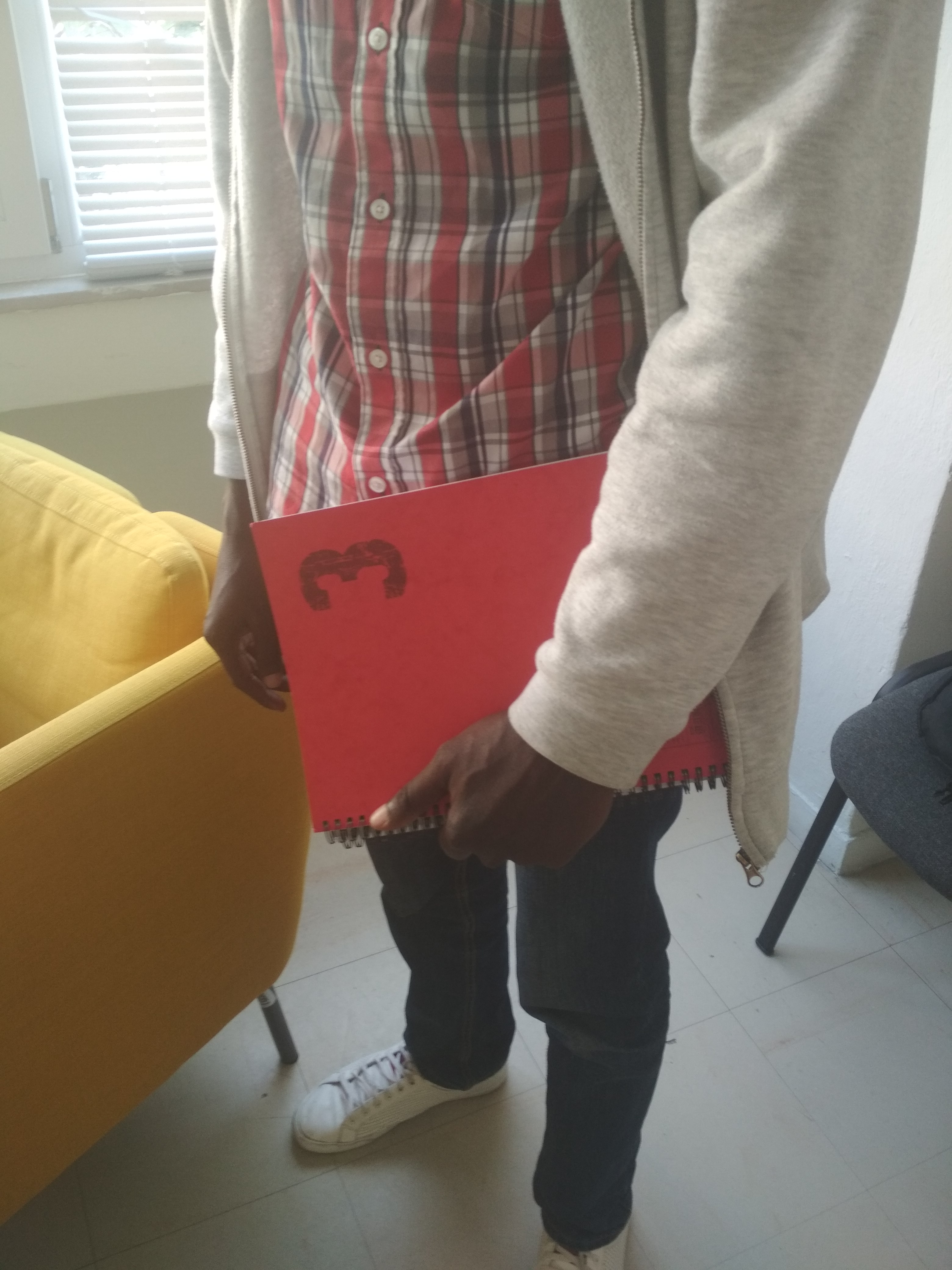
The waiting room in Thessaloniki Solidarity Center is crowded. Smiles, over thinking, anxiety, relief, some of the feelings that are reflected on people’s faces. M’s figure stands out from the crowd. Tall and ramrod straight, with his big eyes and a calm look, he holds a bag full of books and awaits the time for our appointment.

M.’s colors reveal his African origin. He is only 25 years old and he has been in Greece for the past 2 years. At a very early age, he lost his parents, however his foster mother raised him with a lot of love. His life as a child and as a teenager was difficult, as he had to work as a farmer to be able to support himself and pay the tuition fees for his education. “But I did it, because I have always had a positive attitude towards life and I have honestly believed that everything would be fine”, he says. And indeed, everything went well. He has managed to enter the University and specifically, the law school. Immediately after graduating, he began working for the government of his country. One of his main duties was to train the Police Forces on criminal procedures and the respect to fundamental human rights. Unfortunately, for security reasons he was forced to leave his job and flee away from his country. At the time, he was enrolled in a postgraduate program, but he wasn’t able to complete it.

“When I arrived to Lesvos and saw myself in a tent, I started to cry, when I remember my past -my studies and who I am”, he states. But, at the same moment, he looked around and he saw hundreds of people caught in the same situation as him. “I said to myself that if people can live like that, I can do it too. I saw it as a challenge and I believed that something would change”, he notes. Within a short time, everything changed. He left Lesvos and went to Derveni refugee camp and from there he was moved to one of the organization’s apartments in Thessaloniki. Things changed when he won a scholarship to study at the Perrotis College-American Farm School for the academic year 2017-2018, part of the “Education Unites: From Camp to Campus” program offered by the United States Embassy. He attended undergraduate courses in business environment and due to his good marks, he was given the opportunity to continue his studies. But unfortunately, because his asylum decision was still pending, he couldn’t get the scholarship.

They say that «every cloud has a silver lining», and in the case of M. it’s true. His willingness to continue his studies and his optimism led him to attend free courses in the European Civil Law program of the law school at the Aristotle University. With the help of his professor, he applied and got accepted in the postgraduate program LLM in Transnational and European Commercial Law, Banking Law, in the International Hellenic University in Thessaloniki. The only thorn was the expensive tuition fees. M. had paid an initial amount to cover the costs of his enrollment, and then, with the encouragement of a friend, he created a crowdfunding campaign. Despite his anxiety about whether he will be able to raise money, he has never lost his hope. “I feel happy, and I am very grateful given the situation, as few refugees have the ability to do what I do right now”, he points out.

In addition to his postgraduate studies, he also attended the “Future Interpreters”, a comprehensive training program for community interpreters and cultural mediators organized by SolidarityNow in Athens and Thessaloniki. “I thought it was a good idea to attend these seminars so I can find a job as an interpreter, but unfortunately there are not many people coming from my country to Greece”, explains. Despite the obstacles and difficulties, M. dreams his life in Greece, his studies, his desire to learn Greek, but also to work as a lawyer. “This positive way of thinking is a charisma. I think my mother inherited it to me. Life is far too short to be sad” he adds.

It is in January 2019 and 2018 seems far away. M. has come to the Center and is sitting in the computer room. We greet him and, with a huge smile, he tells us that the administration of the University has decided to cover 50% of his tuition fees, and through the crowdfunding campaign he has managed to raise the amount he was asking for! “This is life, man. If you think negatively, it’s like suicide”.


*Thessaloniki Solidarity Center was established and is supported by Open Society Foundations (OSF/OSIFE).

* SolidarityNow, with the support of the Guerrilla Foundation and in collaboration with the Society for the Care of Minors (SMA) and the Panhellenic Association of Professional Translators Graduates of the Ionian University (PEEMPIP) organized a comprehensive training program for community interpreters and cultural mediators in Athens and Thessaloniki.