“We are having very nice discussions with our teachers” – Τribute: “Before the bell rings”


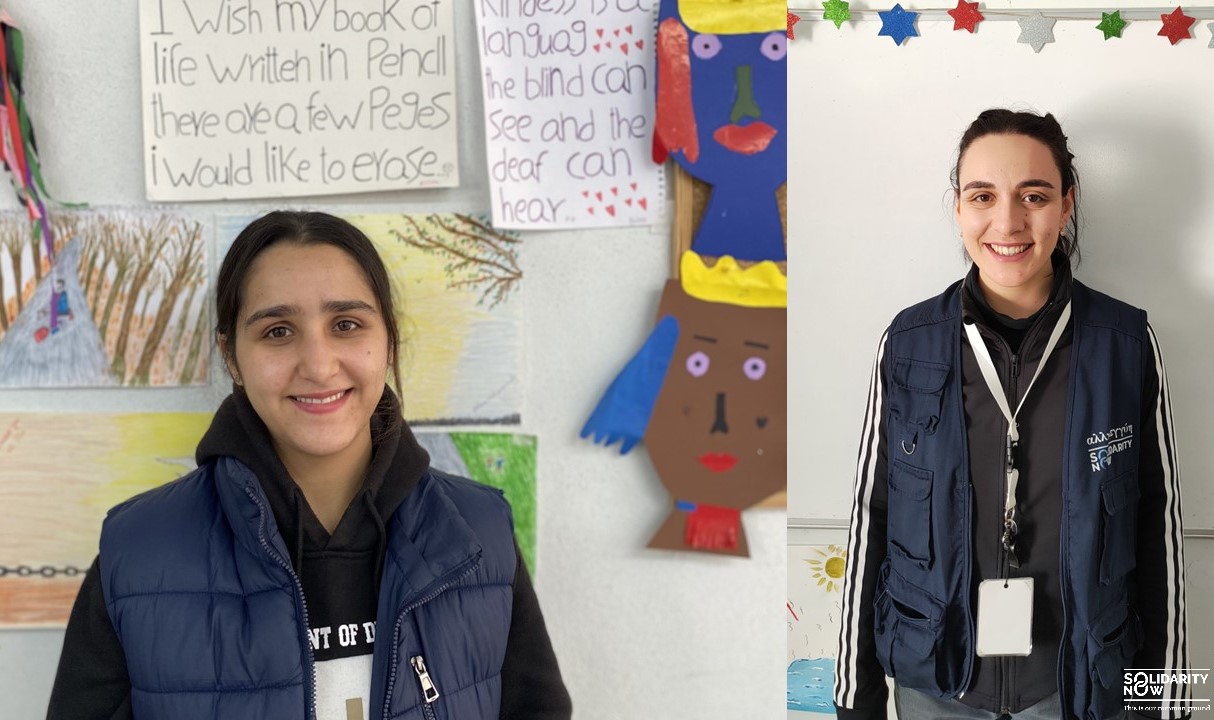
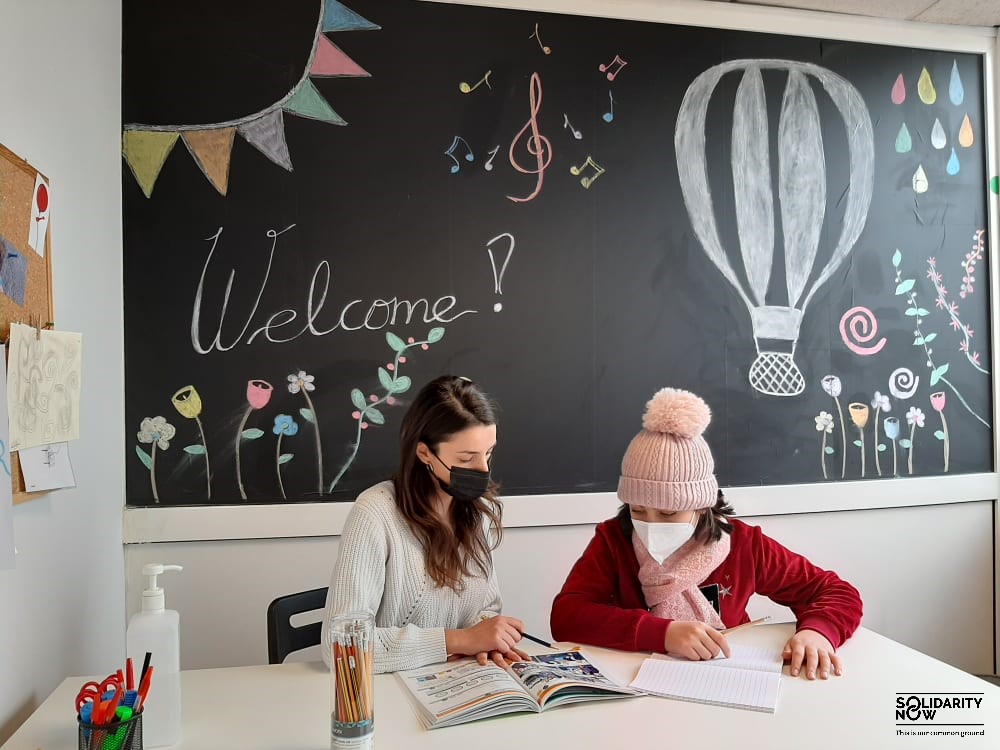
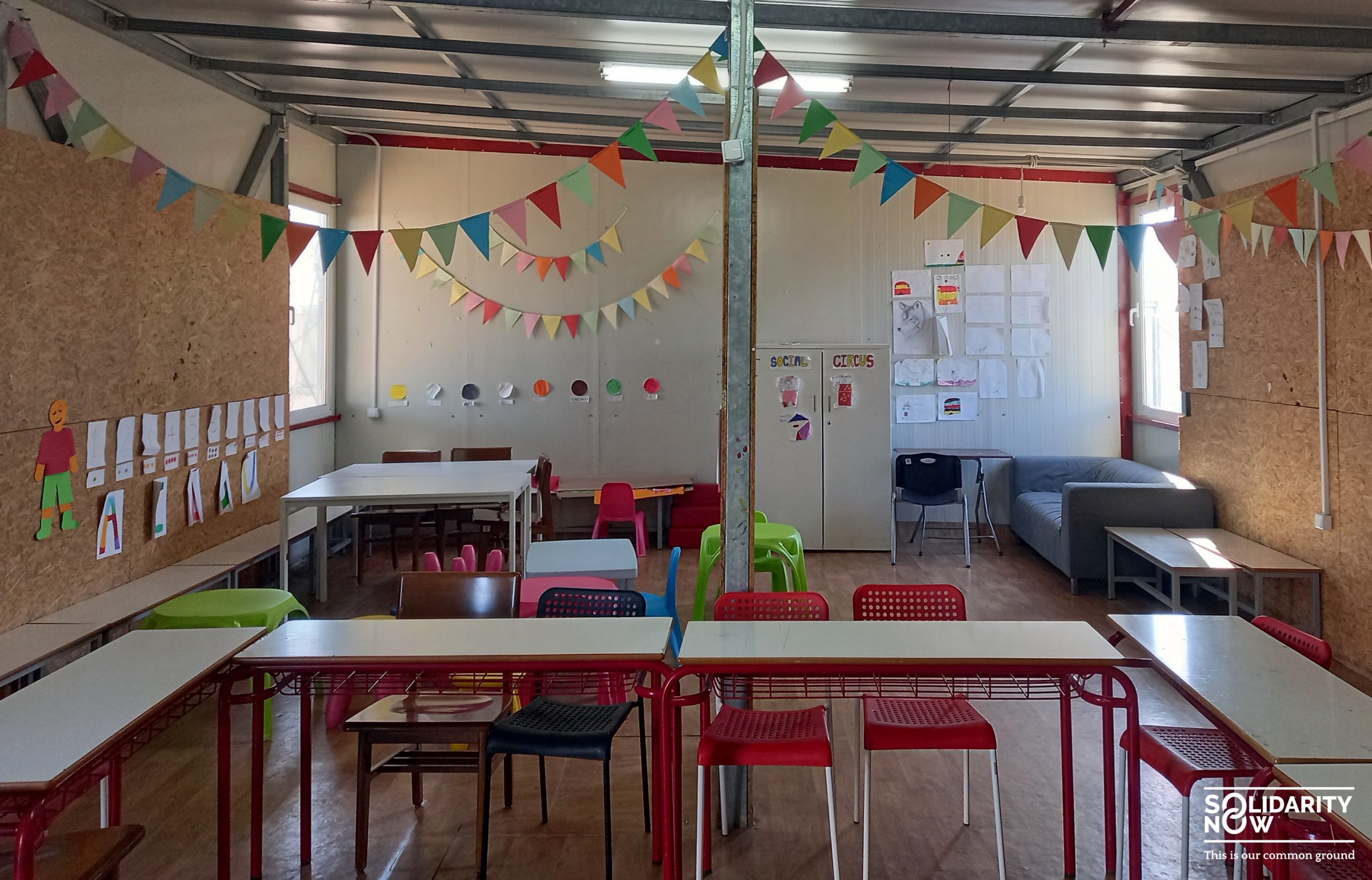
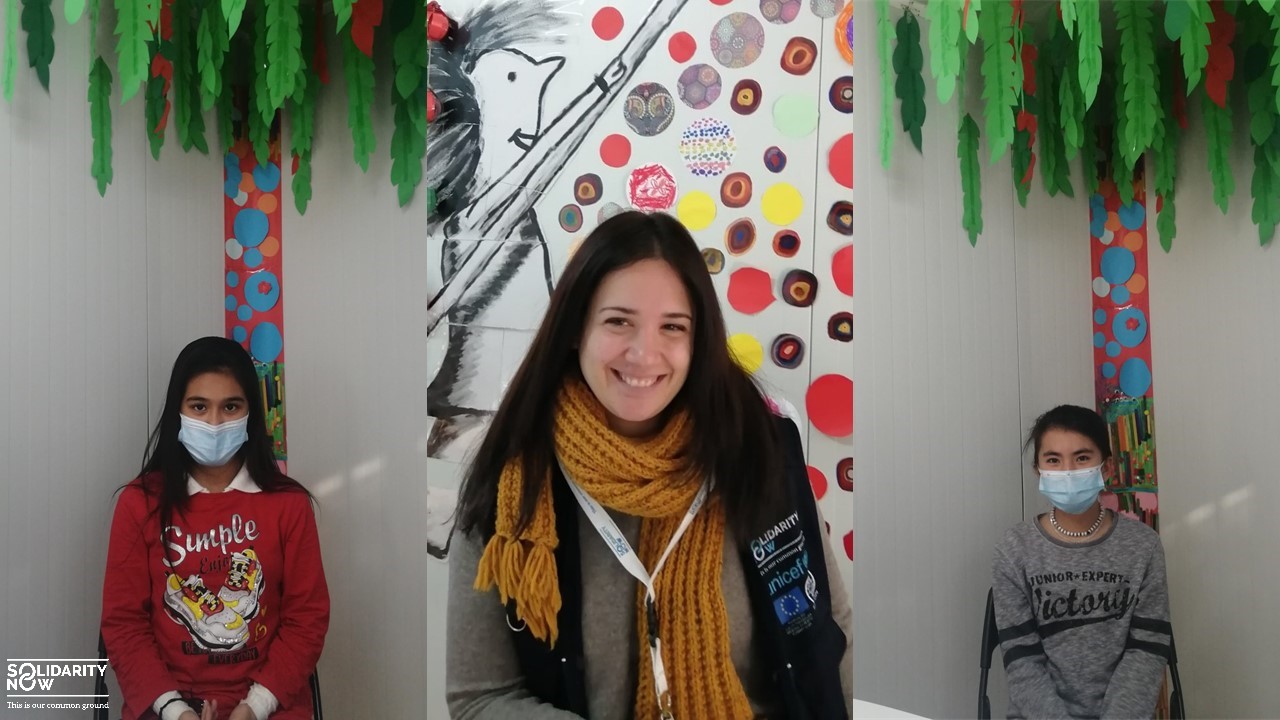
Alexandra, a teacher at SolidarityNow’s “Homework and Creative Activities” in the open accommodation structure for refugees and asylum seekers in Vayiochori shares her thoughts and the same do the 12-year-olds Hasti and Kosar with enthusiasm!

Hasti Jafari, from Afghanistan

What have you learned so far at the HCAC?
Here, I learn many things; English, Greek and Math. Usually, I cannot understand what we do in the other school, so we come here, we ask for help and the teachers here support us. Then, we go back to school, and we make it better!

What’s your favourite thing about going to the HCAC?
Some of my favorite things from this school, is playing board games, UNO, reading books and making crafts.

Kosar, from Afghanistan

What have you learned so far at the HCAC?
In this school, we learn many things about the Greek and English language and play Mathematical games. The teachers also help us with the homework from the other school and explain to us whatever we don’t understand. 

What’s your favorite thing about going to the HCAC?
My favorite thing in this school is that we learn by playing and having very nice discussions with the teachers. 

Alexandra Velavi, teacher, teacher from Greece

What are the Centers doing for refugee children that wasn’t being done before?

Psychosocial activities, specialized support according to the children’s needs as well as a variety of educational activities offered by the Center lead to great results concerning access to education services, both formal and non-formal. Moreover, parental involvement through parent-teachers’ meetings and activities designed to include parents in the educational process contribute to a more integrated approach. 

Do you have an example of a child who has responded well to the teaching at the HCAC?

A 12-year-old boy with low attendance in school and limited social network was approached through the guitar classes and slowly got more and more involved in the educational process and started socializing with his peers. Now, he attends our classes regularly and spends time with his friends. 

*The project “All Children in Education” (ACE) is implemented by SolidarityNow with support and funding from UNICEF.
From the darkness of ignorance to the light of knowledge – Τribute: “Before the bell rings”


Respond from the “Homework and Creative Activities Center” of SolidarityNow in the open accommodation structure for refugees and asylum seekers in Drama.

Shevin Ali, 16 years old from Syria (Kurdish origin)

What have you learned so far at the HCAC?
I have learned Greek and English, which in the past I did not know at all. I have learned to read and write!

What’s your favourite thing about going to the HCAC?
I really like the languages ​​and the fact that I now have the opportunity to learn them. I like that I am given the opportunity to paint and use painting in lessons, which I like so much! Through the actions taking place in the Center, I learned to have confidence, courage and to decide for myself.

Ali Ali, father of Shevin from Syria (Kurdish origin)

What difference have you seen in your child/children since they start going to the Centre?
My children can translate, read and explain things to me, something they couldn’t do before!

How do you think the HCAC will help your child stay in school and do well academically?
Teachers support children and insist on going to school. This is very important, that is, to make children understand how important education is and how much it helps to build their future. Through education, they will be able to pass from the darkness of ignorance to the light of knowledge.

Elpida Kritikou, teacher, from Greece

What are the Centers doing for refugee children that wasn’t being done before?

Through the ACE program, a good and inseparable relationship has been built between formal and non-formal education. The basis has now been laid for the children to perceive the educational process as unified and thus to move towards the fulfillment of their learning goals. The stable and seamless cooperation (of formal and non-formal education) with the psychosocial service is also the appropriate framework in which our students realise their role in the educational process.

Do you have an example of a child who has responded well to the teaching at the HCAC?

An example is the 11-year-old Zahra from Iraq who through the courses and activities we offer, has learned the Greek language very well (now she can interpret herself between the teacher and her classmates) and progresses in formal education. At the same time, she has developed psychosocially to a great extent and got acquainted with teamwork, a skill she had not cultivated before starting to attend our classes.

*The project “All Children in Education” (ACE) is implemented by SolidarityNow with support and funding from UNICEF.
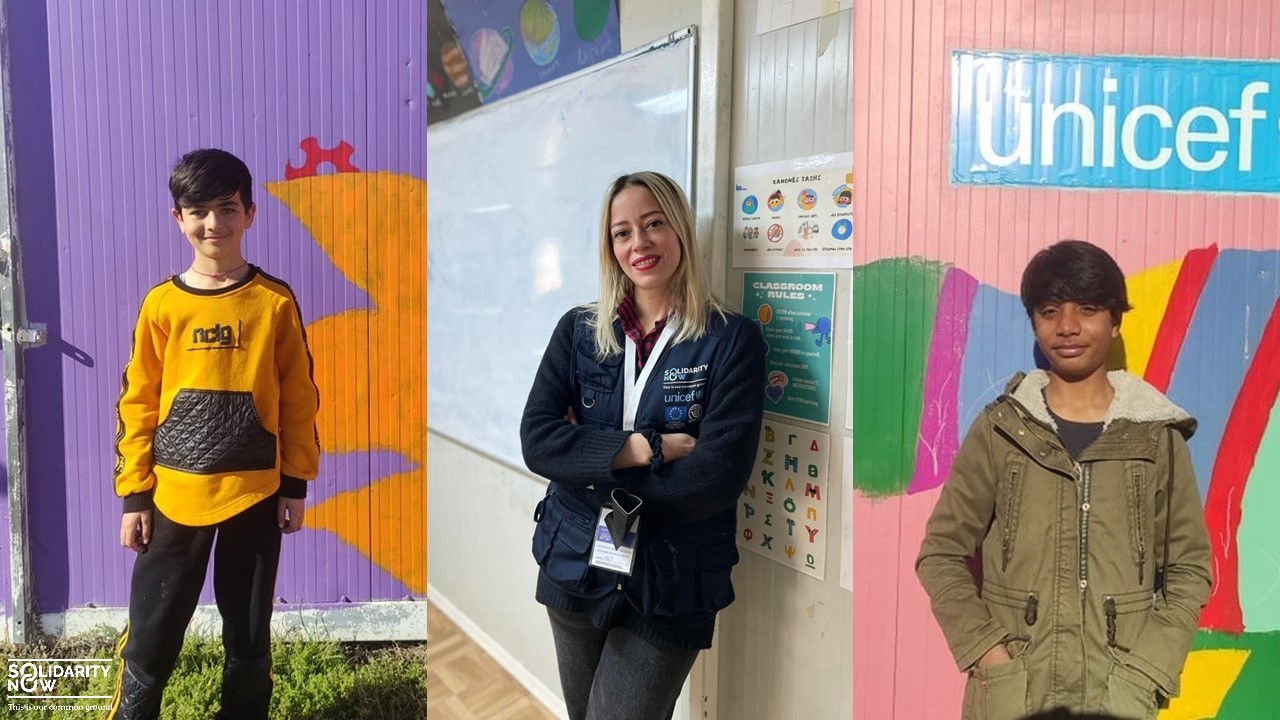
Badal, Iqbal and their teacher Chrysa – Tribute: “Before the bell rings”


Badal, Iqbal and their teacher Chrysa share their educational experience with us just “before the bell rings” at SolidarityNow’s “Homework and Creative Activities Center” in Serres as well.

Badal Ridhwan, 11 years old from Iraq

What have you learned so far at the HCAC?
I like the HCAC because I learn different languages, like Greek and English. Also, I am getting better in mathematics, which is great!

What’s your favourite thing about going to the HCAC?
I like getting help with homework for school. I feel happy because I can learn and have fun at the same time.

Iqbal Rayan, 14 years old, Pakistan

What have you learned so far at the HCAC?
I learn many languages, how to behave and I meet new people. It is very important because I can gather knowledge and a certificate for future career. Also, this school helps me with my H/W and, I really like that we do maths that I can understand.

What’s your favourite thing about going to the HCAC?
It’s more fun! You can be with your friends, discuss about different topics and watch videos that help you learn in a more fun way.

Chrysa Paradisou, teacher from Greece

What are the Centers doing for refugee children that wasn’t being done before?

In HCAC of Serres, we hold classes that support formal education and strive for inclusion. At the same time, the program includes psychosocial integration activities, aiming to socialize children and help them develop life skills. For this reason, we use co-teaching methods to achieve intersectionality.

Do you have an example of a child who has responded well to the teaching at the HCAC?

The 11-year-old Redwan is a student, residing in Serres camp for the past two years. When he started coming to our classes, he could not speak Greek at all. But, with his desire for learning, combined with our rich educational program, he managed to develop language skills and to achieve a satisfactory level. He is now even more active in classes. There is no greater satisfaction than seeing children being happy and gaining linguistic and social skills.

*The project “All Children in Education” (ACE) is implemented by SolidarityNow with support and funding from UNICEF.

Ramazan’s mother sees the positive impact of education on him – Tribute: “Before the bell rings”


Three people involved in a story where the positive impact of education is more than obvious! Response from the SolidarityNow’s “Homework and Creative Activities Center” in Nea Kavala.

Ramazan, 15 years old from Afghanistan

What have you learnt so far at the HCAC?
I attend English, Greek, science and homework classes. We also have workshops about many interesting topics. I have learnt to speak better English and Greek.

What’s your favourite thing about going to the HCAC?
My favourite thing is when we solve maths problems!

Sabrmha, mother of Ramazan, Afghanistan

What difference have you seen in your child/children since they start going to the Center?
He is coming back from school running, so he can quickly eat and go to his lesson in HCAC – “please mom have the food ready” – he says to me. He is so much happier!

How do you think the HCAC will help your child stay in school and do well academically?
He is doing so much better in Greek language, and this motivates him to go to school

Charis Poulikidis, teacher from Greece

What are the HCACs doing for refugee children that wasn’t being done before?

They offer substantial support for the formal school education of students that adapts to their individual needs. It also promotes and facilitates parental involvement in their children’s education.

Do you have an example of a child who has responded well to the teaching at the HCAC?

Little Emran is a 6-year-old student from Afghanistan with zero or limited prior schooling experience. Due to his first days on the ACE program little Emran was too scared and uncomfortable to attend the language & creating activity courses. The fact that he was lacking friends and his low performances during the lessons prevented him from having his first happy schooling experiences. A few weeks later of attending SolidarityNow’s HCAC courses little Emran turned into a happy and active student. Emran has managed to make many new friends quickly, while his performance and participation during the lessons were increased. A person’s first school memories accompany him in the rest of his life, which is why we must all help to create happy and pleasant memories for all children.

*The project “All Children in Education” (ACE) is implemented by SolidarityNow with support and funding from UNICEF.

Basira, Maria and education – Tribute: “Before the bell rings”


The 15-year-old Basira from Afghanistan and her teacher, Maria, met at the “Homework and Creative Activities Center” of SolidarityNow in the open accommodation structure for refugees and asylum seekers in Kavala. What do they tell us about the educational procedure as they experience it through the “All Children in Education” program?

Basira Mohammadi, Afghanistan

What have you learned so far at the HCAC?

By joining the program, I have learned many new words. Before coming here, I couldn’t speak English at all; thanks to the classes I attend here, now I can speak! Another thing that i have learned is how to understand people in general, my teachers as well. I have learned to love people as I get a lot of love. Also, I made a lot of new friends! 

What’s your favourite thing about going to the HCAC?

My favourite thing about going to the HCAC is the fact that I am able to express myself, but also listen to other people (teachers, classmates). For me it is very important as I believe that the more, we speak the better we learn. 

Maria Katsikari, teacher from Greece

What are the Centers doing for refugee children that wasn’t being done before?

The Center provides a sense of normality and a safe space for children. Besides academic subjects and support to formal education, the children improve their life skills, build their confidence and practice their critical thinking. 
Do you have an example of a child who has responded well to the teaching at the HCAC?

There is not just one example. Most of the students who are punctual and attend the courses have impressively improved not only in their academic skills but also in their interpersonal and social skills.

*The project “All Children in Education” (ACE) is implemented by SolidarityNow with support and funding from UNICEF.

Iliana, the student, and Louisa, the teacher speak about their encounter through education – Tribute: “Before the bell rings”


The 12-year-old Iliana from Syria is a student of Louisa in the “Homework and Creative Activities Center” (HCAC) operating in the Blue Refugee Center of SolidarityNow in Thessaloniki. Through their answers, they share with us the positive imprint of educational procedures in their lives.

Iliana, Syria (Kurdish origin)

What have you learned so far at the HCAC?
I learned to speak Greek and English. Also, I learned that boys and girls are equally capable. The Center is like my home, I feel that I am at home.

What’s your favourite thing about going to the HCAC?
My favourite thing is when I am hugging my teachers. Also, I love doing my homework and learn new things with them.

Louisa Rousomani, Greek

What are the Centers doing for refugee children that wasn’t being done before?

ACE program promotes formal education in accordance with the Convention of children’s rights, since through the program we support and ensure the enrollment in formal education for unenrolled children. Furthermore, we provide psychosocial support and make referrals to other organizations in order to offer integrated support and balance to the children struggling multiple changes. In addition, we establish communication and cooperation among the Refugee Education Coordinators (REC), which is our basis and guide to continue supporting our students efficiently.

Do you have an example of a child who has responded well to the teaching at the HCAC?

It is worthy to mention Iliana! She is 12 years old and she now finishes the Greek primary public school. She also participates in the recreational activities organized based on students’ interests in the Blue Refugee Center’s HCAC almost every day, despite the fact that she lives with her family quite far from the Center. With our support, Iliana not only has improved her school performance, but she has also empowered her identity and boosted her self-esteem. She excels at school as one of the best students of her class and she has acquired strong social skills that support her integration. We are very proud of her and her family that stands by her side!

*The Blue Refugee Center’s operation is supported by UNICEF Greece.

*The project “All Children in Education” (ACE) is implemented by SolidarityNow with support and funding from UNICEF.
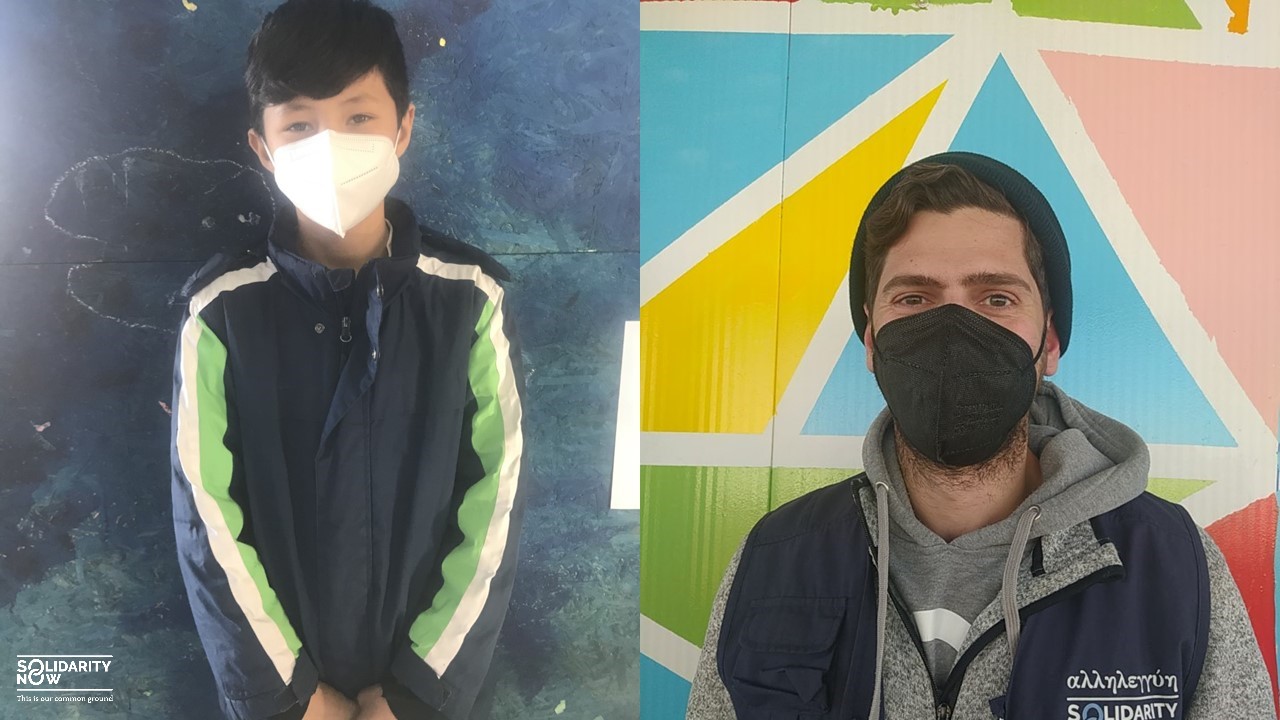
Tribute: “Before the bell rings”


“Before the bell rings”:

What is the imprint of education in the lives of children, their parents and teachers?

This September, before the beginning of the school year, let’s read what students of the “Homework and Creative Activities Centers” (HCACs), parents and educators answered to this question, from six out of the twelve areas in Greece, where the Centers operate.

The “Homework and Creative Activities Centers” operate in mainland Greece in the context of the program “All Children in Education” program, implemented by SolidarityNow since October 2021, with the support and funding from UNICEF Greece. The program aims to facilitate the integration of refugee and migrant children in formal education through the provision of non-formal education services and other complementary activities.

SolidarityNow invests in education since its establishment, recognizing its fundamental role both in the smooth social integration and the creation of independent and empowered adults. Through specific programs and actions, the organization creates and offers opportunities to vulnerable population groups – Greeks and non-Greeks- to enhance their educational and life skills by providing them with access to non-formal education activities.

Just “before the bell rings” we give the floor to Iliana, Louisa, Shevin, Mr. Ali, Elpida, Basira, Maria, Ramazan, Ms. Sabrmha, Charis, Badal, Iqbal, Chrysa, Hasti, Kosar and Alexandra!

*The project “All Children in Education” (ACE) is implemented by SolidarityNow with support and funding from UNICEF Greece.

Tribute to the International Friendship Day, July 30th: “Friendships have no borders”


#internationalfriendshipday

International Friendship Day, July 30th: “Friendships have no borders”

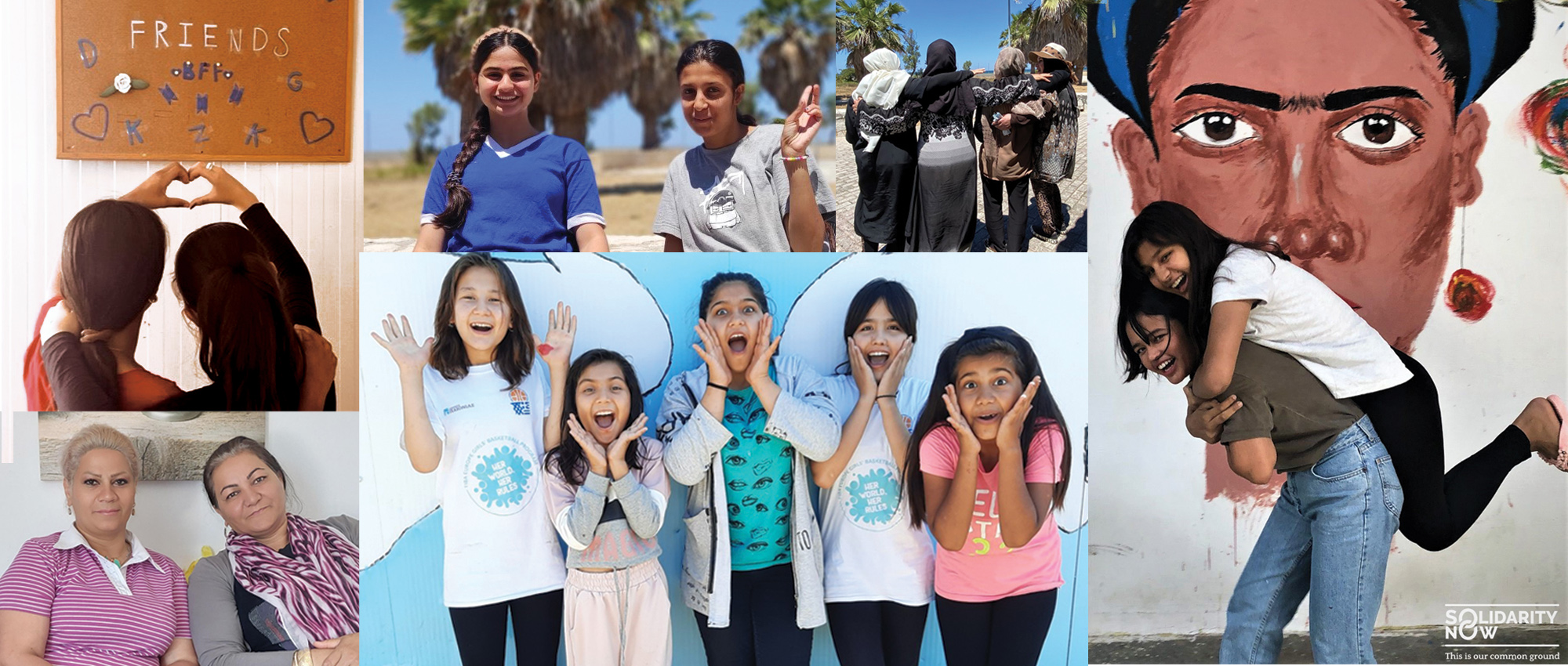
On the occasion of today’s World Friendship Day, SolidarityNow starts unfolding a digital short storytelling and photographic tribute to the people who became friends under difficult living conditions, entitled: “Friendships have no borders” via the organization’s social media pages!

It is of the utmost importance that during these tough times our world is facing- war, poverty, violence, human rights abuses, etc.- to confront those crises by creating strong bonds. A united world can be built by making real friendships that have the power to cross borders.

The portrayed people talked to us about the importance of having a true friend by your side and accepting your friends without judging them.

The eight (8) friendship stories that will be presented from today and during the next eight (8) days, are among beneficiaries of the organization’s “All Children in Education” *, “Female Friendly Spaces” (HARP**), and “HELIOS”*** programs from five (5) different open accommodation structures (Andravida, Diavata, Nea Kavala, Thiva, Vagiochori) and Ioannina.

Let’s read what friends shared with us! Follow us social media!

 *The “All Children in Education” program is implemented by SolidarityNow with the support and funding from UNICEF Greece.

**The program “Friendly Spaces for Women” is implemented by SolidarityNow with the support of International Organization for Migration (IOM Greece) in the framework of the HARP program.

***SolidarityNow is a key implementing partner of the International Organization for Migration (IOM Greece), in the framework of the HELIOS project which is funded by the Ministry of Migration and Asylum.

Mr. S. achieved what he thought was unachievable with the right support


by the Athens Solidarity Center of SolidarityNow

One of the most interesting and challenging cases with which the social service team at the Athens Solidarity Center (ASC) had to deal with recently, was the one of a 68-year-old beneficiary from Greece with severe health problems.

Mr. S used to work in various sectors to support his family. His life changed dramatically twelve years ago when he was diagnosed with a critical lung problem that gradually worsened. Therefore, he is respiratory supported by a portable breathing apparatus, which allows him to stay outside his home for a very limited time and only with its support. All these years, his family’s only income was from his wife’s part-time job.

When Mr. S firstly asked help from the Athens Solidarity Center’s social service, he believed that social benefits were inaccessible because procedures are too complex.

Mr. S was immediately informed by the social service’s team about the four different support programs: invalidity allowance, pensions/welfare benefits for elderly persons who are uninsured, social household electricity and water tariff. Then, the social service’s team scheduled appointments at municipal offices, where the beneficiary could submit the necessary applications.

Moreover, due to Mr. S’ s health condition, which didn’t allow him to attend the appointments in person, the team contacted the nearest police station, and his wife got the authorization and represented him.

After many dedicated efforts of the ASC’s social service team, Mr. S received the benefits he was entitled to, a fact that created a new reality for him, empowering him financially and psychologically.

*From 1/8/2021 till 31/7/2022, the Athens Solidarity Center’s operation is supported through a grant from the Stavros Niarchos Foundation in the framework of its global COVID-19 Relief Initiative.

**From 1/7/2021 till 30/6/2022, Kahane Foundation supports the Psychosocial service of the Athens Solidarity Center.

***The Athens Solidarity Center by SolidarityNow is also supported by the Municipality of Athens.

With a Little Help from the Athens Solidarity Center, Mr. A. found a job and made his first personal art exhibition!


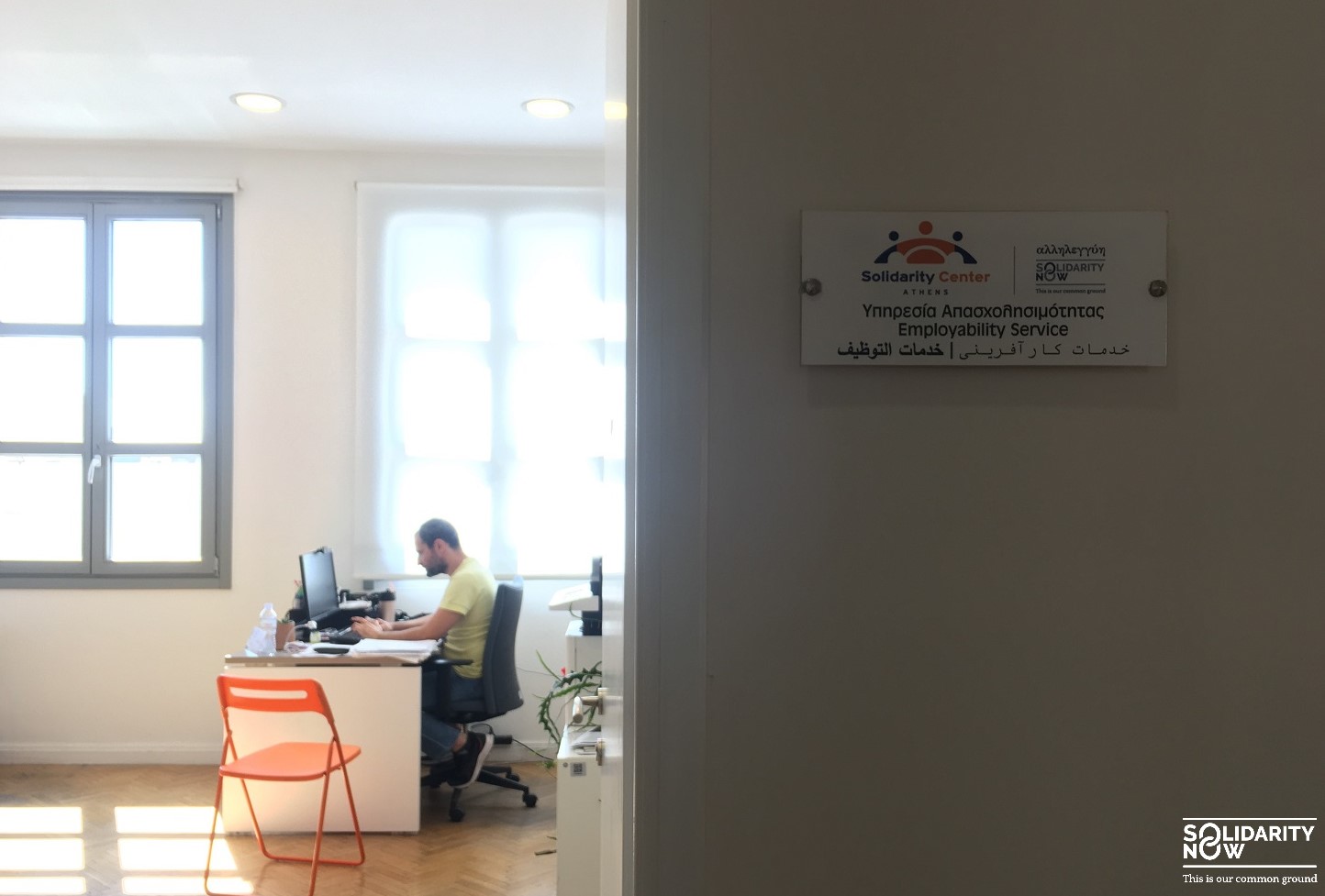
by the Employability Service of the Athens Solidarity Center, SolidarityNow

A 56-year-old art teacher, painter and sculptor from Greece, living in Athens, sought support from the Athens Solidarity Center’s employability service.

Mr. A. has studied graphic arts and worked for many years as a private sector employee, an art teacher, and a freelance painter and sculptor.

However, after a long period of unemployment it was tough for him to find a job due to his age. The first step taken along with his job counsellor was to discuss and find out his strengths, weaknesses but also his needs and aspirations. Then, Mr. A. was supported to make his curriculum vitae and identify job opportunities that matched his profile.

The most important of all was to get the appropriate support that would help him to make the most of his potential and create a stable plan of action. Due to his age, Mr. A. carried on his shoulders the burden of many disappointments and frustrations. Consequently, he had lost faith on himself, so empowerment was the primary goal set by the employability service’s team. Mr. A. started making gradual steps; he created a list of potential employers and through the guidance of his job counsellor, he began to communicate with them.

The first obvious result of his effort came shortly after and was his part-time job as an art teacher. That was a life-changing step for Mr. A!

And there were more to come! After contacting many art centers, which he found with the help of the job counsellor, he managed to find the one with which he collaborated organizing an art exhibition of his work! The exhibition was very successful, and he achieved to expand his network and receive more job offers!

Today, Mr. A. is a confident man who believes in himself, and he is optimistic about the future!

*From 1/8/2021 till 31/7/2022, the Athens Solidarity Center’s operation is supported through a grant from the Stavros Niarchos Foundation in the framework of its global COVID-19 Relief Initiative.

**From 1/7/2021 till 30/6/2022, Kahane Foundation supports the Psychosocial service of the Athens Solidarity Center.

***The Athens Solidarity Center by SolidarityNow is also supported by the Municipality of Athens.