Connecting Blue Dots to support refugee and migrant children


SolidarityNow on the side of the most vulnerable populations through the operation of Care Hubs in Attica, Epirus, and Eastern Macedonia

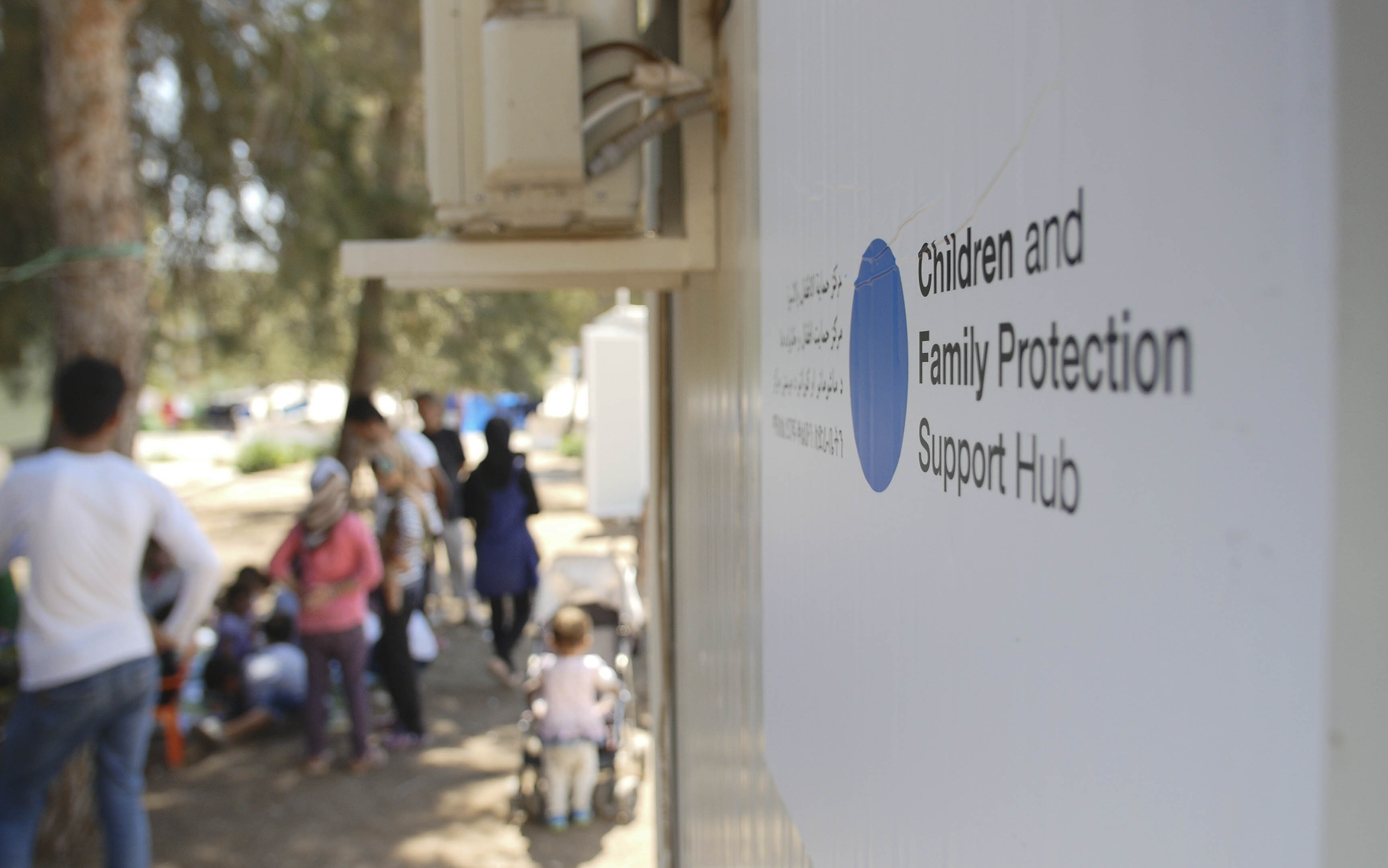
As part of ongoing efforts to protect the most vulnerable refugee and migrant groups, special support centers –known as “Blue Dots”- for children, women and families are being rolled out in more than 10 points across Greece to provide vital services, counselling and play in a single location.

SolidarityNow, with UNICEF support, is implementing this innovative approach to connect the Blue Dots on a national scale. Piloted in Greece in the Port of Piraeus earlier in 2016, the Blue Dots concept was developed originally by UNHCR, UNICEF and ICRC to ensure a minimum package of services was available to the refugee population across Europe and foster complementarity amongst protection actors on the ground. The SolidarityNow “Blue Dots” are easily identified, since they have the distinctive mark of the blue dot indicating that through the present structure the several essential services are provided free of charge. Through this program, SolidarityNow is addressing the inadequate supply of services in 4 different geographical areas of the country: Attica (Elefsina and Marathonas), Central Macedonia (Oreokastro and Kavalari), Eastern Macedonia (Drama) and Epirus (Filippiada, Ioannina and Doliana).

The Blue Dots in detail

The “Blue Dots” are Child & Family Care Hubs for children, women and other vulnerable people living in refugee camps in Attica, Epirus and Central and Eastern Macedonia, as well as in the urban environment of these regions, where the greatest populations’ needs are recorded.

Every “Blue Dot” is a safe place for refugee children and their families, while the range of services offered at each one includes legal counseling, psycho-social support, case management and referrals, specific area exclusively for mothers and babies/children.

“The Blue Dot is the image of our world, as envisioned by SolidarityNow – a planet where people will be equally treated and have the same opportunities living in societies based on solidarity and peaceful coexistence and this begins by helping children and families”, says Epaminondas Farmakis, Managing Director of SolidarityNow.

More specifically, the operation of the Child & Family Care Hubs includes:

  • Child-friendly spaces that provide recreational and educational activities for children in order to restore the sense of normalcy that they have lost during the journey and while stranded.
  • Identification and referral of vulnerable persons to specialized services, including vulnerable families, single mothers, children at risk with a specific focus on unaccompanied children, persons with disabilities or illnesses, cases of suspected trafficking, survivors of sexual and gender-based violence (SGBV).
  • Breastfeeding corners and provision of reproductive, neonatal, and postnatal care and counseling.
  • Sharing efficient and accurate information to refugees and migrants, about their rights (before and after applying for international protection).
  • Providing general psycho-social services, and referrals when needed.
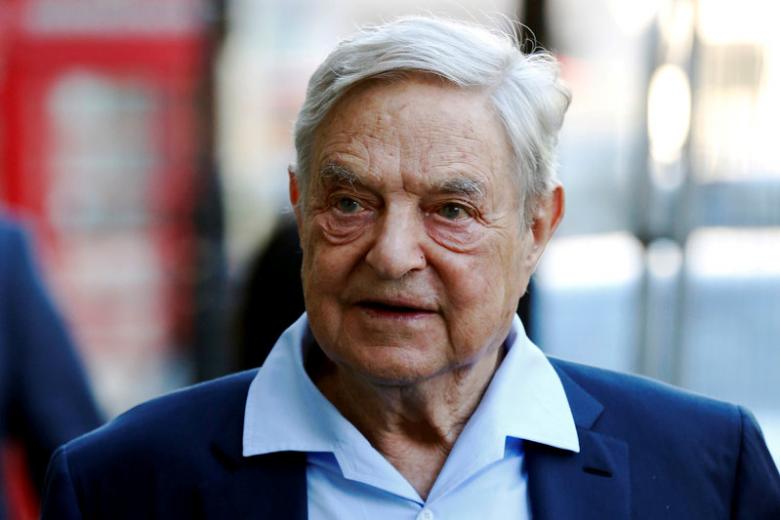
George Soros, Mastercard to partner to aid migrants, refugees


Billionaire investor George Soros will partner with Mastercard Inc on a venture they said could help migrants, refugees and others struggling within their communities worldwide to improve their economic and social status.

The partnership, Humanity Ventures, stems from a pledge Soros made in September to earmark up to $500 million for investments to address challenges facing migrants and refugees.

In a joint statement on Thursday, Mastercard and Soros said that despite billions of dollars of humanitarian and development assistance, millions of people remain marginalized, a situation the private sector can help rectify.

“Migrants are often forced into lives of despair in their host communities because they cannot gain access to financial, healthcare and government services,” Soros said.

“Our potential investment in this social enterprise, coupled with Mastercard’s ability to create products that serve vulnerable communities, can show how private capital can play a constructive role in solving social problems,” he added.

Humanity Ventures intends to focus initially on healthcare and education, with a goal of fostering local economic development and entrepreneurship.

With the creation of Humanity Ventures, Soros could invest up to $50 million to make these solutions more scalable and sustainable, and perhaps encourage smaller projects committed to mitigating the migration crisis.

“Humanity Ventures is intended to be profitable so as to stimulate involvement from other businesspeople,” Soros said. “We also hope to establish standards of practice to ensure that investments are not exploitative of the vulnerable communities we intend to serve.”

Soros opened his first foundation, the Open Society Foundations, in 1979 when his hedge fund had reached about $100 million and his personal wealth had climbed to about $25 million.

The Open Society Foundations began Soros’s philanthropic activity when he gave scholarships to black South Africans under apartheid. In the 1980s, Soros and his foundations ultimately contributed to the collapse of communism in Eastern Europe.

Just last week, Soros’ Open Society Foundations said it will keep working with and financing organizations in Hungary despite the government saying that any civil society group should be “swept out.”

(Reporting by Jennifer Ablan; Editing by Lisa Shumaker)

As featured in REUTERS

The new updated website of SolidarityNow is on “air”!


The SolidarityNow new website is on “air” with updated content for the organization’s activities and work, a modern design, a fresh appearance and mainly a dynamic and user-friendly interface. The renewed website is an effort to reflect in a more complete way the multidimensional work of SolidarityNow for the people who most need our help and support and to provide direct and reliable information in all the new initiatives undertaken.

“The comprehensive information, transparency and accountability are the basic principles governing the operation of SolidarityNow; this becomes apparent today through the launch of our new website which is a modern communication tool of our dynamically developing work“, notes Sophia Ioannou, Director of Communications.

In www.solidaritynow.org, visitors can easily navigate and gain immediate information for the organization’s humanitarian work as well as find detailed and updated data on each program which is either in progress or has been completed, and any consequent activity for the benefit of vulnerable social groups of Greeks, refugees, and migrants.

Visit www.solidaritynow.org and find out more in the following links of how we convert Internet into action:

  • The section “Our Work“, where the geography of the implemented programs in the country is presented schematically as well as the “Solidarity Centers” contact details and those of Mobile Units, in order to achieve the direct access for those who have immediate need. SolidarityNow is active in Athens, Thessaloniki and in other eleven (11) geographical points in Greece.
  • The section “Press Office”, for the organization’s news concerning the project implemented to address the humanitarian and refugee crisis, for the presentation of human stories through the eyes of both, our beneficiaries and employees, as well as for any new and current activity.
  • The section “Work with us”, for every new job opening in the organization’s projects as well as for every public tender.
  • The section “Supporters”, to see at a glance, the sources of financial support to the organization’s work and mission and the bodies and institutions that help the programs’ implementation.

Alongside,SolidarityNow’s new website provides detailed information on the annual financial statements of the organization, the members of the Board of Directors as well as on the people working in the programs, aiming at the prompt access of all to the information relating to SolidarityNow. The organization’s operation, since its establishment in 2013, is based upon the principles of transparency and accountability.

A click on www.solidaritynow.org is a small step towards solidarity; our objective is the website to become the digital reference point of accurate information in the map of NGOs in Greece.


Invitation to open discussion-film projection “Twice trapped: discrimination among asylum applicants”


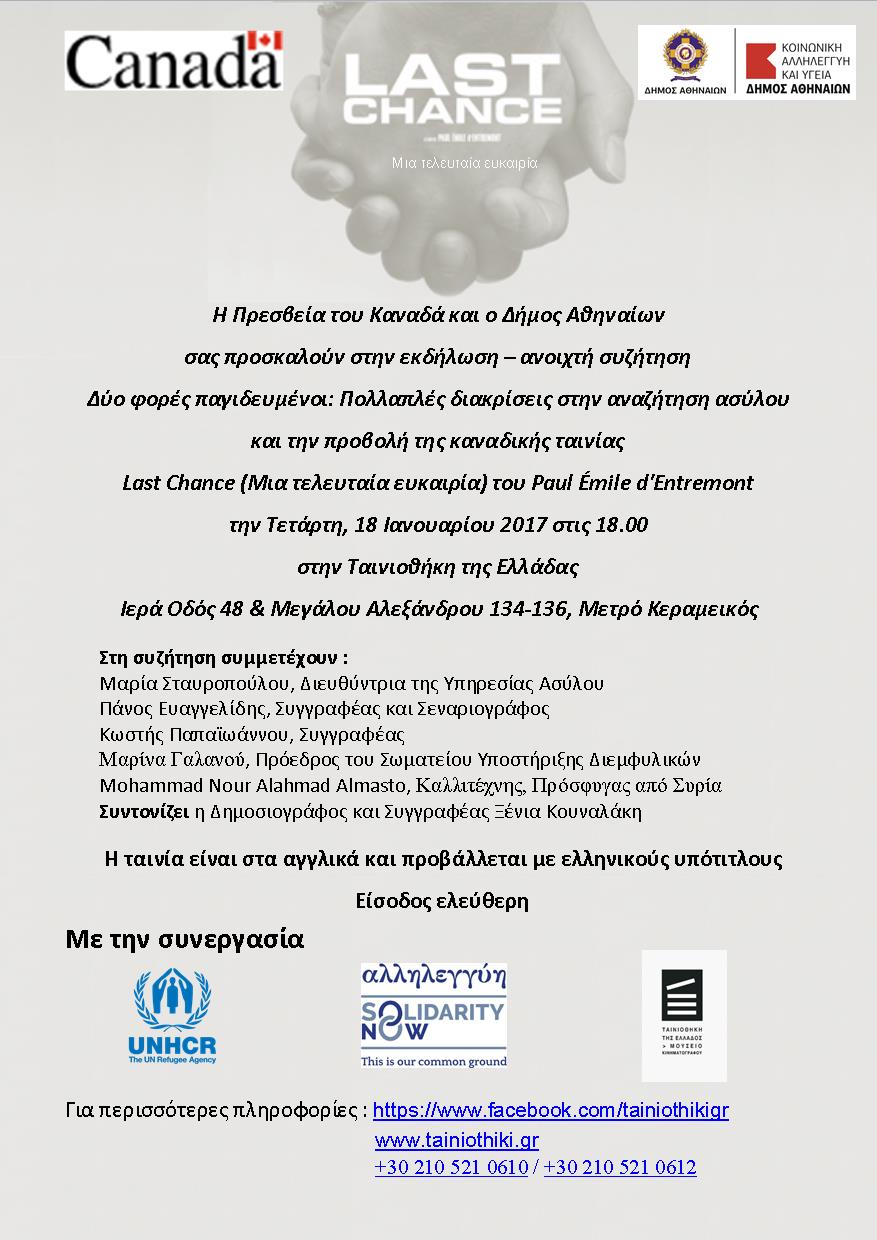
The Embassy of Canada in Greece, in collaboration with the Municipality of Athens, and with the participation of the United Nations High Commissioner for Refugees (UNHCR), SolidarityNow and the Greek Film Archives, is hosting “Twice trapped: discrimination among asylum applicants”, a special public event that will address the realities faced  by lesbian, gay, bisexual, transgender and/or intersex (LGBTI) refugees in fleeing persecution and the particular challenges in applying for asylum. The event will be held on Wednesday, January 18 at 18:00 at the Greek Film Archives, 48 Iera Odos and 134-136 Megalou Alexandrou, Keramikos Metro Station.

The event’s program includes the screening of the Canadian documentary “Last Chance” (2012) by Paul Emile d’Entremont, followed by a panel discussion. Details of the program and speakers are attached.

“Last Chance” is a feature documentary which retraces the turbulent journeys of five people who fled their native countries – Jamaica, Colombia, Lebanon, Nicaragua and Egypt – to escape persecution or homophobic violence and are seeking asylum in Canada. In anticipation of a decision, they face challenges in integrating, fear possible deportation if not accepted, and hope for an opportunity to change their lives. “Last Chance” gives voice to LGBTI refugees around the world who refuse to deny their core identity.

Director Paul Emile d’Entremont is an Acadian filmmaker living in Halifax who, in addition to a rich film career, remains active in the television industry, as a journalist and a director. “Last Chance” was produced by the National Film Board of Canada.

Human rights violations targeted toward persons because of their actual or perceived sexual orientation or gender identity constitute an entrenched global pattern of serious concern. They include extrajudicial killings, torture and ill-treatment, sexual assault and rape, invasions of privacy, arbitrary detention, denial of employment, health services and education opportunities, and serious discrimination in relation to the enjoyment of other human rights. Today, more than seventy countries criminalize same-sex conduct using laws.  However, even when these laws are not enforced, authorities sometimes ignore hate-motivated violence, arbitrary arrest, torture, sexual assault and even murder of LGBTI persons. This can also take place in countries where same-sex conduct is not illegal.

As Canada’s Prime Minister Justin Trudeau has said: “ Everyone deserves to live free of stigma, persecution, and discrimination –  no matter who they are or whom they love…. ensuring that all people –  regardless of sexual orientation or gender identity –  feel safe and secure, and empowered to freely express themselves.”

The film is in English with Greek subtitles.

The panel discussion will be in Greek without simultaneous translation.

Free admission


George Soros: Open Society Needs Defending


Open societies are in crisis, and various forms of closed societies – from fascist dictatorships to mafia states – are on the rise. Because elected leaders failed to meet voters’ legitimate expectations and aspirations, electorates have become disenchanted with the prevailing versions of democracy and capitalism.

Well before Donald Trump was elected President of the United States, I sent a holiday greeting to my friends that read: “These times are not business as usual. Wishing you the best in a troubled world.” Now I feel the need to share this message with the rest of the world. But before I do, I must tell you who I am and what I stand for.

I am an 86-year-old Hungarian Jew who became a US citizen after the end of World War II. I learned at an early age how important it is what kind of political regime prevails. The formative experience of my life was the occupation of Hungary by Hitler’s Germany in 1944. I probably would have perished had my father not understood the gravity of the situation. He arranged false identities for his family and for many other Jews; with his help, most survived.

In 1947, I escaped from Hungary, by then under Communist rule, to England. As a student at the London School of Economics, I came under the influence of the philosopher Karl Popper, and I developed my own philosophy, built on the twin pillars of fallibility and reflexivity. I distinguished between two kinds of political regimes: those in which people elected their leaders, who were then supposed to look after the interests of the electorate, and others where the rulers sought to manipulate their subjects to serve the rulers’ interests. Under Popper’s influence, I called the first kind of society open, the second, closed.

The classification is too simplistic. There are many degrees and variations throughout history, from well-functioning models to failed states, and many different levels of government in any particular situation. Even so, I find the distinction between the two regime types useful. I became an active promoter of the former and opponent of the latter.

I find the current moment in history very painful. Open societies are in crisis, and various forms of closed societies – from fascist dictatorships to mafia states – are on the rise. How could this happen? The only explanation I can find is that elected leaders failed to meet voters’ legitimate expectations and aspirations and that this failure led electorates to become disenchanted with the prevailing versions of democracy and capitalism. Quite simply, many people felt that the elites had stolen their democracy.

After the collapse of the Soviet Union, the US emerged as the sole remaining superpower, equally committed to the principles of democracy and free markets. The major development since then has been the globalization of financial markets, spearheaded by advocates who argued that globalization increases total wealth. After all, if the winners compensated the losers, they would still have something left over.

The argument was misleading, because it ignored the fact that the winners seldom, if ever, compensate the losers. But the potential winners spent enough money promoting the argument that it prevailed. It was a victory for believers in untrammeled free enterprise, or “market fundamentalists,” as I call them. Because financial capital is an indispensable ingredient of economic development, and few countries in the developing world could generate enough capital on their own, globalization spread like wildfire. Financial capital could move around freely and avoid taxation and regulation.

Globalization has had far-reaching economic and political consequences. It has brought about some economic convergence between poor and rich countries; but it increased inequality within both poor and rich countries. In the developed world, the benefits accrued mainly to large owners of financial capital, who constitute less than 1% of the population. The lack of redistributive policies is the main source of the dissatisfaction that democracy’s opponents have exploited. But there were other contributing factors as well, particularly in Europe.

I was an avid supporter of the European Union from its inception. I regarded it as the embodiment of the idea of an open society: an association of democratic states willing to sacrifice part of their sovereignty for the common good. It started out at as a bold experiment in what Popper called “piecemeal social engineering.” The leaders set an attainable objective and a fixed timeline and mobilized the political will needed to meet it, knowing full well that each step would necessitate a further step forward. That is how the European Coal and Steel Community developed into the EU.

But then something went woefully wrong. After the Crash of 2008, a voluntary association of equals was transformed into a relationship between creditors and debtors, where the debtors had difficulties in meeting their obligations and the creditors set the conditions the debtors had to obey. That relationship has been neither voluntary nor equal.

Germany emerged as the hegemonic power in Europe, but it failed to live up to the obligations that successful hegemons must fulfill, namely looking beyond their narrow self-interest to the interests of the people who depend on them. Compare the behavior of the US after WWII with Germany’s behavior after the Crash of 2008: the US launched the Marshall Plan, which led to the development of the EU; Germany imposed an austerity program that served its narrow self-interest.

Before its reunification, Germany was the main force driving European integration: it was always willing to contribute a little bit extra to accommodate those putting up resistance. Remember Germany’s contribution to meeting Margaret Thatcher’s demands regarding the EU budget?

But reuniting Germany on a 1:1 basis turned out to be very expensive. When Lehman Brothers collapsed, Germany did not feel rich enough to take on any additional obligations. When European finance ministers declared that no other systemically important financial institution would be allowed to fail, German Chancellor Angela Merkel, correctly reading the wishes of her electorate, declared that each member state should look after its own institutions. That was the start of a process of disintegration.

After the Crash of 2008, the EU and the eurozone became increasingly dysfunctional. Prevailing conditions became far removed from those prescribed by the Maastricht Treaty, but treaty change became progressively more difficult, and eventually impossible, because it couldn’t be ratified. The eurozone became the victim of antiquated laws; much-needed reforms could be enacted only by finding loopholes in them. That is how institutions became increasingly complicated, and electorates became alienated.

The rise of anti-EU movements further impeded the functioning of institutions. And these forces of disintegration received a powerful boost in 2016, first from Brexit, then from the election of Trump in the US, and on December 4 from Italian voters’ rejection, by a wide margin, of constitutional reforms.

Democracy is now in crisis. Even the US, the world’s leading democracy, elected a con artist and would-be dictator as its president. Although Trump has toned down his rhetoric since he was elected, he has changed neither his behavior nor his advisers. His cabinet comprises incompetent extremists and retired generals.

What lies ahead?

I am confident that democracy will prove resilient in the US. Its Constitution and institutions, including the fourth estate, are strong enough to resist the excesses of the executive branch, thus preventing a would-be dictator from becoming an actual one.

But the US will be preoccupied with internal struggles in the near future, and targeted minorities will suffer. The US will be unable to protect and promote democracy in the rest of the world. On the contrary, Trump will have greater affinity with dictators. That will allow some of them to reach an accommodation with the US, and others to carry on without interference. Trump will prefer making deals to defending principles. Unfortunately, that will be popular with his core constituency.

I am particularly worried about the fate of the EU, which is in danger of coming under the influence of Russian President Vladimir Putin, whose concept of government is irreconcilable with that of open society. Putin is not a passive beneficiary of recent developments; he worked hard to bring them about. He recognized his regime’s weakness: it can exploit natural resources but cannot generate economic growth. He felt threatened by “color revolutions” in Georgia, Ukraine, and elsewhere. At first, he tried to control social media. Then, in a brilliant move, he exploited social media companies’ business model to spread misinformation and fake news, disorienting electorates and destabilizing democracies. That is how he helped Trump get elected.

The same is likely to happen in the European election season in 2017 in the Netherlands, Germany, and Italy. In France, the two leading contenders are close to Putin and eager to appease him. If either wins, Putin’s dominance of Europe will become a fait accompli.

I hope that Europe’s leaders and citizens alike will realize that this endangers their way of life and the values on which the EU was founded. The trouble is that the method Putin has used to destabilize democracy cannot be used to restore respect for facts and a balanced view of reality.

With economic growth lagging and the refugee crisis out of control, the EU is on the verge of breakdown and is set to undergo an experience similar to that of the Soviet Union in the early 1990s. Those who believe that the EU needs to be saved in order to be reinvented must do whatever they can to bring about a better outcome.

Original Text

Letter to the President of the European Commission


The European Commission Recommendation of 8 December 2016 to resume transfers of certain groups of asylum seekers to Greece as of 15 March 2017 under certain conditions and the Joint Action Plan adopted by the EU Coordinator for the implementation of the EU-Turkey Statement together with the Greek authorities raise fundamental questions relating to the functioning of and the future of the Common European Asylum System (CEAS).

SolidarityNow, jointly with Greek Council for Refugees and NGO Aitima, also members of the European Council for Refugees and Exiles, have addressed a letter to the President of the European Commission and the Greek Minister of Migration Policy.

Read the full text of the letter

We go for Cash4solidarity!


Within the framework of its current partnership with UNHCR through EU funding, SolidarityNow implements a cash transfer project for the beneficiaries of its accommodation projects. Implementing the decisions by UNHCR and the Cash working groups, SolidarityNow distributed pre-paid cards, loaded with the amount corresponding to each beneficiary’s household.

In order to prevent complications and user problems, SolidarityNow has launched a multi-layered informational campaign, consisting of information sessions and descriptive videos, multilingual leaflets, microsite and a helpline providing feedback and technical support to pre-paid card holders.

Shifting from a vouchers support to a prepaid cards system, not only boosts self-dignity and empowers the decision making among beneficiaries, but also can become an important beneficial factor for local economy and small shops.

Greek Prime Minister visits SolidarityNow’s Hospitality Structure in Tilos


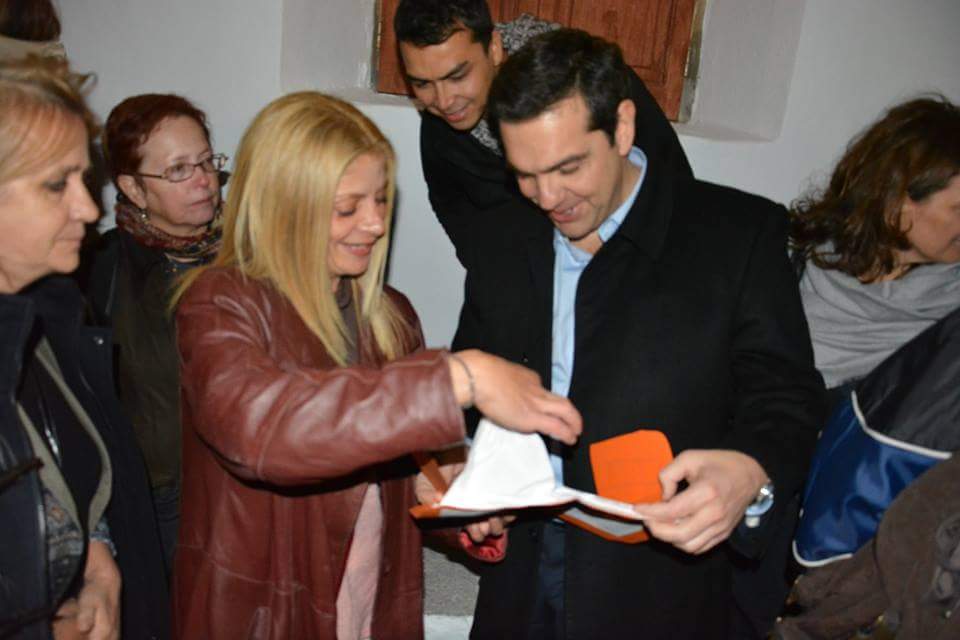
The Greek Prime Minister Mr. Alexis Tsipras visited the Tilos Family Hospitality Center on December 13, 2016.

He was greeted by Tilos Mayor Ms Maria Kamma, the SolidarityNow staff, the program’s beneficiaries and many residents. The Mayor informed the Prime Minister about the program which is supported by UNHCR and SolidarityNow, on positive attitude of the islanders towards the refugees and about all the efforts made since the beginning of the refugees’ flows.

The Prime Minister visited the classroom, the playground, the restaurant while he was invited by a beneficiary to visit her home. Mr Tsipras was informed about the Greek, English and Arabic language lessons that are offered to our beneficiaries, as well as on the fact that the refugees cook for themselves based on their own eating habits.

The PM was moved when he heard some refugee children speaking Greek and he said that he was impressed by the way Tilos is organized concerning the refugee issue and by the peaceful coexistence of the refugees with the locals. He said he has not seen a similar Hospitality Center that is already been established a landmark.

Handmade gifts were offered by refugees to the Prime Minister – one of them was a painted cardboard box that symbolizes openness to life.

The visit was very emotional: little Wissam was in the arms of the Prime Minister all the time, while Thomas – who was born on a Super Puma- was cradled by the Minister of Defence.

Mr. Tsipras said that while Europe raises fences, Tilos is a safe haven.

SolidarityNow’s program in collaboration with the UNHCR is already a success where the beneficiaries acquire the necessary skills to pursue their lives, while they coexist peacefully with the local population – thus providing  a good example to follow and Greece and in Europe in general.

“We support the non-extradition of the eight in Turkey. We cannot sacrifice our principles. It is dangerous” Conclusions of the Press Conference for the extradition of the eight Turkish Officials


PRESS RELEASE

“We cannot allow the eight to be extradited to Turkey. We can’t sacrifice our values because it’s dangerous”

Conclusions of the Press Conference with Regards to the Possible Extradition
of 8 Turkish Officials

Athens, 15th of December 2016
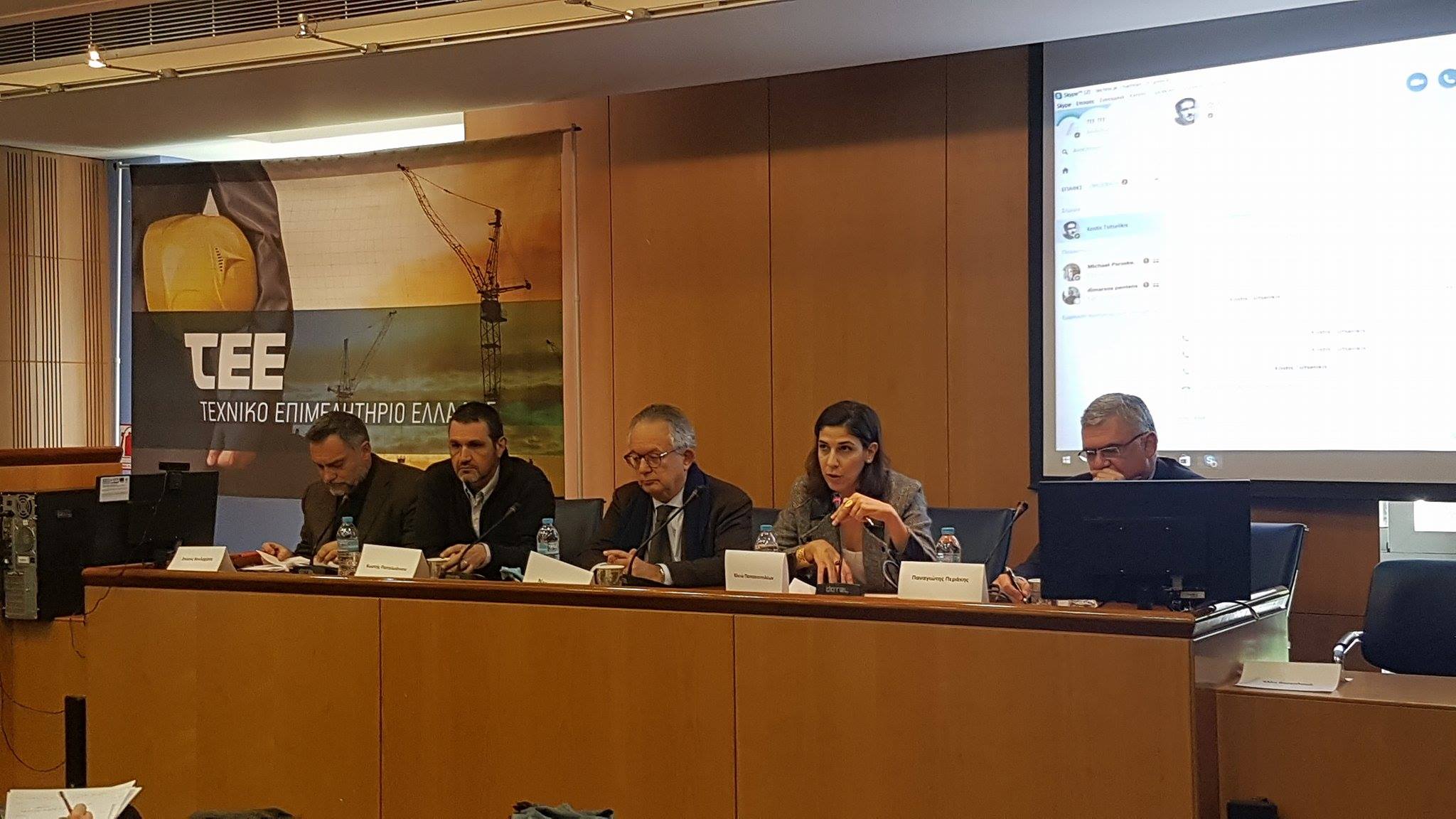
Highlighting the importance and necessity of the Turkish officers’ non-extradition, given the breakdown of the rule of law in Turkey and reasonable grounds that they will face persecution and inhuman treatment if they are extradited, a press conference was held today, the 15th of December 2016, in the Technical Chamber of Greece (TCG) on the subject: “The Rule of Law with Regards to the Possible Extradition of 8 Turkish Officials”. The Press Conference was jointly organized by the Hellenic League for Human Rights and SolidarityNow, with parallel interventions by prominent organizations of civil society, various institutions, and members of the academia.
At the beginning of the Press Conference, Clio Papapantoleon, lawyer and coordinator of today’s discussion, stressed that “I want to make clear that we’re not interested whether the requested persons are guilty or innocent, whether they participated or not in the coup attempt, if they are political friends or enemies of Gülen’s, etc. We’re not interested, this isn’t what this press conference is about. And that’s because in matters of human rights, you don’t ask what is the organization the persecuted parties belong to, so as to defend their rights only if you approve of it”.
Nikos Alivizatos, Professor Emeritus of Constitutional Law in the School of Law in the University of Athens, referred to the recent report by the European Commission for the Democracy through Law (an advisory body to the European Council), where it is noted that “the Turkish government interpreted too widely the extraordinary powers that it awarded itself, and put in effect measures that are far in extent of what is provided for in the Turkish Constitution. One of the main goals of a state of emergency, wherever it’s imposed, is the reinstatement of the democratic rule of law and it’s impermissible to extend it indefinitely for no reason. If a government exercises its power for a long time based on a state of emergency, it will unavoidably lose its democratic legitimacy, whereas it should be noted that there are rights that must never be repealed, such as the prohibition of torture”. Mr. Alivizatos stressed the need for the use of legal procedures in the European Court of Human Rights, including interim measures to prevent extradition.
Konstantinos Tsitselikis, President of the Hellenic League for Human Rights, reported that it is a matter crucial to the Greek legal order. The suspension of the European Convention for Human Rights by the Turkish government, according to Mr. Tsitselikis, dismantles the institutional framework that guarantees the protection of human rights in Turkey. “The situation as it stands today shows that a fair trial is impossible if the presumption of innocence is merely a pretext, the courts operate with prearranged compositions, and lawyers face persecution, or when there is absolutely no guarantee of humane treatment. On the contrary, there are testimonies of maltreatment and torture,” he stressed.
Kostis Papaioannou, former Secretary General of Transparency and Human Rights of the Ministry of Justice, pointed out that no one is contesting the sovereign right of the Turkish government to safeguard the rule of law. The extension of the state of emergency has caused multiple breaches to the respect of human rights. He said: «We aren’t interested in the degree of involvement of the requested persons in the coup attempt, we’re only interested in their fate at the hands of the Turkish authorities. Greek judges are called to reach a decision based on their conscience, and not on vague appeals to national interests. They are called to uphold the rule of law which can’t stand for courts staffed with judges of dubious independence, obstruction of access to a lawyer, the possibility of the death penalty, and the certainty of inhuman treatment in detainment”.
Panagiotis Perakis, a lawyer and Board Member of the Athens Bar Association and Head of the Committee for the Rights of Refugees and Migrants, connected the discussion with the agreement between EU and Turkey, mentioning that the Council of Bars and Law Societies of Europe (CCBE) has ruled that the agreement is not in accordance with the rule of law. Also, special mention has been made to the matter of the reinstatement of the death penalty in Turkey, while on the occasion of the world day for human rights, the CCBE issued a release that denounces the collapse of the rule of law in Turkey. He said: “The right of access to justice is put in doubt, and access and communication with a lawyer encounters numerous obstacles, and there are more than 300 lawyers and 3,000 judges under arrest.” It is evident, he stressed, “that we do not seek to forestall a personal judgment, we are merely calling on the Greek judges to reach their decision based on the evidence and the rule of law”.
Dimitris Christopoulos, President of the International Federation for Human Rights, sent a written announcement that was read to the audience present at the Press Conference, saying: “If there’s one thing that is still standing in this tottering Europe of our age then it’s a prestige that relates to –not the policies that it puts into effect– but a few foundational values that have made it what it is in modernity. These are the rule of law and human rights. […] The eight cannot be allowed to be extradited in Turkey. Not because we like them, but because we cannot afford to sacrifice the core of our values in the name of political expediency. Or else we’ll have no values. And that’s not only immoral, it’s also dangerous”.
Spyros Koulocheris stressed that if someone strips away the political importance of the matter, the case is legally unambiguous. Both national legislation and Supreme Court case law make clear that the requested Turkish officers cannot be extradited, «because their asylum applications are still pending, but also due to the fact that there are reasonable grounds to assume that they will face persecution due to their political activity”
Elli Varhalama, the representative of the General Confederation of Greek Workers (GSEE), mentioned the great and long solidarity and cooperation with the Turkish labor unions, as well as the turbulent history of union rights violations in Turkey, which have been confirmed by the European Court for Human Rights. “The Greek labor unions also call for the refusal of extradition of the 8 Turkish officials, given that their lives and safety, as well as those of their families’, are already threatened,” Ms. Varhalama noted.
Statements were made by the “Citizen Committee against the Extradition of the 8 Officials”, and by the officers’ defense counsel Mr. Omiros Zelios. Present at the Press Conference was the President of the Special Permanent Committee on Institutions and Transparency of the Greek Parliament, Ms. Anastasia Christodoulopoulou.Interventions were made by:
– Nikos Alivizatos, Professor emeritus of Constitutional Law at the University of Athens
– Konstantinos Tsitselikis, President of the Hellenic League for Human Rights and professor of Human Rights Law at the University of Macedonia
– Kostis Papaioannou, former Secretary General of Transparency and Human Rights of the Ministry of Justice
– Panagiotis Perakis, Board Member of the Athens Bar Association and Head of the Committee for the Rights of Refugees and Migrants
– Representative of the General Confederation of Greek Workers (GSEE)
– Dimitris Christopoulos, President of the International Federation for Human Rights and associate professor at Panteion University
– Spyros Koulocheris, Scientific Coordinator of the Greek Council for Refugees