Deportations of refugees and migrants from Greece must be halted as fears of human rights violations grow


Deportations of refugees and migrants from Greece to Turkey must be halted immediately and people wanting to seek asylum should not be kept in detention, said Oxfam, Norwegian Refugee Council and SolidarityNow today in Greece.

Refugees could be returned to Turkey without having had a proper asylum hearing or without receiving the necessary information about their legal rights, the aid agencies warn. Forced returns to Turkey were restarted after a pause last week.

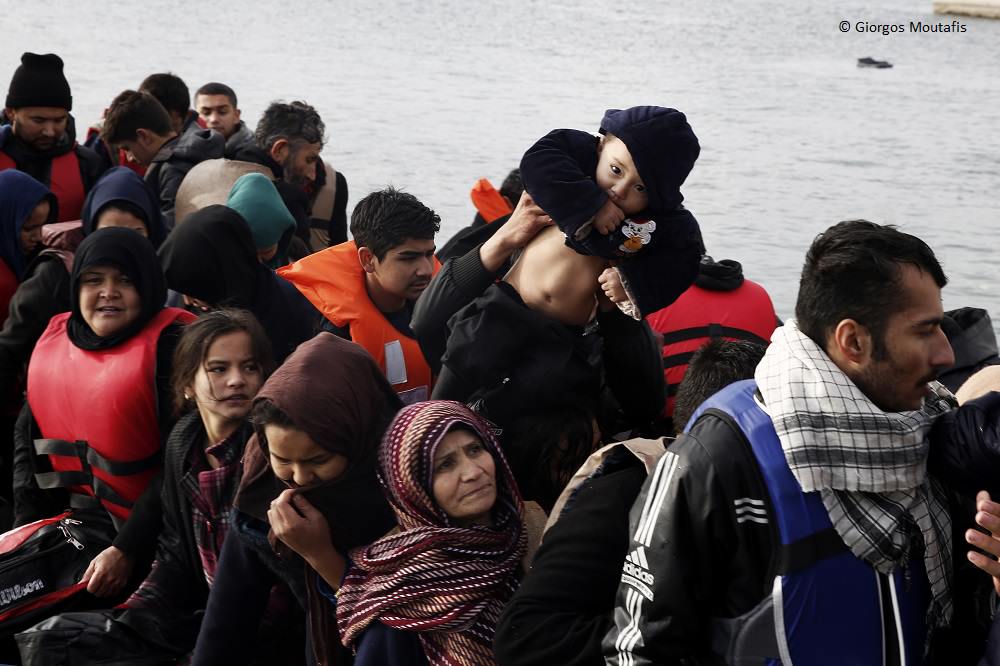
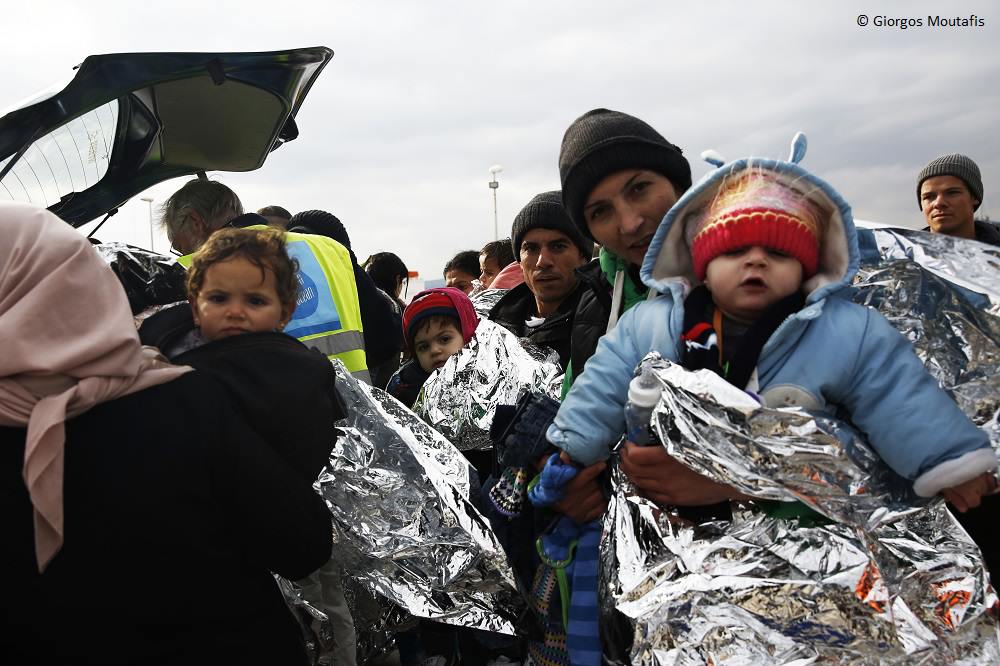
Over 6300 refugees and migrants have arrived on the Greek islands since the EU-Turkey deal came into effect on 20th March, and are being arbitrarily held in detention camps. The majority of these new arrivals have applied for asylum. While the European Commission said on April 4th that Greece had sent 1500 asylum case officers and police officers to the islands, there is no evidence of this additional capacity on the ground.

The Greek Asylum Service remains severely understaffed with only a handful of officials and caseworkers on the island to process cases who are struggling to cope with the demand of asylum requests. Unless the promised additional capacity arrives, the quality of the asylum process will be severely compromised.

Compounding the pressure are new ‘emergency measures’ adopted into law by the Greek Government on April 3rd, which includes an expedited ‘fast track’ asylum hearing to determine admissibility. Under these new procedures, Greek asylum officials must undertake complex asylum examinations, including decisions on whether or not Turkey is considered a safe country for return. These complex reviews that determine a person’s future take place in just one day.

Farah Karimi, Oxfam Executive Director said: “Thousands are being held in squalid detention centers on the Greek Islands – this is the state of Europe in 2016 – while the returns deal was pushed through to the detriment of these stranded suffering people by the EU which claims to be a bastion for human rights. Shame on the EU for prioritizing detention and deportation over people’s rights to safety and dignity.”

Even with the support of this promised extra staff, it will take weeks to process the asylum claims of the more than 6,300 people currently being held in overcrowded detention centers on the Greek islands.

Secretary General of the Norwegian Refugee Council Jan Egeland said, “It is shocking to see how Europe is mistreating men, women and children fleeing to our continent for protection from war and persecution. Asylum seekers are kept with migrants in overcrowded detention camps deprived of dignity and basic human rights. Disgraceful conditions are placing people at risk. European politicians hold the keys to this crisis, and should immediately open the camps.”

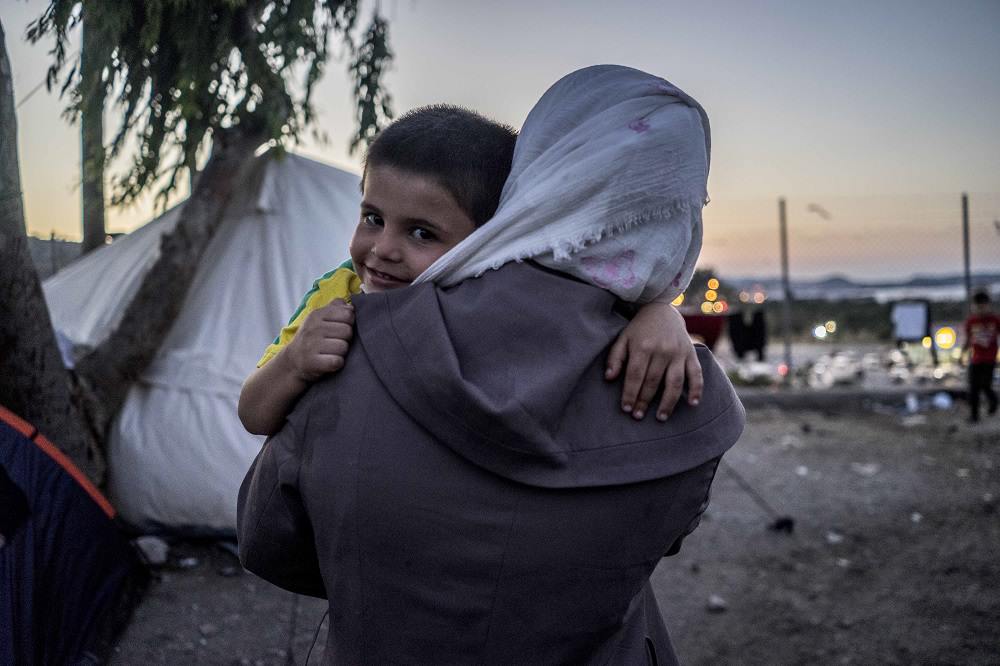
The aid agencies claim that living conditions in the detention centers are deteriorating rapidly with many people sleeping outdoors or in cramped shelters.
Epaminondas Farmakis, Managing Director of SolidarityNow, said: “Europe can no longer look away from this inhumane situation in which people continue to risk their lives. It must ensure that the people on the move will live in open and secure structures as long as they remain in the country. It is more important, however, to immediately stop deportations to Turkey and to guarantee that these people can exercise their basic right- that of asylum”.
There remains no routine identification of vulnerable people and aid agencies report ongoing detention of children, pregnant women, people with disabilities and those with medical needs. In Lesbos and Chios Pakistanis who perceive their treatment to be discriminatory have threatened to commit suicide.

There is, additionally, growing insecurity as a result of rising frustration and tensions. There have already been incidents of violence at night and women in particular are extremely vulnerable under such circumstances.

Aid agencies are calling on Europe to:
– Immediately halt all returns from Greece to Turkey
– Immediately open all camps where people have expressed intention to seek asylum.
– Immediately improve security to ensure a protective environment for all people inside the closed facility
– Maintain the integrity of the asylum claims process and ensure people have access to legal aid as a matter of urgency
– Increase the number of staff working with the Greek Asylum Service on the islands to process these claims and ensure people are able to access their right to claim asylum before any deportation order is issued.
– Put an end to arbitrary arrests and detentions. The increasing use of detention as a restriction of the freedom of movement of asylum-seekers on the grounds of their irregular entry is a major concern.
The e-Report with our actions!


In an Action Report we named “e-Report”, we have concentrated the positions of SolidarityNow from 2013 until today.We assess the policy that we follow for our donations to organizations of civil society, which produce important work with social impact and public organizations.

We unfold our philosophy that determines our positions and guides our actions. And simultaneously, we outline the programs that we have developed throughout the social spectrum which ranges from human rights and social justice, to the protection of vulnerable social groups and advocacy on an international and national level.

We present the very positive results that we have achieved through our Solidarity Centers in Athens and Thessaloniki. And the “bet” we won when in 2014, we created specific structures based on the idea of an open space, a nucleus that supports the participation of different groups of civil society in order to cover the lack of access of the city’s most vulnerable populations to integrated services.

We talk about the development of partnerships with civil society organizations and institutions as a fundamental axis of the strategy that we are developing. Our goal is to maximize the result of the joint efforts to relieve the most vulnerable groups affected by the economic and social decline and the refugee crisis.

At SolidarityNow, from 2013 until today, we have financially supported 40 civil society organizations, public institutions and other initiatives with donations exceeding 14 million euros to implement 68 projects .

And we go on.

You can read the e-Report in detail, here.

Greece, the land of Fear or Hope and the Agreement with Turkey

Giorgos Moutafis for SolidarityNow

For over a year now, more than one million people have put their life at risk because they simply have no choice. The policy of delay and exclusion contributes to the deterioration of the situation, causing urgent humanitarian needs and leading to profit-making practices and exploitation of these people.

In 2015, 67 million refugees and migrants who move to flee wars or famine, were recorded worldwide. Article 14 of the Universal Declaration of Human Rights grants everyone the right to leave their country and seek protection in another one.
According to data from the UNHCR, in Greece more than 90% of people who have passed through our country or are currently here (52,000) are refugees that come from war-struck countries where life is threatened, while 59% are women and children – many of whom, (the number is constantly increasing), are unaccompanied or die tragically. Altogether, more than 4,000 people have lost their lives trying to exercise their legitimate right to reach the EU in 2015-16!

As a state based on justice and integrity, we must ensure their human rights based on strict adherence to international law and the Geneva Convention. In this context, closed reception and recording/detention centers cannot work, as there have not yet been any institutionalized procedures for their operation, ensuring the protection of human rights (enhancement of the asylum service, second degree for the examination of appeals, sufficient time to process requests –it is obvious that two weeks’ time is not enough – free legal support and interpretation, medical care, psychological support, housing and food, all of which aim to ensure on human dignity).

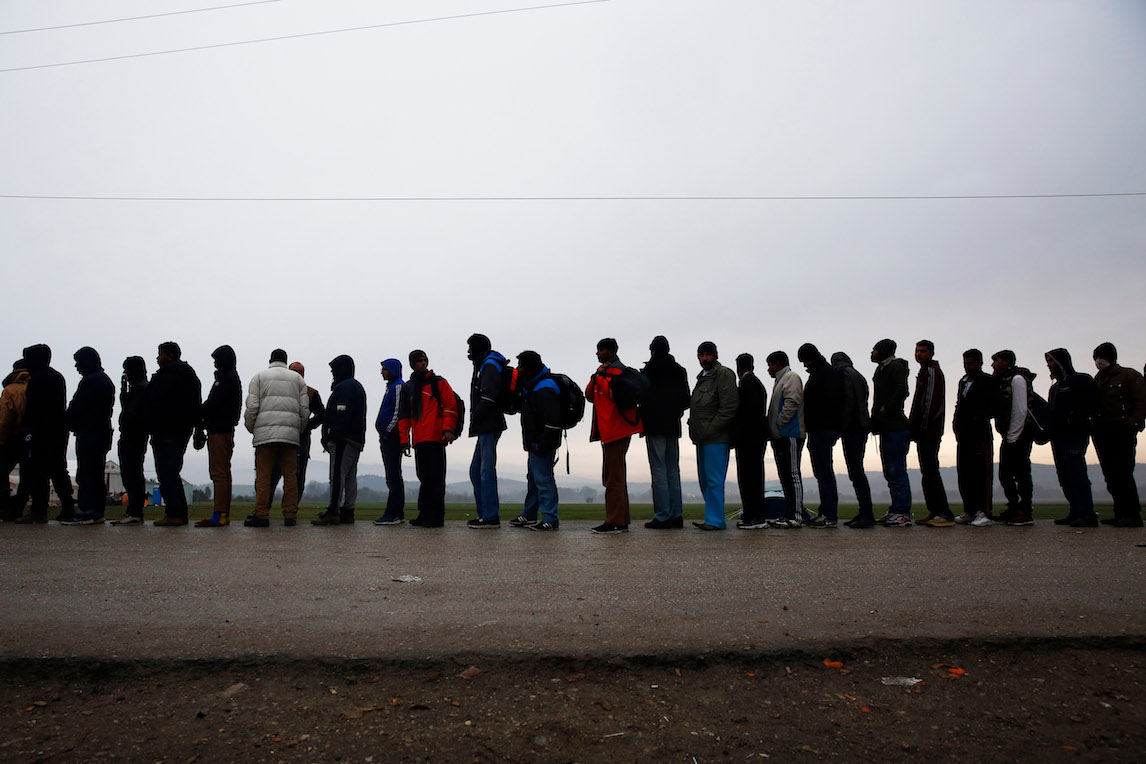
In the mainland, where people who arrived before March 20 still remain, the situation is dramatic. Refugees and migrants have been dispersed in over 30 areas. The conditions at the port of Piraeus and around Idomeni are horrible and are inappropriate for a country that wants to be called European. Under these conditions, the risk of causing panic, injuries and deaths in these areas is great, while violence and resistance is expected today as migrants are being returned to Turkey.
The Greek state constantly violates Article 25§1b of the constitution, which requires public institutions to ensure the full exercise of the individual rights of all people who are in the Greek territory, either inside structures or in open areas. In this sense, it especially violates Article 2§1 (respect and protection of human dignity) and puts into jeopardy the rights enshrined in Article 5§2 (absolute protection of life, honor and freedom). Any death or serious injury causally derived from these offenses will lead to serious criminal responsibilities/ repercussions. The criminal offense of exposure (306§1 of the Penal Code) is already taking place with potential fraud.

The EU and Greece probably do not realize that these practices simply alter the routes of traffickers and increase their profits – we have already witnessed arrivals on islands where there are no hotspots, while more and more people are using the route to Italy and soon, the passage at Kipoi towards Bulgaria and Albania will reopen.
The shortsighted policies that led to the destabilization of the Middle East, the formation of terrorist Daesh group (ISIS) and the explosion of the migration phenomenon, should be of concern and it should become rapidly understood that the current practices regarding the refugee/migration crisis are creating persecuted population in the “East and West”, that could trigger new, unforeseen situations.

With the implementation of the 20 March 2016 EU-Turkey deal, refugees and migrants in Greece are divided into two groups, who (for now) have different legal procedures. There are those who remain in the mainland -about 50,000- and those who arrived on the islands during the last two weeks -about 5,000 – and who are temporarily accommodated at the hotspots (which are being renamed “Reception and Identification Centers” but in reality, are simply temporary accommodation areas) in Lesvos, Chios, Leros, Samos.
The people for whom the neighboring country is a “safe country “, will be returned immediately. The rest can apply for asylum which should be irrevocably judged in a month. Those who are entitled to asylum can legally stay in Greece for three years and can also file a request for relocation to another Member State. They have no right to choose a specific country, but if they have family in another country, they can go there according to the family reunification law.

The solution of the problem lies in third countries such as Turkey, which has received 3 million refugees and migrants, Jordan 500,000 and Lebanon 1.5 million. Turkey must be helped, but is it a safe country? Certainly not, in the sense that populations may be returned to the countries of origin. In this way, the Geneva Convention has not been adopted fully, as geographical limitations are placed because although refugees are protected from the West (!), they are not from the Middle East and Asia.

So the refugees / migrants are not safe in Turkey, they do not have access to education and have quite limited access to employment. We do not know where the 3 billion euros of the deal will go and what organization will manage it and how it will improve the lives of the people in the accommodation centers. Generally, there has been a breakdown of freedoms in Turkey particularly against the freedom of the press and academia. Obviously, each country aims to prevent flows.

On the other hand, the fact that the revenues of the smuggling networks are estimated in the last few years to be $ 16 billion, while the cost of securing the borders amounts to 13 billion, is deterrent to limiting the phenomenon. In Greece, the government expects to spend € 4,000,000,000 without clarifying its allocation and relevant procedures. Where will we spend this money? In a country that we believe will accommodate 29 million tourists in 2016, we cannot accommodate a little over 50,000 people? Or are there other reasons behind this policy?

According to a recent survey by the Bertelsmann Foundation, 79 % of European citizens believe in a common European asylum system, while 85% of citizens believe in a fair distribution of refugees in 28 EU countries (currently only 8 countries have accepted this relocation). Greece should be an example of rational integration for everyone, and urge all countries to accept a fair share commensurate with their financial capacity and population size.

Until safe zones are created in Syria, Iraq, Afghanistan and Libya, this mass movement will not stop and the EU will have to absorb 1 million people on the move directly from third countries, who meet certain criteria, and not the 72,000 according to the agreement. The legalization of this movement in combination with a common European asylum will stop the trafficking networks and deaths and will give hope amidst the despair and fear. Besides, 1 million a year is less than 0.5% of the EU population.
Legal and safe channels to Europe and other countries must be created, like the effective resettlement model that Canada implements. In the last century, Greece accepted some 800,000 Greeks of Asia Minor, 500,000 Pontic Greeks and 1million originating from Albania.

Today, despite the sympathy that ordinary citizens, groups of citizens and civil society and government organizations, such as the Coast Guard, have shown, the inability and lack of organization along with the timidity of the government, has excluded us from having a wide, coordinating humanitarian role in the EU. This has resulted, once again, apart from the lost opportunity to promote the country as a major player and partner, in the loss of confidence and now we are visibly at the risk of exiting the Schengen Agreement, with all the financial consequences this entails.

In a month the agreement will practically collapse and the EU will be searching in panic for a new unreal salvation plan to delay again the new large flows, while fearing internal resistance and national elections, as Nazi and xenophobic movements gain new momentum feeding off the lack of organization, fear and the absence of a common political vision. A new “maypole of people” that are nothing more than numbers, will be created. The EU is facing a political crisis.

The number of non-Syrians recorded in Greece will increase and all of them will file applications for asylum and appeals, as applications are rejected in Turkey since only Syrians have specific asylum provisions – though lately mass deportations are taking place and Syrians are sent back to their country. It is, of course, expected that the applications of Syrians satisfy most of the standards in Greece, as they constitute the main group which conceptually is closer to the word “refugee”. The European Court of Human Rights will prohibit the return of Kurds or Iranians, for example. Traffickers will initially be under pressure but will find, eventually, new passages. So if justice prevails, few will be judged as meeting the requirements to be returned to Turkey.

Our country is now in its 6th year of an economic and socio-political crisis that has moved us back in time, with skyrocketed rates of unemployment especially among young people. Young people leave in search of opportunities overseas where, because they are white and Christian, their right (to relocate) is respected. Perhaps this the last chance for us to leave our children and the EU with the belief that with solidarity and integration in our society, there is still hope for a better life, free of racism and xenophobia, which ultimately contributes to the prospect of social and economic development. Hopefully.

Epaminondas Farmakis has been a member of civil society for the past 19 years and since 2015, has been Managing Director of the Association SolidarityNow

Creation of 700 temporary refugee accommodation places in homes and households in Athens and Thessaloniki – Hosting program for asylum seekers in Greece by SolidarityNow

Anna Pantelia

Creation of 700 temporary refugee accommodation places in homes and households in Athens and Thessaloniki

Hosting program for asylum seekers in Greece by SolidarityNowWith the support of the UNHCR

Athens, 4 April 2016.

Fully supporting solidarity, SolidarityNow develops a Housing and Hosting Program for vulnerable groups that lack the fundamental human right to housing.

The aim of the initiative
“The aim of the initiative is to contribute to the solution of the problem of housing and living conditions of our fellow citizens seeking asylum to relocate in other EU countries. Through the program, funded exclusively by the UNHCR in Greece, vulnerable groups that in recent years have been living and traveling under inhumane conditions, will be hosted in homes in Greece”, says Epaminondas Farmakis, Managing Director of SolidarityNow. He continues: “At SolidarityNow, we believe that providing decent conditions to migrant populations further reinforces solidarity, through which it is possible to overcome any kind of crisis: humanitarian, spiritual, economic, political”.The program and its fundingThe program encourages the participation of ordinary citizens and migrants living in Greece, in a practical demonstration of solidarity towards vulnerable people, through the provision of decent housing in their own homes.
In order to support the relocation program of the asylum seekers and of persons who are eligible to relocate, SolidarityNow creates 600 temporary accommodation places in Attica, and 100 in Thessaloniki and the wider regions of the two cities.
In particular, citizens who wish to offer their house for hosting asylum seekers will receive financial support -approximately 300 euros over a three-member family for one month- in order to meet basic daily expenses resulting from the cohabitation. It is important to also note that the food needs of people who will be hosted, will not place a burden on the household as it will be covered on a monthly basis through food stamps (monthly coupons worth 250 euros per family of two people, or 150 euros per person), throughout the hosting period.
Implementation of the ProgramSolidarityNow addresses ordinary citizens. We ask you exhibit solidarity by offering housing to the people who need it most.“The recent developments raise many questions relating to the protection of people, so this is why we ask for the support of the citizens so that we can highlight our belief in the humanitarian ideal, which, so far, we have demonstrated as a country. For this reason we “bet” on the housing program, as a symbolic action, reflecting the practical demonstration of solidarity”, says Elli Xenou, Head of Programs of SolidarityNow.And she continues: “In this great act of solidarity, it is important for citizens to know that they are not alone. We are by their side. Both the guests and the hosts will have access to free medical, legal and other services that we provide at our Solidarity Centers in Athens and Thessaloniki. In the course of hospitality and cohabitation, they will be supported and guided by a trained team of social scientists”.“For the implementation of this innovative and necessary program, we would like to ask for your support!”, said Elli Xenou.“We urge you to encourage families or individuals wishing to host either an asylum applicant or a family, for a certain time period”. We seek preferably residential accommodation, and non-residential (eg summer houses).

The philosophy of the program and what it stands for
With the support of the High Commissioner of United Nations for Refugees and the European Commission, 20,000 reception places will be created in Greece.
During their stay in our country, it is important to offer these people the basic and obvious: shelter and food. It is a priority for us to offer them humane and decent living conditions. It is important for them to feel welcome again after a dangerous trip due to uprooting.
In one of the darkest periods of the refugee and migrant crisis, SolidarityNow turns to you citizens. We ask you to show once again your solidarity by offering housing to people who need it most.

We seek to help our fellow citizens to view these people as if they are a relative or a friend to whom they open their homes and welcome and host them. And share: space, friendship, food, culture.

For more information about the program, please reach 210 6772500/or filoxenia@solidaritynow.org and:
–        Dr. Eda Gemi, Project Manager, tel. 210 6772500
–        Ioanna Fourkiotou (for Thessaloniki), tel. 6949084488

For interviews:
Sophia Ioannou, Head of Communication and Fundraising, sophia@solidaritynow.org | tel . 210 6772500, 6937 251997

Follow us!
Facebook: SolidarityNow
Twitter: @Solidarity_Now
Instagram: Solidarity_Now
www.solidaritynow.org

SolidarityNow is a network of people and organizations established in Greece in 2013 by the initiative of the Open Society Foundations (and the support of the EEA Grants, the Norwegian Embassy in Greece and others), aiming to help the populations most affected by the crisis. SolidarityNow supports civil society organizations and public entities operating in Greece, to implement programs. SolidarityNow operates two centers in Athens and Thessaloniki, where vulnerable population groups can receive free medical, legal, etc. aid.

From early 2015 to date, SolidarityNow has allocated 10 million euros to projects solely on migration and the refugee crisis in Greece.

The Board of Directors of SolidarityNow is comprised of:
Stelios Zavvos, Christos Rozakis, Nikos Alivizatos, Efthymios Vidalis, Aristos Doxiadis, Jenny Cavounidis, Antigone Lyberaki,Panos Marinopoulos, Manos Matsaganis, Calypso Nomikou, Anna Triandafyllidou

Our actions in figures!

Giorgos Moutafis for SolidarityNow

Facts and figures reflecting the actions of SolidarityNow from 2013 until today. In total, 68 programs throughout Greece – 43 programs related to the broader social spectrum and 25 programs exclusively on migration and addressing the refugee crisis. Our Solidarity Centers in Athens and Thessaloniki have welcomed from the beginning of their operation more than 40,000 people, having delivered almost 100,000 free services.

See the infographics here

The actions of our Solidarity Centers in figures!


Facts and figures reflecting the actions of SolidarityNow through the Solidarity Centers. Our Solidarity Centers in Athens and Thessaloniki have welcomed from the beginning of their operation more than 40,000 people, having delivered almost 100,000 free services. Specifically, the Athens Solidarity Center has provided 70,800 services to 30,255 beneficiaries, while our Center in Thessaloniki has offered 18,700 services to 10,787 beneficiaries.

See the infographics here and here

“Migration: A Threat or an Economic Opportunity for Europe?”


Athens, March 23, 2016. The Harvard Business School-Club Greece (HBS) and the “SolidarityNow” successfully held a very timely presentation entitled “Migration: a Threat or an Economic Opportunity for Europe?” on Tuesday, March 22, 2016, at the Megaro Mousikis Concert Hall. The event began with a minute of silence in honor of the innocent victims of the terrorist attacks in Brussels. The presentation stressed that migration and the people on the move can serve as an important lever of economic growth in modern Europe. At the same time, the speakers presented their suggestions that could help address the complex phenomenon of migration.

The Harvard Business School-Club Greece presentation of this year was organized with “SolidarityNow” at a critical time for both the country and Europe. Due to the specific theme of migration, three perspectives were examined:
–   The political perspective
–   The financial perspective
–   The European perspective

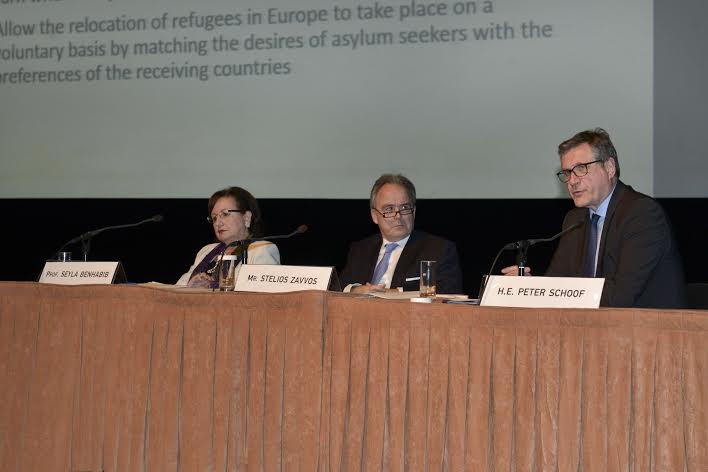
The keynote speaker of the evening –discussing from a political perspective- was the internationally renowned contemporary philosopher, Political Science and Philosophy Professor at Yale University, Seyla Benhabib. The Ambassador of the German Embassy in Greece, Dr.Peter Schoof was also a speaker, speaking through the European perspective on migration. Lastly, the presentation of the internationally renowned Emeritus Professor at Columbia University, Bimal Ghosh, was delivered by Mrs. Jennifer Cavounidis, member of the Board of Directors of SolidarityNow -as health reasons kept him away from the event. He shared with the Greek audience that filled the Concert Hall, extremely timely opinions and thoughts about the economic outlook of the migration crisis, as it is unfolding.

The event’s moderator was the President of the HBS and Chairman of the Board of “SolidaityNow”, Mr. Stelios Zavvos.

“In 2014 the number of refugees worldwide reached 59.5 million – while in 2013 it was only 8.3 million. In 2015 these figures soared: refugees exceeded 65-67 million. Each year, there is an increase of refugees by 10 million”, said Seyla Benhabib, professor of Political Science and Philosophy at Yale University, as keynote speaker of the event. Also, she noted: “Globally, the number of migrant populations increased from 154 million in 1990 to 232 million in 2013. We witness that it doubled in 10 years’ time”. Ms. Benhabib, originating from Turkey, released data on migration in our neighbor country noting that in a period of 10 years (from 2001 to 2011), the number of arrivals and migrant departures tripled – from 23 million in 2001, to 63 million in 2011.

Regarding the recent developments and the EU decisions for the people on the move, Ms. Benhabib stressed the importance of respecting the Universal Declaration of Human Rights, noting Articles 13 and 14 on “the right to freedom of movement and residence within the borders of each state” and “the right to seek and to enjoy in other countries asylum from persecution”.  Concluding, Ms. Benhabib cited Aristotle’s “Politics” to refer to who constitutes a citizen and resident in a country: “There is often great controversy regarding the “citizen”, and not everyone agrees that the same person is a citizen. Someone who is a citizen in a democracy is often not in a totalitarian regime”.

Due to recent developments and decisions of the meeting of European leaders on the migration crisis, the Ambassador of the German Embassy in Greece, Dr. Peter Schoof, spoke from the European perspective of the matter and the obligations under the EU. He specifically noted: “We are working on a very complex issue. We cannot just press a button and make the refugees disappear. And the EU is not a federal state; it is a complex system of different Member States with different political and legal systems”. As pointed out, what the EU needs to do in order to tackle the crisis is to work together on the roots of the problem. We must empower neighboring countries that are affected by the crisis and combat the trafficking industry. And Turkey’s role here is key. Referring to Greece, the German Ambassador wondered: “How is it possible for Greece, a country of 10 million, to manage over 800,000 refugees?” For that reason, as he said, it is important to respect the process of relocation so that other countries bear a part of the burden as “the Geneva Convention dictates solidarity”.

Bimal Ghosh, as a professor at Columbia University, argued that migration should be seen as an opportunity for development and economic prosperity in Europe, noting: “Governments, especially in Europe, feel swamped by gathering waves of disruptive and unpredictable migration. As their fears grow that immigration is getting out of control, some governments become even more restrictive, creating a vicious cycle and inter-state tensions build up”. Referring to people entering the EU, Professor Bimal Ghosh stressed: “It is important to remember that although the arrival already of more than one million additional people within the time span of one year seems an overwhelming event, they would represent roughly one-fifth of one percent of EU’s population. The new arrivals would represent 0.4 percent of the labor force of the European Economic Area and Switzerland”.

Regarding what should be done in order to achieve a greater and more effective control of the flows, he stated: “Since the root causes aren’t addressed and emigration pressure remains unabated, flows are diverted to irregular channels.
A regime of regulated openness can be achieved through proactive collaboration of origin, destination and transit countries”.

While concluding and ending the presentation, the President of HBS and President of “SolidarityNow” noted:“Recent migration flows pose an existential threat to Europe and suppress the social fabric of Greece. It is necessary to develop and implement a common European asylum policy to avoid nationalistic, extreme solutions”.

Brief bios of speakers

Seyla Benhabib: Seyla Benhabib, born in Istanbul, Turkey, is the Eugene Meyer Professor of Political Science and Philosophy at Yale University and was Director of its Program in Ethics, Politics and Economics from 2002 to 2008. She was the President of the Eastern Division of the American Philosophical Association in 2006-07 and has been a member of the American Academy of Arts and Sciences since 1995.  She has previously taught at the New School for Social Research and Harvard Universities, where she was Professor of Government from 1993-2000 and Chair of Harvard’s Program on Social Studies from 1996-2000. Professor Benhabib holds Honorary Degrees from the Universities of Utrecht (2004), Valencia (2010) and Bogazici University in Istanbul (2012).

Bimal Ghosh: Bimal Ghosh has a long record of activities running concurrently between academia and international organizations. He is Emeritus Professor at Columbia’s Graduate School of Public Administration, and a Senior Fellow (global migration) at the Graduate Institute of International and Development Studies, Geneva as well as at the Institute of International Policy and Diplomacy, University of Tadeo Lozano, Bogotá.

Dr. Peter Schoof: Before joining the German Foreign Service in 1988, he had been a Programme Officer for the United Nations High Commissioner for Refugees (UNHCR) in Geneva and Islamabad. In the Foreign Service he held positions in the German Embassy in Damascus and the Permanent Mission to the UN in Geneva as well as at the Foreign Office in Bonn and Berlin. Since 1998 he has worked extensively on EU affairs, holding positions – among others – as Spokesman at the German EU Representation in Brussels, as Coordinator for the EU Presidency in 2007 and as Deputy Director-General for European Affairs at the Foreign Office in Berlin. Mr. Schoof holds a PhD in Political Science from the University of Freiburg/Germany.


The Advisory Board of “SolidarityNow” is composed of:
Stelios Zavvos, Christos Rozakis,  Nicos C. Alivizatos, Efthimios O. Vidalis,
Aristos Doxiadis, Jennifer Cavounidis, Antigone Lyberaki, Panos Marinopoulos, Manos Matsaganis, Calypso-Maria Nomikos, Anna Triandafyllidou.

The press release for the event  “Migration: A Threat or an Economic Opportunity for Europe?”, can be found here in a pdf form.


Watch the video of the event here:

By your side! The first official presentation of the “Programme to Combat Discrimination based on Sexual Orientation and Gender Identity”


The official presentation of the “Programme to Combat Discrimination based on Sexual Orientation and Gender Identity: Prevention and Intervention” was held with success on Thursday, March 17, 2016, which is a continuation and development of the “we live like you” program, designed in 2011 and implemented in 2011-2013 by the General Youth Secretariat. The event was hosted at the Onassis Cultural Centre. Attendees included heads of institutions, academics, and representatives of organizations.

During the event the objectives and the two main projects of the program, were presented:

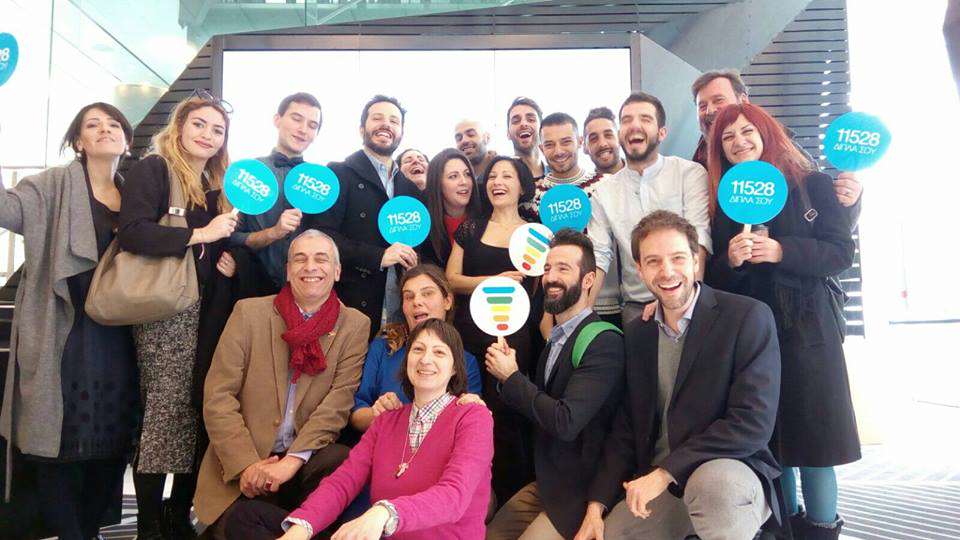
  • The Psychological Support Hotline 11528 – By your side for lesbian, gay, bisexual, trans, their families and teachers. It operates on weekdays, Monday to Friday, from 1:00 p.m. to 9:00 p.m. The calls are anonymous, confidential and those carried out by OTE have land line charge. The calls are answered by specialized and qualified psychologists.
  • The 1st Panhellenic wide campaign to combat discrimination based on sexual orientation and gender identity. Through the organization of workshops across the country and viewing communication material, the camaraderie between couples of the same sex is portrayed and serves as the vehicle for claiming equal rights and opportunities for all citizens of our country (regardless of sexual orientation or identity or expression sex). It also familiarizes the public with these themes.
  •  Responsible for the project are the following: Lesbian & Gay Community of Greece (OLKE) and the organizations “Thessaloniki Pride”, “Athens Pride” and “Positive Voice” . The program has the solidarity and support of the organizations: “Families – Rainbow”, “Queertrans”, “Homophobia and transphobia in Education”, “LGBT – disabled “, “ThessDIKTYO”, “Thessaloniki Rainbow Youth”, “Proud Seniors”, “AMKE Scale” and “Generation 2”. The 11528 – By your side line he has the moral support of the City of Athens and the Attica region.

The program is funded entirely with the support of “SolidarityNow”