Takeaways: The first Sirius Policy Dialogue Workshop on Labour Market Integration


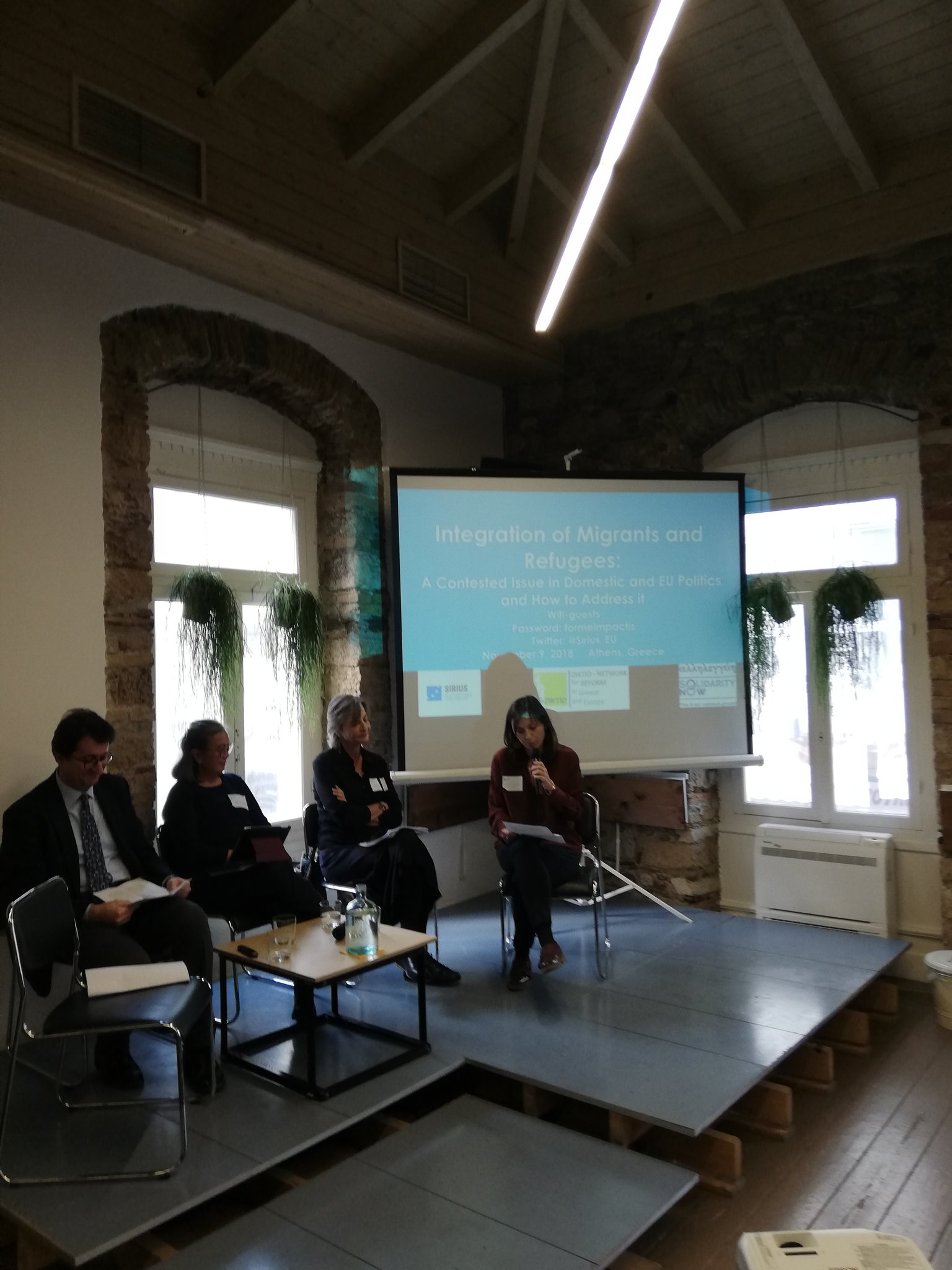
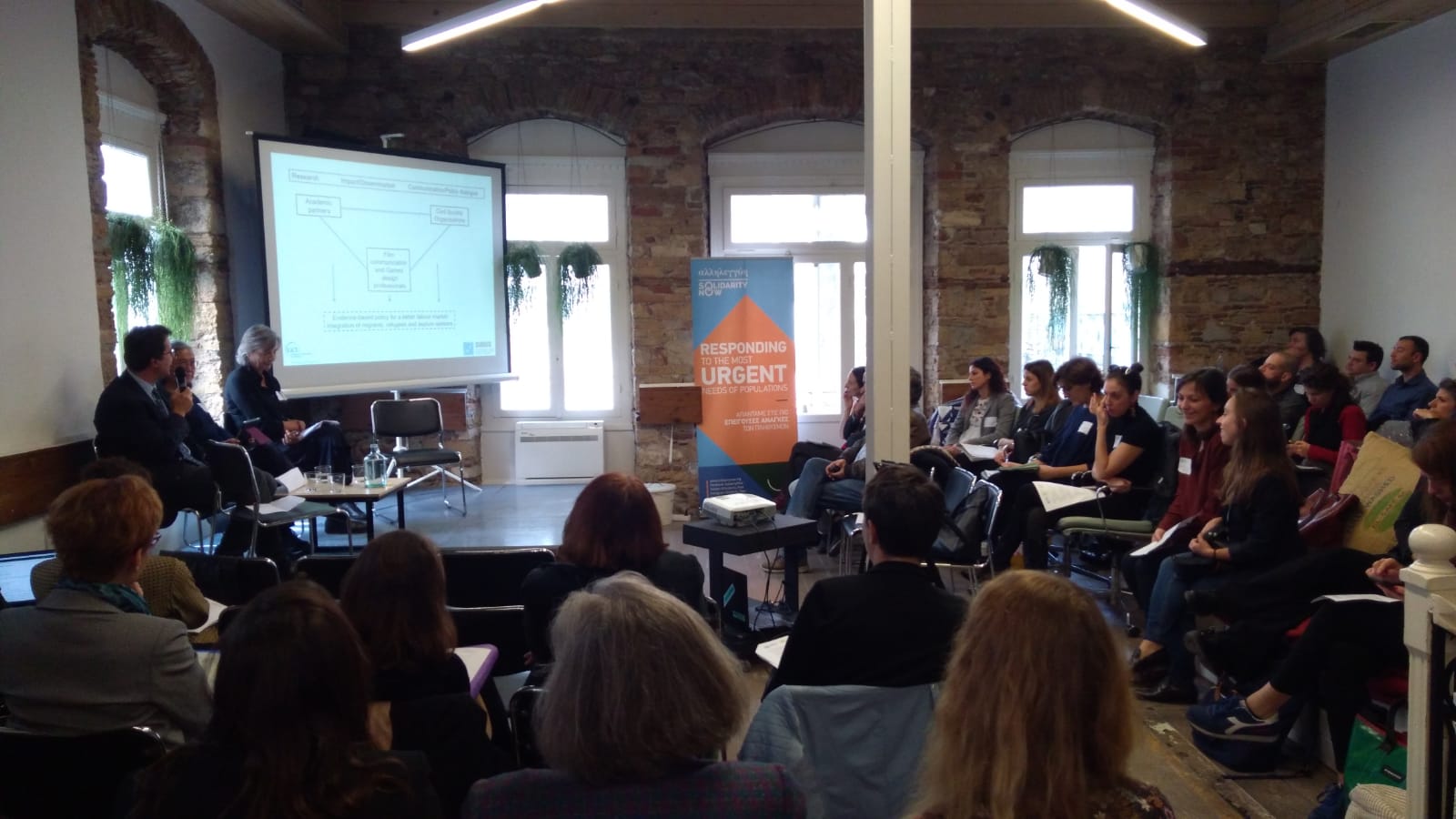
The first SIRIUS policy dialogue workshop Integration of Migrants and Refugees: a contested issue in domestic and EU politics and how to address it was held in Athens on Friday 9 November. The SIRIUS consortium, in collaboration with its partners SolidarityNow and DIKTIO, convened different stakeholders to explore how Europe can approach migration and asylum through integration and not externalization.

Antigone Lyberaki of SolidarityNow and Simone Baglioni of SIRIUS made welcoming speeches, which were followed by a keynote remark from Deborah Carlos-Valencia of Melissa Network. After presenting how Melissa’s programs promote the specific needs of women refugees, she highlighted why migration and integration policies must adopt a gendered approach and address the specific challenges and vulnerabilities women and girls face to ultimately support their empowerment and agency.

The first session featured principal investigators of the SIRIUS Project who provided an overview of the results of the two Work Packages completed thus far (available here and here), which compare various barriers and enablers of labour integration across the SIRIUS Countries (Czech Republic, Denmark, Finland, Greece, Italy, Switzerland, and the United Kingdom). Dr. Konstantinos Konstantakis of NTUA presented macro-economic findings on the relationship between migrants’ skills and the needs of the national labour market and showed that given the uneven economic landscapes, opportunities for labour market integration vary substantially by country.  Dr. Veronica Federico of UNIFI provided a comparative overview of migration and labour integration law in the seven cases, and emphasized that the complexity of legal frameworks, combined with hierarchical classification of migrants contributes to the narrowing access to rights and protection.

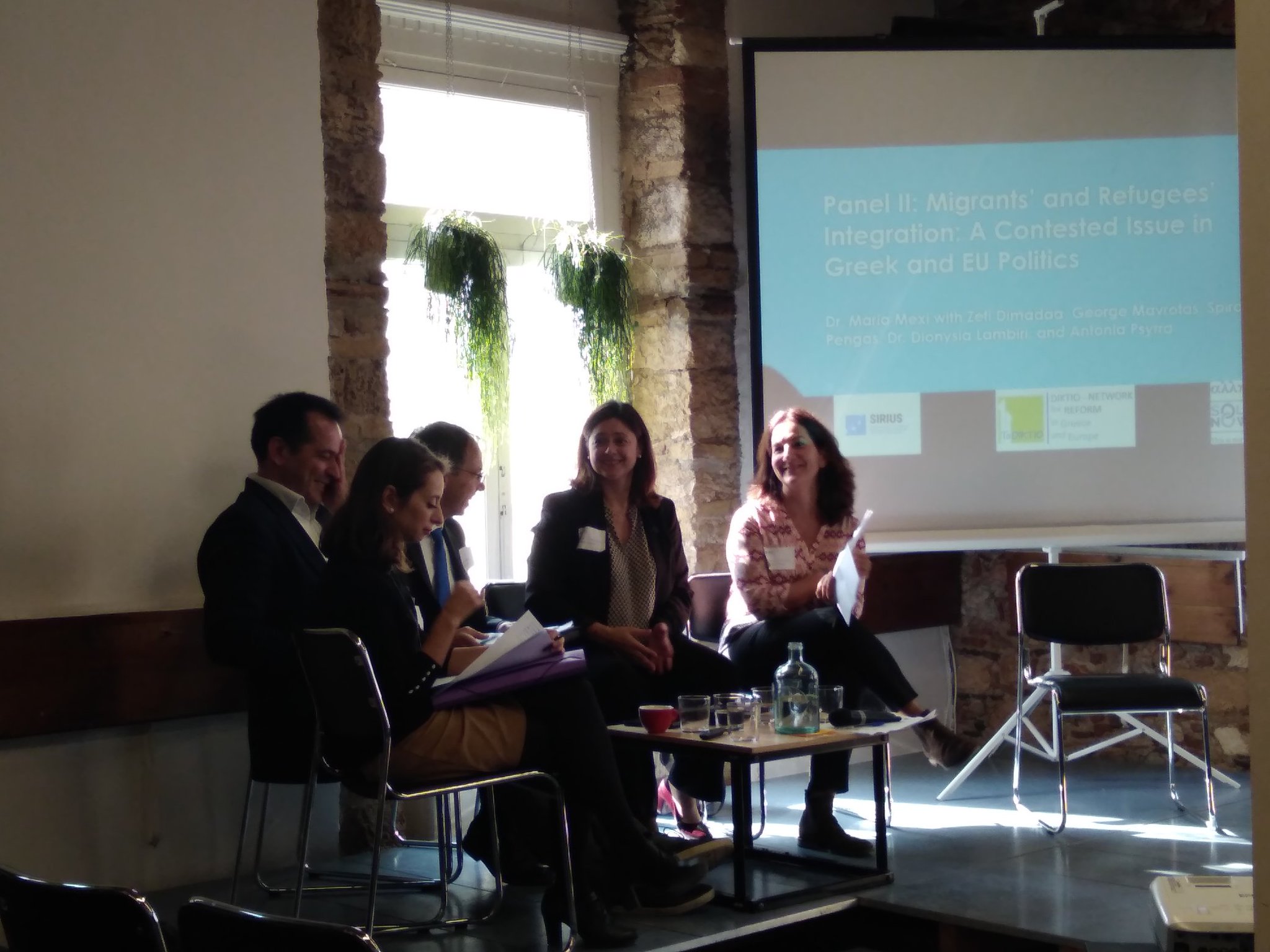
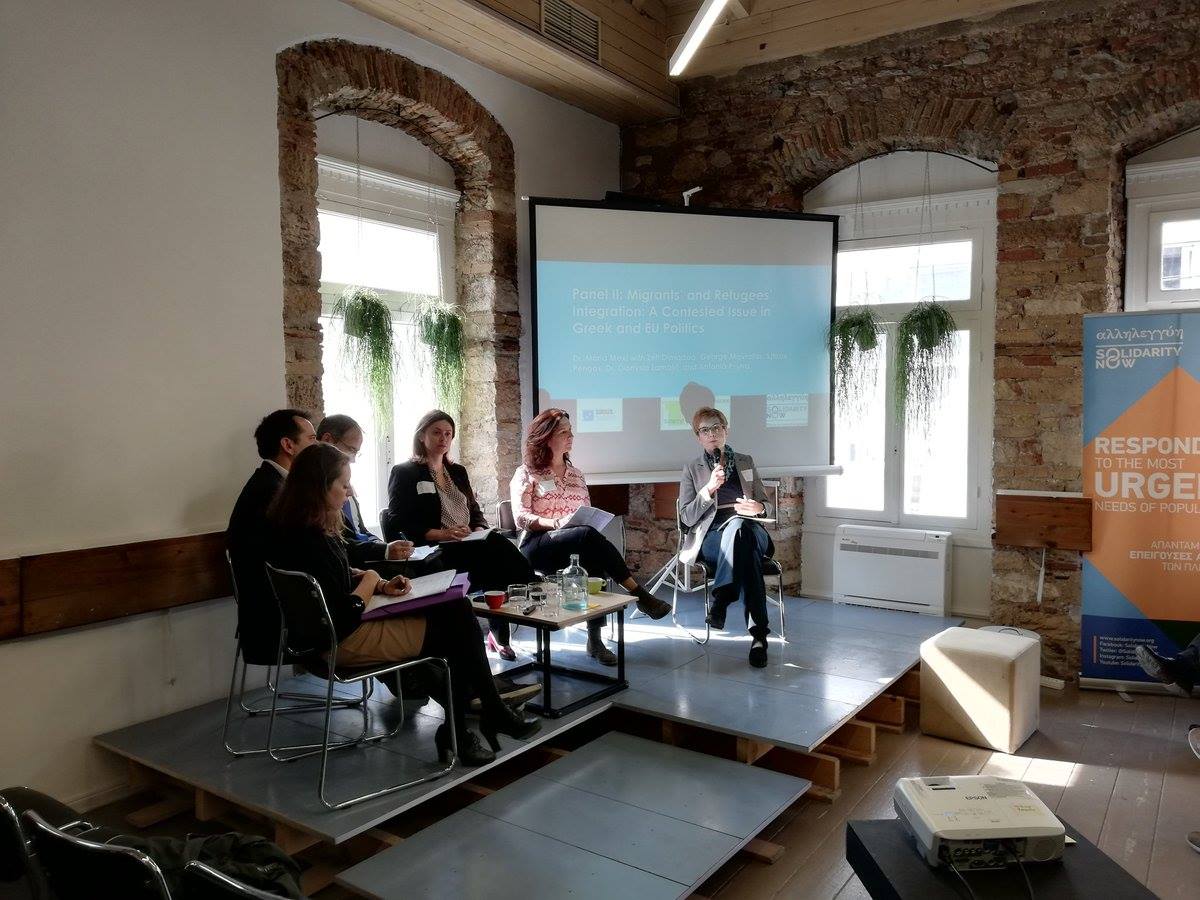
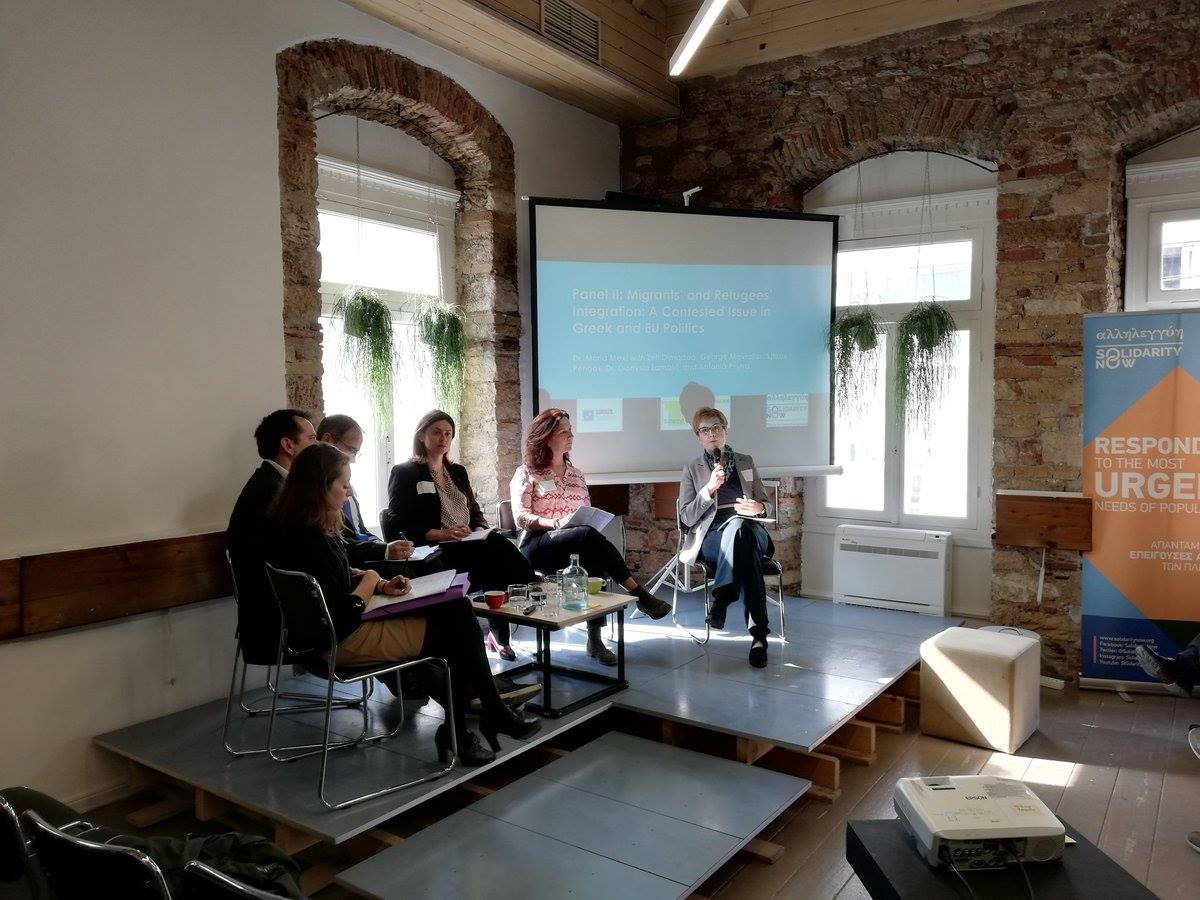
The second panel focused specifically on Greece. In her introduction, Dr. Maria Mexi of DIKTIO stressed the timeliness of the discussion given the EU and National elections, where migration remains the central agenda priority across the spectrum. Representatives of PES Women (The Party of European Socialists), the Municipalities of Athens and Thessaloniki, To Potami (a central and socialist-liberal political party in Greece) and DG Home of the European Commission discussed the challenges of integration faced at the national and local levels.  The speakers agreed that when it comes to migration, widespread socio-political polarisation sets limitations to policymaking. Employment was highlighted as conditio sine qua non for integration alongside education, skills and qualification recognition by MP Mavrotas of To Potami. However, the lack of political will in the Greek context threatens the possibility of focusing on integration and instead only promotes a short-term emergency response. The necessary role of the EU to support Greece and the other “first destination” countries was identified as fundamental and Ms. Dimadama of PES women emphasised the need for a better functioning common asylum system. Ms. Psyrra of DG Home stated the Commission’s willingness to promote inclusion through funding tools to better leverage local level capacities and policies. Ms. Lambiri and Mr. Pengas of Athens and Thessaloniki, respectively pressed the fundamental role of municipalities in addressing and implementing integration which has been consistently overlooked and consequently places these local actors in an institutional vacuum. Both shared examples of locally-initiated plans and programs for emergency situations and integration.

The day closed with a panel of best practices of inclusion of migrants, refugees and asylum seekers into the labour market with case studies in Germany, Northern Ireland and Spain. Presented respectively by Dr Monika Gonser, Dr Ulrike Vieten and Federica Rosato, they shared examples from profit-companies, non-profit organisations and the public sector.

With the array of perspectives and positions accounted for, all participants stressed the following key points. The first being the critical need for stronger and supportive education and employability programs. Doing so also requires robust methods for skill assessment and accurate job placement. At the European level, all experts called for additional efforts to better coordinate States’ labour needs and asylum systems. Finally, the main takeaways for the Greek context were that its role as a transit country requires integration policies to be designed accordingly, whilst ensuring that all services and infrastructure be accessible to all citizens.

You can find the workshop’s agenda here.
 

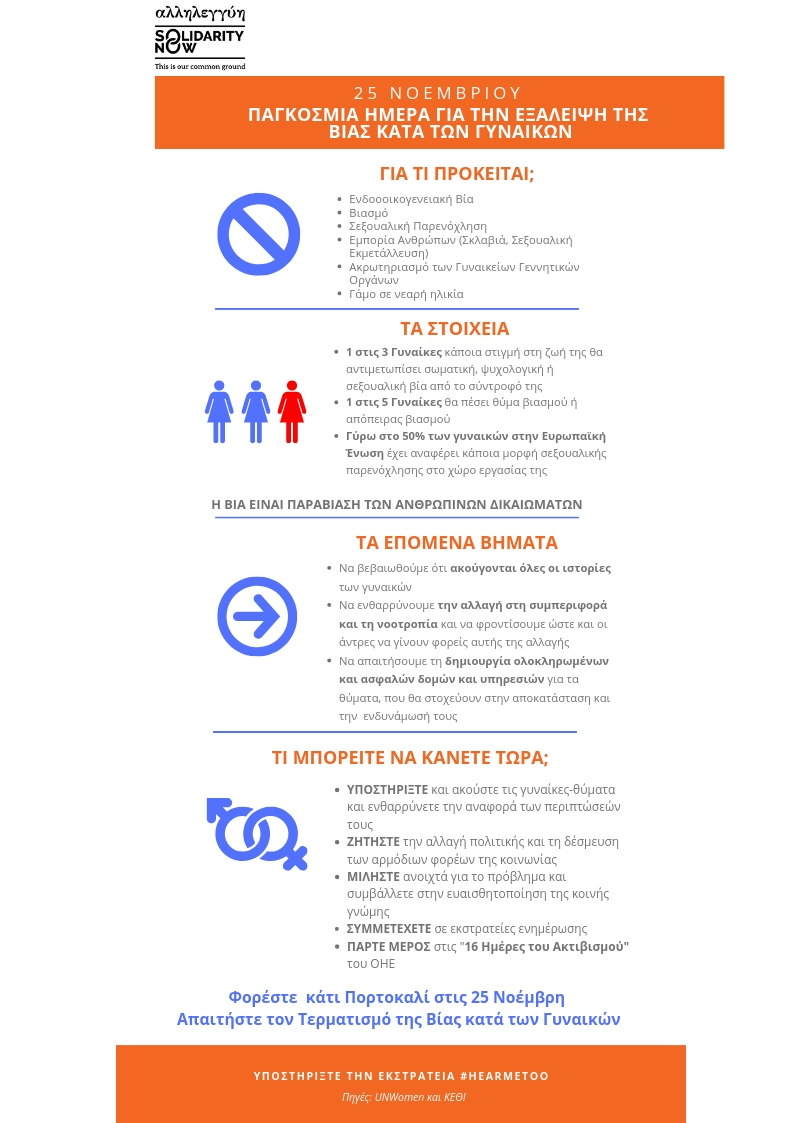
On November 25th we demand the elimination of violence against women and girls


November 25th is when we demand the elimination of violence against women and girls. Since its inception in 1991, the international campaign galvanizes concrete actions to ultimately bring the number of women and girls who experience any and all forms of violence down to zero. It was the United Nations Declaration on the Elimination of Violence against Women of 1993 that first amplified the issue as a violation of human rights and demanded international recognition of it as such.

It is time we put an end to violence against women so that an international day of action is no longer needed. Help spread the word and participate in the 16 Days of Activism for the UN’s UNiTE Campaign. This year’s theme is Orange the World: #HearMeToo and you can contribute to advocating for specific policy and legislative changes and amplifying the diverse voices of women.

If you or someone you know is victim of domestic violence, that are people and services available to hear you and support you. In Greece, the 24-hour SOS Helpline is 15900. Support is also available by email at sos15900@isotita.gr You can also find more information online.

Read the infographic below:

November 25th_ Violence Against Women


Joint Letter to European Commissioner for Migration, Home Affairs and Citizenship

Giorgos Moutafis for SolidarityNow

In view of the ongoing reforms of the Common European Asylum System (CEAS) and related national-level developments, SolidarityNow, along with 18 civil society organisations across Europe, calls on the European Commission to seize this historic opportunity to promote an orderly and efficient asylum system which strengthens the EU’s and Member States’ ability to meet obligations under international human rights law. You can read our concrete proposals laid out in the letter:

Joint letter regarding CEAS reform

International Day of the Girl: An Opportunity to address Female Genital Mutilation


by Melina Dunham, Advocacy Intern

October 11 marks the 6th annual International Day of the Girl. Today’s celebration aims to address both the challenges girls face and to promote their empowerment and uphold their human rights.

In this spirit, it is important to address the issues of women’s reproductive health and sexual violence which remain critical factors of gender inequality, particularly for the vulnerable populations SolidarityNow seeks to defend and support. One manifestation of profound discrimination, which is overlooked and stigmatized, is female genital mutilation (FGM). The World Health Organization defines FGM as “all procedures involving the partial or total removal of the external female genitalia or other injury to the female genital organs for non-medical reasons. Founded upon sociocultural and religious justifications, this practice has severe and traumatizing effects on the health, well-being, and safety of women in the short, medium, and long term”.

This summer, the European Institute for Gender Equality published a study on the risk of FGM in six Member States: Belgium, Greece, France, Italy, Cyprus, and Malta. The findings revealed that in Greece, an estimated 25% to 42% of migrant girls originating from FGM-practicing countries remain vulnerable to this horrific form of gender-based violence. Despite being condemned and criminalized at both the European and national levels, cases of FGM persist in Greece, partially due to a common practice where girls are temporarily returned to their home country to have the procedures performed.

Raising awareness for this practice is urgent because not only does it impact the health and safety of young girls, but also has profound lifelong repercussions on the survivors’ future agency and empowerment, across all aspects of their lives.

To put an end to this dangerous and dehumanizing practice, actions must be taken at the behavioral, community, and policy levels. The Istanbul Convention – which, among others, criminalizes FGM as a form of gender-based violence and establishes the obligation to recognize it as a form of persecution justifying the right to asylum – needs to be unanimously ratified and implemented by all Council of Europe Member States and the European Union itself. In June 2018, Greece became the 32nd State to ratify the Istanbul Convention – which has been already reflected in Greek criminal laws and entered into force on October 1, 2018. Beyond adopting a gender-sensitive asylum system that can protect the rights of women migrants and asylum-seekers facing FGM, irrespective of where the offense is committed, Greece can adopt prevention strategies and systems for better legal and health support. This should easily build off the “National Action Plan for Reproductive and Sexual Health”, developed in 2008 which has since expired.

At its core, FGM is a criminalized cultural practice that has serious physical and psychological consequences. For this reason, tackling behavioral changes and cultural norms is a critical first step. Examples of this include training staff working across all relevant sectors (education, health, asylum, social services) in gender-sensitive manners, and engaging men and religious community leaders to both effectively challenge misbeliefs and raise awareness on the psychosomatic consequences and stigmatization caused by FGM. To do so, however, the biggest barrier in Greece is related to data collection and availability; gathering the relevant statistics on the female migrant population and asylum applicants and all those originating from FGM-practicing countries will provide the quantitative foundation and information needed to both fill the gaps and push for policy change. Finally, a strong national Integration Action Plan, which SolidarityNow continues to demand, would tackle the underlying factors of FGM across all levels and eventually dissuade the continuing of the practice.

Conditions at Moria are “shameful”.

Giorgos Moutafis for SolidarityNow

19 NGOs decry conditions at the site, now worse than ever, and call for sustainable solutions to both decongest the islands and improve conditions across first receptions centres in North Aegean Sea.

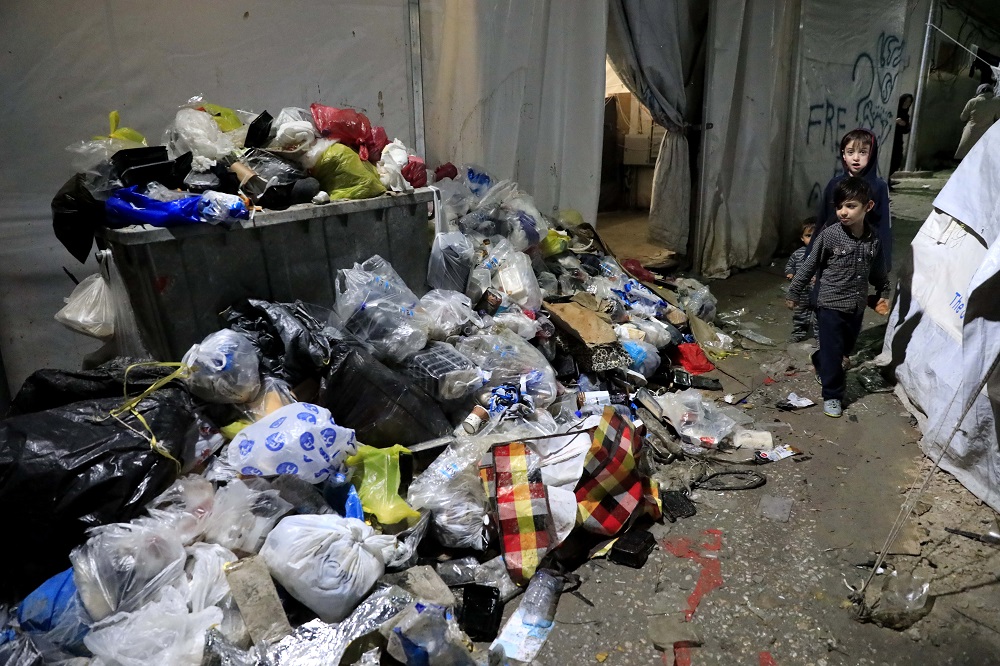
Athens, September 13, 2018 – Over 17,000 people remain crammed in Greek island reception centers with a total capacity for only 6,000, living in desperate conditions which do not meet humanitarian standards. This, despite public assurances from the Greek Minister of Migration Policy, Dimitris Vitsas, that the islands would be decongested by September and that thousands of new places would be created on the Greek mainland. As conditions continue to deteriorate, 19 civil society organisations once again urge authorities to engage in the creation of sustainable solutions for the decongestion of the islands and to immediately improve reception conditions for refugees. It is nothing short of shameful that people are expected to endure such horrific conditions on European soil.

Moria, the first reception centre on the Greek island of Lesvos, recently described in a BBC report as “the worst refugee camp in the world,” is currently hosting almost three times its capacity. The sewage system does not work, and filthy toilet water reaches the tents and mattresses where children sleep. This, despite funds for sewage system improvement having been approved for some time. Reports of sexual violence and abuse are on the rise. The first reception centre on Samos is six times over its capacity.

In addition, chronic shortages in crucial staff are further exacerbated by the constant resignations of health professionals working in the island sites, who are resigning as a result of untenable working conditions. The Keelpno coordinator on Samos was recently quoted in the Greek press as saying that, despite Greece’s ongoing financial struggles, “medical staff prefer taking the road of unemployment, rather than having to work under such conditions”.  Earlier this week, staff at Moria staged a strike to protest conditions at the site. Also this week, the Prefecture of the Northern Aegean described Moria as “unsuitable and dangerous for public health and the environment,” and warned that the site would be closed in 30 days if sanitary conditions are not improved dramatically. In this environment, civil society organisations working on the islands also find it increasingly difficult to do their work.

There is no excuse for the shameful conditions in which thousands of people remain trapped in limbo while they wait out their asylum claims. The Greek authorities must take immediate and urgent action to ensure that refugees benefit from full access to their basic rights and that they are accommodated in dignified conditions, in accordance with national and international law. The relief measures promised by the Greek authorities to create thousands of additional safe and dignified accommodation spaces on the mainland and transfer people off the islands to the mainland must be implemented immediately as a matter of urgency. At the same time, EU leaders should urgently renew efforts to unblock discussions on the implementation of a fair and permanent mechanism of responsibility allocation within the European Union.

Help is no crime: stand with volunteers against the criminalisation of solidarity


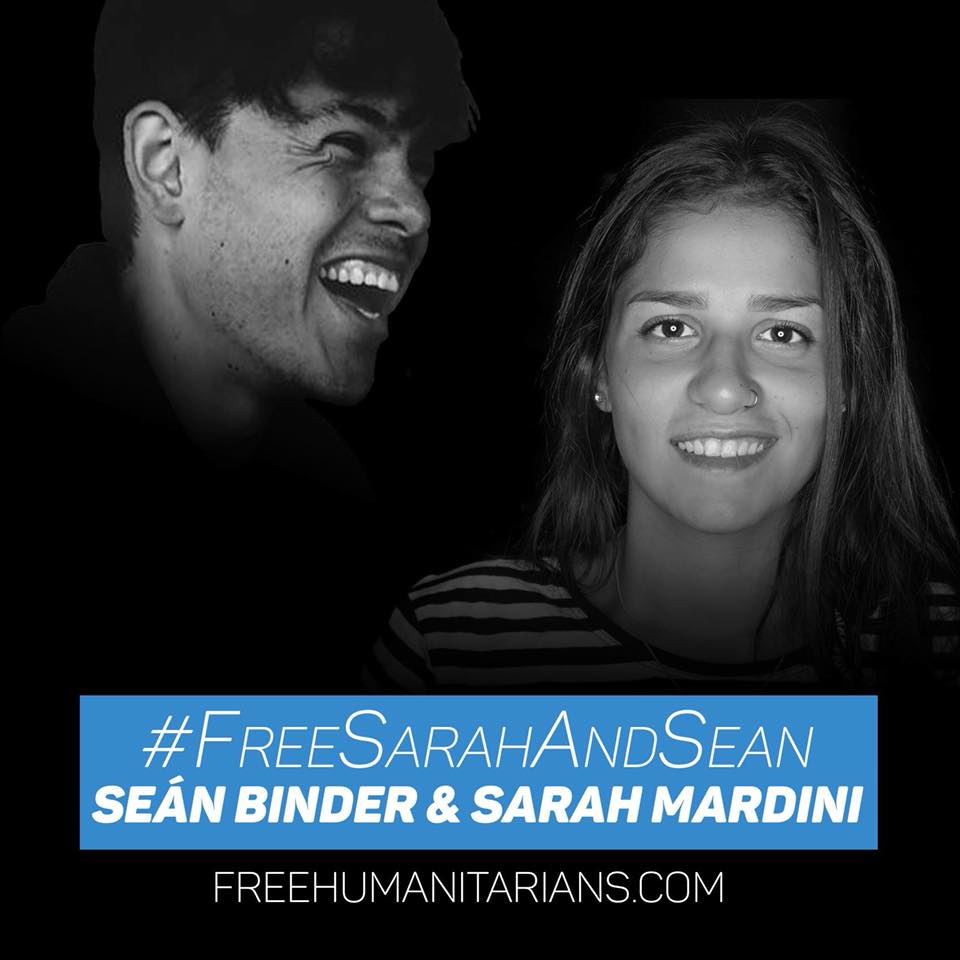
The arrest of Sarah Mardini and Seán Binder is the latest case of a worrying trend towards the criminalisation of solidarity in Europe. The two volunteers were arrested by the Greek authorities on 21 August for helping refugees and migrants arriving by sea on Lesbos island. With this joint letter, European civil society organisations call on the Greek authorities to release Sarah and Sean while their trial is pending.

Sarah Mardini and Seán Binder – who are accused of smuggling by Greek Authorities – are currently in pre-trial detention. Sarah became known when she and her sister  pulled a boat to safety and saved a dozen refugees in 2015. Like many individuals and organisations providing support and first aid to migrants and refugees across Europe, the two volunteers could face jail time.

European civil society actors have continuously opposed the intimidation and punishment of volunteers and non-governmental organisations. State practices that criminalise EU citizens for their solidarity with migrants and refugees are intolerable and risk our fundamental European values of justice and human rights.

Charges against Sarah and Seán occur in a broader context of a pan-European trend towards criminalising solidarity. As part of the #WelcomingEurope European Citizens’ Initiative, hundreds of civil society organisations and thousands of European citizens are fighting back against these restrictive policies that have created a hostile environment for people who help refugees and migrants.

Through this official EU tool, 1 million signatures from European citizens have the power to get the European Commission to comply with our joint-demand: end the criminalisation of solidarity acts across Europe.


Join the call to #FreeSarahAndSean
Tell EU leaders that helping people in need is no crime by signing the petition: www.weareawelcomingeurope.eu


Follow and share: #HelpIsNoCrime #FreeSarahAndSean

Signatories

1.    Migration Policy Group

2.    Picum

3.    VolontEurope

4.    JRS

5.    Emmaüs Europe

6.    AEDH

7.    Sick of waiting

8.    CCME

9.    Migrant Voice

10.  International Committee on the Rights of Sex Workers in Europe

11.  Refugees Welcome Denmark

12.  Maisha e.V. African Women in Germany

13.  Association for Integration and Migration

14.  Federación SOS Racismo

15.  Center for Legal Aid – Voice in Bulgaria

16.  FLEX

17.  La Strada International

18.  Consortium of Migrants Assisting Organizations

19.  Health Centre for Undocumented Migrants

20.  Medinetz Mainz e.V.

21.  Verenigde Protestantse Kerk in België – Eglise Protestante Unie de Belgique

22.  Jugendliche ohne Grenzen – Youth without borders

23.  Rosengrenska

24.  LEGIS Volunteers

25.  Medibüro Kiel e.V

26.  Secours Catholique

27.  Parents International

28.  Borderline-Europe

29.  Afrique Culture Maroc


30.  Stichting LOS

31.  SB OverSeas

32.  The Salvation Army Europe

33.  ForumFer

34.  Menedek

35.  J&P

36.  SOS Racism

37.  ASTI

38.  Greek Council for Refugees

39.  Mundo en Movimiento

40.  SolidarityNow

41.  HIAS

42.  Human rights league

43.  La Cimade

44.  Oxfam Belgium

45.  Passerell

46.  Liga voor de Rechten van de Mens – Dutch League for Human Rights

47.  CNCD

48.  Positive Action

49.  European Network of Migrant Women

50.  New Europeans

51.  Hellenic League for human rights

52.  LIDU- Lega italiana dei Diritti dell’Uomo

53.  Oxfam Germany

54.  Welcoming Europe: Per un’Europa che accoglie

55.  Réseau Education Sans Frontières

56.  Ligue des droits de l’Homme

57.  League for Human Rights – Civitas

58.  ENAR

59.  JRS Greece

60.  The Greek Forum of Refugees

NGO statement on the closure of PIKPA solidarity camp


We, the undersigned organizations active in human rights and humanitarian aid, urge the Regional Governor of the North Aegean Region to re-examine her decision to suspend the operations of Lesvos Solidarity in the area of PIPKA on the island of Lesvos.

PIKPA, an open, self-organised solidarity space, has provided essential services and assistance to refugees on Lesvos since 2012.  In 2016, the UNHCR awarded the Nansen Refugee Award to one of the co-founders of PIKPA, in recognition of their work saving lives and providing a haven for the most vulnerable during the refugee ‘crisis’ in 2015. We urge the Greek Government to continue supporting the outstanding contributions of PIPKA and the Greek citizens who have displayed thousands of acts of solidarity, humanity and compassion towards refugees. These voluntary acts by ordinary Greek people are a source of national pride and international recognition.

If PIPKA is closed, it is currently unclear where the existing residents would be transferred.

However, returning to Moria would endanger the physical and mental health of the residents and should be avoided at all costs. The authorities should cease transfers of new arrivals to Moria and expedite transfers out of the facility to safe accommodation elsewhere. Immediate improvements to the conditions in Moria must be prioritized to ensure access to safe accommodation and basic services for those forced to reside there.

Taking into account all of the above, the number of reports drawn up by international organizations, including the recent observations from the Council of Europe’s Commissioner for Human Rights, as well as the experience of many of us through our programs on Lesvos since 2015, we call on the Regional Governor to reconsider her decision to close PIKPA.

————————————————————–

Camp Fire Innovation

Caritas Hellas

Comisión Española de Ayuda al Refugiado (CEAR)

Danish Refugee Council (DRC)

Greek Council for Refugees

HIAS

International Rescue Committee (IRC)

Jesuit Refugee Services (JRS)

Oxfam

SolidarityNow

Terre des Hommes Hellas

#savepikpa

Giorgos Moutafis for SolidarityNow

Η Λέσβος έχει ταυτιστεί με την αλληλεγγύη. Οι εικόνες του νησιού και των κατοίκων του ταξιδεύουν σε ολόκληρο τον κόσμο δείχνοντας τι σημαίνει να στέκεται κανείς στο πλευρό των πλέον ευάλωτων συνανθρώπων μας. Η δομή της Αλληλεγγύης Λέσβου (ΠΙΚΠΑ) έχει υπάρξει εδώ και αρκετά χρόνια το καταφύγιο για εκατοντάδες ανθρώπους –κάποιοι από αυτούς ιδιαιτέρως ευάλωτοι- και έχει γίνει διεθνές σύμβολο αλληλεγγύης. Η είδηση για το κλείσιμο της σε μία περίοδο που η δυναμικότητα της Μόριας έχει ξεπεραστεί κατά σχεδόν τρεις φορές αποτελεί ένα ακόμη πλήγμα στην ανάγκη να εκφράσουμε έμπρακτα την ανθρωπιά μας και δημιουργεί εύλογα ερωτήματα.

Στηρίζουμε την έκκληση του #welcomingEurope για να δηλώσουμε όλοι μαζί ότι ως ενεργοί ευρωπαίοι πολίτες που στηρίζουν το εγχείρημα του ΠΙΚΠΑ καθώς και οποιαδήποτε προσπάθεια ανακούφισης του ανθρώπινου πόνου, θα συνεχίσουμε να υψώνουμε τη φωνή μας με κάθε τρόπο καθώς τώρα η ανάγκη ύπαρξης χώρων αλληλεγγύης και αξιοπρεπούς διαβίωσης είναι μεγαλύτερη από ποτέ.

Υπογράφουμε την έκκληση εδώ: https://www.weareawelcomingeurope.eu/el/

Διαβάζουμε την ανακοίνωση του ΠΙΚΠΑ για την απόφαση της Περιφέρειας Λέσβου να κλείσει τη δομή, εδώ: https://lesvossolidarity.org/…/apantisi-se-anakoinosi-tis-p…

Για την ιστορία:

Η Αλληλεγγύη Λέσβου (ΠΙΚΠΑ) είναι ένας ανοιχτός καταυλισμός προσφύγων στη Μυτιλήνη που παρέχει ανθρωπιστική βοήθεια στους πλέον ευάλωτους πρόσφυγες, όπως σε οικογένειες με παιδιά, έγκυες γυναίκες, πρόσφυγες με ειδικές ανάγκες, πρόσφυγες που υποφέρουν από σοβαρά προβλήματα υγείας και θύματα ναυαγίων που έχασαν τους αγαπημένους τους στη θάλασσα. Η δράση της είναι παγκοσμίως γνωστή και έχει βραβευτεί από πολλούς φορείς.
Ο κύριος στόχος της Αλληλεγγύης Λέσβου είναι να σταθεί με ανθρωπιά δίπλα στους πρόσφυγες και σε όσους βρίσκονται σε ανάγκη προσφέροντας καταφύγιο, προστασία και αφύπνιση με βάση τις αρχές της αλληλεγγύης, του σεβασμού προς την ανθρώπινη ζωή, της μη- διάκρισης, της μη- βίας και του εθελοντισμού.
Η Αλληλεγγύη Λέσβου υποστηρίζει τους πρόσφυγες έμπρακτα και μάχεται ενάντια στις τρέχουσες ευρωπαικές μεταναστευτικές πολιτικές. Στα πιστεύω της είναι ότι κανένας άνθρωπος δεν είναι παράνομος και ότι τα σύνορα πρέπει να είναι ανοιχτά για όλους.
Πριν λίγες ημέρες η Περιφέρεια Λέσβου ανακοίνωσε το κλείσιμο του ΠΙΚΠΑ με την αιτιολογία κάποιων παραβάσεων που διαπιστώθηκαν στη δομή, όπως η μη ύπαρξη προστατευτικών πλεγμάτων – σίτες στο χώρο της διανομής τροφίμων, η διαρροή σε δεξαμενή αποθήκευσης νερού για τα πλυντήρια και οι ελλείψεις στην κοινή κουζίνα στην οποία μαγειρεύουν οι πρόσφυγες. Οι παραβάσεις ελήφθησαν αμέσως υπόψη από τις ομάδες και τους εθελοντές και έχουν ήδη αποκατασταθεί. Είναι εύλογα τα ερωτήματα που προκύπτουν σχετικά με την παρέμβαση της Υγειονομικής Υπηρεσίας και της εξάντλησης της αυστηρότητας της Περιφέρειας στο ΠΙΚΠΑ, σε αντίθεση με την ανοχή που δείχνει στις συνθήκες υγιεινής στον χώρο της Μόριας οι οποίες καθημερινά καταγγέλλονται από ντόπιους, φορείς, κατοίκους, οργανώσεις και από τον διεθνή και τοπικό τύπο. Έχουν διεξαχθεί έρευνες από το Υγειονομικό για την Μόρια; Τί μέτρα έχουν λάβει οι αρμόδιες υπηρεσίες και η Περιφέρεια; #savepikpa

#weareawelcomingEurope @ #21stAntiraFestAthens 


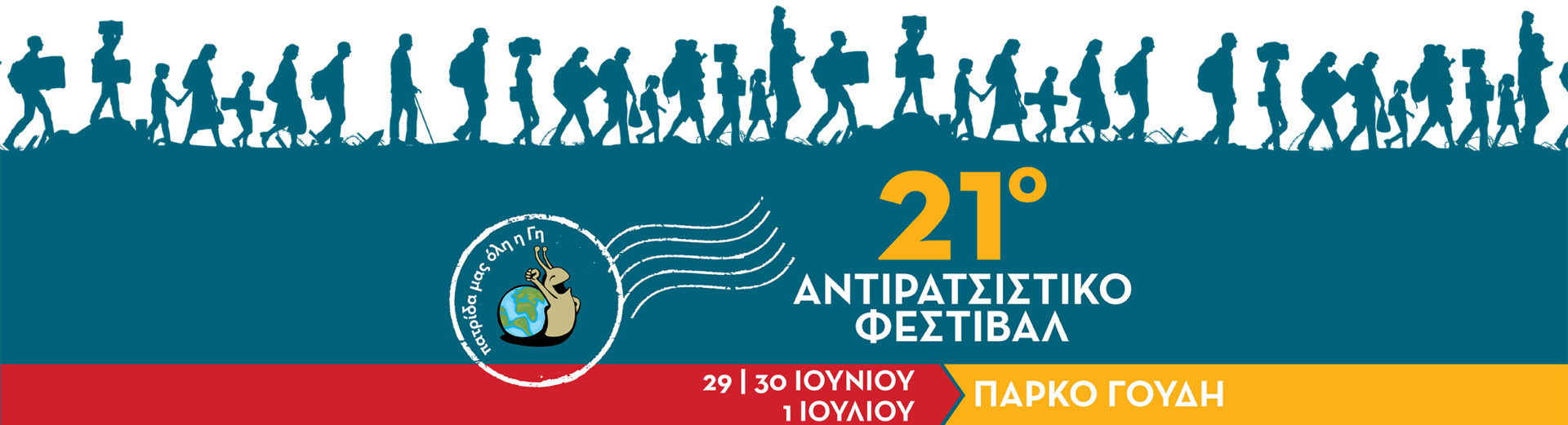
#weareawelcomingEurope, goes @ the #21stAntiraFestAthens !

We are waiting for you at our booth to talk about the European Citizens’ Initiative and how you can help us decriminalize solidarity!

If the idea of being prosecuted for providing help to refugees seems appalling to you, you have to join our efforts!

Let’s start from the 21st Antiracist Festival, from 29 June to 1st of July.

Learn more on the campaign at https://www.weareawelcomingeurope.eu/el/

SolidarityNow calls for immediate actions to improve the living conditions of refugees at Thiva’s Open Accommodation Site

Giorgos Moutafis for SolidarityNow

The recent death of the three-year-old boy, at Thiva’s Open Accommodation Site, is a fact that must signal the danger to all of us and activate the authorities to prevent such tragic events in the future, SolidarityNow states. Moreover, it underlines the need for immediate action to improve people’s living conditions in the site.

SolidarityNow is present in the site with an experienced team providing a wide range of free supporting services; based on the refugees’ needs, we are deeply concerned about the following:

– the accommodation of people with severe medical problems and pregnant women at the Center, under inappropriate conditions where their basic needs are not met, and a dignified life is not secured

– serious deficiencies in the provision of primary healthcare, including the absence of refugee transport at Thiva’s public hospital. The currently provided medical services, including pharmaceutical care, remain unsatisfactory and do not respond to the population’s needs.

– the lack of regular and free means of transportation to the city center, which forces people into isolation while also causing particularly vulnerable population groups (elderly, children, patients) to walk long distances in often dangerous conditions.

The organizations which operate daily in refugee and asylum seekers’ accommodation sites have one common goal: to protect people’s lives and not being faced with the death of people seeking a new life in our country.

We, at SolidarityNow, express our deepest condolences to the little boy’s family. His loss is a loss for all of us.


*SolidarityNow intervenes at Thiva’s Open Accommodation Site since June 2017, by providing supporting services to vulnerable population groups – families and children – through the Family and Child Support Hubs (the program is being implemented with the support of Unicef).