Response by the Greek Ombudsman to a report on discrimination against foreign workers


The Greek Ombudsman’s response to a report submitted in February by SolidarityNow and the organization Generation 2.0 Red is being published, regarding the unacceptable discrimination against foreign workers, legally residing in Greece, who enjoy – undoubtedly – fewer benefits than Greek nationals, even though they pay the same social security fees.

The Ombudsman fully justifies both NGOs by considering that the provisions of existing insurance legislation conflict with the principle of equal treatment since they result in different treatment with mere criterion the nationality, without any justification for the deviation, and calls on the EFKA to submit their views ASAP because of the urgency of the matter.

Full text here (in GR)

Joint report of 25 organizations for cases of violation of asylum seekers’ rights

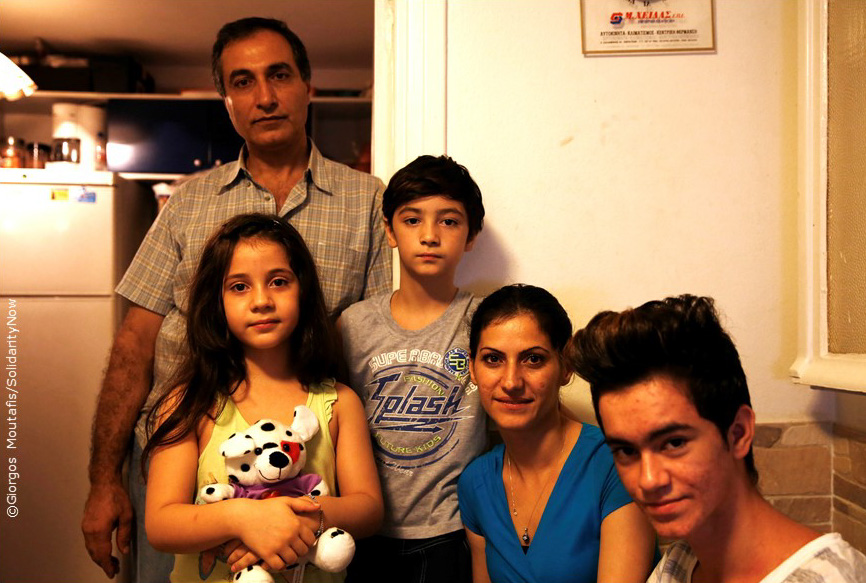
Giorgos Moutafis for SolidarityNow

25 organizations submitted a petition with which they wish to inform the responsible Greek authorities of the ongoing problems that arise regarding the granting of AMKA (Social Security number), AFM (Tax Registration number) and unemployment cards to applicants of international protection, requesting their intervention to harmonize administrative practices with the applicable legislation. They also want to reintroduce the issue of the obvious need to extend all rights to applicants who are at the stage of pre-registration.


25 organizations submitted a joint letter-report with which they wish to inform the responsible Greek authorities of the ongoing problems that arise regarding the granting of AMKA (Social Security number), AFM (Tax Registration number) and unemployment cards to applicants of international protection, requesting their intervention to harmonize administrative practices with the applicable legislation. They also want to reintroduce the issue of the obvious need to extend all rights to applicants who are at the stage of pre-registration.

Regarding AMKA (Social Security number):

According to Greek legislation, asylum seekers have the right of access to the Greek labour market and to hospital and health care. A prerequisite for the full realization of these rights is the possession of AMKA which many times employees from the Citizens’ Service Centre (KEP) do not provide even though the applicants meet the legal requirements.

This refusal is accompanied by several excuses – most of the times unfortunately preemptive – which ultimately constitute a denial by the administration to apply existing legislation. Given that these are people who are in extremely difficult circumstances, the inability to satisfy their fundamental rights and the complete lack of access to health structures or work, does not only further exacerbates their physical, psychological and economic situation but also constitutes a straightforward Violation of existing legislation.

Regarding AFM (Tax Registration number):

According to Greek legislation an AFM number is provided to all natural, legal entities and associations of persons who have their residence or professional establishment or carry out transactions of tax interest within the Greek territory. According to a relevant ministerial decision on AFM provision, what is required is simply a relevant special form upon presentation of an identity card or passport, and, for foreigners, it is also required the provision of evidence that they are legally residing in Greece. As far as asylum-seekers are concerned, the ‘asylum applicant’s alien’ card issued by the Asylum Service constitutes proof that they reside legally in the country.

Unfortunately, asylum seekers often face problems with tax office officials who do not issue AFMs, despite the fact that applicants meet the legal requirements. This refusal is accompanied by several excuses – most of the times unfortunately preemptive – which ultimately constitute a denial by the administration to apply existing legislation.

In the context of good administration practices, there must finally be harmonization of administrative procedure and unimpeded application of the legal framework so as not to interfere with the enjoyment of the rights of those individuals.

Regarding the registration at OAED’s (Manpower Employment Organisation) unemployment register

Employees from the signatory organizations have repeatedly stated that the above mentioned administrative problems in the provision of AMKA and AFM increase the difficulties for asylum seekers to register at OAED’s unemployment register.

Therefore, we appeal to all Greek authorities and ask for their intervention in whatever manner you deem most appropriate in order for the administration to comply with and adhere to the principle of legality and ensure the unhindered provision of AMKA, AFM and unemployment card to all people who meet the legal requirements throughout the Greek territory.

Regarding the lack of access to rights for applicants who are pre-registered

Lastly, the signatory organizations would like to point out that the right to work, as already mentioned above, is guaranteed by Greek legislation for applicants of international protection, only after completing “full registration” of their asylum application according to the existing provisions.

However, de facto delays in the completion of the process of filing an application for international protection, results in the deprivation of those who are at that stage of their fundamental rights, making it necessary that the protective provisions extend their scope to include applicants who are also in the process of “pre-registration”.

Finally, the signatory organizations emphasize that the integration of asylum seekers and refugees in our society, beyond legal obligations of the State, should also constitute a political priority, which apart from the formal requirements, provides the substantial conditions for the inclusion of the population in the social fabric of the country. Therefore, the need for a national action plan for integration, covering both formal (legislation and implementation) and the material conditions of integration (awareness and training of public officials, intercultural mediation and interpreting, access to information etc.) remains a fundamental demand of our organizations.

The co-signed organisations

SolidarityNow
Wind of Renewal
ANTIGONE – Information and Documentation Center on Racism, Ecology, Peace and Non Violence
ARSIS
Medecins Sans Frontieres
Nostos
Hellenic League for Human Rights (HLHR)
Greek Forum of Refugees
Greek Forum of Migrants
Greek Council for Refugees (GCR)
Ιliaktida
Marangopoulos Foundation For Human Rights
Caritas Hellas
BABEL
Melissa Network
Kentro Zois
City of Athens Migrant Integration Council
Ecumenical Refugee Program/ERP
ASANTE
CARE
Generation 2.0 for Rights, Equality & Diversity
HIAS Greece
JRS Greece
PRAKSIS
Save the Children

Joint letter of 21 NGOs regarding housing issues for recognized refugees


21 organizations have drafted a letter addressed to the Ministers of Migration Policy and Economy, concerning the need for immediate use of the AMIF Fund in order to ensure housing and integration prospects for recognized refugees.


To:

Minister for Migration Policy, Mr. Ioannis Mouzalas

Alternate Minister of Economy and Development, Mr. Alexis Haritsis


Notification:

UNHCR Representative in Greece, Mr. Philippe Leclerc


TOPIC: Housing issues for recognized refugees

The increase in refugee status and subsidiary protection granting rates in Greece in recent years, which is of course a very positive development, calls for the immediate design and implementation of integration policies for recognized refugees.[1] The integration of refugees into our society is a legal obligation on the part of the state, which must take the appropriate measures to facilitate this extremely difficult process for refugees. At the same time integration must also be a political priority that, in addition to the formal conditions, provides essential conditions for the inclusion of the population in the social fabric of the country.

There are many problems in the field of integration today. The administrative procedures for the granting of Social Security Number, Tax Registration Number, unemployment cards, bank accounts, etc. remain extremely problematic, while Greek language learning and labor market links remain fragmented and inadequate, making the integration of the population more difficult.

As far as housing is concerned, UNHCR’s Housing Program concerns only asylum seekers (either those residing in Greece or those who will be resettled in other EU countries) and did not initially include any provision for the fate of these people from the moment they will receive refugee status or subsidiary protection.

Given the high number of recognitions, the UNHCR program now extends shelter for recognized refugees for one month, with the possibility of a six-month extension following a personalized assessment that will document vulnerability. After that time, these people will literally have to “be thrown out on the street”.

More specifically, based on the updated data, 1,014 people who have joined the UNHCR Housing Program have already been granted refugee status, most of whom are residing in programs implemented by the co-signing organizations. These people will have to gradually leave the accommodation that has been provided to them, and at the latest by the end of the year. It should be noted that the organizations are unable to cover their housing needs with their own resources.

Recommendation:

The provision already in place in the National Asylum, Migration and Integration Fund scheme for housing allowance, could be used as a bridge program for legally residing third-country nationals (a category in which recognized refugees are included) [2] combined with a grid of integration and language services.

Unfortunately, although the problem is becoming more and more urgent, a relevant action has not yet been procured, risking leaving a gap that organizations will be unable to manage with their own resources. Therefore, we believe that the proclamation and implementation of this action is a priority for the smooth integration of these people in Greek society and we are calling for your immediate actions in this regard.

The co-signed NGOs

  1. SolidarityNow
  2. ARSIS
  3. Wind of Renewal
  4. ANTIGONE – Information and Documentation Center on Racism, Ecology, Peace and Non Violence
  5.  Hellenic League for Human Rights (HLHR)
  6. Greek Forum of Refugees
  7. Greek Forum of Migrants
  8. Greek Council for Refugees (GCR)
  9. Ιliaktida
  10. Marangopoulos Foundation For Human Rights
  11. Caritas Hellas
  12. BABEL
  13. Melissa Network
  14. METAdrasis
  15. NGO Aitima
  16. PERICHORESIS
  17. City of Athens Migrant Integration Council
  18. Generation 2.0 for Rights, Equality & Diversity
  19. Help Refugees
  20. JRS Greece
  21. PRAKSIS


[1]Indicatively, based on the Asylum Service’s statistics, in 2016, 2,467 persons were granted refugee status and 245 subsidiary protection, while in 2017, 3,791 persons received refugee status and 305 subsidiary protection, https://asylo.gov.gr/wp-content/uploads/2017/07/Greek_Asylum_Service_Statistical_Data_GR.pdf.

[2] See https://asylo.gov.gr/wp-content/uploads/2016/12/Programme_2014GR65AMNP001_4_4_el.pdf, page 15.

ASYLUM SEEKERS’ TRANSFERS FROM GREECE TO GERMANY FOR FAMILY REUNIFICATION UNDER EU REGULATION 604/2013


With a joint letter the undersigned organizations would like to express our serious concerns on a de facto violation of the right for family reunification and breach of relevant provisions stipulated in the EU Regulation 604/2013 (Dublin III Regulation), regarding asylum seekers’ transfers from Greece to Germany under family reunification procedure, through the implementation, by the German authorities, of a certain “cap”  on asylum seekers that are transferred per month through family reunification process.


Joint Letter of Civil Society Organizations on the issue of family reunification of refugees and/or migrants in Germany.

TO:

  • UNHCR
  • COUNCIL OF EUROPE-COMMISSIONER FOR HUMAN RIGHTS
  • EUROPEAN COMMISSION-DG HOME-ASYLUM UNIT
  • EUROPEAN PARLIAMENT-LIBE COMMITTEE FOR CIVIL LIBERTIES, JUSTICE AND HOME AFFAIRS
  • FUNDAMENTAL RIGHTS AGENCY
  • MINISTER OF THE INTERIOR OF GERMANY
  • MINISTER FOR MIGRATION POLICY OF GREECE

The undersigned organizations would like to express our serious concerns on a de facto violation of the right to family reunification and breach of relevant provisions stipulated in the EU Regulation 604/2013 (Dublin III Regulation), regarding asylum seekers’ transfers from Greece to Germany under family reunification procedure. We refer specifically to a practice recorded during the last months according to which, asylum seekers entitled to be transferred to Germany under the relevant provisions of the Dublin III Regulation, are “blocked’ in Greece for periods exceeding the deadlines provided by the above-mentioned provisions, for reasons related to supplementary terms of a maximum number of transfers per month. This situation is jeopardising the whole process and undermines the right of asylum seekers to family reunification, as provided by Dublin III Regulation and violates further their right to family life as stipulated in article 8 of the European Convention on Human Rights as well as article 7 of the EU Charter of Fundamental Rights.

In particular, during the last months, we have become aware of many cases of asylum seekers whose taking charge requests have been accepted by Germany, though their transfer to Germany has not taken place, although the six-month deadline (art. 29) has expired. We have also been aware of many other cases for which the above deadline is to expire soon, but nevertheless, no arrangements have been made for their transfer.

The Greek Asylum Service in its written answer (attached to the present document in Greek) to one of the undersigned organizations, ‘AITIMA’, regarding the problem that has arisen, expressed the following position:

 Athens, 15 June 2017

 Subject: Scheduling of asylum seekers’ transfers to Germany according to the EU Regulation 604/2013 EU.

In answer to your question regarding the transfer of asylum seekers to Germany we would like to inform you as follows:

The German Dublin Unit requested from our department the transfer of asylum seekers in controlled numbers per month without consideration to the six-month deadline for the completion of the transfer as provided by art. 29 of the EU Regulation 604/2013.

For the cases for which the six-month deadline has elapsed or is about to elapse, we have received an extension of the deadline for their transfer according to an understanding with the German Dublin Unit (BAMF).

The completion of the transfers you mention in your letters will be scheduled in cooperation with the German Authorities from July 2017 onwards.

The above answer of the Greek Asylum Service confirms that an arrangement has been made between the competent authorities of the two-member states, Germany and Greece, which exact content is not known.

We would like to note that according to the existing data less than 100 asylum seekers are transferred per month, while currently the six-month deadline expires for over 300 asylum seekers per month, which means that if this arrangement continues, the delays in transfers will lead to a significant postponement amounting to a de facto denial to family reunification, to integration to protection of a big number of asylum seekers-most of them vulnerable as many unaccompanied minors, single mothers with children, ill persons etc..

This development, on one hand, aggravates the existing problems regarding asylum seekers’ living conditions in Greece and on the other hand, prolonging the partition of families which has serious effects in the family members’ well-being, in particular the most affected being the most vulnerable, as unaccompanied minors, single mothers with children, ill persons who are suffering and at risk of being deprived of their family for long-lasting and in practice unknown period of time, while being entitled to join them. Within this context, it must be also considered the long-lasting period of registration of the asylum applications (ranged from 8 months to over one year) that most of the asylum seekers, currently under family reunification procedure, have been subjected to in Greece, after the closing of the so called Balkan route took place.

Furthermore, we would like to point out that the above arrangement as presented in the document of the Asylum Service, apart from serious breach of the provided right for family reunification, is in clear violation of specific provisions of the EU Regulation 604/2013 and especially of article 29, providing for:

“[…] Modalities and time limits

  1. The transfer of the applicant or of another person as referred to in Article 18(1)(c) or (d) from the requesting Member State to the Member State responsible shall be carried out in accordance with the national law of the requesting Member State, after consultation between the Member States concerned, as soon as practically possible, and at the latest within six months of acceptance of the request by another Member State to take charge or to take back the person concerned or of the final decision on an appeal or review where there is a suspensive effect in accordance with Article 27(3).
  2. Where the transfer does not take place within the six months’ time limit, the Member State responsible shall be relieved of its obligations to take charge or to take back the person concerned and responsibility shall then be transferred to the requesting Member State. This time limit may be extended up to a maximum of one year if the transfer could not be carried out due to imprisonment of the person concerned or up to a maximum of eighteen months if the person concerned absconds.

Moreover, according to article 36:

“Administrative arrangements

  1. Member States may, on a bilateral basis, establish administrative arrangements between themselves concerning the practical details of the implementation of this Regulation, in order to facilitate its application and increase its effectiveness. Such arrangements may relate to:
  • exchanges of liaison officers;
  • simplification of the procedures and shortening of the time limits relating to transmission and the examination of requests to take charge of or take back applicants.
  1. Member States may also maintain the administrative arrangements concluded under Regulation (EC) No 343/2003. To the extent that such arrangements are not compatible with this Regulation, the Member States concerned shall amend the arrangements in such a way as to eliminate any incompatibilities observed.
  2. Before concluding or amending any arrangement referred to in paragraph 1(b), the Member States concerned shall consult the Commission as to the compatibility of the arrangement with this Regulation.
  3. If the Commission considers the arrangements referred to in paragraph 1(b) to be incompatible with this Regulation, it shall, within a reasonable period, notify the Member States concerned. The Member States shall take all appropriate steps to amend the arrangement concerned within a reasonable time in such a way as to eliminate any incompatibilities observed.
  4. The Member States shall notify the Commission of all arrangements referred to in paragraph 1, and of any denunciation thereof, or amendment thereto.”

It is obvious that the above-mentioned arrangement agreed between Germany and Greece cannot be considered as falling within the provisions of the above article, as administrative arrangements, may concern the practical details of the implementation of the Regulation, in order to facilitate its application and increase its effectiveness and may relate to simplification of the procedures and shortening of the time limits, not the opposite. In any case, arrangements cannot reduce rights nor set extra terms-such as numbers or quotas- to specific provisions set by an EU Regulation. Therefore, the above-mentioned arrangement is in violation of this article as well.

The arrangement agreed between Germany and Greece on the implementation of family reunification of asylum seekers introducing quantitative criteria (maximum number per month) is in flagrant violation of International, EU and national legislation establishing the principle of family unity and the best interest of the child and in particular article 8 of the European Convention for Human Rights which protects the right to family life, article 10 of the Convention on the Rights of the Child as well as article 7 of the EU Charter of Fundamental Rights.

For these reasons, we call you to take all the necessary measures to stop this unlawful practice, as the arrangement agreed between Germany and Greece is, which hinder core principles and rights as family unity, the best interest of the child, protection and integration of asylum seekers.

———————————————————

ADVOCATES ABROAD https://advocatesabroad.org

ΑΙΤIMA https://www.aitima.gr

ARSIS –ASSOCIATION FOR THE SOCIAL SUPPORT OF YOUTH https://arsis.gr

ASYLKOORDINATION www.asyl.at

BUMF https://www.b-umf.de/

CCME – CHURCHES’ COMMISSION FOR MIGRANTS IN EUROPE www.ccme.eu

DIAKONIE DEUTSCHLAND, EVANGELISCHER BUNDESVERBAND E.V. https://www.diakonie.de/

EUROPEAN COUNCIL FOR REFUGEES AND EXILES (ECRE) www.ecre.org

EUROPEAN HUMANIST FEDERATION https://humanistfederation.eu

GREEK HELSINKI MONITOR https://greekhelsinki.wordpress.com

GREEK COUNCIL FOR REFUGEES https://www.gcr.gr

GREEK FORUM OF REFUGEES https://www.refugees.gr

HELLENIC LEAGUE FOR HUMAN RIGHTS https://www.hlhr.gr/

HUMANIST UNION OF GREECE https://www.facebook.com/humanistuniongreece/

INITIATIVE FOR THE DETAINEE’S RIGHTS https://www.tokeli.gr

INTERNATIONAL HUMANIST AND ETHICAL UNION https://iheu.org

MOBILE INFO TEAM https://mobileinfoteam.blogspot.gr/

“LATHRA?” COMMITTEE FOR SOLIDARITY TO REFUGEES IN CHIOS https://www.lathra.gr/

NETWORK FOR SOCIAL SUPPORT OF REFUGEES AND MIGRANT https://migrant.diktio.org

OMCT – WORLD ORGANIZATION AGAINST TORTURE https://www.omct.org

PRAKSIS https://www.praksis.gr

PROASYL www.proasyl.de

REFUGEE LAW CLINICS ABROAD https://refugeelawclinicsabroad.org/

REFUGEES SUPPORT AEGEAN https://rsaegean.org/

SAFE PASSAGE www.safepassage.org.uk

SOLIDARITY NOW https://www.solidaritynow.org/en/

WORLD WITHOUT WARS AND WITHOUT VIOLENCE-GREECE www.kosmosxorispolemous.gr

Joint Press Release about the violent incidents in Moria, Lesvos


On 28 November 2016 due to the accident in Moria’s camp that took the  lives of two refugees, SolidarityNow and 22 other organizations made a joint statement about the living conditions and safety rules in the refugee camps around the country.


We express our deepest concern in relation to the information, complaints and testimonies about violence and abuse by the Hellenic Police in the detention centre in Moria, Lesvos. Visual material depicting scenes of violent, inhuman and degrading treatment towards refugees causes disgust, while information about arbitrary arrests is of great concern.  In addition, the action of citizens who appear, in the same video, to be attacking and severely beating migrants and refugees, under the tolerance of police officers, raises many questions and requires instant investigation by the competent authorities.

The State policies have led to a double dead end: they have left refugees and migrants for months in a miserable situation, while at the same time they are testing the resilience of the inhabitants of the islands.  Repression, police violence, collective temporary custody and threatened heavy convictions on both right- and wrong-doers, plunge even further into this impasse.The harsh criminal treatment of migrants and refugees on the one hand, and the police violence, which no one seems to be disapproving or investigating, on the other hand, cast serious doubts on the level of protection of the rights in our country.We ask the Greek justice to stand up as a guarantor of the rule of law and resist to a climate of attaching collective responsibility as well as seeking of scapegoats.

Υοu can also read the statement in ARABIC

Co-signatories 

Babel DC

Bridges – Humanitarian Initiative

Hellenic League for Human Rights

Caritas Hellas

City of Athens Migrant Integration Council

Generation 2.0 for Rights, Equality & Diversity

Greek Forum of Migrants

Greek Forum of Refugees

HIAS Greece

Melissa: Network of Migrant Women in Greece

Motion for the defence of refugees’ and immigrants’ rights

PR.A.K.S.I.S. – Programmes of Development of Social Support and Medical Co-operation

SolidarityNow

United Afghan’s Community in Greece

Lack of handover plans for the response in Greece puts asylum seekers at risk, NGOs warn


Humanitarian organisations welcome the transition to Greek Government management of all aspects of service provision for asylum seekers on the Greek islands and for unaccompanied children throughout Greece. However, as this transition begins, and the European Commission scales down support for humanitarian assistance currently provided by nongovernmental organisations (NGOs), there are growing concerns over the potential for deteriorating living conditions and diminishing access to essential services, as few details have been released about the plans for how this handover will be implemented.

In just over two weeks, on 31st July, the majority of European funding provided directly for NGOs responding on the Greek islands will come to an end. These NGOs have been providing aid for the nearly 14,000 people who are seeking international protection on the islands, but unable to move due to policies underpinned by the European Union – Turkey Statement. Under the new system, the Commission will support the Government to manage all aspects of the response through asylum, migration and integration funds (AMIF) and internal security funds (ISF) through DG HOME. The transition is a change from the current system in which NGOs provide services funded by the European Commission (directly through DG ECHO). In addition to the response on the islands, funding and responsibility for meeting the needs of the 2,250 unaccompanied children across Greece will largely also transition from DG ECHO to DG HOME funding under Government management.

This handover has the potential to be a positive step if implemented transparently, promptly and in close collaboration with the organisations currently providing services. However, to date, no national response plan has been released, and information about how the transition will be implemented is severely lacking. Without a clear transition plan, gaps in services will likely occur, and men, women and children may be put at greater risk, without the health, legal and other services and safety they need and have the right to.

We are already seeing the impact of similar service provider transitions. In Lesvos, for example, the contract for the organisation providing primary health care and conducting vulnerability assessments as part of the asylum procedure in the Moria Reception and Identification Centre ended on 30th May. Its 10 doctors, who had provided care for the more than 2,000 people living in the facility, as well as supported the Greek Asylum Service with vulnerability assessments, were replaced by just three doctors meant to fulfil the same responsibilities. Information from the ground indicates there is now a backlog in vulnerability assessments in both Chios and Lesvos, and a dire lack of primary health care.

Additionally, there has been a persistent shortage of safe accommodation and alternative care options for the children arriving to Greece alone throughout the response. There are currently 2,250 such unaccompanied children across Greece in need of safe shelter, but just 1,270 shelter spaces available. Roughly 1,000 unaccompanied children are therefore on a waiting list for shelter, with some living in squats, on the streets, or placed in “police protective custody” (detention) while they wait. As a result of this transition, at least five shelters are set to close, resulting in fewer shelter spaces available, and the number of children in detention, as a form of accommodation, is on the rise. Other forms of appropriate care, such as foster care and semi-independent living, which are more cost-efficient and in line with the needs and best interests of the children, have received little coordinated support or approval from the Government, and there has been no information released about if and when even existing, small scale alternative care initiatives will be continued, let alone expanded upon.

Any gaps in services caused by an uncoordinated transition would impact the health and well-being of thousands of already vulnerable people. It is therefore critical to learn from the lessons of the past years of this response and avoid a foreseeable humanitarian emergency.

We call on:

  • The Greek Government to consult with UN agencies, donors, NGOs and civil society to urgently develop and release a national response plan for the transition period and beyond. This plan should include clear steps for close collaboration and a smooth handover between current and new service providers to ensure no disruption or deterioration of services and living conditions on the islands or for unaccompanied children throughout Greece.
  • The Greek Government to invest in and facilitate the development of more effective and sustainable forms of alternative care for unaccompanied children, particularly supervised semi-independent living and foster care.
  • The European Commission to provide technical and coordination support to ensure that its funds are available, accessible, and used effectively and efficiently to prevent against disruption of essential services. This should include facilitating regular coordination meetings between relevant organisations and the competent authorities as necessary, to ensure a smooth handover between service providers.
  • The EU and other donors to encourage the Government to ensure continuation of health, mental health and psychosocial support, education and legal services on the islands and a variety of appropriate alternative care options and protection services for unaccompanied children throughout Greece.

Joint letter on Racist Attack on a Romani Neighbourhood in the city of Menidi, Attica


Solidarity Now together with other organizations sends a letter of concern to the competent Greek and European authorities in response to the racist attack on a Romani neighborhood in  the city of Menidi. A full criminal investigation on these events which started on 10 June 2017 has not been conducted yet.


Τo:

Nikolaos Toskas

Alternate Minister of Interior and Administrative Reconstruction

4 P. Kanellopoulou St., GR-101 77, Athens, Greece

pressoffice@yptp.gr


Municipality of Acharnes, Yiannis Kassavos, Mayor

Filadelfeias Avenue, 87 & Bosda str.

PC 136 73

info@acharnes.gr


Lieutenant General, Konstantinos Tsouvalas

Chief of the Hellenic Police

4 P. Kanellopoulou St., GR-101 77, Athens, Greece

press@hellenicpolice.gr

Cc:

Álvaro Oliveira

European Commission Legal Officer, DG Justice

Rue de la Loi / Wetstraat 200 1049 Brussels

Belgium

alvaro.oliveira@ec.europa.eu


Pia Lindholm

European Commission Legal Officer, DG Justice

Rue de la Loi / Wetstraat 200 1049 Brussels

Belgium

pialindholm@ec.europa.eu


Dora Husz

European Commission Policy Analyst, DG Justice

Rue de la Loi / Wetstraat 200 1049 Brussels

Belgium

dora.husz@ec.europa.eu


Andreas I. Pottakis

Ombudsman of Greece

17 Halkokondyli St. 104 32 Αthens, Greece

ombudsman@synigoros.gr

press@synigoros.gr

Re: Racist Attack on a Romani Neighbourhood in the city of Menidi, Attica

Dear Sir/Madam,

We the undersigned organisations are writing to you in response to anti-Romani mob violence and arson attacks that began on 10 June 2017 in a Romani neighbourhood of the city of Menidi, Attica (Greater suburb of Athens).

According to information compiled from media sources[1], on 10 June 2017 an 11-year-old non-Romani boy was killed by a stray bullet of unknown source during celebrations on the occasion of the ending of the school year. A 23-year-old Romani man was apprehended as a suspect by the police and on 12 June 2017 was convicted to a suspended 40-month sentence for the use of a weapon[2]. In response, the local Roma community were collectively blamed for the death of the boy. In the immediate aftermath, an angry mob, of about 1500 participants, has gathered in the Romani neighbourhood of Menidi and thrown Molotov cocktails in front of the house of the 23-year-old suspect’s Romani family.

A video posted on social media[3] by far-right groups shows arson attacks on 12 June on the homes of the Romani suspect (2.20) as well as hundreds of supporters of the Independent Maeander Nationalists and Combat 18, marching and chanting “gypos, pigs, murderers”. The footage later (3.30) shows another arson attack on a second home belonging to the Romani suspect’s family and crowds chanting “gypos, cunts, shops of cops”. The video ends with a threat of more violence against the Roma in Menidi (8.55). Both homes were burned extensively[4] but no arrests have been made.

On 11 June the anti-Roma protest continued and outbreaks of violence occurred in Menidi. There was an attempt by the mob to break through police lines and attack the Romani inhabited area. During the rally, some people threw self-made firebombs at Romani houses destroying two of them. The police has responded with tear gas, triggering a clash with the mob.

On 12 June, an anti-Roma march was initiated in the area of Menidi. The rally lead to outbreaks of violence as the angry mob more threw self-made bombs and stones at police at the train station, in an area bordering the Romani neighbourhood. The police has responded with tear gas and stun grenades. At 10.30 pm the rally had reached the Romani inhabited area. The intervention of the police has so far stopped further outbreaks of violence against the Roma.

On 13 June, non-Romani residents of Menidi initiated anti-Romani riots in front of the Citizen Protection Ministry. When authorities reportedly failed to launch a criminal investigation, the Greek Helsinki Monitor filed a complaint with the Hellenic Police’s Division to Combat Racist Violence on 16 June. On 20 June, GHM has been briefly informed that Hellenic Police had launched a criminal investigation on these events.

We urgently call on your respective authority to fully investigate and prosecute (if appropriate) the individuals involved in this incident once order is restored. The clear presence of deeply entrenched anti-Gypsyism in the county requires that this be undertaken, not only to secure the rights of the individuals affected, but also for the protection of the entire Romani community. We would remind your office, it is indispensable to investigate the potential for racial motivation in order to fulfil your legal obligations under the EU Framework Decision 2008/913/JHA, particularly Article 8, as well as Article 14 read with Articles 2 and 3 of the European Convention on Human Rights.

We urge the Minister of Interior and the Mayor of Menidi to ensure the safety of its Romani citizens in Medini as Neo-Nazi groups rally continue threatening the life and security of the Romani people in the city and in the country. We call your respective authorities to address the issues of marginalization of Greece Romani citizens and the obviously heightened dangerous level of anti-Roma sentiment in the city and society.

Given the gravity of the situation, we in accordance with the applicable domestic and international safeguards regarding disclosure of personal data, requests, in accordance with article 5 (Access to documents—Πρόσβαση σε έγγραφα) of the Greek Administrative Procedural Code (Κώδικας Διοικητικής Διαδικασίας), Law 2690/1999 regarding the free access to information of public interest – your office to provide us with the following information in writing.

We, the undersigned organisations, would like to highlight that the information requested concerns the institutional response to alleged hate motivated incident rather than any data of a personal nature:

  1. 1. Has an ex officio investigation been launched concerning the violent arson attacks against the Romani community, and if so when? Has the complaint filed by the Greek Helsinki Monitor been addressed and if so when?
  2. What measures have been undertaken by your office to determine the cause(s) of the incident?
  3. Have any suspects been identified?
  4. Have witnesses been summoned to testify?
  5. Has anyone been accused of being responsible for this incident, and if so, what charges were brought against this person(s)?
  6. Has the highly likely racial motivation of the incident been investigated and / or taken into consideration during any investigations?
  7. What measures (if any) are planned, or have already been taken to rehouse the victims of the arson attack?
  8. What measures are envisaged to ensure the safety the Romani inhabitants in the Menidi neighbourhood?

We will be carefully monitoring the situation, and institutional responses. We are available for further information or clarification if it is needed. We look forward to your response via email to atanas.zahariev@errc.org, or by post to the European Roma Rights Centre, Wesselényiutca 16, H-1077 Budapest, Hungary.


Yours sincerely,

Đorđe Jovanović

European Roma Rights Centre


Panayote Dimitras

Greek Helsinki Monitor (GHM)


Vasilis Tsarnas

Coordinated Organizations and Communities for Roma Human Rights in Greece (SOKADRE)


Epaminondas Farmakis

Solidarity Now


Nafsika Papanikolatou

Minority Rights Group – Greece (MRG-G)


Read the letter here


[1] https://dithen2010.blogspot.hu/2017/06/an-anti-roma-pogrom-in-athens-short.html

[2] https://greece.greekreporter.com/2017/06/13/menidi-residents-demonstrate-at-citizen-protection-ministry/#sthash.KEj859qz.dpuf

[3] https://www.youtube.com/watch?v=qQq0Y5onv8w

[4] https://agonaskritis.gr/μενίδι-εκαψαν-και-τα-2-σπίτια-του-23χρονο/]

“A Fundamentally Different Approach is Needed”: Α Joint Statement


IDC Members and partners, including SolidarityNow, write to express our collective concern that, “A Fundamentally Different Approach is Needed” to the immigration detention of migrants in Europe.
In advance of a consultation with key civil society stakeholders from 22-23 June 2017 at the Council of Europe Headquarters in Strasbourg, over 30 national, regional and international civil society organisations have drafted a joint statement, which will be presented to the European Committee on Legal Co-operation (CDCJ) who is carrying out a codifying exercise on a detailed set of immigration detention rules based on existing international and regional human rights standards relating to the conditions of detention of migrants.

More info at https://idcoalition.org/ 

Read the joint statement here

Social integration is now the priority

Giorgos Moutafis for SolidarityNow

World Refugee Day: SolidarityNow underlines the needs on the ground  for refugees living in Greece.

The celebration of the World Refugee Day finds our country at a crucial moment. At present, there are no more than 40,000 refugees in the Greek mainland; nevertheless, an unreasonably large number of them still live in camps under conditions that are anything but satisfactory.

SolidarityNow has already stressed out that social inclusion and integration should now be the priority, i.e. the primary access of these people to the fundamental goods of health, education, labor, etc. Only by this way we will be able to ensure the already wounded social cohesion.

Specifically, SolidarityNow requests:

  1. Direct plan for the evacuation and #close_the_camps and transference of the people to urban areas to become feasible the implementation of the integration policies.
  2. Unrestricted access for all, whether they are in the islands or in mainland, to the asylum process, while respecting all the procedural assurances deriving from national, community and international law.
  3. Access to the labor market for all asylum seekers (and the pre-registered ones).
  4. The registration of all children in the national education system to ensure their smooth socialization in the country.
  5. The unhindered access for all to the health system without discrimination
  6. Immediate activation of Asylum, Migration and Integration Fund to support the respective actions, focusing on the housing allowance for persons who are granted the refugee status and are therefore not eligible for asylum accommodation.

The refugees will live with us. The sooner we respond to this fact with integration policies, the better we will protect ourselves, the local communities and the cohesion of the Greek society.

Racist Violence Recording Network: presentation of Annual Report at the Parliament


On 7 June 2017, the Racist Violence Recording presented its Annual Report to the Special Permanent Commission on Equality, Youth and Human Rights, following the invitation of its President, Aphrodite Stambouli.

The Network considers this event an important initiative that has provided the opportunity for a fruitful and meaningful dialogue with representatives of the parties of the Greek Parliament and hopes that similar initiatives will be taken by the plenary of the Parliament.

You may find the 2016 annual report here.