M. found hope again


Μ. found hope again, with the support of the Personal Counseling and Psychotherapy Department at the Athens Solidarity Center

Vicky Anastasiou,

Reception Officer at the Athens Solidarity Center

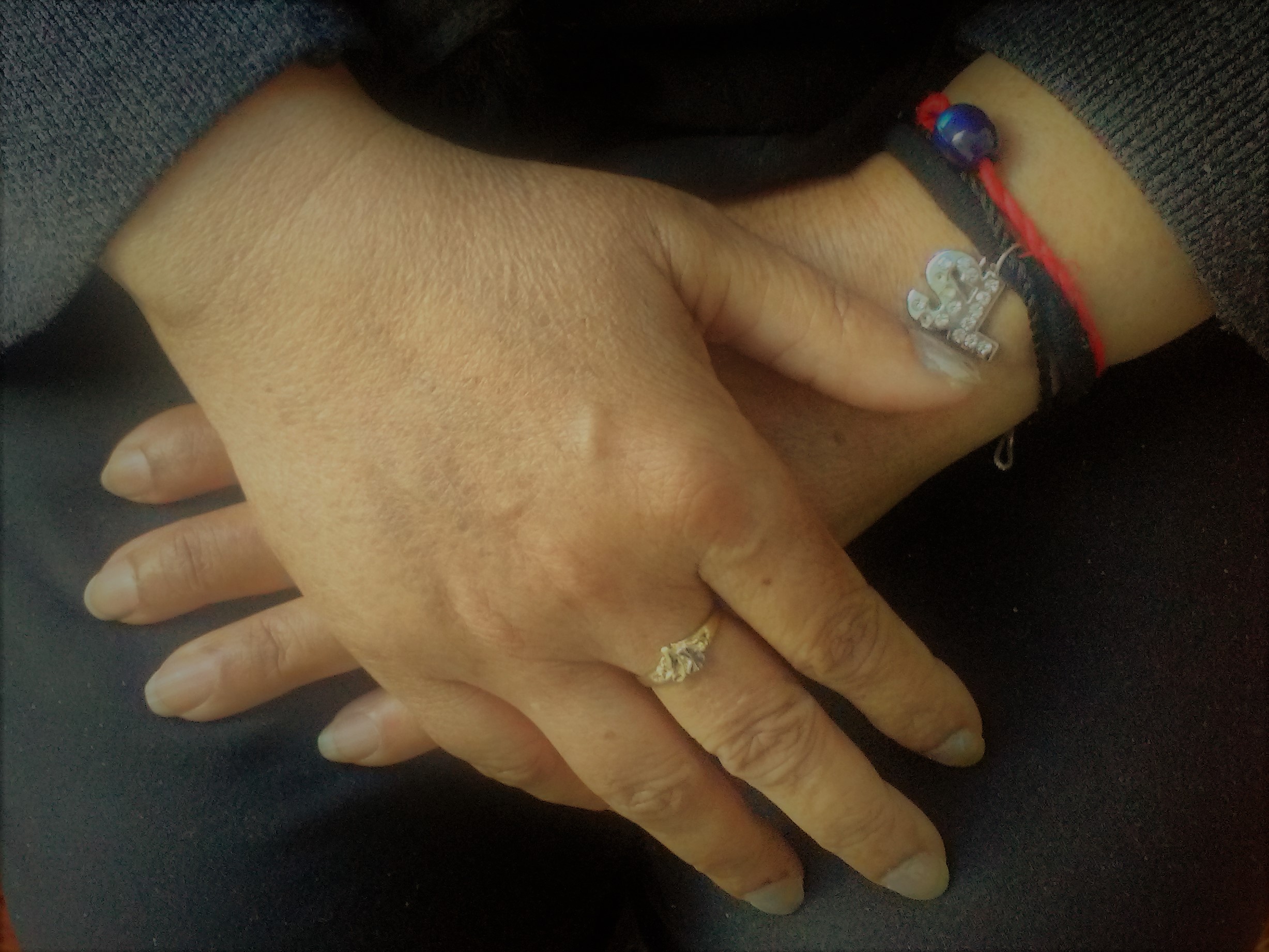
“I am looking forward to leave; I will travel to find my children. I am waiting for the ticket to Germany. If I hadn’t come to Athens Solidarity Center I would have committed suicide; I wouldn’t be able to do anything. I felt sick, I couldn’t eat, I couldn’t sleep, and I had a constant headache. Now I am attending sessions with the psychological team at the Center and I have started thinking positively”, M., a 28-year-old woman, mother of two, from Kandahar, confesses.

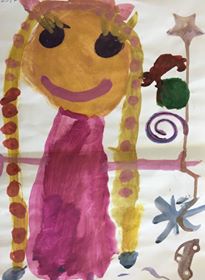
The six-year-old A. and the four-year-old R. contact with their mother by post. She sends them letters and they send back drawings. This irregular way of communication has been going on for a year and a half, as long as they have been separated, since the mother was arrested during their escape travel, while the kids continued the trip with the rest of the team. Months went away until she had news from them.

Μ. was widowed at the age of 24. She left Afghanistan when Taliban murdered her husband. Her life was in danger. “They could have kidnapped me, made me marry a Taliban and recruited my children. I was left alone, and I decided that I would either die or pursuit a better life.”

*Μ. is one of the beneficiaries receiving the services provided pro bono to vulnerable population groups in SolidarityNow Athens Solidarity Center. Learn more about the Athens Solidarity Center, https://www.solidaritynow.org/en/kentro-allileggiis-athinas/.


Athens Solidarity Center has been financed by SolidarityNow and Open Society Foundations (OSF/OSIFE), while complementary services are funded by EaSI ( Employment and Social Innovation) in the context of  “Employment enhancement and Social services integration in Athens Municipality (ESTI@)” program.
“We do not believe in heroes; we believe in people’s power when they interact truthfully.”


Thodoris and Eleni, SolidarityNow employees, Blue Dots program

Thodoris: Occupational therapist with postgraduate studies and trainer of the Sherborne method (pedagogical method), with large experience in storytelling and team empowerment.

Eleni: Psychologist and art historian, also with experience in storytelling and group empowerment.

From the very beginning of their professional acquaintance, Thodoris and Eleni felt that “we match, ‘we are birds of a feather’”.

“From the first moment we realized that we would have an interesting and effective cooperation”, they confide.

photos: Giorgos Moutafis for SolidarityNow

Our dream was to create a safe space (both psychological and physical) for the children, where they can play and mainly express themselves. Through discussions and study, we set our core goal, since we concluded that the greatest need for refugee children is to win back their roles in life; the roles of the child or adolescent, son or daughter, student. Thus, we developed a program to primarily achieve this goal. The key component of our work is to be honest and direct in our communication with the children, paying attention to each one of them personally.

So, imagine our joy…

In the case of the concert held in Elefsina camp by the children’s choir, when their parents were telling us that it was the first time after years that they applauded their children.

Or when, after a quarrel, the two teenagers involved, asked us to discuss the incident with the adolescent group.

Or when, on our excursion to the adventure park, the children dreamed of reaching the sky!

Or the moment when the camp was no longer a hall of shadows, but a building full of toys and children’s voices.

Or when, on the first day at school, our children proudly showed their bags and asked us to help with their homework.

Or … or … or … we could mention so many more beautiful moments!

For us, every child is unique and special. Each one of them has their own story, personality and future. If we manage to support them, we are proud of our work. We do not believe in heroes; we believe in the power born when people meet and interact honestly“.

*Thodoris and Eleni share with us their experience and emotions during their work at the Blue Dots Unit operated by SolidarityNow in the Elefsina accommodation structure. The structure remained open until October 2017.


Τhe Blue Dots program is implemented by SolidarityNow, supported by UNICEF, with funding from the European Commission’s Humanitarian Aid Department (ECHO).

“God gives life and can take it again… I died, and I came back to life.” | Τhe story of L.


L. walks with difficulty. She presses her hand against the wall to be able to stand and continues her walk. Few weeks ago, she couldn’t even stand on her feet. I told her to stand by me. L., 38 years old, comes from Pakistan. The last few months she has been living at SolidarityNow’s shelter for vulnerable cases in the center of Thessaloniki.

L. had the strength and courage to travel by herself to Greece. I am asking her about her life in Pakistan, but she doesn’t want to talk about her past. So, our discussion focuses on her recent adventure with her health.

L. suffered from unexplained and sudden seizures. For a long time, she didn’t know what was happening to her. She had episodes in which her contact with the environment was preserved. “I believed that an evil spirit had taken hold of me,” she explains us. From Nea Kavala refugee camp, where she was living, she was hurriedly moved to SolidarityNow’s shelter for vulnerable cases in the center of Thessaloniki and then to Papanikolaou Hospital, where she underwent a brain tumor surgery. The surgery was successful, but she had to be immediately transferred to a rehabilitation center. A real big race started then. “We didn’t know if we could proceed, and most importantly who is going to pay the rehab center. At the beginning, I was pessimistic,”, says Maria Georgopoulou, Social Officer at SolidarityNow’s Hosting and Accommodation Programs in Thessaloniki.

Despite the difficulties and time pressure, L. with Maria’s help and SolidarityNow’s financial support went to the Rehabilitation Center “Armonia”. There, through physiotherapies, she gradually regained her motor skills. Maria didn’t leave her alone. She accompanied her to the hospital, she gave her anticoagulant injections, and she supported her in other occasions as she couldn’t look after herself. At the beginning L. was feeling lost. It is not an easy thing for a single woman, who does not speak the Greek language, to be alone in a foreign country and to undergo such a serious surgery. When she came to SolidarityNow’s shelter she started to feel better. “Three months have passed, but still there are more things to be done not only by her but also by me. There is no room for complacency”, says Maria.

Maria

L. is a strong and courageous woman. “God gives life and can take it again. This was a trial for me. I died, and I came back to life. I feel grateful to God, and to SolidarityNow and Maria! “, she underlines. Her health has been improved. We ask her how she imagines her life in the future. “At the moment I’m staying at the shelter until I get better, but I’m very anxious about what will happen next. Where will I go, what will I do? What I really want is to feel better, to learn Greek, to find a job and start and normal life in Greece” she tells us. We ask her if she wants to start her life all over again. She answers “that the only thing that she wants right now is to be back on her feet”.

[#ESTIA, the Emergency Support to Integration and Accommodation programme, is implemented by SolidarityNow, supported by UNHCR and funded by ECHO].

Zachia, Abdullah and Younes


A family of three, shares its story with us – “we want to talk“.

Zachia and Abdullah are the parents of 7-year-old Younes and one more underage son, who already is in Sweden. They await the decision that will reunite the family; and the young Υounes looks forward to the moment he sees his beloved brother again.

However, Zachia and Abdullah are particularly reluctant and afraid. They have gone through many difficulties in order to arrive in Greece and furthermore until   eventually reaching the accommodation structure for refugees and migrants in Elefsina. The couple’s origin is from Afghanistan. From there they began their refugee trip in pursuit of a decent life. Iran was their first stop. Unfortunately, in Iran, things proved even harder.

“I felt like we did not have a place to live there – being a refugee means being invisible. You are not recognized by anyone, people do not see you. We had no papers, home, security“, Zachia confesses. Zachia is just 35 years old, and the stories of her adult life sound like the stories of a much older woman. Now, she is happy with the fundamentals, as she says – grateful for being alive, she and her family after the hard trip from Iran to Turkey, then Samos. Zachia has no great expectations for the future, she only wants her family to reunite intact.

Until then, she awaits in agony – and perseveres. A Swedish proverb says, “Do not celebrate before you cross the stream (Man ska inte ropa hej, förrän man är över bäcken)“. This is Zachia’s motto. So, she awaits. On the other side of the stream her child waits for her.

Abdullah is more optimistic, he believes everything will be better for his family in Sweden, “I am 100% certain that everything will go well there“.

Still, life goes on in the accommodation structure of Elefsina, completely filled by their 7-year-old child, Younes. The youngest of the family participates in the activities SolidarityNow agents uphold through the Blue Dot Unit operating there. Through Junes, Zachia, although hesitant, dreams again and smiles at the end of our conversation, confessing:

“I wish I could work in carpet-making again, I hope that my husband is employed, my children return to school and all of us live safely with dignity again“.

Little Younes is lucky to participate in the activities being held in the structure, that include English lessons and group games. These activities have supported him in becoming more social, sharing and able to express his feelings. Younes prepares to adapt as quickly as possible to the environment awaiting him in Sweden.

Next to his brother.


Zachia, Abdullah and Younes are beneficiaries of the Blue Dot program in Elefsina. The program in implemented by SolidarityNow, supported by Unicef and funded by the European Civil Protection and Humanitarian Aid Operations/ECHO.

[Note: The program in Elefsina was concluded after the closure of the local camp, on October 2017]

# followmylife | Zohra, Zahra, Elyas, Bayat and Fatima


At dinner with Zohra, Zahra, Elyas, Bayat and Fatima

by Julia Terner, SolidarityNow, intern – trainee

Zohra is showing me around her bedroom: “This is Zahra’s bed, this is my bed and this is Elyas’ bed. And this is where we put toys.” Three children from Afghanistan share a room in their new home, where they live along with their parents, Bayat and Fatima.

It is a typical children’s bedroom: sunny and colorful, with toys on each bed and pictures on the walls. But this bedroom has not been typical for Zohra and her family for the past year, as they have just moved into a flat in Athens, after over a year living in refugee camps in Greece. Bayat and Fatima made big sacrifices to obtain the house, selling everything they owned in order to afford it, even their engagement rings. It was a little dingy when the family arrived but Bayat painted all the walls in light pastel colours and slowly they are adding furniture to each of the rooms. Having met Zahra’s Barbies, we are called into the sitting room to have dinner. Plates of chicken, salads, flat breads and home-made chips surround a huge dish of rice on a mat on the floor.

As we eat, we discuss the most important changes that moving into their own home has brought. As well as the obvious practical improvements of space, cleanliness and facilities, Bayat tells me how important their privacy is in making the family feel safe. “It was really important for me to have a house. Now I am very relaxed when [the children] are in the house because when they were in the camp and I was out for a long time, I was really worried about them… now I know that we have our privacy and that they are safe.” A private space also means a quiet space, where Zohra can sleep. She tells me that she couldn’t sleep well in Elefsina because she was always disturbed by babies crying in the night. “Here, I don’t have problem for peace and sleep” – apart from when Zahra and Elyas snore…!”. For Fatima, a private space that is theirs allows the family to feel more united: “We can feel everybody’s love, we can be sat with each other”. Fatima smiles as she tells me that “when I return home, as I put the key in the door I feel really happy… now I realise how important a house is. When we had a house in Afghanistan we didn’t appreciate the value of it but we see how valuable it is.”

The flat is in Omonia, near the centre of Athens, and Bayat and Fatima have made sure to explore the city with their children. As we sip on our tea, Bayat and Fatima flick through photos on their phones of the children in front of Athens and Elefsina sites: The Acropolis, the National Library and elsewhere. Bayat loves the sites that Greece has to offer: “Greece has very many places that you should go and visit. Even if you’re walking, you should go and visit the historical sites that teach you more about the place.” The family’s trips to see Greece’s national monuments is not just about learning about the country, it’s also important for them that the children feel comfortable in their new city. As Bayat muses, “I always take my children out with me. I don’t want them to feel like refugees. I want everyone to have the same perspective.”

Despite their move, Bayat and Fatima still return to Elefsina regularly to gain advice and support from the NGO teams. What’s more, Fatima helps in the school that the children from Elefsina camp attend. This is not new for Fatima: she worked in a kindergarten in Afghanistan, where she and Bayat set up a kindergarten in Larisa camp; they have been living there before moving to Elefsina camp. They pitched a tent, drew the support of volunteers and slowly more and more children joined, taking part in daily classes and activities. The couple arranged art classes and games for the children, and Fatima taught English and Farsi. “We searched on the internet to learn the names [of the Greek numbers]. When we arrived at Elefsina even the Greek people were surprised that the children could count from 1 to 20!”

Part of the motivation for Bayat and Fatima in setting up the kindergarten was to create a safe space for their children. Conditions at Larissa were not good. Set in a mountain, the weather would go from extremes of hot to extremes of cold. The residents lived in tents rather than more permanent structures, and snakes and scorpions scurried through stones on the open floors. Bayat explains that “I was always the first person to go inside the kindergarten to check whether it was safe for the children or not. I always found two or three scorpions inside the tent.” Not only was safety a priority for Bayat and Fatima, but also an education for their children: “Whatever happened in this place where we lived, we tried to teach something to our children because we believed that a lack of education was part of what brought us here.” The couple show me photos of the space they created: pictures and paintings fill the space and smiling children wave at the camera. It’s a testament to the energy and commitment of the couple, and it bound the community together – many of whom were moved together to Elefsina camp. This desire to help and to create the best out of a situation defines the whole family.

As I walk home from this delicious dinner, a comment that Bayat made sticks in my mind: “I am happy that in this one year I was helpful to those children who everyone had forgotten about.

*This interview took place at Bayat and Fatima’s home. They have three young children: Zohra, Zahra and Elyas

#followmylife | Zahra’s story

(Ελληνικά) Julia Turner

Zahra, the Artisan

by Julia Terner, SolidarityNow intern – trainee

A woman reclines luxuriously on a bed of pillows, with flowers in her hair. Broad wisps of wind whirl around her and over the blue mountains beyond her. The woman is Layla, the ill-fated lover of Majnun, who together make up one of the most famous love stories of the Middle East. The scene is depicted in Zahra’s carpet, which she had almost finished when the family had to leave Afghanistan in 2016. The story, which took place in seventh century Arabia, tells that Layla and Majnun were childhood friends who fell in love. When Layla was married off to someone else by her father, Majnun fled for the wilderness, where, driven mad for his love for her, he recited poetry and eventually died. Having moved to Northern Arabia with her husband, Layla eventually died of heartbreak. In some versions of the story, the lovers do meet in the wilderness but eventually die.

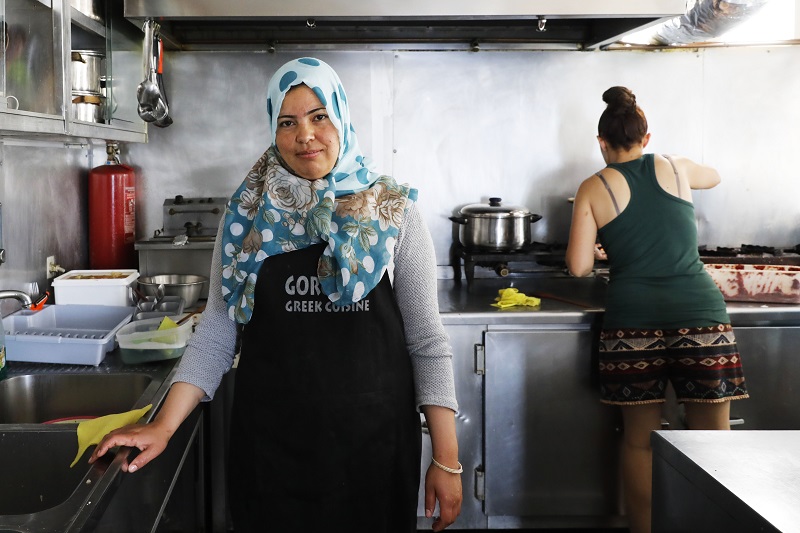
Zahra is a tall, graceful woman who is living in Elefsina accommodation structure with her family. A wife, a mother and, before she came to Greece a year ago, a professional artisan; Zahra was ten when her mother first taught her to embroider and knit. Once her mother had taught her the basics, she moved on to learning from the TV and the Internet. She ran a business in Afghanistan, making and selling embroidery pieces, mostly as domestic decorations, and teaching the craft to students. She is also an accomplished seamstress, who made many of her children’s clothes as they grew up. Zahra is one among many women working with textiles, who dominate the industry in her area of Afghanistan.

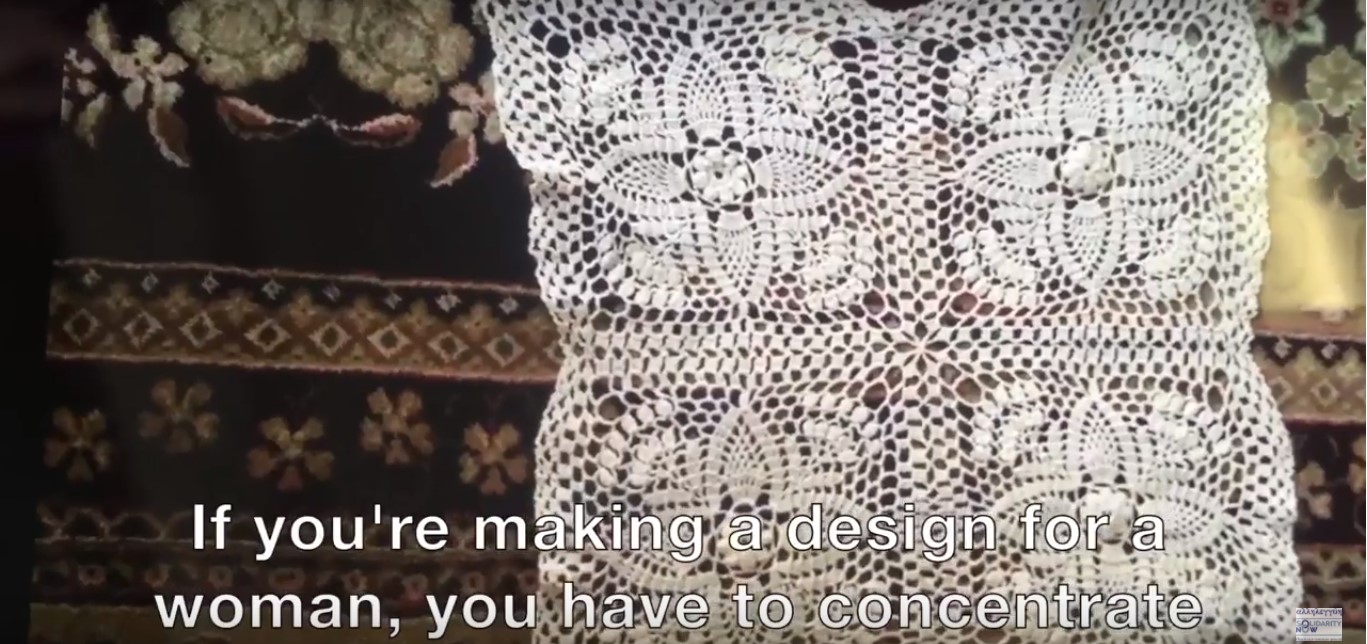
Zahra shows me some of the embroidery pieces she has made on her phone. They are lace-like designs in white with occasional pastel tones and flower patterns. Geometric, intricate and delicate, the pieces combine rigour and intimacy. Zahra often works on commission and is adaptable to what the customer wants: “if we have a new variety and she comes with the book and asks for this design, I will make it for her.” A lot of her commissions are for embroidered pieces that Afghan women traditionally bring to their wedding when they marry, and which then feature as decorations in their marital home.

When working professionally, emotions don’t come into Zahra’s creations: the customer is always right. However, “for my own self I always do [use my emotions]”. Never more so than in her Layla carpet, as the emotions at the core of the story appealed to her: it “makes me upset (…) that’s why I depicted it.” Specifically, the “trust and the love that they had together” made Zahra want to depict the couple’s story in her carpet, and to hang it in her home. Zahra also enjoys the process of telling a story through images. The design for her carpet was based on a painting she saw, in which she was struck by how the painter had used the composition to tell the story. “… the most important and interesting thing in it is that Majnun had to walk through so many mountains to reach Layla and the painter painted all these things. The painter was clever so he gave the whole image together (…) If somebody knew the story and looked at the tableau, they would recognise it.” The same goes for some of the churches local to Elefsina and Larissa, where Zahra was staying before: “When I was in Larissa I went to a church and I saw [the paintings] and I recognised what they meant (…) It’s really interesting.”

But Zahra doesn’t make embroideries and carpets simply for the result. She also enjoys the process involved in creating her work. Firstly, it requires focus and critical thinking. Zahra explains that embroidery is “like you’re doing mathematics. Because you must do it one by one, if one of the stitches is missing you have problems with it all. Secondly, you go on a journey as the piece comes together”. As Zahra says, “At the beginning I don’t have anything to tell you but when it’s about to end, I always feel I must hurry because I want to see what will happen, what it is, how it looks. This excitement and anticipation helps to motivate you through the making of the carpet – a necessary boost when a carpet can take up to a year to make”. Zahra recalls that “sometimes when I was making it and I got tired, I lay down and looked up at the carpet and I thought to myself ‘Ok, when will I finish?’ and I could see all the colours together (…) when you put colours together then you feel like ‘oh, now I should do this’!” Ultimately, the focus and journey of making carpets combine to make them relaxing for Zahra: “it makes me feel happy… It’s really relaxing for me.”

This creative process continues to be an important part of Zahra’s life since she arrived in Greece. Zahra has a tub of knitting wool and needles in her room, and deftly knits a jade green piece for me while we talk. “For the past year since I arrived here, through the problems I have suffered, I feel like I’ve lost myself. But I’ll continue making carpets because I really like it (…) For me, working making carpets by hand, in these countries, it is good not just for the money but for me. It’s really good to work on that.”

The BlueDot program is supported by UNICEF and funded by the European Commission – Civil Protection & Humanitarian Aid Operations – ECHO

[Note: The program in Elefsina was concluded after the closure of the local camp, on October 2017]

#livingtogether | Maha’s story

Giorgos Moutafis for SolidarityNow

“I thought I would never work in my life!”

Maha is from Damascus and she is 30 years old, whereas half of her years she is married! Maha and her husband have five beautiful children, two girls and three boys. All of them arrived at Greece, to the island of Leros, in October 2016; few months later, in February 2017, the team of SolidarityNow welcomed the family to the accommodation structure of Tilos.

“Life is beautiful here. I like the island. In Tilos it is not like the other hosting structures. Before I came here, I was afraid, because I knew how it is to be on an island. As soon as we left the ship, the members of SolidarityNow greeted us with a warm “Welcome!”. Then I started to live normally, an everyday life I had forgotten. We went shopping, we chatted with the organization’s personnel. I felt a tenderness; it is like these people were and are here to surround us with a warmth, exceeding their work.”

Maha learns Greek and English, attending the lessons that take place in the premises of the Tilos accommodation structure, and she admits that the Greek language is harder for her.

Currently, Maha is working as a hotel maid on the island and she describes this experience with enthusiasm: “This is my first job. In the past, I thought I would never work in my life! Now I’m working and I feel my life has changed. The job is a good thing for women and especially for the women from Syria. Now I don’t only sleep and eat, I have a purpose, I have something to do, I have a job. Now, I’m offering things to my family, not just my husband. We both work for the future of our family. Before I was an ordinary woman, I didn’t have anything else, now I have, I get to know people from other countries, I see how life is. I learn new things every day.”

She then refers to her husband’s difficulty in accepting her work, “because in Syria women do not work.” Now things have changed, since Maha manages to combine her role as a mother and as a successful worker, and her husband is not only happy but proud and he congratulates her!

Maha speaks warmly and with gratitude for her employer and stresses that she feels great since he treats her equally; as he treats to the Greek employees of his – “she speaks to me in the same way“. Today, Maha and her husband have decided that they want to stay in Tilos because “our relations with the locals are very good and now that we are working we feel we can start our life from the beginning!”


Maha Baraka is a beneficiary of the Hosting Scheme project of SolidarityNow, and she lives at the accommodation structure in Tilos island.

#ESTIA, the Emergency Support to Integration and Accommodation programme, is implemented by SolidarityNow, supported by UNHCR and funded by ECHO.

Tilos – Community & Integration pilot project

The Refugee Accommodation shelter was created in 2015 by SolidarityNow, in collaboration with the Municipality of Tilos and stood out as an example of a local project through which the local community welcomed the refugees, supporting the smooth integration of those who would remain on the island. The operation of the shelter concerns the provision of accommodation to 50 beneficiaries and has hosted 100 people so far. Watch the BBC tribute to the Tilos program: https://www.bbc.com/news/av/world-europe-40586229/the-greek-island-where-syrian-refugees-are-welcome.

#livingtogether | Mohsan’s story

SolidarityNow

“I can watch my kids grow up”

“My name is Mohsan and I am 42 years old. I came to Greece in December 2016 along with my wife Zouhor and our five children. We have been living in Tilos since January. In Syria, I was in the military.”

“In the beginning, it was difficult”, Mohsan says, because “we didn’t know what life was like in Greece, but now we are slowly discovering it. The SolidarityNow team and the locals have helped us so much.”

They knew some English, and now they have learned much more, even though they are attending classes to learn the Greek language. “We didn’t know any Greek before, now we know some. We also didn’t know anyone here before, but now we greet everyone whenever we see them. All the locals respect us, and they are all good people. No friendships have developed between us yet, but I’d really like to have Greek friends!”

Mohsan’s wife, Zouhor, has been working at a hotel for the past few months. “In the military, I was not able to have contact with a lot of people. It was very difficult for me to talk to everyone. When we arrived here, I began to open up and change. That is why we were able to tell them that we had no problem with Zouhor working. She may be tiring herself out now, but she is working towards our future. She left the structure and saw what is happening in the world, and she is very pleased she did so”, Mohsan admits.

He also talks to us about the changes in their lives that happened gradually. “I stay with the kids. Our roles as parents changed a bit, but I don’t mind at all. When we were in Syria, I would only see my kids for two hours- if I saw them at all- on account of my job. Now, they are fonder of me than they are their mother! However, I don’t know how to cook, but I’d like to learn. When you do something, it has to come from inside of you, you have to want to do it. Before, I would sometimes help out with the chores around the house, now, I do them all. My wife works from the morning until the afternoon. When she returns, she is exhausted, and so I want to help her out.”

Today, Mohsan is happy to have more time to spend with his children. “Since we arrived in Tilos, I have been able to see my children. I can watch my kids grow up and I can be there from the start. When my wife and I got married, I only took one day off work, and it was the day of the wedding, because that’s all they would give us. My life revolved around my work. But that’s all in the past. The only thing I want now is for my children to go to school and to be happy. I want to stay in Greece, simply because there is the chance for a better life for my children.”

Mohsan Barak is a beneficiary of the Hosting Scheme project of SolidarityNow, and he lives at the structure on the island of Tilos.

*The Hosting and Accommodation Programs, are developed by UNHCR, the UN Refugee Agency and funded by the European Union Civil Protection and Humanitarian Aid (ECHO).

————————

Tilos – Community & Integration pilot project

The Refugee Accommodation shelter was created in 2015 by SolidarityNow, in collaboration with the Municipality of Tilos and stood out as an example of a local project through which the local community welcomed the refugees, supporting the smooth integration of those who would remain on the island. The operation of the shelter concerns the provision of accommodation to 50 beneficiaries and has hosted 100 people so far. Watch the BBC tribute to the Tilos program: https://www.bbc.com/news/av/world-europe-40586229/the-greek-island-where-syrian-refugees-are-welcome.

#followmylife | TOBA’S STORY

Julia Turner

Toba from Herat of Afghanistan, the aubergines and the smell of sanjit


by Julia Turner, SolidarityNow intern – trainee

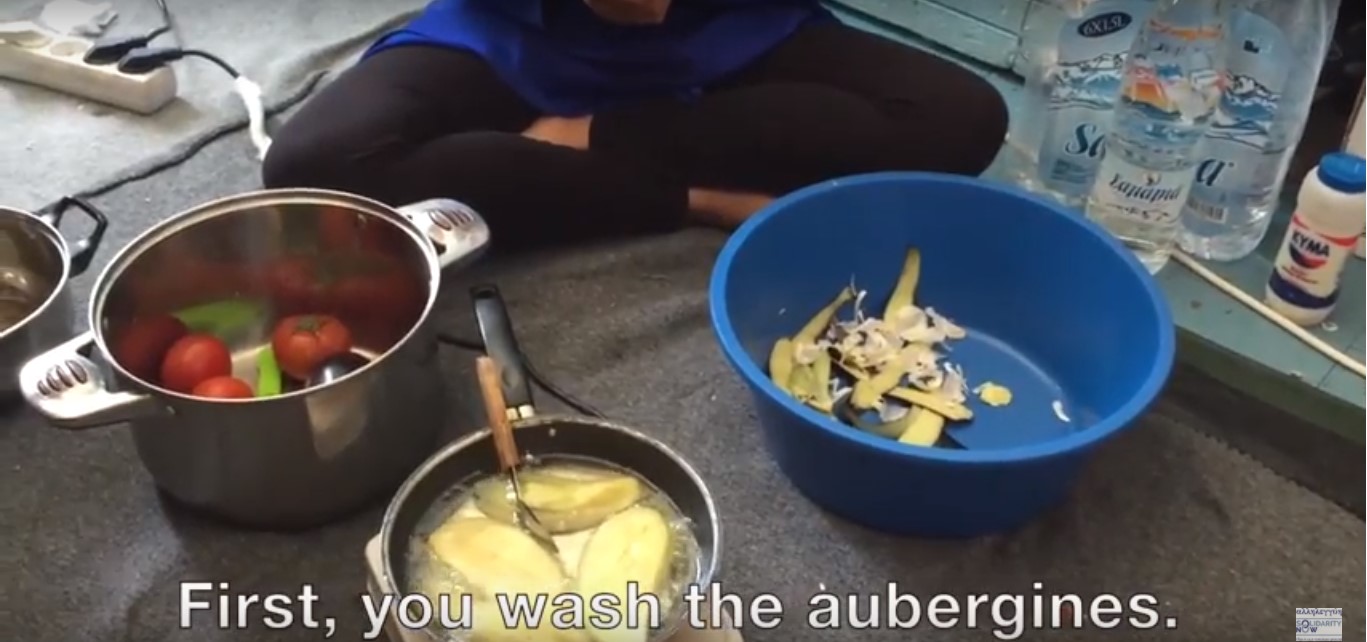
“I’m slicing the aubergine and putting them in the oil; but you must do it fast because if you take it slow it will go brown.”; Toba, a mother of four, is cooking a traditional meal from Afghanistan for me.

Her eldest son, Suhail, is translating for us. While slicing, she tells me more about the dish. It is from Herat, a city in the west of Afghanistan where Toba was born. She learnt how to cook it from her mother – “obviously”, pipes in Suhail.

I ask Toba about the differences she’s found between cooking in Greece and Afghanistan. Happily, there are no ingredients that she hasn’t been able to track down. Hours of scouring the shops of Athens mean that she can find everything the family wants. That said, she has noticed differences in the ingredients themselves: “In our country, the aubergines were bigger. They were so sweet that you could eat it without cooking them”. Similarly, with the garlic, “in Afghanistan when we put the garlic in with the aubergines, the smell filled the whole house. Even the neighbours could smell it! Here their flavour is, perhaps mercifully, less potent.” The biggest difference to cooking here is, of course, the conditions of cooking in camp. The electricity is not very strong so it takes much longer to cook everything. Whereas the aubergines would cook in ten minutes in Afghanistan, it takes a least half an hour here. There is also the challenge of space, as the family occupy a space of approximately two metres x three metres, much of which is taken up with a double bunk bed for them to sleep on.

Two girlfriends cook together between partitions

Since arriving in Greece, Toba has also got to know Fatima, who lives with her family in the makeshift ‘room’ next to Toba’s. Fatima has taught Toba how to cook an Iranian rice dish, not so much through formal lessons as by cooking together – or rather, by cooking in their respective rooms and shouting over their partitions. Suhail demonstrates: “She cooks and she says, ‘What shall I do with this?’ and Fatima shouts [from the other side of the partition] ‘Like this!’” What about the rest of the family, I ask. Does your husband cook? “Only egg”, Toba responds. And Suhail? Suhail grins sheepishly and tells me that even eggs are too difficult for him: “I cook the worst eggs in our family!” Toba plans to teach her children to cook when they’re a bit older.

A smell “traveling” with her wherever she goes

Once soft, Toba removes the aubergines from the heat and places them in a bowl for later. Then the tomatoes and garlic go into the pan, she turns down the heat, leaving these to cook for up to an hour. While she does so, I ask Toba to tell me a bit more about Herat. What is it like as a city? “Perfect” she says, “100% perfect”. “It’s not busy, it is green” Suhail adds, “If you want to have, like, some space there are so many places; it is quiet. And it’s just such a great city – for holidays, for travelling…”. As for the people, Toba is diplomatic: “everywhere you go, there are all types of people. But the culture of Herat means that the people are so welcoming.” Along with the greenery, the architecture and the people, Toba misses the smell of sanjit, a fruit whose fragrance lingers throughout the streets of the city. But despite her love for Herat, Toba is no city girl. “I’m a village girl”, she tells me, having grown up in a village just outside Herat, where the family still lived before coming to Europe.

Despite frugal ingredients, Toba’s cooking skills ensure that the resulting meal is a luxurious affair: deep-fried aubergines melt in the mouth with tomato and garlic, accompanied by the compulsory mountain of rice and washed down with a glass of Doogh, a yogurt-based drink that is extremely refreshing and very welcome in a hot and crowded room. As we finish our lunch, I ask Toba how it feels to continue to eat traditional Afghan food in Greece: “It is a very good feeling when you eat it.” And to cook it? “I feel comfortable… because it’s from my hometown.”


The BlueDot program is supported by UNICEF and funded by the European Commission – Civil Protection & Humanitarian Aid Operations – ECHO

[Note: The program in Elefsina was concluded after the closure of the local camp, on October 2017]

#LIVINGTOGETHER | MAYSOON’S STORY

Giorgos Moutafis for SolidarityNow

“The people are with us. I want to stay here in Tilos”


“My name is Maysoon Alderi, I’m from Syria and I’m 32 years old. I’ve been at SolidarityNow’s Tilos structure since early September with my husband and five children. In June, I began working at Nikos’ restaurant. I really like working, because I wasn’t able to in my homeland, I was at home with the kids. It’s tiring to work and raise children at the same time, but now all I want to do is leave the structure and meet people, learn to speak Greek, and see what life is like in Greece.”

Maysoon already has friends at the restaurant, and she’s gradually learning Greek. “I know some words that are relevant to my work, like fridge, potato, traditional Greek salad, moussaka, water, milk, yoghurt. Once a week, after work, I go to the structure’s school to learn Greek.”

Maysoon’s husband isn’t employed, but he attends the language classes, meanwhile taking care of the children and learning how to get accustomed to the changes. “In the beginning, it was very hard for him. In Syria, women don’t work; they stay at home and take care of the kids. Now, however, his views are also slowly starting to change.”

We talk about the inhabitants of the island, and how they welcomed Maysoon and her family, how they integrated them within their community. “The people are with us. Generally, all the locals are good to me. I want to stay in Tilos. I wish I can buy a house and stay here forever. I hope that my kids will be able to go to school here, and we can all lead regular lives. I didn’t only come here because I am a refugee, I came here because I want to be like the Greeks!”


Maysoon Alderi is a beneficiary of the Hosting Scheme project of SolidarityNow, and she lives at the structure on the island of Tilos.

#ESTIA, the Emergency Support to Integration and Accommodation programme, is implemented by SolidarityNow, supported by UNHCR and funded by ECHO.


Tilos – Community & Integration pilot project

The Refugee Accommodation shelter was created in 2015 by SolidarityNow, in collaboration with the Municipality of Tilos and stood out as an example of a local project through which the local community welcomed the refugees, supporting the smooth integration of those who would remain on the island. The operation of the shelter concerns the provision of accommodation to 50 beneficiaries and has hosted 100 people so far. Watch the BBC tribute to the Tilos program: https://www.bbc.com/news/av/world-europe-40586229/the-greek-island-where-syrian-refugees-are-welcome.