#FOLLOWMYLIFE | ΝΑΚΑΜ’S STORY

Julia Turner

Nakam, the artist

by Julia Terner and Valia Savvidou

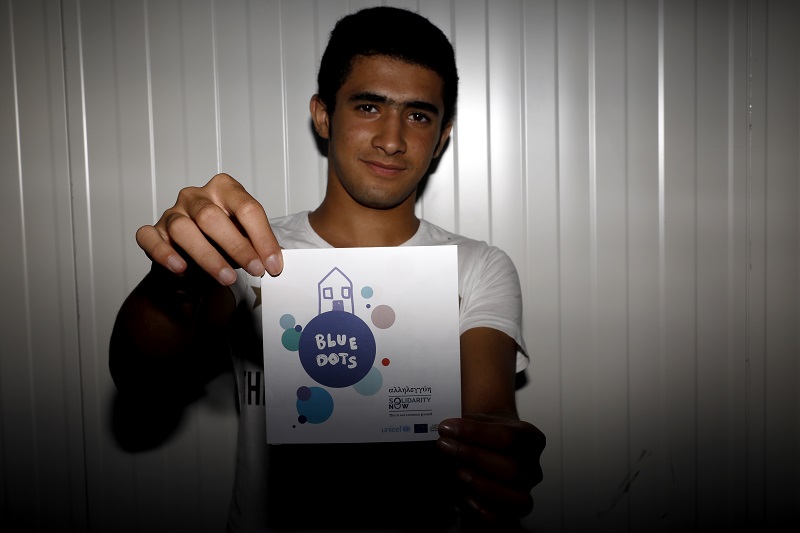
Nakam is dressed entirely in blue today, as he is every day. Blue hat, jacket, shirt, jeans and sandals. I ask him why he dresses in blue and the answer is simple: “I like blue”.

Nakam is a Kurdish artist and writer sitting under a fig tree with me, on the cracked terrace of Elefsina camp where he now lives. He studied art at university in Iraq and is now enrolled at university in Athens, which he relishes. “I like it here because (…) I know I can make everything that I want to (…) I am so happy now (…) that I go to college and to all the places where I can see art, like museums and art galleries.”

On a wall in the camp, Nakam hangs artworks depicting the crossing to Europe across the sea in pencil and charcoal. “This is about the people, how they came here and the problems that they have faced in the sea.” The pictures typically show a boat crossing the seas, with abstract figures aboard and the land wrapping around them. While the distress and despair are evident, there are often small signs of hope too, a sun shining above, a tree growing out of the boat, people reaching to them. I ask Nakam why this is. “Before, when the people decide to come and make this journey, they have many hopes. They are happy. They have hope that they will make their dreams of a good life come true. But this journey has many perils (…) they realise that it is so difficult and that there are many dangers (…) I like to mix this hope before with the despair during the journey together.”

Nakam employs symbols to convey these powerful emotions and forces of fate: a tree, a dice, a dove. “There are symbols in all of my work. Some symbols about love, about dreamers, but also some symbols about problems and people and chance – how some people have chance and some don’t.” Not confined to his visual art, Nakam’s use of symbolism extends to his writing as well. One of the stories he shared with me is narrated from the perspective of a doll, passed from owner to owner until she is worn out and broken. The parallels between the doll’s experience and that of refugees are not unintentional. However, if Nakam’s work is to be recognised in Greece, he must learn the language: “I would like to be able to speak Greek very well because I have many stories and works that I have written and I would like them to be translated into Greek.”

Overall, Nakam’s art is about expressing what is inside you, and the importance of doing so. When I ask him what subject he most enjoys depicting currently, he tells me “my work is about the space between reality and dreams (…) I hope to make everything in my heart. I have many things in my heart so I hope that I can make everything that’s inside it.” He applies the same approach to the weekly art lessons that he now gives to the children in the camp, with the help of the Solidarity Now team: “I feel the children need help. They have wishes to make art and express themselves (…) I like to teach the children good things through the art classes, to calm them down.” What’s more, it is the emotions of all Nakam’s neighbours that he seeks to channel through his art: “I know many people who have many things inside them and they are sad about the journey. But they cannot tell their story; they have to keep it inside. So, I like to make these drawings about the people and what is inside their hearts.”

Today, Nakam is very active artistically! Soon, he will take part in a series of exhibitions and events. Although his works are mostly black and white, he states “I have colourful dreams. Now I feel I have a choice – many doors to open.”

His dream of life is to live free, “without wearing a mask“, as he tells me while coming a little closer to me and lowering the tone of his voice. This freedom wants to be expressed in writing, “Writing is the most important thing for me. That’s what I will do. And I will write in English and in Greek, not in my mother tongue. I want to walk ahead; I don’t want to keep anything from the past.”

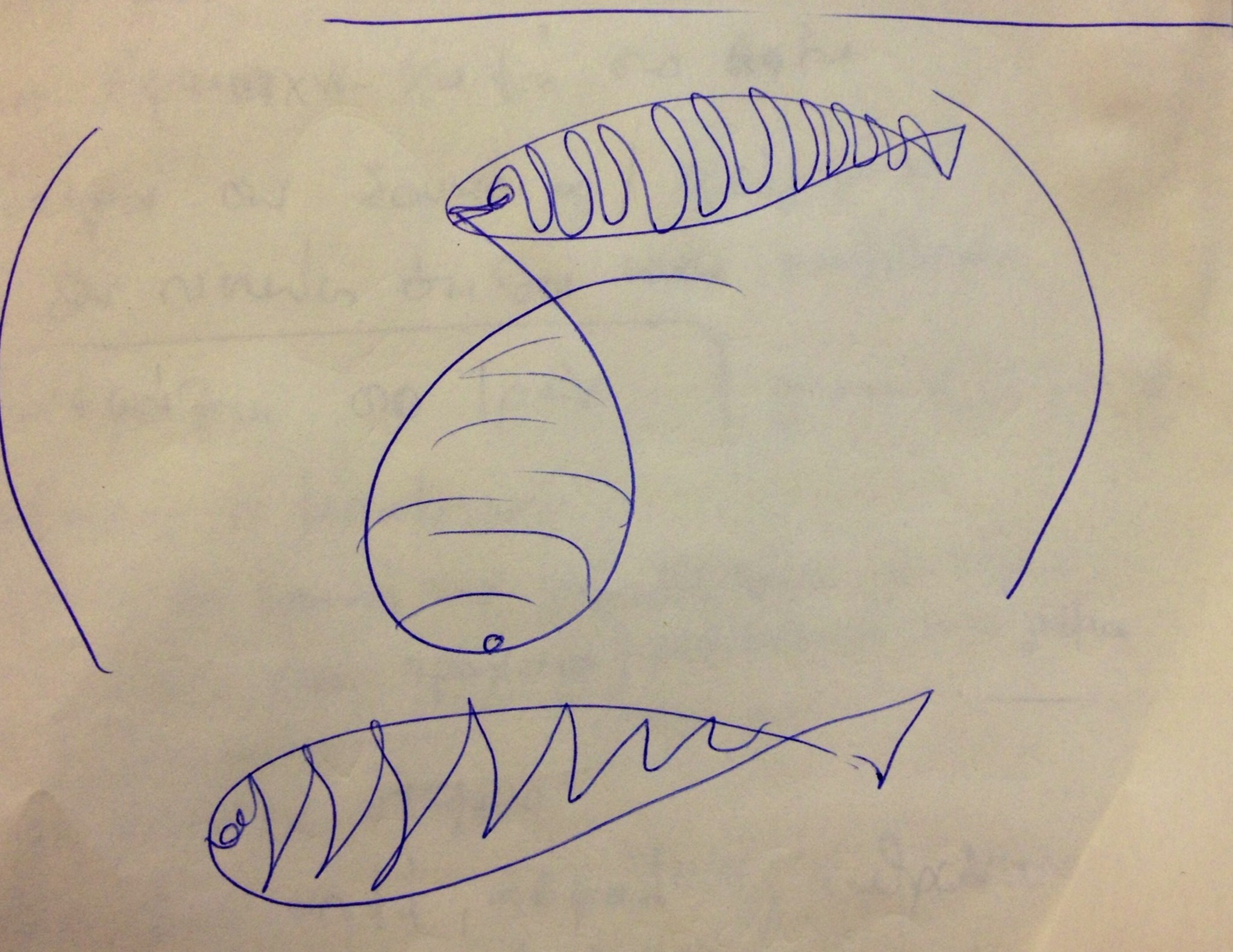
Wishing to see each other again soon and before we say goodbye, Nakam takes my pen and quickly paints a few fishes – “Now you know, I would paint a black and white seabed.”
#FOLLOWMYLIFE | AHMAD’S STORY

Julia Turner

Gol Ahmad, “the Grandad”

 by Julia Terner, SolidarityNow intern – trainee

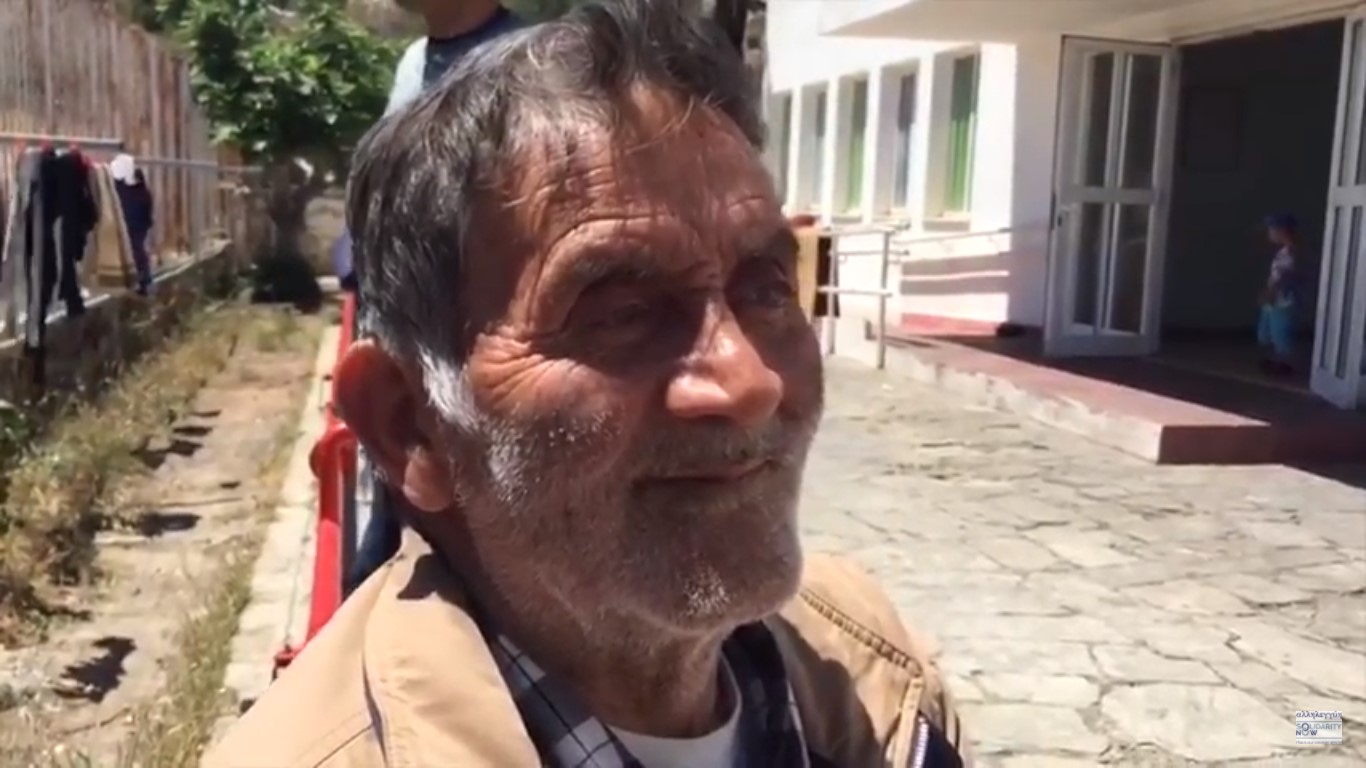
Referred to as ‘The Grandad’, Gol Ahmad is the only elderly person living in Elefsina camp. He is staying there with his son and three grandchildren. Often sitting on a bench on the terrace outside the camp building, he is always smiling and ready to say ‘kalimera’ (good morning) to those who pass him by. I ask him why he likes sitting outside: “because of the fresh weather out here… for me, it’s better to sit in an open space and to smell the fresh air.”

Gol Ahmad was born and grew up in Kabul. His clearest memories centre on school: he and his siblings would wake up, wash their hands and go to school. In the evenings they would come home, eat, work for a few hours and sleep. I ask him what he did when he wasn’t in school. He responds, “I was always going to school. My parents did not allow me not to go to school!”. Gol Ahmad stayed in the capital as an adult. He had a very small room in his home, the walls of which were made of mud. “It was a lovely room. I put up the certificates of my school graduations and pictures of my wife and there were lots of books which I read.” Over his lifetime, Gol Ahmad has seen the city change considerably: “It’s really changed since I was a child. Now you can see the high buildings. In Kabul, there are lots of new cars and everything has changed. And of course, there is a war, with bomb blasts that destroy everything.”

Gol Ahmad worked for forty years in two government ministries in Kabul, the Ministry for Social Workers and the Ministry for Work. Starting from humble beginnings, he rose the ranks to become a General Manager. “There were steps to become manager. I started from the bottom step and I made it. There weren’t any more steps to go on.” I tell him he must have what it takes! “Same to you”, he quips. Despite struggling with prostate cancer and memory problems, Gol Ahmad still has his wits about him, evident in his bright eyes and ability to keep himself going in difficult surroundings. This energetic quality must have been spotted by his employers in Afghanistan: “my job was for forty years and after that they said ‘Ok, you can retire’ but then the minister said ‘No, we need him! He has to work!’ So, I made another contract for two years, and at the end of that they extended my contract for another two years.”

Gol Ahmad’s eyes light up when talk turns to his grandchildren, Ramin, Rubineh and Anliah. “They are well-mannered, they are hard workers, that’s why I really love them.” Due to his health conditions, and the fact that he is a widower, Gol Ahmad depends heavily on his son and grandchildren in the camp: “they bring me everything like food, my medicine and they bring me tea whenever I need.” He laughs when I tell him he’s a lucky man to have a tea delivery service. Gol Ahmad is similarly encouraging of his children when it comes to their careers. I ask him what he thinks they will do when they grow up and he tells me “it depends on their own wishes, their own choices. But they are talented. One grandson is studying Engineering in Austria.” Gol Ahmad is confident that whatever they choose to do, they will do well in. He has clearly passed on his strong work ethic to his grandchildren.

Talking to the granddad of the camp causes one to reflect on the power and value of family, and their importance in such challenging settings. “Now, I’m alone in here because I lost my wife. If they weren’t here then I wouldn’t be able to survive, they are the ones who look after me.”

The BlueDot program is supported by UNICEF and funded by the European Commission – Civil Protection & Humanitarian Aid Operations – ECHO

#LIVINGTOGETHER | Kousay’s STORY

Giorgos Moutafis for SolidarityNow

a discussion with Eleni Stamatoukou

“I don’t feel like a foreigner in Tilos”

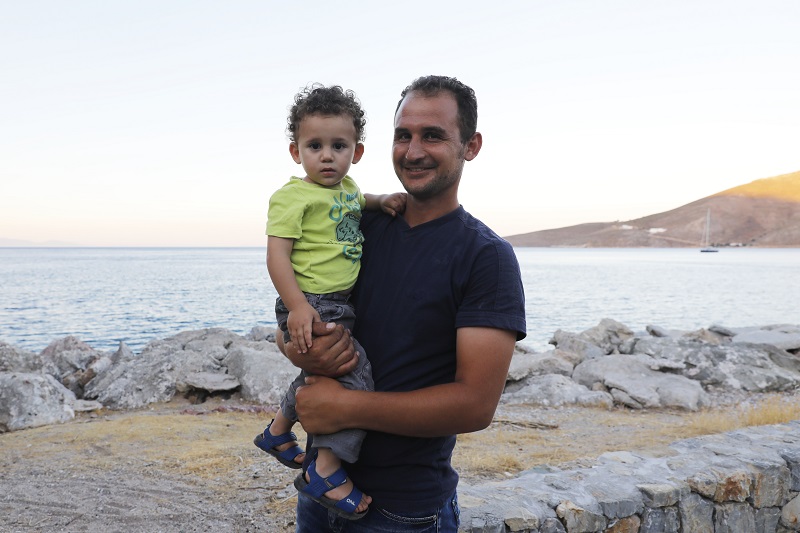
 “What we’re experiencing now, here, in the accommodation structure we are hosted in Tilos, is like a dream coming true. I feel stronger than before. Compared to other people who came from the same place as me, I feel as though I’m in the best position. I have most of my family here with me, and I was the first to find a job. I live a normal life”.

Kousay is always polite, even though his smiles are somewhat restrained. “Do you need something? I’m glad to help!”; this was the first thing the 25-year-old Kousay told us upon agreeing to talk to us.

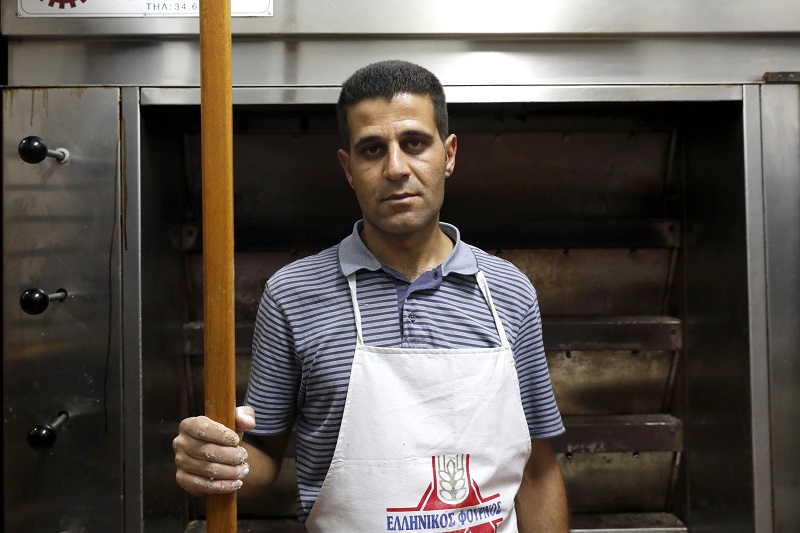
The long trip to Greece, away from the war, begins in Daraa, in Syria, whereas he has been in the hosting structure of Tilos the past nine months. Three months ago, he was fortunate enough to be able to welcome his mother and his younger brother to the island. For the past few months, he has been working at the only bakery on the island. We ask him whether he has learned any Greek. “I know how to say good morning, goodnight, and a few words relevant to my job, like bread, dough, flour. I attend Greek lessons at the structure’s school, but I have difficulties concentrating during the lessons. My employer talks to me in Greek so I can learn. The truth is, I prioritized English. This year, I was able to get my certification at a B2 level in English”. Before the war, Kousay worked as an air-conditioner technician. He’s a high school graduate, and he has attended the first year of classes at a University of Economics.

In the middle of our conversation, he suddenly excused himself, as he told us he had to run home. He then appeared with a plate of ejjeh in hand, which he offered to us. Ejjeh is a traditional Syrian dish which consists of greens, eggs, flour, parsley, and a bit of mint. “My mom made this for you. When we lived in Syria we often couldn’t find bread, so we made it like this. In Syria, we have Arabic pita instead of bread. My wife doesn’t know how to make it so I used to make it. Here in Tilos, I cook sometimes, in my free time”.

“I haven’t had any difficulties with work. People who see me in the bakery come to congratulate me. I don’t feel like a foreigner in Tilos. Like most, my biggest challenge is the language barrier. I thought I’d only be here for a bit, and suddenly I had a job. My relationship with Michael- Tilos’ baker- is really good”.

We ask him if he has a friendly rapport with the rest of the locals as well. “I think friendship takes time, so maybe at some point in the future we’ll achieve that. But I recognize and know all of them, and we always greet each other”.


Kousay Al Damad is a beneficiary of the Hosting Scheme project of SolidarityNow, and he lives at the structure on the island of Tilos.

#ESTIA, the Emergency Support to Integration and Accommodation programme, is implemented by SolidarityNow, supported by UNHCR and funded by ECHO.


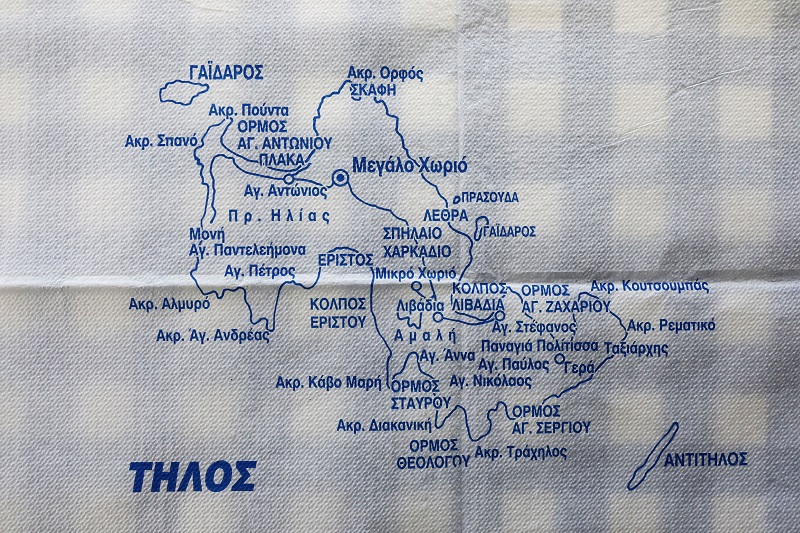
Tilos – Community & Integration pilot project

The Refugee Accommodation shelter was created in 2015 by SolidarityNow, in collaboration with the Municipality of Tilos and stood out as an example of a local project through which the local community welcomed the refugees, supporting the smooth integration of those who would remain on the island. The operation of the shelter concerns the provision of accommodation to 50 beneficiaries and has hosted 100 people so far. Watch the BBC tribute to the Tilos program: https://www.bbc.com/news/av/world-europe-40586229/the-greek-island-where-syrian-refugees-are-welcome.

#FOLLOWMYLIFE | FARIBA’S STORY

Julia Turner

Fariba on the mountains’ top

by Julia Terner, SolidarityNow intern – trainee

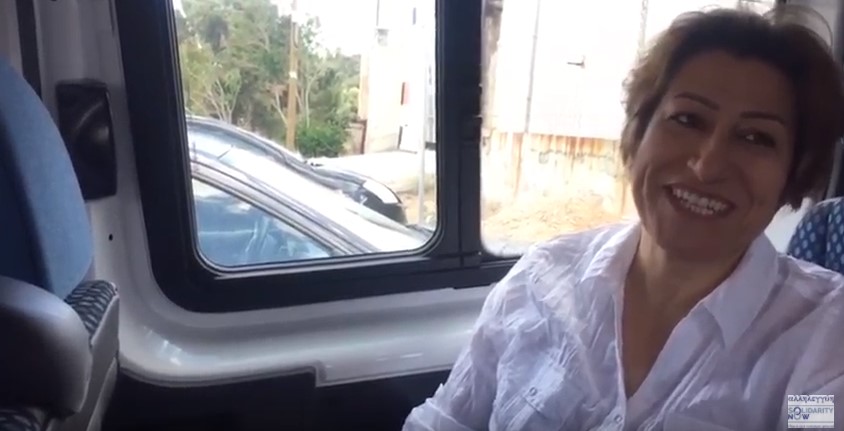
“Sometimes I go outside to the forest alone and I start to sing with a loud voice.”. I am talking about the power of music and singing with Fariba, a Kurdish woman from Iran. She speaks quickly and earnestly and has a pleasant husky timbre to her voice. With strong features and short, smart russet hair, she cuts an elegant figure as she sits opposite me in the van. We came to the van for Fariba to sing ‘Soltane Ghalbha’, a romantic song from the homonymous and famous Iranian film of 1968. She feels people disapprove of her singing in the camp so we have created our music studio in the car park. Fariba sings the song in a strong, reedy voice. As she signs without accompaniment, the arresting performance transports us out of the van, over the hills that hug the port and into another space. We discuss how important it is to use singing as a release. Fariba confesses that she begins to feel down when she hasn’t sung for two days or more. “I feel relaxed singing the songs because whatever I have deep inside, I can bring them out when I’m singing the song.”

Fariba understands the importance of transporting oneself out of the everyday and clearing the mind of its emotional baggage; along with her love of singing, Fariba is a keen mountain-climber. She tells me about the feeling of summiting a mountain: “when you reach the highest part, you forget about all the pain and the sadness and tiredness. You forget everything.”

So along with her singing outside the camp, Fariba has tackled the large hills that surround the camp – climbing each of these on her own since her arrival here. Back home, she has climbed some of the most challenging mountains in Iran and the surrounding countries. Together with a group of mountaineers, she has climbed Sabalan, Dena and most impressively, Mount Damavand, a potentially active volcano, which is the highest peak in Iran and the Middle East, and the highest volcano in Asia. For this reason, perhaps people can be forgiven for calling such climbers crazy. Indeed, Fariba says “we like the word that’s give to us, of crazy.” Fariba did not start climbing properly until she was 35 years old, but one could say it was inevitable. Her brother was a guide and her father was a climber himself. At 95, he has seen a lot but he still has great power and energy, which Fariba is convinced is thanks to the mountain climbing. “It’s great at giving you energy, not just physical but mental too.” This is due to the physical exercise you get but also the practice in focusing your mind: “you never think of anything, you just think of your aim to get to the top of the mountain, and getting yourself there.”.

Of course, you are also richly rewarded for your efforts by the view. “There is a place, there are forests in Kurdistan, which when you visit the you believe it’s paradise. Sometimes I found myself thinking, ‘If this is not paradise, what is?!’”. However, the overall feeling of stunning beauty combined with achievement and clarity is one that Fariba tells me she simply cannot put into words. “Until you have been to the place itself, you won’t understand what I’m telling you (…) I cannot express my feelings right now in words.”


The BlueDot program is supported by UNICEF and funded by the European Commission – Civil Protection & Humanitarian Aid Operations – ECHO

Fatima loves to run and hit a record!


Fatima Sadiqqi is 16 years old and she is coming from Afghanistan. Last Saturday she ran her first 5km race at the 6th International Thessaloniki Half Night Marathon half marathon in Thessaloniki, Greece and hit a record! Wearing her hijab, she crossed the finish line with net time of 00:13:56, making history as the only woman teenager refugee among the Greek women!

Fatima loves running! When she was in Afghanistan she was running for her own joy. We met her few hours before the race and we talked with her about her big day. “I love racing! My dream is to be a real champion, this is my goal!” she said and she stood with confidence in front of the camera. “Today I want to send a special message to my people, I want to tell them that they must exercise!”. Fatima is a fearless girl, she is so inspired and motivated and she pursue her dreams!

SolidarityNow is proud of Fatima and the rest of the teenagers and their parents who participated in this important event that has altered the course of city’s history! This race helped pave the way for greater equality and equal opportunities. Refugees and immigrants show on Saturday that despite the difficulties they have faced, can contribute to society through their talent, their skills and their passion for life!

#LIVINGTOGETHER | AHMAD’S STORY

Giorgos Moutafis for SolidarityNow

a discussion with Eleni Stamatoukou

“My name is Ahmad, and I’m 30 years old. I come from Syria, and more specifically, the city of Deir ez-Zor, which is situated near the boarder to Iraq. Deir ez-Zor is Syria’s richest city, a result of the oil reserves found in the soil, but the people who live there are the poorest.

In my native country, I worked as a construction worker, and then I opened my own shop, which sold women’s accessories. I arrived in Tilos in March 2017, along with the rest of my family. Before this, we were at Ioannina. I’ve been in Greece for a year now.

I don’t speak Greek yet, but I’m gradually learning. Of course, I try to learn as much Greek as I can from my job. I’ve been working on the island at Michael’s hotel since the end of May as a helper. I managed to get this job with the help and support of the SolidarityNow team. Things are going great at the hotel. When the clients see me, they greet me before I manage to greet them! I have yet to make some Greek friends, but I’d really like to. The problem is that I still don’t speak the language, but when I manage to learn it, I’ll drink yerba mate, a traditional Syrian drink, with the Greek families.

I have no complaints, everything is perfectly ok. I’ve taken the first step. I got a job”!

Ahmad has certain expectations for his and his family’s future.

If he can secure a stable job and a house, he would like to stay in Greece. However, if he isn’t able to find a job, he would prefer to seek out a career and be able to progress in another country. “I just turned 30 years old, and I have already experienced so much. I don’t ask for anything, just that my family is okay, both the one that is here as well as the members that are currently in Turkey. I don’t ask for anything for myself, just for my children. I don’t feel very strong, because I’m far away from my mother and my four siblings. When we are all reunited I will feel strong again!”

Ahmad Alkhalaf is a beneficiary of the Hosting Scheme project of SolidarityNow, and he lives at the accommodation structure in Tilos island.

#ESTIA, the Emergency Support to Integration and Accommodation programme, is implemented by SolidarityNow, supported by UNHCR and funded by ECHO.


Tilos – Community & Integration pilot project

The Refugee Accommodation shelter was created in 2015 by SolidarityNow, in collaboration with the Municipality of Tilos and stood out as an example of a local project through which the local community welcomed the refugees, supporting the smooth integration of those who would remain on the island. The operation of the shelter concerns the provision of accommodation to 50 beneficiaries and has hosted 100 people so far. Watch the BBC tribute to the Tilos program: https://www.bbc.com/news/av/world-europe-40586229/the-greek-island-where-syrian-refugees-are-welcome.


#followmylife | The Elef Club for teenagers in Elefsina


by Julia Turner, SolidarityNow intern – trainee

“We wanted to get away from… from being so alone; and you know keep our minds busy.” Suhail is explaining how the Elef Club was set up. Six months ago, Suhail and a couple of friends approached Solidarity Now CFS Facilitators* Theo and Eleni, asking to set up a group for the teenagers of the camp to provide entertainment and to make friends with one another. The club started with a piece of paper, on which everyone wrote down what they wanted to do or what they could teach the group. That way they built activities to do everyday: “we made a schedule everyday… football, volleyball, board games…” Now the group meets daily and is a central part of its fifteen members’ lives.

The interview is as chaotic and fun as you would expect to have with a group of teenagers: dominated by excited laughing and teasing, infinite distractions as phones go off and tangential conversations take hold, and plenty of talk about girls. However, what strikes me is how earnest the boys are and how open they are about their feelings and fears. When I ask the group about their favourite activities, they initially call out specific games: “when we write the homework and play volleyball”, says Danial; “I like Jungle Speed and Dobble” says Zobair; “I like when the teacher helps me with the, you know, girly things…” says Ramin. But when Sadeq brings up the social aspect of the club, saying “I like to think that we gather around and play together”, everyone agrees. “I like that we are together and can discuss anything”, says Zobair; “And if we have a problem we can share it with anyone”, says Suhail. Theo recalls that they agreed at the beginning that they would be the solutions to their own problems. “I remember that sentence”, mulls Suhail “We will be the solutions”.

So how would the boys describe the club themselves? What are the words or feelings that the name ‘Elef Club’ conjures up for them? “When I hear Elef Club, I get happy”; “I imagine I am playing”; “Being lucky”; “Problem solver!”. And what about the members who make up the club themselves, what do they want to do in their careers? Sharoq wants to “go to Madrid to play football with Ronaldo” and he’s not the only on who wants to be a “footballist”. Others are more artistic – an astronomer and a singer are among the group; or more technical “I want to learn medical in Germany”; “I want to be a mechanic”; “Professor in MIT…in computers”. They become more adventurous when we discuss what they want to do with their lives outside their careers: “I want to create a submarine and do some research in the sea”; “I want to create a big airplane”; “I want to go around the world… in 80 days!”; “I want to help the poor people… to make Earth better”, says Zobair; “I want to love someone”, says Younnes.

Ultimately, the club offers so much more than fun activities for its members to do everyday. It bolsters their confidence by providing support through Eleni and Theo, and through the strong bonds that they have built together. “You know, in this group, we have some really good friends… and we’re not just school friends or something. We live together. It’s something so different. It’s like, they’re my brothers.”. The importance of these bonds is particularly clear when the boys describe their first day of school, which they all agree was a huge highlight of their time here: “I went out of the car, I saw the girls, I ran back!… All of us were going back, shouting ‘Go back!’ and then Danial said, ‘Let’s go guys’ and we went in front and we had to enter.” With many of the group on family reunification programmes that may see them move to other European countries, the future of the club is not certain. Nonetheless, it’s enduring importance is secured through the friendships it has helped to build: “I don’t want to say goodbye to these friends”, says Danial. Ramin nods, “I don’t want to say goodbye to my friends”.


The BlueDot program is supported by UNICEF and funded by the European Commission – Civil Protection & Humanitarian Aid Operations – ECHO

In Tilos #LivingTogether

Giorgos Moutafis for SolidarityNow

Ahmad works at Michalis’s hotel. Kousay found work at the island’s bakery. Maha and Maysoon are working for the first time in their lives and feel the joy of earning a salary and being able to support their families. Mohsan for the first time devotes time to raising his children. All of them live in Tilos. The island that has been demonstrating its solidarity since the beginning of the refugee crisis; not with words and analysis, but with deeds.

SolidarityNow follows these people in their everyday lives, takes notes of their stories of coexistence; stories which they share with us and portray emotions, realities and dreams as they narrate them. In #LivingTogether, a photographic journey with the collaboration of the photojournalist Giorgos Moutafis, we travel to Tilos, the island of tangible solidarity. And we realize that “small miracles” just need brilliant and open minds and few competent people with a great deal of will.

*SolidarityNow’s innovative Accommodation & Hosting program in Tilos, implemented since 2016, is proving in practice how integration of refugees in local communities can be a lever for sustainable development in a local community. The organization’s vision of this program being a model of hospitality and social integration and ideal coexistence, became an international example of positive change: a tangible example, with concrete results and achievements that can be replicated in other European societies on how a “crisis” may be transformed into “a success story”.

#ESTIA, the Emergency Support to Integration and Accommodation programme, is implemented by SolidarityNow, supported by UNHCR and funded by ECHO.


They shared their love with U2!


Their love story is one of the true love stories starring in the new video of the all-famous U2 band for their freshly released song “You’re the best thing about me“.

Who are they? Maha and Abdulrahman from Syria; SolidarityNow beneficiaries who have been living in the accommodation structure for refugees in the island of Tilos since February 2017. The couple has five beautiful children and they dream of settling down in Greece.

The filmmaker Tatia Pilieva and her team followed four real-life couples during the last 24 hours they had together before one partner had to leave for an extended period. One of these couples is Maha and Abdulrahman; this last one setting forth to work in Athens.

The two of them open their hearts to the camera:
– “Of course, I remember the first time my husband kissed me,” Maha says.
– “I gave her a kiss, here“, Abdulrahman confides and shows the edge of his lips.

Abdulrahman is a chef – and one of the best as his monicker in Syria suggests: “The King of falafel”. And if that isn’t enough, he proved it with his participation in the Refugee Food Festival, which was held for the first time in Athens on the initiative of the UNHCR, last June!

Watch him cooking, here

But now his wife Maha works too! Maha is currently an employed mother of five who works as a maid in a hotel in Tilos. What is more, the BBC tribute to the Tilos innovative hosting program implemented by SolidarityNow was based on Maha’s story and was presented internationally last July!

You can see the BBC tribute, here:

This couple of young and active people who fled war and came to Greece is an example of successful integration in the new social environment, which has embraced and safeguarded them. The true protagonists – life’s heroes, are now the protagonists for U2 also!

ESTIA, the Emergency Support to Integration and Accommodation program, is implemented by UNHCR and funded by European Union Civil Protection and Humanitarian Aid (ECHO).

#FOLLOWMYLIFE | DANYAL’S STORY

Giorgos Moutafis for SolidarityNow

Danyal, the sleepless guard

by Valia Savvidou

A restless teenager with black lively eyes, curly black hair and expressive hands that talks endlessly, while passing next to you singing and laughing!

Danyal makes everything during the day to serve anyone who needs it.

At night, he reads and learns. I ask him why in the night. “Why? It is quiet because I have insomnia, what does that mean ‘why?’ – I like it!” And yes, Danyal’s night has proved effective since, as an excellent user of the new technology, he has learned English online, and now he is also learning Greek.

In the meanwhile, he is the man who intervenes both for the service and for solving problems that arise between the people who reside, as he himself, in the accommodation structure for refugees and migrants in Elefsina. Among the rest he does, he welcomes the volunteers, while having the English language as a weapon -“I conquered it too“-, he guides them in the structure, shows them what to do, where and how they can help, naturally in agreement and with the instructions of the people of the structure; of course, he acts as the mediator between the organizations’ teams operating in the structure and the refugees-beneficiaries.

Everyone, younger and older, Greeks and non-Greeks, addressing vividly Danyal! He replies to everyone and they all listen to him – they wait for their turn until he can assist them.

“I am more pleased when I help others than they are themselves – I never get tired!

Besides, in four years from now, ‘remembering me, in four’, I will be the best and I will not be here of course! I will not stay here forever, but until I leave I want to do my best for me and for the others!”

For the people of the organizations, “these guys are like my family; we are all day together.” Danyal exudes his energy in sports activities that take place in the structure and is distinguished in the volleyball, which he loves the most.

He’s got plenty of dreams and has this beautiful arrogance and exaggeration of a teenager; the young man who wants to leave nothing to chance, but he has the will to fight and is certain to succeed in whatever he decides to do! Besides, in four years from now we share his confidence that he will studying biology, become an amateur singer, a very good volleyball player, and at the same time he will be speaking ten languages! But most of all he will be the ‘bright leader’, as he characterizes himself, for his family!

The ‘bright leader’, Danyal greets me with a sweet look, kissing my hand as a young gentleman, and leaves by saying “whenever you want to see me again, I will be here for a while.” Bright for everyone and not just for himself, Danyal is the best example in the structure for his siblings and other children who love him and listen to him; I too did the same -obeyed his instructions until I had a conversation with him because he had many tasks to sort out!

* Danyal is a beneficiary of the Blue Dot program in Elefsina. The program in implemented by SolidarityNow, supported by Unicef and funded by the European Civil Protection and Humanitarian Aid Operations/ECHO.