Let’s create a tolerant society


Dimitra Sarantopoulou, a sociologist in SolidarityNow’s refugee accommodation center in Porto Heli, talks about her experience – the experience of someone who tries to help and stand by to the people in need.
Today, 350 refugees of Kurdish and Afgan origin, are hosted in the accommodation center of Porto Heli.

A team with a common vision
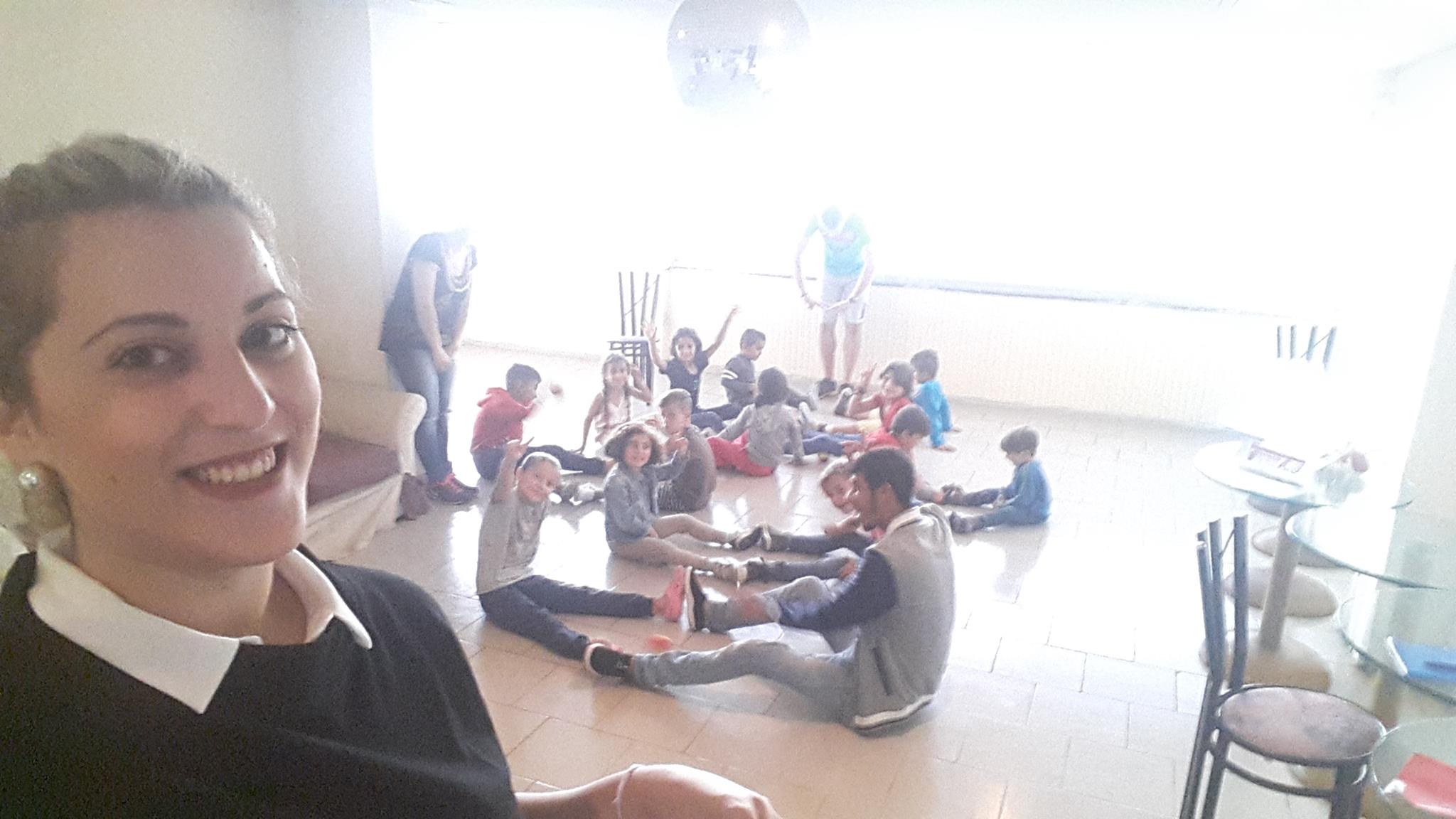
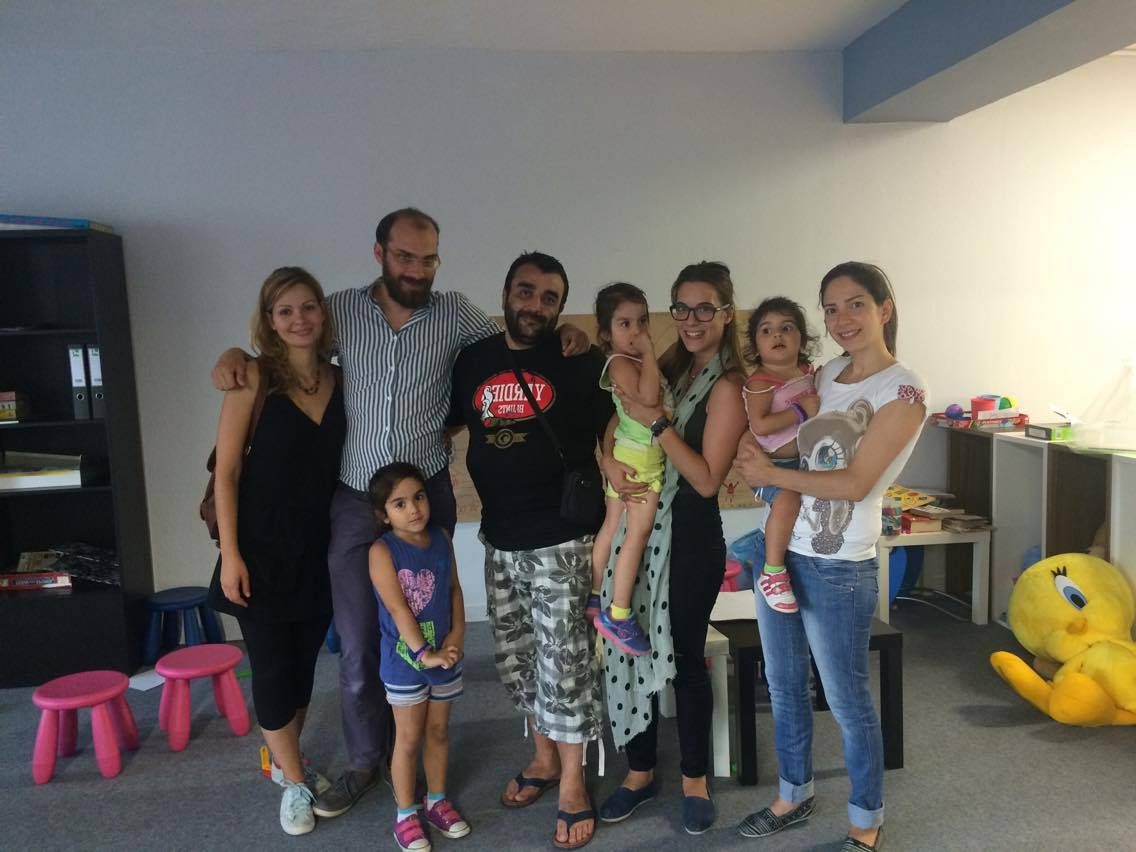
Dimitra is a member of the organization’s team involved in educational activities provided to the refugees – the team consists apart from Dimitra, a philologist, a gymnast and an interpreter. For Dimitra and the rest of the team, the goal is one and clear: “To create a small society based on the principles of tolerance and acceptance in which different cultures and cultural habits can coexist”.

The different daily routine of this work
“There are a lot I can say about our daily life, the work we do, the feelings we share, that I really cannot put my whole experience into words. I feel appreciation that I was given this opportunity and I consider myself trying, along with the other members of the team, for a better world. There is no better feeling than knowing you made someone happy even for just a while.
My main role as a sociologist is to study and record the interaction of our society with new cultures, which are governed by different relations, laws and religions.
In parallel, it is my duty to try introducing in beneficiaries’ daily lives new habits and customs which will contribute to their smoother integration within the host society. Based on this principle and as a result of a great effort, we have created a small school which operates in the accommodation center. The entire team, with love for what we do, with persistence and patience, we were able to make feasible a dream that we thought impossible in the beginning! In order to have an effective school we have distinguished among the beneficiaries of different age groups and created a program able to engage all groups simultaneously and for as much as we can.
At school, beneficiaries are taught English and Greek, whereas one of its operational objectives was the creation and production of a guide with basic information that a refugee needs to know, in Arabic and Kurdish. Other activities included in the school program are gymnastics, volleyball, basketball, football and of course special activities for children such as art activities, singing and dancing – through the latter we become kids too!”.

I try…
“…in order to support them to catch the thread of their life from the beginning. I joined the organization Solidarity Now, which is trying to provide the least to people in need: a decent shelter, humane living conditions and food, opportunities for integration into Greek society, education”.

Present is part of the future
“I cannot think of the future; I prefer to think about the present. I just want to continue offering strength, courage and support to those who really need it”.

*The Hosting Scheme Project “Home for Hope” is implemented by SolidarityNow with the support of UNHCR GREECE and EU funding.
Samir is flying to Europe!


Just a couple of days ago, Samir’s family left Greece for another European country, which, through the European Relocation Scheme, will become their new ‪home. But while they were here, they also had a home no less real and no less warm than the one they are about to build.
Thanks to Lambros’ hospitality and the Home for Hope Hosting Project, Samir’s family enjoyed a beautiful and, most of all normal, daily life – and just like that ‪‎Europe welcomed them with an open mind and an open heart.

If you also wish to host a refugee in your home, call us at 3233 210 816 or send us an email at filoxenia@solidaritynow.org.

*The Hosting Scheme Project Home For Hope is implemented by SolidarityNow with the support of ‪‎UNHCR and EU funding.

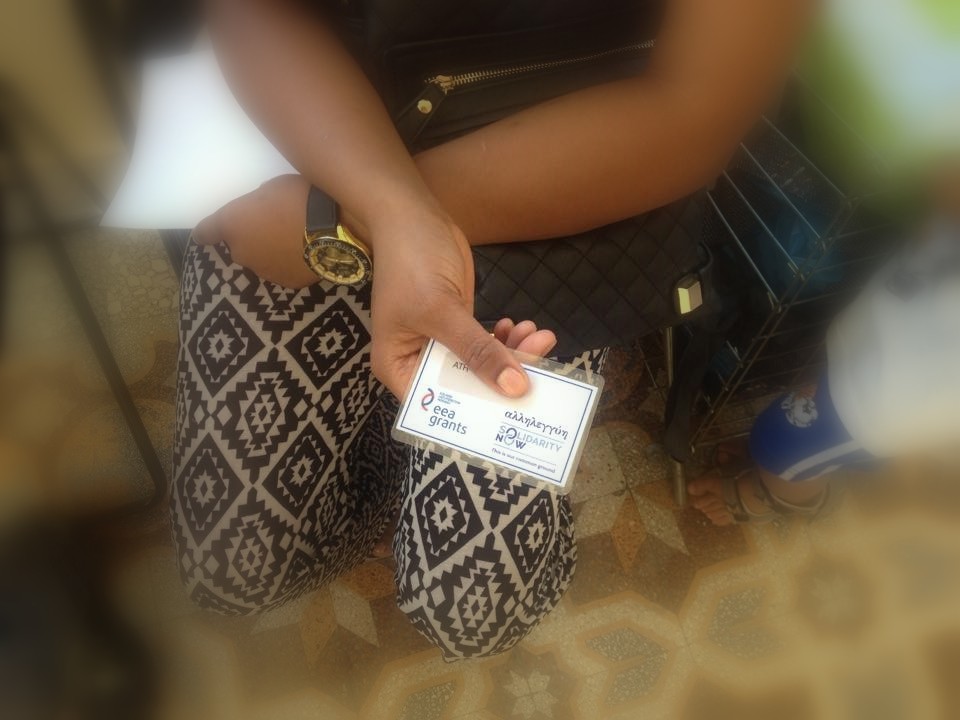
I want to take control over my life, L. from Nigeria, Athens Solidarity Center


L. from Nigeria is 37 years old and arrived in Greece three years ago because of religious persecution. Everyone in his family was Christian, but when his father converted to Islam, all the men of the family had to become Muslims otherwise they would risk death. L. and his six brothers were forced to flee Nigeria and go to other countries. Three of his brothers fled to Ghana and the other two were found in Gambia. He came to Greece.
L. walked nine days with other compatriots to get here. He crossed Syria and Turkey, to arrive in Patras. He had friends there who hosted him for about two years. He came to Athens where he lives the last seven months, by bus. He does not have frequent contact with his family. In 2013, he was informed by his compatriots that his father died. So far, he has not managed to find out the cause of his death.
In Athens, L. is being hosted by friends and they were the ones who led him one day to the Solidarity Center of SolidarityNow in order to receive the free services offered.
“The conditions in Greece are very difficult,” he says. He cannot find a job so his main request is for the employment counselor to guide him so that he can find for a job and be able to live. In his country he was working as a gardener. Now he is looking for a job of any kind that will ensure stability and an income for him to continue his life.
L. found out from the social service of the Center that he can make room and board requests through programs of Praksis -which operates in the Solidarity Center- and in cooperation with the Municipality of Athens.
L. experienced racism from people many times in the past and in the present. In the past, he had gone into a shop to sell jewelry and was verbally insulted. He just smiled at them and said thank you. “They accuse you of having a problem but the problem is their own when they act this way.” One day, as he was walking on the street, two police motorcycles stopped and the officers asked him if he has papers. He showed them and then they asked him if he has ever been incarcerated. “This was somewhat awkward”, he tells us. “They do not know me, they do not know anything about me, and they cannot stigmatize me because I am of different color. I know they stopped me because I’m not white. If I were of different color, they might have not stopped me. Since then, I change direction whenever I see police, not because I’m afraid, but because this suspicion bothers me”.
He recounts another incident. One day, as he was walking on the street, he was stopped by two police officers and they asked him again for his papers. He replied that he did not have them with him but that he has evidence on his mobile. Then the police took his phone and left! “Many times they exploit weak people like me.”
L. tries to not lose hope, to remain active, to chase every opportunity that is given. He wants to find a job, to stay in Greece because, as he tells us, he likes the “climate, different places, and lifestyle” very much. His status does not allow him to go on, have his own family and children. He does want to stay focused on his problems though, he wants look into the future of his life.
He has found great help regarding his request for work at the SolidarityNow”Center and through Praksis; people always welcome him with smile, listen and direct him as they can through the employability program.
But he cannot continue to live in Greece without a job, because he is unable to meet the daily needs and cover costs. He dreams of freedom and democracy.
“I want take control over my life, organize it, strike a balance so that I can live in Greece with dignity.”
Our discussion with L. ends with a phrase that spontaneously came to mind at that moment: “When thinking of the problem you face, you lose your time. So it’s better to think about the solution to the problem.”

The two women from Syria


The summer that passed marked one of the most intense moments in the history of immigrants-refugees in the last years in Europe. The first entry point to Europe for the majority of people, who were forced to leave their home countries, was Greece and specifically

On Lesvos Island one out of the innumerable refugees’ stories took place. Present in that story was the Psychologist-Criminologist, Eftychia Georgiadi who works in the Legal Service of NGO ARSIS at the Athens Solidarity Centre. During a mission that was organized-coordinated by Solidarity Now in a number of islands, so as to evaluate the refugee crisis at the moment, Eftychia met on Lesvos island the women of this story, who are relatives and of Syrian origin. Actually, the first lady is a mother of three juveniles, whose husband is back in Syria, and as for the second, her husband has been given a 10-year permit to reside and work in Germany.

At first, the women came in contact with Eftychia and after explaining the situation they were in, they asked her for help with the registration by the authorities. At the same time, the woman, whose husband lives in Germany, mentioned that she had already informed him about her being on Lesvos Island and for this reason, he was about to come, in order to take them to Germany.

Considering all those people waiting to be registered, it is of no surprise that both ladies have been staying on Kara Tepe’s settlement for four days without anything going forward. Having estimated the situation of the ladies, Eftychia contacted a member of the NGO International Organisation for Migration (IOM), who afterwards referred her to speak with a lawyer of the NGO METAction, in order to speed up the registration process. Following all the appropriate steps, the registration completed and hence all of them were transferred from Kara Tepe’s settlement to the port, from where they travelled by ship along with the husband coming from Germany to Athens on 5th of September.

Hereinafter, Eftychia, having contacted the ladies by phone, was thanked for her help and also was informed about the safe arrival of all of them at Piraeus’ port and their subsequent journey, until they arrived safe and sound in Germany after two weeks.

The story of Asma


Everyone is smiling and ready to help you!

Asma is a young, unemployed mother of a 3,5 year old child. She has managed to successfully complete a 2-year detox programme regarding alcoholism at KETHEA MOSAIC. For the last two months she has been at a rehabilitation stage. As a result of her new beginning, people from KETHEA referred her to the Athens Solidarity Centre, so as to get more help from the provided services there.

Upon her visit to the Centre, Asma contacted the medical services of PRAKSIS and more specifically, the ophthalmologist for her child, acknowledging and stating how helpful the doctor was. She also reached out to the Network for the Children’s Rights, where she had the chance to speak with the social worker of the NGO. After her conversation with the social worker, Asma felt a lot better about her concerns. In addition to this, Asma started receiving food aid from the same NGO. Apart from these services, Asma sought help from ARSIS, which is also hosted at the Solidarity Centre, in order to obtain legal advice and guidance on the issues of concern which required more specialized assistance.

Shortly before leaving with her child, we asked her if she found the help and support she needed at the Solidarity Centre, and she answered: “I ​​have never regretted visiting this place. Everyone is smiling and willing to offer help. If there wasn’t any understanding and sympathy, there wouldn’t be any reason for me to come and keep on coming”.

The story of Amin


Τhe photo on the wall, Amin and an extraordinary encounter

The photo of a person with his hands wide open and stretched, as signs of both despair and expectation of a better future, is the one that someone can see, while entering the management office of SolidarityNow at the Athens Solidarity Centre.
Until recently, for all of us, this was just a picture. Powerful, yes, yet simply a picture on the wall.

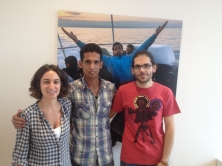
Nassos, the guard at the Solidarity Centre was the one who recognized Amin first, by linking almost automatically the picture with the man who now stood in front of him. The staff at the Centre took him by the hand and asked him to follow them. He followed their directions. They led him to the picture on the wall. Indeed, the man in the photo was Amin. Just ten years ago.
When their gazes crossed, Amin immediately fell into his mother’s arms to hide both his tears and emotion.

Amin arrived in Greece in 2005. Starting his journey from his home country Mauritania, Amin followed what the majority of immigrants-asylum seekers do – that is, to travel long distances in their way to Greece. As such, Amin passed through Morocco, Libya and Turkey.

Having completed ten years in Greece and having been recognized as a refugee, Amin hopes for the best. Being a juvenile when arrived in Greece, Amin was given a place to stay at the temporary accommodation of asylum seekers ‘’FUTURE’’ in the area of Moschato. That accommodation is operated by the IASIS A.M.K.E in collaboration with EKPOSPO NOSTOS, ERGOEREUNITIKI and EADAP. During his stay there, Amin had the chance to speak with a staff of the non-profit union ‘’Network for the Children’s Rights’’, who then referred him to the Athens Solidarity Centre (ASC).

When Amin visited ASC, he spoke with the social worker of the ‘’Network’’ in an attempt to ask for help regarding a new accommodation that could accept him. In addition to his request, the social worker also referred him to the employability programme of PRAKSIS, so that he could get advice on job matters.

Currently, Amin is staying with a friend and he is striving to find a job. It is worth mentioning that during the whole conversation we had with him, Amin constantly reiterated his wish to find a job. Therefore now Amin is trying to be issued with the paper that will give him work permission. He visits the non-profit organization NOSTOS, where he has the chance to communicate over the phone with companies and employers.

This life-changing meeting between Amin and the image on the wall of the Athens Solidarity Centre inspired us to become familiar with his story these past 10 years, since he arrived in Greece. And at the same time, it made us reflect upon the strange game of life, the twists war brings into the lives of people, but also into the lives of thousands of other people like “Amin”, which are reflected in pictures, but then pass by and disappear. But do these people actually disappear? Amin showed us that behind the images are everyday people, with their own unique story to tell you.

Stand with S. Stand with Greece. Stand with Europe.


A mother of two young children became aware of the operation of the Athens Solidarity Centre, after visiting Social Solidarity Hub of the municipality of Athens at Palaio Frourarcheio across Larissa Station. Specifically, the mother seeking to get help as regards food provision, she was informed about the relevant to children and family support services of the two NGO’s Network for the Children’s Rights and Together for the Child, both of them located in the first floor of the Solidarity Centre in Athens.

In her first visit to the centre, S. (the mother) was able to speak with the pedagogue, the social worker and the psychologist of the Network for the Children’s Rights regarding her two children. After a thorough conversation with the staff members of the NGO, S. was referred to attend an appointment with an experienced pediatrician. In the following days, the mother had the chance to speak with the pediatrician as for her younger child. The doctor ascertained that the child appears signs of developmental speech disorder. However, she added that there is no need of worrying, as the immediate action and care by the parents will help the child to recover. Besides that, S. started to attend sessions with the psychologist of the NGO, this time for her older child, regarding the management of child’s behaviour, which has been affected by the fears and anxieties caused by the family environment. S. through those sessions is trying as well to reinforce her roles as a person inside the family and to learn how to cope effectively with everyday’s life’s problems.

Apart from Network for the Children’s Rights, S. visited also the employability service of PRAKSIS for herself and the legal service of ARSIS for one of her close friend’s issue and she was given future appointments.
At the end of our conversation S. told us that the pediatrician is in contact with her, following-up the progress of the child. Moreover, it has been discussed the possibility of enrolling the child in a nursery upon the new school season. According to the mother, this is something that can conduce positively to the socialisation of the child, along with the speech improvement, things that until now have been pushed aside as a result of no appropriate information and specialized support and help.

Panagiotis Bourgazas
Social Scientist

International Day of Refugees Every minute three people from Syria leave their homes in order to save their lives, the number of Syrian refugees rising to 2.5 million since the beginning of the war


This is the story of X, a refugee from Syria, in his own words:
‘Escaping the destruction and the endless bloodshed that has spread across Syria, we got lost looking for a European country that will accept us. The Arab nation is facing the problem with brutality and exploitation, in a cruel way, a way not to be accepted by humans.

I am a Syrian refugee, from the suburbs of Damascus, Zampantani, I want to live in a European country to continue my life and plans. This is my story with the “blood dealers” in Turkey, Greece and Serbia.

We traveled from Syria to Turkey looking for a smuggler to bring us to Greece. I found one that had the reputation of the “best”. He promised a safe way, a boat in good condition, small number of passengers. We gave our money to an office in Izmir and we started preparing for the trip.
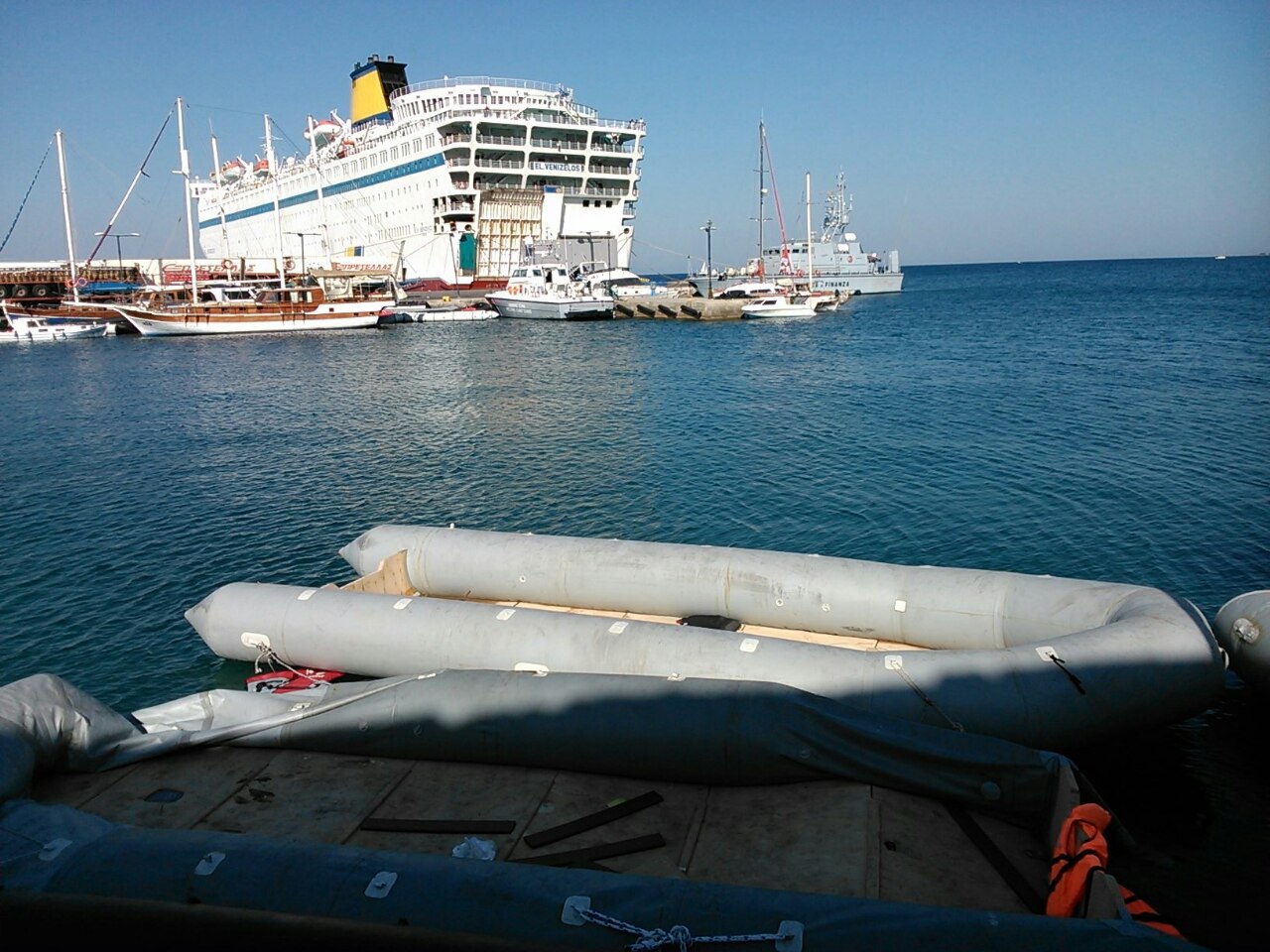
The day after, we traveled to Bodrum and then to the departure point. After several hours waiting we saw a group of people walking and trying to carry a boat to fit 2-3 people. We were 20 shocked people, hoping that it would be a different boat.

But, this was our boat, where 20 people should board and we did, unable to move because once person’s legs were the others seat. We were in the middle of the sea when bad weather and big waves immobilized us, we could not move and our only anxiety was not to drown. After half an hour battling with the waves the boat ran out of petrol, we lost control, the waves pushed the boat left and right. We were half an hour in the darkness, full of fear and anxiety, it was a slow death for us, we thought we would become food for the fish. After a while a big boat with big lights was coming towards us, we were minutes away from death, we began to shout in order to be heard, we used the flash of the cameras and luckily someone on the ship noticed us and suddenly the ‘ship of death’ became the ‘ship of life’. After half an hour we were boarded on the Coast Guard’s boat that took us to the island of Kos.
We reached the island of Kos and stayed there for three days in the detention center, then we were released and went to Athens.

Eight months we spent in Greece, these were the most difficult period of my life and under very difficult conditions.

A couple of months after, me and a friend of mine were looking for a smuggler in order to travel by plane to Germany, but we couldn’t. If you want to travel illegally by plane you need to have a good demand of the Greek language and you should also look like a European or just be lucky.
We were looking for our way to Germany by plane for a month but we were not lucky and the fact that it was the end of the tourist season didn’t help us, so we decided to try to walk.
A month later, it was our first attempt to Serbia, we left Athens in order to go to Thessaloniki to meet the smuggler. During my stay to Thessaloniki I visited the Solidarity Center several times mainly for social support. After 4 days talking on the phone with the smuggler he told us what we had to do, but we were penniless and had to spend some days on the streets, homeless, with the temperature reaching the 3-5 degrees in the evening.

After days on the streets, we traveled to Kilkis, to Evzone, to Macedonia, on foot.
We were so many, young people, old people, families or by ourselves (more or less 200 people). We were walking for hours, until the sunrise. We had to reach a mountain and despite the rain, the rough weather and the fatigue we were very happy. The temperature was low as the evening approached. It was a difficult night, unable to sleep because of the cold. In the morning we started walking again for five hours until we arrived in an abandon small house and stayed there until we heard about our next step. We were asked to pay one quarter of the money we had agreed with the smugglers for the cars to come and get us. After five days on hold with limited food and water, without any news from our smugglers we decided to return to Greece. A way back full of dangers. In our effort to reach the city we were stopped by a gang who stole us and got everything (money, mobiles).

Having lost my legal papers on the way back, we reached Greece homeless and exhausted. The weather got worse and the border exits closed after the death of several refugees and many of us went to Athens to protest requesting legal travel documents. After several weeks protesting in Syndagma, we came to an agreement with the Greek government for legal travel documents as asylum seekers, giving priority to those listed in Syndagma square, but unfortunately I was not able to write my name on the list because some of the protesters took advantage of the situation and listed their friends and relatives.

So by being not included on the priority list I went to the asylum office in Katehaki. Me and my friend were there every morning for two months, but never been picked. The asylum seeker officer used every day 10 names from the list and he randomly chose ten unlisted people. We wore the same jacket every day in order to be remembered, but this never happened.

With no patience or any other choice we tried, once again, to leave the country with the ‘help’ of smugglers. We walked for days and thank God we’ve reached Macedonia then Serbia, Hungary and by train to Germany.

This difficult journey of mine ended here in Germany, I wish all the Syrians in Greece to reach their destination fast and with no dangers.

Thank you’.

X is legally living as asylum seeker in Germany.
Translation from Arabic by Roula Ganoun, 
PRAKSIS translator at the Solidarity Center in Thessaloniki
Translation in English by Aggeliki Papadopoulou

Stand with Maria. Stand with Greece. Stand with Europe.


Maria is a single parent, of a nine year old boy, who tries her best for the upbringing of her child, after being unemployed since the end of 2012. Having contacted PRAKSIS’ offices in Athens, a social worker visited her at home and estimated her situation. Thus, Maria has been able to receive financial support for the last six months. In addition to this, Maria attends face-to-face sessions to a work advisor of PRAKSIS.
Moreover, a friend of hers, who happens to be a single parent just like her informed her about the overall work that is going on at the Solidarity Centre in Athens at Palaio Frourarcheio. Maria started visiting the medical services provided by PRAKSIS for herself a month ago.
However, Maria’s first and foremost concern is the wellbeing of her little boy, who faces Pervasive Developmental Disorder (PDD-NOS) or Autism Spectrum Disorders. PDD-NOS simply refers to children who have problems with communication, play and interaction with others and is one among other four Pervasive Developmental Disorders, like Autism, Asperger Syndrome, Rett Syndrome and Childhood Disintegrative Disorder. As being aware of her child’s need, Maria took him to speech-therapy, since he was 21 months old. She stated also, that no significant provision of help was given through IKA.
Apart from the care issue, Maria pointed out that her son has been a victim of social racism a few times at school, due to his condition and lately has been isolated by his classmates. As a result, she spoke with people of NGO ‘’Together for Children’’ at Solidarity Centre in Athens regarding a programme that is focused on children with learning disabilities. Maria hopes that her son receives appropriate help, securing in that way a better future for himself. Last, but not least is what she said about more information along with seminars should be provided at schools as regards the phenomenon of social racism and bullying.