When you’re in the forest you are in the hands of the Mafia


On Wednesday 13/5/14, 93 refugees, among them 18 minors, were trapped for almost 12 hours in a commercial train at Gevgelija (FYROM) with original destination Serbia.
They were rescued after calling 112 and being detected by the officers of OSE (national railway organization) and Idomeni’s police officers. The Greek Police Department followed the process of receiving data and depositions from the refugees who were released and sent to Thessaloniki. They are all legal with a six month public service note.
In the following days three of the families and a number of adults visited the Thessaloniki Solidarity Center seeking support: information, clothing, medical and legal assistance.
Mohammed, a Syrian man and \”passenger\” of the train talked with us about his adventure and underlined the need to make his story public, hoping that the refugees will be informed about the risks they are dealing with.
His trip started 1, 5 month ago from Lebanon where he stayed with his family the last years, due to the war in Syria. Germany was the final destination where his father stays.
He arrived to Smyrna with no difficulty and were transferred with the help of a smuggler by boat for 1.000$ to Mytilene with 25 people, women, men and children.
The Coast Guard gathered them from an isolated beach in Mytilene and kept them for three days in the detention center of the island. Mohammed was one of the lucky refugees who was placed in the new detention center. As he heard from others, the old center was not clean and was crowded.                                                                                                                                                     Refugees, under custody, were mostly Syrians and Afghans. There were no translators, they were given basic medical care and there were no medical exams. After three days they were released and once they gave their fingerprints they were given a public service note which lasts for six months.
The next destination was Athens, where he came into contact with the smuggler and he took instructions on how to continue his journey to Germany. First stop was Thessaloniki where he came by train and the next goal was to continue to the borders.                 According to the public service note which was given to him, he is banned to stay / transit in Kilkis meaning he cannot use any legal way to reach the borders. He and 4 other people paid 600 € on a taxi ride to Polykastro (49km from Thes/niki). The taxi left them in a remote area and they had to walk five hours to arrive to Polikastro. They were instructed that they would pass the borders at night with the smuggler and from Gevgelija would board in a commercial train for Serbia. The cost was 1600€ per person.
– What were the conditions while waiting for boarding?
\”Before we travel to Gevgelija we slept in the forest. The route from Idomeni was two hours. Around 800 people were gathered from different smugglers in an abandoned area in the forest waiting the train. Some refused to continue the journey in such conditions and were forced to board (beaten and blackmailed). The FYROM Police Department were watching from distance but did nothing. There were several children among the 800 people…. I am glad that I don’t have my children with me, even in war they are safer than they would have been here with me\”
800 people were packed in the train wagons which were full of large paper rolls. Basically, they were standing and squeezed between products. In each wagon there were 2 people of Afghan origin sent from the smugglers with large knifes trying to keep them quiet.
They were more than four hours in the wagons when started to feel upset as been threatened by the smugglers (children and adults). While waiting, FYROM police opened the door of the wagon just to have a look and closed the door again, after a few moments the train moved but then a strong sound like someone released the rest of the train was heard and the train freezes  again.
\”When you leave Syria you know the route, what you do not know is the risks you take. They informed us only for the physical stress and hardship, no one tells us about the mafia and crime. When you\’re in the forest you are in the hands of the mafia …\”
– What was the situation on the train?
\”The atmosphere was stuffy, we had no idea where we were and the worst, we could not escape since the wagons opened only from the outside.\”
Being in a stuffy wagon and under the threat of knives, putting their own life into danger, they tried to break the walls of the wagon and leave. They called the smuggler but didn’t respond and then FYROM police informed them that there were not in their territory so, they could not intervene. Finally, almost 12 hours later, they managed to call 112 and talk with Greek police who found them in Greek territory in the area of ​​Idomeni and rescued them.
“I did not know that there is another way to reach your destination, that of family reunification, if I knew it, I would prefer it\”
Doctors, local organizations and residents took care of them; they offered clothing, food, water. Later they were transferred to the police and the next day they travelled to Thessaloniki by coach.
\”… I left my country where the war has destroyed everything, my wife and 2 children live in a rural area in a tent and their only hope is to be able to get to Germany, my money is over and I do not know what I will do from now on…. I am afraid that I will die in the woods away from my country and my family..\”
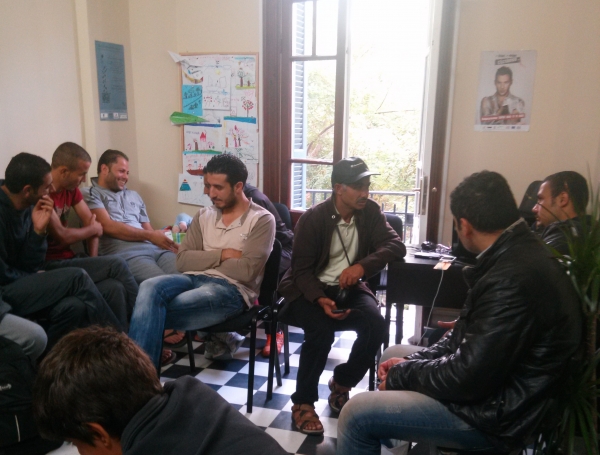
The interview was given at the Thessaloniki Solidarity Centre on 05.15.2015 to the staff of SN and with the assistance of Arabic-speaking translator from PRAKSIS.                                                                                       
According to the code of conduct, special considerations were given to the protection of personal data, and with the consent of the interviewee we conducted this interview and made it public.                                                  
Mohammed was referred to the Greek Council for Refugees where he was informed about the process to follow for family reunification.

Translation and edited in English for SN by Aggeliki Papadopoulou.
Stand with Vangelis. Stand with Greece. Stand with Europe.


Vangelis is a 51 year old person, who has been struggling to make ends meet for the past six years. His story has as a starting point the rise of the economic crisis and whatever came as negative results of it for him and a vast majority of people. Specifically, Vangelis during the recession lost his two businesses (restaurants), after went bankrupt. In the meantime, he made the decision to immigrate to Germany, Netherlands and Austria, in search of a decent job and better living conditions. He spent most of his time abroad in Dusseldorf, having worked there as kitchen staff at local Greek restaurants. However, a few unpaid salaries from one of his employers in Dusseldorf forced him to return to Greece.
Upon his arrival, Vangelis has been hosted for more than a year to a friend’s house at Fyli in Attica. Also, along with it and in effort to increase the possibilities of finding a job, he tried in vain to be registered to OAED programme, so as to get an unemployment card. Vangelis was informed that he couldn’t obtain the card, due to a pending case of his former business’ book of account. As a result, Vangelis visited Solidarity Centre in Athens and asked for advice and help of the accountant provided by ARSIS.
Regardless of all the difficulties that Vangelis came across, he worked only a few times as a plumber. Thus, he left his friend’s house and rented a small flat close to Omonoia, where he lives these days. Vangelis says that he has been supported a lot as for food for the last months by the monks of the monastery of Saint Cyprianus and the Fylis’ municipality.
Vangelis is still looking for job. Actually, he is in contact with an employment agency and he has been informed that he might be able to find work at Varna in Bulgaria.

Panagiotis Bourgazas
Social Scientist, Intern

Stand with Konstantinos. Stand with Greece. Stand with Europe.


Konstantinos is a middle-aged man, who has experienced the consequences of the economic crisis when it all started. While being a freelancer during the recession, Konstantinos came across a few financial problems with his business, having as a result to close it down. However, this might not be the worst thing happened, as six months ago he received an eviction notice. Without money and a house to live with his wife, Konstantinos sought for help at the welfare services of the municipality of Athens. There, he was informed that he will be able to receive temporary accommodation for one year.
For the last four months, Konstantinos is being hosted along with his wife in a two-storey building on Acharnon Street. He shares the available rooms of the flat he resides with three other families. Food is another big issue, as the only food-bag (vegetables, meat) that Konstantinos gets every week from the welfare services is not enough. On the top of these, he has also to take care of his sick wife and to cope with his own illness (epilepsy). That seems very difficult, as Konstantinos receives no medical insurance and proper medication is needed.

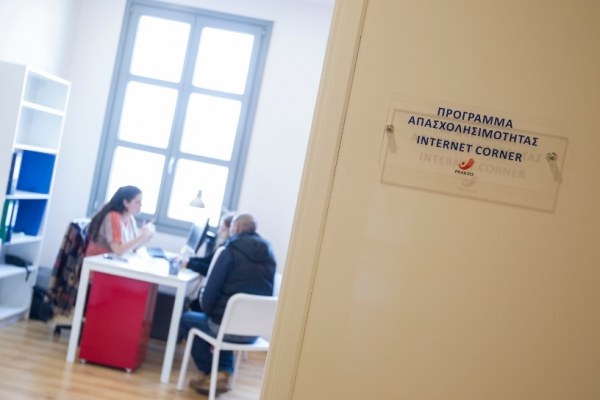
In one of his visits to the welfare services, Konstantinos was informed about a current seminar that runs through PRAKSIS’ employability service at Palaio Frouracheio, as regards how to become a lottery ticket seller. Thereby, Konstantinos visited Athens Solidarity Centre to talk about that seminar and he was also given further information for the rest of the services. He was very impressed as for the PRAKSIS doctors.

Konstantinos expressed his fear about the future and what it’s going to happen once the provision of temporary accommodation ends.

Panagiotis Bourgazas
Social Scientist
Intern SolidarityNow

Stand with Nikos. Stand with Greece. Stand with Europe.


Alcoholism is briefly considered as a disease that causes both physical and mental health problems leading thus to serious negative effects on the social behaviour of a person. Nikos is a young person, who used to be an alcoholic. At that time, his life was on the brink of being ruined. After a fight with his parents, Nikos abandoned his home, which resulted in him being homeless with no money at all.
For the last year Nikos often wanders around Attica, in an effort to find a place to rest and sleep. During that period, he has gone through some very difficult situations, with no food, or a place to take a shower and above all he experienced social stigmatization and the total ignorance of his municipality’s welfare services, due to his addiction. The primary response that Nikos was given when asking for help is that nothing can be done, as he was an alcoholic.
However, Nikos managed to fight against alcoholism through the help of Alcoholics Anonymous’ fellowship and he has abstained from alcohol for 1,5 months. Moreover, municipality’s welfare services referred him to PRAKSIS at (Palaio Frouracheio) Athens Solidarity Center, after someone stole his health card and he was in need of a doctor.
Nikos is amazed by the overall work that is going on here. He precisely mentioned: ‘’the only ones that offered to help me, regardless of my situation and my past are the people of PRAKSIS’’, ‘’nowadays, every job application is made through Internet, so it’s vital a service like employability to exist, offering free computer and internet access’’.
Nikos these days lives in an uninhabited building at Kifissia and he is about to start selling SXEDIA magazine, an initiative of the NGO DIOGENIS. At the end of his narration, Nikos pointed out that certain actions must be taken and more information should be provided regarding the issue of alcoholism.

Panagiotis Bourgazas
Social Scientist
Intern SolidarityNow

The only thing I need is a house to stay with my wife, says Ismael


Article 19 of the Universal Declaration of Human Rights (UDHR) dictates that everyone has the right to freedom of opinion and expression. However, this is not the case for people like Ismael. Ismael was forced to leave Khartoum, the capital city of Sudan, after being persecuted by the police forces, on account of forming a protesters’ group, while studying at university, seeking to raise awareness by speaking the truth about government’s corruption. Police forces arrested him and imprisoned him. There, he underwent several tortures, which left him with severe wounds to his legs and waist. ‘’One of my friends died in the prison from the tortures’’ says Ismael.

Ismael’s first arrival in Greece was in 2010, staying for two years. At that time, Ismael claimed asylum, waiting for a whole year until the attendance of his desirable interview. The outcome was negative, leading Ismael back to Khartoum. There, he spent three months in prison, until the day he fled to Greece for the second time with a friend’s help. He travelled through Egypt, Libya and Turkey, until he reached Mytilinis’ port and from there to Piraeus.
Ismael has been hosted along with his wife in a friend’s house in Athens since November 2014. He claimed again asylum and he has already attended his scheduled interview.

‘’The only thing I need is a house to stay with my wife’’ says Ismael.

Panagiotis Bourgazas
Social Scientist
Intern SolidarityNow

Stand with Mr. H. Stand with Greece. Stand with Europe.


The following story could be a representative sample of a well directed and presented documentary through the eyes of a person, who experienced the persecution and brutality of the government forces (Sudanese Armed Forces – SAF) in his try to defend his homeland and belongings. Specifically the man, who wishes to remain anonymous and thereinafter will be mentioned as Mr. H, comes from the Nuba Mountains of the South Kordofan State in Sudan.

A few months ago, in December 2014, the Sudanese government forces on their way to Nuba Mountains in order to fight the rebels there (Sudan People’s Liberation Army – SPLA), invaded and destroyed the village of Mr. H, seizing all of the villager’s animals (cows, sheep, camels), so that will be able to feed their soldiers. When Mr. H followed them just to take his animals back, he was accused of being rebels’ collaborator. On these grounds, he was arrested and kept as a prisoner in a temporary militant base-camp of the forces that had been set up for their operations in the area. There, he underwent several tortures; one of them was baton beatings on the legs. However, he managed to escape as a sergeant, who happened to be classmate of Mr. H back in high school offered to help him by untying his hands and letting the gate open. The sergeant only told him not reveal to anyone how he broke away if he was arrested.

Once Mr. H was free, he walked until he met a cameleer, who took him to the village, he was living. There, he met a merchant and old friend of his father, who arranged for him to flee Sudan, travelling by boat to Egypt and then to Turkey. Upon his arrival in Turkey and especially in Bodrum, Mr. H was put along with other people from Syria, Eritrea and Somalia on a freezer-truck and all of them were taken to a hotel. He stayed in a room there for a few days, until one night someone came to pick them up and drive them to a woodland and from there to the coast of Bodrum in order to get the boat that brought him to Greece.
Mr. H has already lodged an asylum claim and he hopes to receive a positive decision.

His opinion about Solidarity Now and the work that is going on at Palaio Frouracheio is the following: ‘’Τhe services are a big thing for me, because when I came to Greece I was weak (physically) and frightened. Now I feel very well. Everybody (Praksis’ Doctors) says that my health is getting better.

Panagiotis Bourgazas
Social Scientist
Intern SolidarityNow

They found a job…


In times of financial crisis and high unemployment rate, finding a job is a big personal success. The Employability project, implemented by Praksis, at Athens Solidarity Center, implements a concrete methodology assisting beneficiaries with integrating the labour market, through specialized counseling. Even if the project started providing services in December 2014, it has already produced some tangible and concrete results. Among many personal success stories, some are of special interest:

  • A 45 years-old woman from Greece, facing severe economic difficulties is currently employed as a kitchen assistant in a restaurant.
  • A 45 years-old woman from Greece, low qualified and unemployed for 3 years found a job as a cleaner in a cleaning company.
  • A 47 years-old woman from Albania, unemployed for 11 years found a job as fulltime baby-sitter.
  • A 54 years-old man from Greece, recently released from prison, found a job as delivery employee in a traditional grill tavern.
  • A 43 years-old man from Greece found a fulltime job as a worker in a dried fruit packaging factory.
  • A 35 years-old French speaking refugee from Congo, found a fulltime job as a kitchen assistant in a hotel in Pireus.
  • A 26 years-old English speaking asylum seeker from Nigeria, unemployed for 2 years, found a season job as general duties employee in a hotel in Karpathos.
  • A 19 years-old asylum seeker from Bangladesh, unemployed for 3 years, found a job as a kitchen assistant in a restaurant in Amorgos.
  • A 24 years-old asylum seeker from Afghanistan is currently employed in a dried fruits and nuts market.

Thessaloniki: Supportive services


Almost from the beginning of the operation of the Center, the need of a service that will aim to inform Beneficiaries about issues relevant to public authorities became a necessity. Gradually, the service was developed. Providing just the information wasn’t enough, so we moved forward by providing assistance on procedures related to benefits/allowances claims etc. Within the year more than 900 acts were performed, including, filling in an application form, writing requests to public authorities, accompanying to public services, translations and mediations on social, legal and medical issues. At the same time the beneficiaries are constantly informed about free activities carried out in the city.

Inside story

Annita, an unemployed mother of 4 from Nigeria, that lives in the country legally for most than 10 years visited the Center for a legal matter last April. She was also informed about a new allowance for all citizens with low income where she could apply.
As she wasn’t aware of the new allowance, we explained her the process. The application must go through the “taxis” online system and we assisted her on that
as she couldn’t do it on her own and she couldn’t afford an accountant. We help her issue a taxis e‐code, fill in the application as it was in Greek and a week later we also checked the
course of her application Some days later her account was credited the amount of 1000€. Throughout the year we had many cases of beneficiaries that were entitled for a benefit or allowance but weren’t able or skilled to go through the application process. The social Service in the frame of a holistic approach, identified these liabilities and provided them assistance, guidance and support.

Ioanna Fourkiotou, SolidarityNow

A journey of a Syrian


M. is a 28 year old Syrian man, father of two boys. He is a victim of war, having lost his house from a bomb attack which also left his both legs amputated. After a long time of treatment and rehabilitation he got two artificial legs and took the decision to migrate with his family in order to find a safe place in Europe to stay. Because there was no legal way to travel, the Syrian refugees had to pay a trafficker to reach Greece through Turkey.

The journey was really hard, as they had to walk for hours, got lost in the fields, until finally they boarded a small boat loaded with migrants to cross the Evros river. When they arrived to Greece, they were kept for some days at the detention center and then they were released in the country with nowhere to stay. When the family visited Solidarity Center, the social service with the assistance of the translator‐social mediator helped them to find a temporary shelter to stay for free.

When the couple needed to visit a doctor, they were referred to the medical department of Solidarity Center. Subsequently, Ms. N., the mother of the family, seeked for a gynecologist and was accompanied by the translator to another free clinic of the area. After staying for 3 months at the shelter, the family had to leave the place and the sole alternative was a refuge that accommodates only women and children. Thus, Mr. M. had nowhere to stay and decided to leave Greece, and managed to arrive to Germany, where he applied for asylum and is now given the phychosocial support he needed by the German state.His wife and children are still in Greece and with the intervention of the legal department of Solidarity Center all the necessary procedures have been carried out in order for the family to reunite.

Roula Gannoum, Translator Social Mediator, PRAKSIS, Thessaloniki Solidarity Center