Greece: Urgent Need to Move Asylum Seekers from Islands

Giorgos Moutafis for SolidarityNow

As Winter Begins, Accelerate Transfers, End Containment Policy

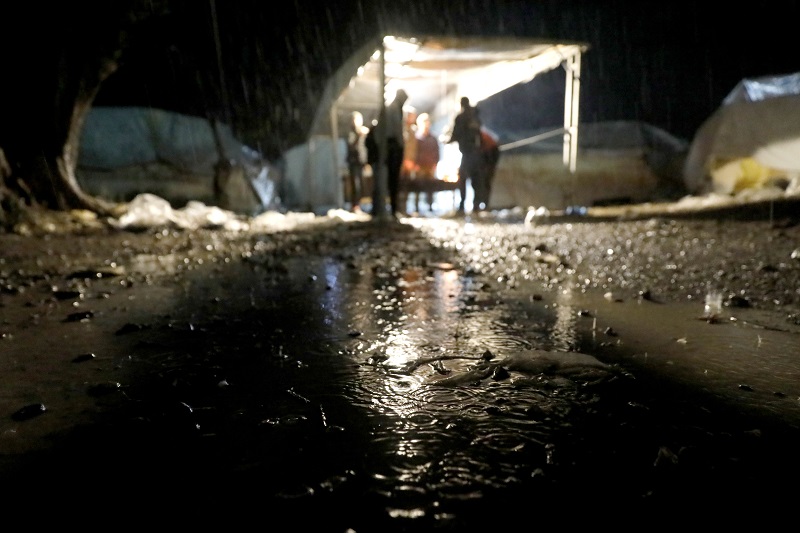
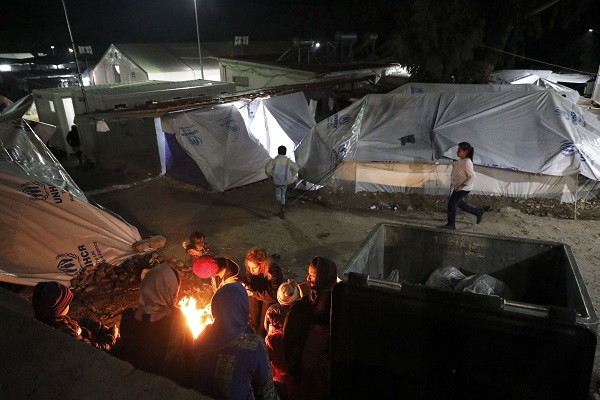
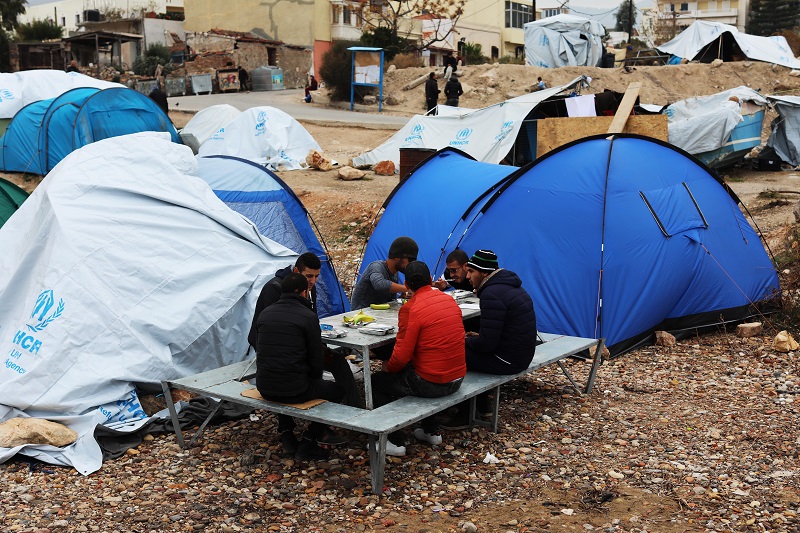
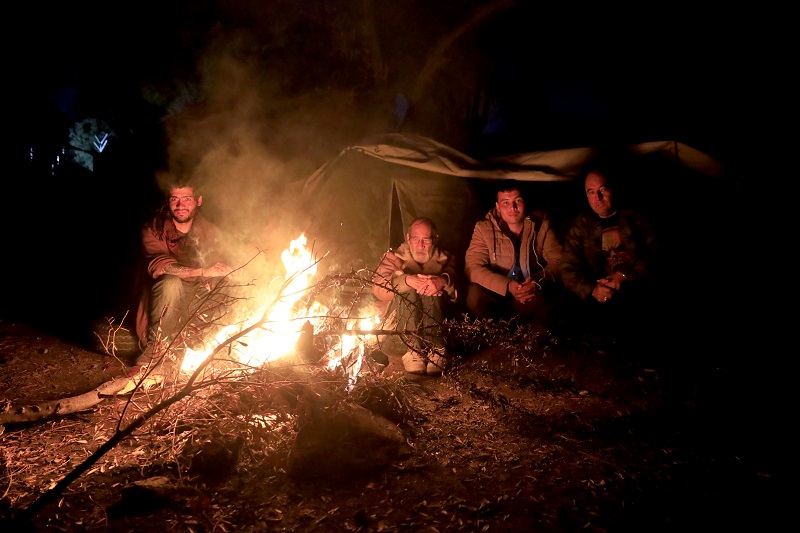
Athens, December 21, 2017. More than 13,500 asylum seekers remain trapped on the Greek islands in most deplorable conditions as winter begins today, December 21st, SolidarityNow states. Greece, with support from its EU partners, should urgently transfer thousands of asylum seekers to the Greek mainland and provide them with adequate accommodation and access to fair and efficient asylum procedures.

The Greek government committed in early December that it would move 5,000 asylum seekers from the islands to the mainland as an emergency measure, before the onset of winter. Despite the transfer of almost 3,000 people since early December, the hotspots on Lesbos, Chios, Samos, Leros, and Kos still have 11,005 people in facilities with a total capacity of just 5,576. More than 1,000 people have arrived to the Greek islands during the same period.

“Αfter the recent incidents in Moria’s camp, resulting in pregnant women and children being injured, the transfer of the population to the mainland, becomes even more urgent. Under these circumstances, we welcome the Greek Government’s decision to promptly move thousands of people to better conditions on the mainland as an emergency measure, however much more needs to be done to improve the situation for refugees in the country. Greece, with the support of the EU and its member states, has to act immediately and protect the human rights of the people arriving at Europe’s borders”, stated SolidarityNow.

In a campaign that began on December 1st, 13 human rights and aid organizations called on Prime Minister Alexis Tsipras, to end Greece’s policy of containing asylum seekers on the islands. The groups said that Greek authorities should immediately transfer people to improved conditions on the mainland and take concrete measures before the official start of winter so that no asylum seekers are left out in the cold. The groups also said that other EU leaders should take a clear stand to end the containment policy that keeps asylum seekers trapped on the islands under an agreement with Turkey to send people refused asylum back there.

SolidarityNow and other groups participating in the campaign will continue campaigning throughout the winter, highlighting the deplorable conditions asylum seekers trapped on the islands face. The groups will press the Greek government and EU leaders for a more effective response that protects the rights and reduces the suffering of asylum seekers arriving in Greece.

The Greek government is expected to introduce a bill in Parliament in the coming days to accelerate the asylum process with the aim of expediting returns to Turkey, under the EU-Turkey deal. While the length of the asylum procedure is one factor contributing to people’s distress on the islands, reducing the length of asylum procedures at the expense of the quality of the process would put asylum seekers at risk of being denied the protection they need, SolidarityNow said.

Such an approach is the wrong way to alleviate overcrowding or address the systemic issues linked to the containment policy and EU-Turkey deal that have created this inhumane situation on the islands. Any reform should ensure that asylum seekers have access to fair and efficient asylum procedures that allow for all asylum claims to be fairly examined on their individual merit.

Organizations Participating in the Campaign:
Amnesty International
Caritas Hellas
Greek Council for Refugees

Greek Forum of Refugees
Help Refugees
Human Rights Watch
International Rescue Committee
Jesuit Refugee Service
Oxfam
Praksis
Spanish Commission for Refugees (CEAR)
SolidarityNow
Terre des Hommes
1 out of 3 Greeks and 1 out of 6 Refugees and Migrants found Work with the support of SolidarityNow


3,000 people were supported and inter-connected with the labor market through the organization’s Solidarity Centers

“I know how to make 120 different desserts“, says Longman Gashimi. Longman, a Kurdish from Iran, currently makes his sweets in a pastry shop in Nea Raidestos where he works; this job was acquired through the SolidarityNow employability service at the Blue Refugee Center, in Thessaloniki.

For SolidarityNow, employment facilitation and empowerment services to access the labor market are an integral part of the support that Greeks and migrants receive in the Solidarity Centers operated by the organization in Thessaloniki and Athens. Linking people to the labor market and enabling them to find a job is the ultimate goal of the comprehensive efforts for their social integration. This leads to the decrease of people’s dependency on state and NGOs’ assistance and provides the opportunities for personal development.

  • Thessaloniki Solidarity Center

1 out of 3 Greek and 1 out of 10 refugees/migrants, beneficiaries of the Center found a job with the support provided by the SolidarityNow experienced employment consultants. Thessaloniki Solidarity Center has significant success rates in employment: 30.3% of Greeks have already found a job, while 15.51% of refugees and/or migrants who have received support also found work through the employability program.

  • Blue Refugee Center

From December 2016 onwards, through targeted activities for refugees in the Thessaloniki based Blue Refugee Center, 15.89% of the its beneficiaries got a job.

  • Athens Solidarity Center

Since 2014, employability services at the Centre in Athens have reached 1,996 people, through the NGO Praksis, with 15.4% of them finding employment.

In addition, SolidarityNow implements specific actions to enhance skills and assist and assist people who are unemployed:

  • Supported an improvement in marketable skills through access to ICT and English language training and certification for 100 Greeks and refugees, with the support of UNHCR.
  • Provides intensive training in professional interpretation techniques for 100 Arab and Farsi speakers to improve their chances to successfully enter the labor market with the support of Guerilla Foundation.
  • Partners with academic institutions in order to analyze job market trends and employability prospects for its beneficiaries.
  • Assisted 18 new social enterprises and cooperatives during their start-up phase, through the cooperation with NGO Ergani.

Furthermore, SolidarityNow kicks off a project aiming to strengthen the market-related skills for 330 refugees, migrants and Greeks through targeted education, technical assistance and mentoring, with the possibility for some to get a business start-up grant, with the support of the International Rescue Committee.

SolidarityNow has supported more than 3,000 people to connect with the labor market via the employability services provided in the organization’s Centers. Our main objectives are: to facilitate young people’s access to the labor market, build partnerships with the private sector and academic institutions and develop funding tools for the new businesses’ set up.

Yokan Sefket, 21, from Komotini, learned to believe in himself and claim his right to work, with the support of SolidarityNow. The assistance he has received through the professional counseling service at Thessaloniki’s Solidarity Center has built his self-confidence and, as he says, “when I go to a job interview now, I know exactly what to say!”

Read more in the SNapshot  no4: https://www.solidaritynow.org/en/ekdoseis/

Concerns for hundreds of unaccompanied children sleeping rough in Greece this winter

Giorgos Moutafis for SolidarityNow

NGOs launch roadmap for handover of refugee response to Greek Government

More than 2,000 unaccompanied children are on the waiting list for safe shelters in Greece, according to a new report by 15 organisations. The chronic shortage of accommodation for children is just one of the gaps in services that is worsening as the Greek Government prepares to take full control of the refugee response.

The report provides an overview of the current situation on the islands as well as on the mainland. It sets out a series of recommendations for the Greek Government, EU leaders and the UN for a successful handover to address the persistent gaps in services, access to asylum and opportunities to integrate with Greek society.

While some steps have been taken to move people to the mainland, the islands remain dangerously overcrowded with many families sharing unheated tents as winter sets in. A dangerous shortage of medical and legal staff risks people’s health and has contributed to long delays in the asylum procedure. On the mainland, unaccompanied children are increasingly spending nights in police cells, in squats or on the streets because of a shortage of safe shelters.

To improve the situation, the report says a mechanism is needed to move people to accommodation on the mainland as soon as reception centres reach their capacity. It also calls for all EU states to recognise their legal and moral obligation to consider asylum claims and to relocate the most vulnerable people to other countries in Europe.

It recommends that NGOs and the Greek Government invest in more programmes that build tolerance and integration, and in Greek communities that have borne the brunt of the sudden influx. It also calls on UNCHR – the UN refugee agency – to be more vocal and take a stand against the policies and practices being implemented in Greece that reduce standards and minimize safeguards in the reception, asylum and returns procedures.

Nicola Bay, Head of Mission for Oxfam in Greece, said: “It’s time for the Greek Government to step up and take control of the situation. It should seize this opportunity to learn the lessons of the past two years and to move people from overcrowded and unsafe shelters. Sadly, the misery we are witnessing on the islands will only deepen when winter sets in.”

Jana Frey, Country Director for the International Rescue Committee, said: “Of paramount concern is the safety and wellbeing of the over 3,000 children who are without their family and on their own in Greece. Only about 1,000 are staying in shelters set up to accommodate them. The rest are on a waiting list, with potentially hundreds of children sleeping on the streets or in squats. These children are at grave risk.”

Antigone Lyberaki, General Manager for SolidarityNow, said: ”The Greek Government has the required resources to receive refugees in a safe and dignified manner and support their inclusion into the society. What is needed now is full political will to resolve existing problems that make thousands of people suffer and to create a response system that will benefit both refugees and the hosting community.”

Aleksandra Godziejewska, Head of Mission of CARE in Greece, said: “Despite being in one country, as a direct result of the EU-Turkey statement, the living conditions and protection safeguards of asylum seekers on the Greek islands and the mainland are substantially different. We look forward to the results of the efforts to decongest the islands, and call the Greek government to implement strategies to counter the exclusion and marginalization that all refugees, men, boys, women and girls, can face during the upcoming process of integration.”

Notes to editors

Download the report, here

The report was jointly written with input from the following organisations:

ActionAid, Advocates Abroad, CARE, Caritas Greece, Danish Refugee Council (DRC), Greek Forum of Refugees, Greek Helsinki Monitor, HIAS, International Rescue Committee (IRC), JRS, Oxfam, SolidarityNow, Spanish Commission for Refugees (CEAR), Terre des hommes and Translators Without Borders.

More than 2,100 unaccompanied children are already on the waiting list for safe shelter on the Greek islands, with at least 100 more arriving each month. As of 1 August 2017, the Greek Government took over financing of the existing shelters for these children. At least four of them are facing funding difficulties and may close without immediate action, forcing even more children into police cells, unsafe accommodation or onto the streets.

At the end of July 2017, the Greek Government took over control of the management and funding of the response on the Greek islands from ECHO, the European Commission’s humanitarian division. Some humanitarian agencies have downsized or pulled out of the islands altogether, leading to gaps in vital services such as medical care.

Greece: Move Asylum Seekers to Safety Before Winter Hits

Giorgos Moutafis for SolidarityNow

 12 Groups Open Campaign to End Containment Policy

(Athens, December 1, 2017) – The Greek government, with the support of European Union leaders, should act now before the onset of winter to end Greece’s “containment policy,” 12 human rights and humanitarian organizations said in a campaign that began today.

The groups began a countdown to the official start of winter, December 21, 2017. They said that Prime Minister Alexis Tsipras, with the support of EU leaders, should immediately transfer people to improved conditions on the mainland and take concrete measures by December 21 so that no asylum seekers are left out in the cold.

As of November 30, the hotspots on Lesbos, Chios, Samos, Leros, and Kos are almost 7,200 over capacity: 12,744 people in facilities with a capacity of just 5,576. Thousands, including single women, female heads of households, and very young children, live in summer tents, essentially sleeping on the ground, exposed to the cold, damp, and rain as the weather worsens. Some women are forced to share tents and containers with unrelated men, putting their privacy and safety at risk. There is lack of access to clean water, sanitation facilities and health services.

This will be the second winter asylum seekers have had to spend in unsuitable facilities on the islands since the EU-Turkey Deal went into effect in March 2016. Last winter, three men died on Lesbos in the six days between January 24 and 30. Although there is still no official statement on the cause of these deaths, they have been attributed to carbon monoxide poisoning from makeshift heating devices that refugees have been using to warm their freezing tents. In late 2016, a blast likely caused by a cooking gas container killed a Kurdish woman and her young grandchild, also sleeping in a tent in Lesbos.

EU and Greek officials have referred to the EU-Turkey deal as a justification for the containment policy. The policy, put in place as part of the deal, forces asylum seekers arriving on the Greek islands to remain there until their asylum claims are decided, regardless of if there is accommodation capacity or adequate access to services. However, forcing asylum seekers to remain in conditions that violate their rights and are harmful to their well-being, health, and dignity cannot be justified, the groups said. Some who arrived on the islands in the early days of the deal have remained stuck there for 20 months.

As part of the campaign, the groups are teaming up to highlight the deplorable conditions asylum seekers trapped on the islands face; to call on European citizens to get involved; and to monitor and update the public on the response of the Greek government and EU leaders.

For more information on the digital campaign, please visit:
www.solidaritynow.org


Organizations Participating in the Campaign:

  • Amnesty International
  • Caritas Hellas
  • Greek Council of Refugees
  • Help Refugees
  • Human Rights Watch
  • International Rescue Committee
  • Jesuit Refugee Service
  • Oxfam
  • Praksis
  • Spanish Commission for Refugees (CEAR)
  • Solidarity Now
  • Terre des Hommes

20 organisations continue to press Greek Officials and EU States to transfer asylum seekers to the mainland and offer improved reception conditions

Giorgos Moutafis for SolidarityNow

Groups Press Greek Officials, EU States for Mainland Transfers, Improved Conditions

The Greek government, with the support of EU member states, should act now to end Greece’s “containment policy,” 20 human rights and aid groups said today. The policy forces asylum seekers arriving on the Greek islands to remain in overcrowded, unsafe facilities, an urgent concern with winter approaching.
Conditions on the Greek islands have continued to deteriorate in the month since 19 nongovernmental groups wrote an open letter to Greek Prime Minister Alexis Tsipras, calling on him to move asylum seekers to the mainland, where better conditions and services are available.

“This remains a matter of life and death,” said Jana Frey, the International Rescue Committee’s country director in Greece. “There is absolutely no excuse for the conditions on the islands right now – thousands of people crammed into overcrowded and desperately under-resourced facilities. We are in a race against time. Lives will be lost – again – this winter – unless people are allowed to move, in an organised and voluntary fashion, to the mainland.”

Members of the group recently asked to meet with Tsipras to discuss the most urgent needs on the islands and provide recommendations for addressing this increasingly dire situation. They have received no response.

Over the past month, the Greek government has transferred 2,000 people from Samos and Lesbos to the mainland as a one-time emergency measure. When the government announced this initiative in October, these islands were already 5,000 people over capacity. It was clear then that this measure, while helpful, would not suffice.

“Nothing can justify trapping people in these terrible conditions on the islands for another winter,” said Eva Cosse, Greece researcher at Human Rights Watch. “Greece and other European Union member states should act urgently to remove the obstacles to people getting the care and assistance they need on the Greek mainland.”

As of November 20, 2017, the hotspots on Lesbos, Samos, and Chios are hosting 7,000 over capacity: 10,925 people are staying in facilities with a capacity of just 3,924. Thousands, including single women, female heads of households, and very young children, are being forced to live in summer tents, essentially sleeping on the ground, as the weather worsens. Some women are forced to share tents with unrelated men, putting their privacy and safety at risk. This will be the second winter asylum seekers have had to spend in unsuitable facilities on the islands since the EU-Turkey Deal went into effect.

“The EU-Turkey Deal is condemning refugees and migrants to a second winter in squalor on the Greek islands. Instead of trying to maintain the deal at all cost, European countries and Greece should urgently work together and move asylum seekers off the islands,” said Gabriel Sakellaridis, director of Amnesty International in Greece.

EU and Greek officials have cited the EU-Turkey Deal as a justification for the containment policy. However, forcing asylum seekers to remain in conditions that violate their rights and are harmful to their well-being, health, and dignity cannot be justified, the organisations said. As such, the groups have also written to EU member state ambassadors to Greece urging them to immediately call on the Greek government to suspend, the containment policy.

The groups urged Prime Minister Tsipras to protect the human rights of asylum seekers trapped on the islands by ending the containment policy, immediately transferring people to improved conditions on the mainland, and making a commitment to ensure that no one is forced to sleep in a tent.

Because the “containment policy” is being implemented in response to the EU-Turkey deal, the organizations highlighted the responsibility of the European Commission and the EU member states to address the situation on the Greek islands and to press the Greek government to reverse the policy. EU member states should support the Greek government’s efforts to ensure the safety and dignity of asylum seekers in EU territory, including by expanding safe accommodation and access to services on the mainland.

“In an effort to make the EU-Turkey deal work, the Greek islands have been transformed into places of indefinite confinement for asylum seekers who have risked their lives in search of safety and a better life in Europe,” said Nicola Bay, head of mission for Oxfam in Greece. “The EU and the Greek government need to start putting people’s lives ahead of politics and uphold Europe’s commitment to human rights.”

To read the joint letter to Prime Minister Alexis Tsipras, please visit:
https://www.solidaritynow.org/en/prime_minister_letter/


Human Rights Watch

International Rescue Committee

ActionAid

Advocates Abroad

AITIMA

Amnesty International

Arsis

CARE

Caritas Hellas

Danish Refugee Council Greece

Greek Council for Refugees 

Greek Forum of Refugees

Greek Helsinki Monitor

Help Refugees

Jesuit Refugee Service

Lesbos Legal Center

OXFAM

Praksis

SolidarityNow

Terre des hommes


Studies abandonment due to war and Insufficient knowledge of the Greek language, the main obstacles in finding a job, reveals a SolidarityNow survey

SolidarityNow

SolidarityNow along with the University of Glasgow conducted an Innovative Research

on Refugees

Athens, 1 November 2017

Results of the new research conducted by SolidarityNow, in collaboration with the University of Glasgow, are published today bringing important information in light relating to Syrian refugees residing in our country. According to the survey, 46% of the refugee’s state that they were forced to stop their studies due to war, 67% think that language is the main barrier to accessing the labor market, while the overwhelming majority, 61%, depends on the financial assistance provided by humanitarian organizations. These figures, SolidarityNow underlines, make it imperative to accelerate the process of integrating refugees into the Greek society aiming at their economic independence and social inclusion as well as the reclaim of human capital for the general social development.

Those are the conclusions following the completion of the first phase of the research program entitled “Building Futures: Aspirations of Syrian Youth Refugees and Host Population Responses in Lebanon, Greece and the UK“, conducted under the initiative of the University of Glasgow; the first phase was completed in July 2017. In this framework, SolidarityNow performed the relevant research in Greece, seeking a better understanding of the experiences, skills and aspirations of the young Syrian refugees hosted in the country.

Research methodology

Population sample: 500 refugees | Women (34%) & Men (66%), 18-32 years old

Time period: May – July 2017

The SolidarityNow team coordinated and interviewed refugees living in the organization’s hosting and accommodation structures, in other organizations’ structures as well as refugees living in official and unofficial camps, squats and collective structures. The survey was conducted in the Attica region, Thessaloniki, Central Macedonia, Ioannina, Evia and Tilos, aiming at the largest possible range of the population groups.

“In SolidarityNow we have offered accommodation at 4,500 refugees. Throughout the survey, attitudes, skills and expectations of 500 young Syrian refugees across Greece were recorded. Today, we feel that we know the refugees a little better and we are more confident that we can help them integrate more easily in the host countries“, Georgia Papathanasiou, Compliance and Information Manager at the Solidarity Now Μonitoring, Evaluation, Accountability, Learning & Performance Quality Department, points out.

Research conclusions for Greece

The research findings mainly concern three areas: a. education/training, b. income and c. access to the labor market.

– Educational level

Concerning the academic background of the respondents, the research has shown that 22% are primary school graduates, 32% are secondary education graduates, 19% are high school graduates, while 15% hold a university degree.

As a result of the warfare, 46% quit studying, whereas 70% of the respondents do not have any documentation to prove their education level, making it difficult for them to enter the labor market quickly.

– Income

Out of all the respondents, just 55% pay the house rent based on their own resources, 6% depend on the help by friends and relatives, 1% have income from work and 9% are supported by direct remittance. As a consequence, there is a bigger dependence on financial aid provided by humanitarian organizations (61%).

– Access to the labor market

In the relative question, for the 67% of the respondents, language is identified as the main obstacle to access the labor market, while 16% think that the problems they face are related to their refugee status itself. This is apparent in the 53% of the respondents who state themselves unemployed, whereas only 6% stated unemployed in their country of origin. The most popular areas of employment among the participants are tourism, food, construction and agricultural sector, which show proportionally the employment sectors of the participants in Syria.

SolidarityNow responds to the refugees’ needs

Based on those research results, SolidarityNow pushes forward in terms of educational and language (Greek, English and French) learning programs for the refugees.

At the same time, SolidarityNow extends its career, training and labor market guidance and programs in both its Solidarity Centers in Athens and Thessaloniki, as well as in the Blue Refugee Center in Thessaloniki that also targets refugees.

Scientific research was made possible with the support of the following NGOs: Praksis, Caritas, Wellcommon, Doctors of the World, Oxfam, Arsis, Society for the Care of Minors, Melissa, HabibiWorks; SolidarityNow warmly thanks all of them.

Note:

The research findings are currently in the elaboration phase by the University’s academic team (Dimitris Skleparis – Scientific Advisor, Giorgos Kariotis – Associate Professor of International Relations), combining the data derived from the three countries. The research activities will be further assisted by awareness and sensitization actions which will be completed in March 2018.

The long-term objective of this study is to allow us to formulate policy recommendations to meet the training and skills needs of young refugees and migrants, with a view to facilitating either reintegration in Syria or integration in their host nations. It will also give guidance on how such policy can be framed and advocated so as to build consensus and cross community understanding in a context of strained public resources and anti-immigration sentiment.

* The program is funded by the Global Challenges Research Fund (GCRF)

Greece: Asylum Seekers in Abysmal Conditions on Islands. Groups Press Tsipras for Transfers to Mainland

Giorgos Moutafis for SolidarityNow

(Athens, October 23, 2017) – Prime Minister Alexis Tsipras should end the Greek government’s “containment policy” of confining asylum seekers to the Aegean islands, 19 human rights and humanitarian aid organizations said in an open letter released today.

Thousands of people, including very young children, single or pregnant women, and people with physical disabilities, are trapped in abysmal conditions as winter sets in. Forcing asylum seekers to remain in conditions that violate their rights and are harmful to their well-being, health, and dignity, cannot be justified by the implementation of the EU-Turkey deal, the organizations said.

Since the implementation of the EU-Turkey Statement in March 2016, the Greek islands of Lesbos, Chios, Samos, Kos, and Leros have become places of indefinite confinement. Thousands of women, men, and children are trapped in deplorable and volatile conditions, with many denied access to adequate asylum procedures. Asylum seekers who arrived on the islands in the first days of the implementation of the EU-Turkey Deal have been stuck there for almost 19 months.

The recent increase in arrivals of men, women, and children has increased the pressure on the already overcrowded reception and identification centers known as hotspots. Current arrivals are still comparatively quite low and should be manageable for Greece and the EU more broadly, but they include a significant number of women and children.

The situation is particularly critical on Samos and Lesbos, where a total of more than 8,300 asylum seekers and migrants are living in hotspot facilities meant for just 3,000. The recent announcement that 2,000 asylum seekers will be moved from the two islands to the mainland in the coming weeks as an emergency decongestion measure is a positive development, the groups said. But it is not sufficient to alleviate the current overcrowding of the facilities and does not sustainably address the systemic issues that have created this emergency situation – namely the containment policy.

With the approach of the third winter since large-scale arrivals on the islands began, it is evident that the Greek authorities cannot meet the basic needs and protect the rights of asylum seekers while they remain on the islands. Implementation of the EU-Turkey Statement has been cited by EU and Greek officials as a justification for the containment policy. But forcing asylum seekers to remain in conditions that violate their rights and are harmful to their well-being, health, and dignity, cannot be justified, the organizations said.

The organizations urged Prime Minister Tsipras to protect the human rights of asylum seekers trapped on the islands by ending the containment policy. They should be transferred to the mainland so that they can be provided with adequate accommodation and services to meet their needs and to ensure that their asylum claims are fairly heard.

Quotes from Participating Groups

“Greece should end its cruel policy of trapping asylum seekers on the islands,” said Eva Cossé, Greece researcher at Human Rights Watch. “People should not be forced to suffer another winter in unheated tents and without proper services.”

“The policy of containment is putting the lives of people who are seeking sanctuary in Europe at risk,” said Jana Frey, the International Rescue Committee’s country director. “While we welcome the government’s announcement to move 2,000 people on Lesbos and Samos off the islands in the coming days as an emergency measure, this can only be seen as a first step. Far more must be done to both improve conditions on the islands, and move the most vulnerable to the mainland, in order to ensure that lives are not lost this winter.”

“The EU-Turkey deal must no longer be used as pretext to strand asylum-seekers in inhuman conditions on the Greek islands’’ said Irem Arf, Amnesty International’s researcher on migration. “It is imperative that the Greek government urgently move people to mainland Greece.”

“The policy of implementing the EU-Turkey Statement has been violating asylum seekers’ rights under international law, and has contributed in disrupting social cohesion in the Greek islands affected,” said Spyros Rizakos, director of Aitima. “It is high time the EU and Greek authorities abandoned this policy.”

“Europe is refusing to offer humane reception conditions and dignity to people in need who arrive on our shores,” said Nicola Bay, head of mission for Oxfam in Greece. “Greek and EU authorities should immediately transfer migrants to the Greek mainland instead of leaving them trapped in abysmal conditions on the Greek islands.”

“Making these Greek islands a huge detention center isn’t in the interests of anyone,” said Gianmaria Pinto, Country Director of the Norwegian Refugee Council. “We all know what it is needed, including the government: to provide vulnerable people trapped on the islands with dignified accommodation and adequate services, without overlooking legal aid.”

To read the joint letter to Prime Minister Alexis Tsipras, please press here


SolidarityNow Refugee Team… Runs with Heart and Solidarity at the 6th International Thessaloniki Night Half-Marathon


#SolidarityNow_Refugee_Team participates in the *6th International Thessaloniki Night Marathon. Following the participation at last year’s Athens Classic Marathon, with the first group of refugees in the history of the Marathon, this year more than 20 refugees and immigrants –beneficiaries of the organization’s from the **Accommodation project and the ***Blue Refugee Center (BRC), along with SolidarityNow’s staff members, will run with heart and solidarity for a friend, a parent, a sibling; and for the Greek people they met and Greece that has welcomed them.

SolidarityNow Refugee Team is consisted by 13 Syrians, 8 Afghani, 1 Lebanese, and 6 members of SolidarityNow’s staff (4 Greeks, 1 Syrian and 1 Afghani). The most remarkable characteristic of this multinational team is that most of the runners are teenagers and women (22 women, 6 men). Furthermore, 3 mothers from Syria, will run along with their children.

Some of the participants are temporarily accommodated at the SolidarityNow housing structures in Thessaloniki; moreover, they are asylum seekers and in the forthcoming future they will be relocated to another European country to start their new life or to be reunited with their families.

Sending a Message | “I Run for…”

Shreen Hakan, 40 years old is a Kurdish Syrian mother of 2 children. Currently, she is living in Greece waiting for an identified period for family reunification. Shreen is a very dynamic and lively woman and she has a thirst for knowledge. She is taking English courses at the Blue Refugee Center of SolidarityNow in Thessaloniki. “While I will be running I will be thinking of my husband, who is in Germany. I haven’t seen him for two years now. I will run this Saturday because I want to send him a special message. My message is that ‘I am here but I am coming to meet you soon’”, says Shreen.

Bediya Seyid, 35, originally comes from Syria and she has 4 children. Bediya is learning English at the Blue Refugee Center. She knows some words in Greek but her daughter Slava, 13 years old, speaks almost fluently. Bediya is also waiting for family reunification. Her husband is in Austria. “I will not run, I will just walk, my daughter Slava will run. I am participating in this race because my children wanted to and I really wanted to do a fun activity with them. One more reason is that I have spent a nice time here in Greece and I want to have memories of the country and its people. I will carry these memories with me when I will be in Austria”, notes Bediya.

Slava, Bediya’s daughter, goes to 6th grade and she speaks three languages: Greek, English and Arabic. “I really like running but I participate in this race because I want to be with my friends. Besides that, I want to have memories of my life in Greece. When I will run I will think about my father. I want to tell him that ‘I will run to you papa’”, says Slava.

On Saturday, October 14nth, the 6th Half Marathon of Thessaloniki will send an additional message through the SolidarityNow Refugee Team: the message of coexistence, human rights, participation and equality.


* The 6th International Thessaloniki Night Marathon is an initiative of the Protergia enterprise and includes the Half-Marathon race and the 5.000m of the Health and Strength Dynamics Path.

** The SolidarityNow Hosting and Accommodation project is part of ESTIA, the Emergency Support to Integration and Accommodation program, implemented by UNHCR and funded by European Union Civil Protection and Humanitarian Aid (ECHO).

*** The BRC is supported by UNHCR and UNICEF and funded by European Commission – Civil Protection & Humanitarian Aid Operations (ECHO).

ANNOUNCEMENT


Mr. Epaminondas Farmakis has submitted his resignation from the position of General Manager of SOLIDARITYNOW as at this date, to pursue new professional challenges. The Association, through the President of the Board of Directors, Mr. Stylianos Zavvos, has accepted his decision, with effect from October 10th, 2017.

Mr. Farmakis occupied the position of General Manager since January 2015. He consistently delivered the organization goals, offering his valuable experience of several years to this end, working side-by-side with all our staff, external collaborators and volunteers, contributing with great success to the expansion of the reach of the services offered by the Association.

Mr. Farmakis thanked the Board for their trust and support, as well as the staff and collaborators of the Association for the constructive cooperation they had in promoting the aims of the Association, encouraging them to continue with the same disposition to assist those in need.

The Board of Directors thanked Mr. Farmakis for his important contribution and services to the Association and wished him the best of luck at his next endeavors.

Mrs. Antigone Lyberaki -member of the Board of Directors of SOLIDARITYNOW- will be taking over as Acting General Manager, being herself a distinguished Professor of Economics and an active member of civil society with meaningful experience in International Humanitarian Organizations.

On behalf of the Board of Directors,

Stelios Zavvos

Chairman

The letter in .pdf

Over 50% of refugee-children in SolidarityNow programs are going to school!


“Education has no boundaries; education is not related to language and it is an inalienable human right. It is indeed a right of all children” *

 Athens, September 28, 2017

Approximately 160 out of the 282 refugee children hosted today in the SolidarityNow Housing programs have been smoothly integrated into the education system and have already started to attend public schools in the country. This percentage is overwhelmingly large as it reaches 56.09% of refugee children and basically represents the majority of the children who benefit daily from the organization’s services. Our common belief in SolidarityNow is that integration in society is made feasible through education.

One of SolidarityNow’s priorities is the protection of human rights at all levels, with emphasis on defending the rights of vulnerable groups such as children.

A basic human right is access to education for all. One of the main priorities of the organization, underpinning the planning and implementing of programs, is to respond effectively to the needs of the most vulnerable groups aiming at the smooth integration of children into public education; this way ensuring equal opportunities. Only thus will these children have equal treatment and the same opportunities to succeed at school as compared to their Greek peers.

What SolidarityNow has done to accomplish the enrollment of refugee children into schools

Since 2016, in order to ensure that all children will enroll in the educational system, the organization has implemented an additional strand of activities that would safeguard their right to smooth access to education:

  1. 1,481 non-formal educational activities were organized
  2. Provided a wide spectrum of activities, ranging from Arabic and Greek courses to computer skills training and geography
  3. Enhanced protection and informal pre-school education activities for 1,519 children
  4. Collaborated with local communities and schools in order to increase acceptance of the new students by classmates and parents, with emphasis on small communities.

The School in Numbers

Today:

– 158 out of the 282 children, hosted in the context of the SolidarityNow’s programs have enrolled in preschool and primary school (56.09%).

More specifically, the percentages of children by educational levels are as follows:

  • 75%: Pre-school
  • 56%: Primary school
  • 55%: Junior High school
  • 82%: High school
  • 26% of refugee children who are not yet enrolled in school are awaiting registration as soon as it becomes administratively possible
  • 06% and 52.60% of the refugee children who have enrolled in school are boys and girls, respectively
  • 17% of the children who are still “on hold” are justified by lack of motivation to enter the Greek educational system in view of pending relocation to another European country, lack of places in preschool education and in some cases, lack of places at schools in their proximity.

In this context, and with a view to the smooth integration of refugee children in the Greek educational system, the Ministry of Education should step up its efforts to ensure and encourage the enrollment of all children living in Greece.

Success Stories paving the Way

In Northern Greece, “Little S., a six-year-old girl staying in Sindos shelter, walks almost an hour to go to school, accompanied by her father”,while on the other side of the country, in the Southern Aegean Sea,

“The eight-year-old Hassan was a war-traumatized boy when he arrived on the island of Tilos, demonstrating troubled behavior toward his teachers and classmates. Through continuous support, he managed within a four-month period, to overcome his fears and became the best student in his class. He wants to be a doctor!”

Minor Examples, Major Steps towards Integration

Since 2016, SolidarityNow has helped eighteen (18) children to join public school in Sindos, while in Tilos thirteen (13) children are expected to start school this year (2017-2018). It is remarkable that the registration of the thirteen (13) children at Tilos School has led to a ministerial decision to increase the number of teachers from three to four, thus benefiting all the children of that island.

Our vision of giving access and providing education to all children becomes reality through determined and targeted actions aiming at overcoming language and cultural barriers.

 * Maria Patsikou, retired teacher, mother of three – she hosted in her home a five-member family from Syria, under the Home for Hope program. Read her story: https://www.solidaritynow.org/en/wearefamily-01-marias-karims-family/