“Solidarity Homes” by SolidarityNow: SolidarityNow and Help Refugees partner in pioneering housing project for recognised refugee and local families threatened with street homelessness


One step closer to social integration and acceptance

Athens, September 20th, 2017

In June 2017, SolidarityNow, in partnership with Help Refugees launched a pilot housing program for vulnerable population groups titled “Solidarity Homes”.

The pilot offers accommodation to refugee families and actively promotes their integration to Greek society. It also supports vulnerable local families facing the consequences of the economic crisis. Under this program six (6) families, with a maximum of 30 people, will be accommodated in the six (6) solidarity homes.

Cultural understanding and mutual respect

The program’s objective is to build relationships between the refugee population and the local community, to support the early steps of refugees’ integration and empowerment in society, and improve cultural understanding by promoting intercultural dialogue and mutual respect.

Provision of housing for families threatened with street homelessness

Refugee families are a population group that still needs exceptional ongoing support. Upon receiving refugee status, families lose access to accommodation and support programs, all that in a socio-economic climate that makes it harder for them to integrate in the host country.

The program also supports a local family with underage children, living in Greece for many years. Suffering from a reduction in income due to the crisis, they are unable to meet their daily needs and are threatened with street homelessness.

“Solidarity Homes” provides:

– Accommodation, by covering the cost of rent and utility bills.

– Provide a monthly allowance to meet the families’ basic needs through a prepaid card program.

– Provision of interpreting advice and services and interconnection with the competent public services, hospitals.

– Provision of advice and interconnection with the labour market.

– Support for the integration of children in the Greek educational system and adults in adult education programs.

– Educational, psychosocial and recreational activities, aiming at the smooth integration of the beneficiaries in society (learning Greek, creative activities for children, etc.).

29 residents at 6 “Solidarity Homes”

Today, the 29-people hosted in the total of six (6) “Solidarity Homes” (15 children and 14 adults) indicate the successful initiation of the program, reaching the utmost number of beneficiaries.

This specific program, which began in June 2017, will last one year (June 2018), and might be extended according to the population’s needs.

——————————————————————————————-

SolidarityNow was founded in Greece in 2013 with the initiative of Open Society Foundations, with its main goal to help those populations that are hurt most from the economic and humanitarian crises. SolidarityNow works with over 70 organizations and supports civil society organizations and public bodies that work in Greece to implement programs. It operates two Solidarity Centers in Athens and Thessaloniki, where vulnerable population groups can go to receive free medical, legal, and other services. Strategic partners of the organization include: UNHCR, UNICEF, EEA GRANTS, Embassy of Norway in Greece, etc. Currently, 15 million euros have been granted to projects addressing the economic and humanitarian crises in Greece.

Help Refugees, started in the summer of 2015 in response to the worsening situation for refugees in Europe, by a group of friends who raised money to support refugees in Calais, France. Today, the organization acts where governmental and other non-governmental bodies are unable to, working to fill the huge and terrifying gaps in services for those displaced by war in Europe and beyond. Our aim is that those we assist can say that their lives have been improved by permitting us to assist them, by bringing them dignity, hope, respect and humanity.

Joint Press Release about the violent incidents in Moria, Lesvos


On 28 November 2016 due to the accident in Moria’s camp that took the  lives of two refugees, SolidarityNow and 22 other organizations made a joint statement about the living conditions and safety rules in the refugee camps around the country.


We express our deepest concern in relation to the information, complaints and testimonies about violence and abuse by the Hellenic Police in the detention centre in Moria, Lesvos. Visual material depicting scenes of violent, inhuman and degrading treatment towards refugees causes disgust, while information about arbitrary arrests is of great concern.  In addition, the action of citizens who appear, in the same video, to be attacking and severely beating migrants and refugees, under the tolerance of police officers, raises many questions and requires instant investigation by the competent authorities.

The State policies have led to a double dead end: they have left refugees and migrants for months in a miserable situation, while at the same time they are testing the resilience of the inhabitants of the islands.  Repression, police violence, collective temporary custody and threatened heavy convictions on both right- and wrong-doers, plunge even further into this impasse.The harsh criminal treatment of migrants and refugees on the one hand, and the police violence, which no one seems to be disapproving or investigating, on the other hand, cast serious doubts on the level of protection of the rights in our country.We ask the Greek justice to stand up as a guarantor of the rule of law and resist to a climate of attaching collective responsibility as well as seeking of scapegoats.

Υοu can also read the statement in ARABIC

Co-signatories 

Babel DC

Bridges – Humanitarian Initiative

Hellenic League for Human Rights

Caritas Hellas

City of Athens Migrant Integration Council

Generation 2.0 for Rights, Equality & Diversity

Greek Forum of Migrants

Greek Forum of Refugees

HIAS Greece

Melissa: Network of Migrant Women in Greece

Motion for the defence of refugees’ and immigrants’ rights

PR.A.K.S.I.S. – Programmes of Development of Social Support and Medical Co-operation

SolidarityNow

United Afghan’s Community in Greece

Solidarity has found its home!


Outcomes in Numbers:

SolidarityNow achievements in Providing Accommodation to Asylum Seekers and Relocation Candidates

 SolidarityNow is actively involved in addressing the issue of refugees’ and asylum seekers’ accommodation in our country, based on the principles of human dignity and respect, having provided hosting and accommodation to more than 4,400 people of concern -among them more than 2,000 children- from April 2016 to June 2017.

SolidarityNow, believing that no man should live in tents or closed camps, has acted -and continues to act- by developing a multi-level hosting program. The idea of this initiative is to ensure decent living conditions for all and offer alternatives by developing housing models that match, as much as possible, the needs of each individual/family.

In the wider framework of the “Home for Hope” program, the organization has adopted an innovative approach to hosting, providing safe and dignified living through the accommodation options to particularly vulnerable populations during their stay in Greece; these people are hosted either until they are relocated to another European country, or until they are reunited with their family members or until they are officially recognized as refugees. These specific programs by SolidarityNow – which have been developed to date in Attica, Thessaloniki, Sindos, Tilos, Kilkis, Rovies in Evia, Ioannina, Peloponnese and Imathia – have focused on providing direct accommodation, while the beneficiaries of the programs are supported by a series of integrated free services both through the program as well as through the operation of the organization’s Solidarity Centers; some of the provided services are: access to medical care, legal counseling, social and psychological support, educational and recreational activities, etc.

From April 2016 until now, the program has comprised of four (4) types of accommodation structures, which vary according to the individual needs of beneficiaries:

  • Independent urban accommodation

Beneficiaries are hosted in independent houses, having the opportunity to start their own household; this type includes also refugees hosted in Greek citizen’s homes.

  • Collective shelters & UNHCR leased hotels (**housing in this type of structure has been completed)

The beneficiaries were hosted in hotels with which the organization cooperated; the hotels’ operation was supported by qualified staff and a range of offered services.

  • Protection accommodation for vulnerable refugees and asylum seekers

These structures concern providing accommodation to the beneficiaries of the specialised assistance program “Safe Refugee” for the LGBTI refugees and asylum seekers, as well as to vulnerable refugees/asylum seekers such as disabled people, pregnant women, victims of violence, victims of torture, etc.

  • Tilos pilot accommodation project

A pilot accommodation structure operates on the island of Tilos for refugees and asylum seekers; through this program, the organization’s specialised personnel implements targeted actions aiming at the beneficiaries’ smooth integration into the local community and their peaceful coexistence with the inhabitants.

“Starting from the hands-on support of the Greeks’ solidarity towards the refugees, supporting those who hosted and shared a home with them, the network of the hosting actions now includes housing in more than 150 apartments“, notes Epaminondas Farmakis, SolidarityNow Managing Director. “We continue to develop our actions aiming to transfer more asylum seekers out of the islands or camps to safe shelters where they can get the necessary support to continue their lives“.

Alongside, and noting that 1 out of 5 beneficiaries of the organization has an additional vulnerability, SolidarityNow has developed dedicated housing and support services for LGBTI refugees and for those who need immediate shelter (pregnant women, victims of violence, victims of torture, etc.).

Beneficiaries’ profile in Numbers

– More than 55.05% of the beneficiaries are refugees, candidates of the relocation program to another European country

– 28.08% are asylum seekers in Greece

– 14.16% are eligible for reunification with family members

– Almost the 21% of the beneficiaries face a form of vulnerability, such as:

  • 64% are in serious medical condition
  • 17% are single parent families
  • 54% are women at risk and,
  • 5% has a disability.

SolidarityNow teams have so far provided more than 3,500 psychosocial support sessions, have facilitated access to medical services for 2,394 beneficiaries, and have provided specialized legal advice to around 250 people. It is also notable that to date, children and adult refugees, program’s beneficiaries, have participated in more than 40,000 educational and recreational activities.

SolidarityNow supports the immediate closure of the camps and the populations’ transfer to housing structures in the mainland of Greece. Our goal is to provide immediate relief to people suffering from inhuman living conditions and to promote alternative housing options such as rental apartment and hospitality programs as well as actions to support the smooth integration of refugees in our society.

*The Hosting & Accommodation Programs “Home for Hope” are implemented by SolidarityNow with the support of UNHCR and funding by the European Civil Protection and Humanitarian Aid Operations (ECHO).

SolidarityNow: Annual Activity Report 2016


Τhe organisation’s actions and its commitment to support the vulnerable populations reflected in a detailed report 

150.000 provided services at the Solidarity Centers – over 3.700 refugees/migrants have found shelter

“Confronted with reality, SolidarityNow developed programmatically and operationally to simultaneously undertake directly implemented social service provision and humanitarian relief activities for those in need -refugees, migrants, Greeks- as a body oriented to promote the open and tolerant societies”.

In these words, the organisation’s Chairman, Stelios Zavvos, introduces us the SolidarityNow Annual Activity Report for 2016, which aims to provide in-depth information on the multi-faceted humanitarian action and work of the organisation.

The organisation’s multidimensional action is apparent through the various actions and programs implemented during 2016. All these actions present a year of demanding efforts, teamwork, achievements and challenges. The results of our action have contributed to the improvement of thousands of people’s lives; these actions are captured in numbers:

  • 150,000 services were provided to vulnerable populations in the framework of the organisation’s two Solidarity Centers’ operation in Athens and Thessaloniki
  • 3,717 beneficiaries have found shelter through the wide range of different housing models implemented by the organisation

The annual Action Activity Report invites you to travel with us by making a stop at the Greek people’ homes who hosted refugees and have turned solidarity into practice. Furthermore, the Activity Report includes the SolidarityNow cornerstone events, refugees’ and migrants’ human stories, as well as the coordinated efforts to advocate and defend human rights. The 2016 accomplishments establish the foundations, but also create the expectations, for even more effective work in 2017 – “A lot of work remains to be done to meet the critical needs of our many fellow Greeks, refugees, migrants. Our vision, a society where every person not only fits but also can be distinguished“, says Epaminondas Farmakis, General Director of SolidarityNow.

Find the annual Activity Report for 2016, on the organisation’s website, https://www.solidaritynow.org/en/ekdoseis/, in Greek and English.

Lack of handover plans for the response in Greece puts asylum seekers at risk, NGOs warn


Humanitarian organisations welcome the transition to Greek Government management of all aspects of service provision for asylum seekers on the Greek islands and for unaccompanied children throughout Greece. However, as this transition begins, and the European Commission scales down support for humanitarian assistance currently provided by nongovernmental organisations (NGOs), there are growing concerns over the potential for deteriorating living conditions and diminishing access to essential services, as few details have been released about the plans for how this handover will be implemented.

In just over two weeks, on 31st July, the majority of European funding provided directly for NGOs responding on the Greek islands will come to an end. These NGOs have been providing aid for the nearly 14,000 people who are seeking international protection on the islands, but unable to move due to policies underpinned by the European Union – Turkey Statement. Under the new system, the Commission will support the Government to manage all aspects of the response through asylum, migration and integration funds (AMIF) and internal security funds (ISF) through DG HOME. The transition is a change from the current system in which NGOs provide services funded by the European Commission (directly through DG ECHO). In addition to the response on the islands, funding and responsibility for meeting the needs of the 2,250 unaccompanied children across Greece will largely also transition from DG ECHO to DG HOME funding under Government management.

This handover has the potential to be a positive step if implemented transparently, promptly and in close collaboration with the organisations currently providing services. However, to date, no national response plan has been released, and information about how the transition will be implemented is severely lacking. Without a clear transition plan, gaps in services will likely occur, and men, women and children may be put at greater risk, without the health, legal and other services and safety they need and have the right to.

We are already seeing the impact of similar service provider transitions. In Lesvos, for example, the contract for the organisation providing primary health care and conducting vulnerability assessments as part of the asylum procedure in the Moria Reception and Identification Centre ended on 30th May. Its 10 doctors, who had provided care for the more than 2,000 people living in the facility, as well as supported the Greek Asylum Service with vulnerability assessments, were replaced by just three doctors meant to fulfil the same responsibilities. Information from the ground indicates there is now a backlog in vulnerability assessments in both Chios and Lesvos, and a dire lack of primary health care.

Additionally, there has been a persistent shortage of safe accommodation and alternative care options for the children arriving to Greece alone throughout the response. There are currently 2,250 such unaccompanied children across Greece in need of safe shelter, but just 1,270 shelter spaces available. Roughly 1,000 unaccompanied children are therefore on a waiting list for shelter, with some living in squats, on the streets, or placed in “police protective custody” (detention) while they wait. As a result of this transition, at least five shelters are set to close, resulting in fewer shelter spaces available, and the number of children in detention, as a form of accommodation, is on the rise. Other forms of appropriate care, such as foster care and semi-independent living, which are more cost-efficient and in line with the needs and best interests of the children, have received little coordinated support or approval from the Government, and there has been no information released about if and when even existing, small scale alternative care initiatives will be continued, let alone expanded upon.

Any gaps in services caused by an uncoordinated transition would impact the health and well-being of thousands of already vulnerable people. It is therefore critical to learn from the lessons of the past years of this response and avoid a foreseeable humanitarian emergency.

We call on:

  • The Greek Government to consult with UN agencies, donors, NGOs and civil society to urgently develop and release a national response plan for the transition period and beyond. This plan should include clear steps for close collaboration and a smooth handover between current and new service providers to ensure no disruption or deterioration of services and living conditions on the islands or for unaccompanied children throughout Greece.
  • The Greek Government to invest in and facilitate the development of more effective and sustainable forms of alternative care for unaccompanied children, particularly supervised semi-independent living and foster care.
  • The European Commission to provide technical and coordination support to ensure that its funds are available, accessible, and used effectively and efficiently to prevent against disruption of essential services. This should include facilitating regular coordination meetings between relevant organisations and the competent authorities as necessary, to ensure a smooth handover between service providers.
  • The EU and other donors to encourage the Government to ensure continuation of health, mental health and psychosocial support, education and legal services on the islands and a variety of appropriate alternative care options and protection services for unaccompanied children throughout Greece.

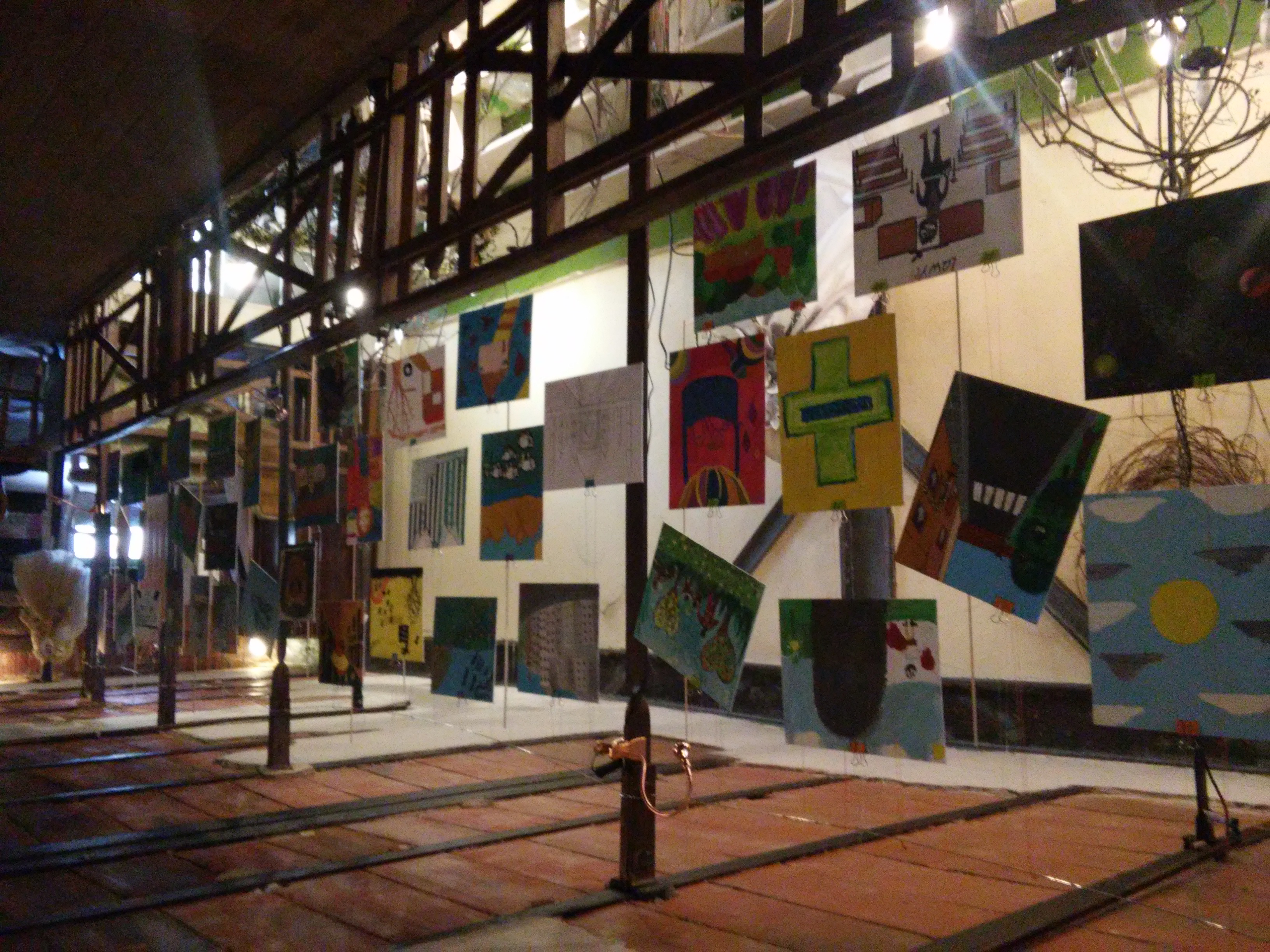
“The Small Room with 101 Windows”


“Small Room”, is an artistic project inspired and based on the refugees’ journey from their warring countries to Europe.

The first opening days of the exhibition were from May 28th to May 30th in Thessaloniki, where the initiator-activist Vassilis Tsartsanis, along with the Asklepeion Team, presented their work to the public. The exhibition was held in Bensousan Khan, a 19th-century inn, at the area of Ano Ladakika in Thessaloniki. The exhibition was comprised of a series of installations, with audiovisual material being projected mainly from the mobile phones of the refugees themselves.

The “Small Room with 101 Windows” project, is an experiential and at the same time interactive exhibition, which describes the two year of every day experience with the refugees originating from the war zones heading from Turkey to central Europe.

This vision-project led by Vassilis Tsartsanis’ inspiration and executed by the Asklepeion Team, aims to inform and raise public awareness on the critical refugee issue focusing on its multiple dimensions:

–        the magnitude of this humanistic drama

–        the power of solidarity

–        the threat of the uncontrolled action of the illegal trafficking gangs and their negative impact on the European asylum

–        the urgent need of action of the European authorities

–        the activization of the reflexes of the European citizens

–        the participation of young people and student as well as University institutions throughout Europe

The place/ point of reference, is situated on the Greek-Skopje border at the around area of Eidomeni where the biggest and at the same time most deadly passage to Europe had been established.

SolidarityNow, with the valuable support of our field teams in northern Greece, is participating in this great project with paintings and drawings from our young beneficiaries. The “Small Room” –funded exclusively by OSF– began its journey from Thessaloniki while its official premiere will take place in London, in September 2017. Then it will travel to various European cities; Berlin, Copenhagen, Brussels, Belgrade and Athens, ascertained so far.

See more on the project here.

Safe Refugee and Proud!

Valia Savvidou & Stefania Athanasiou

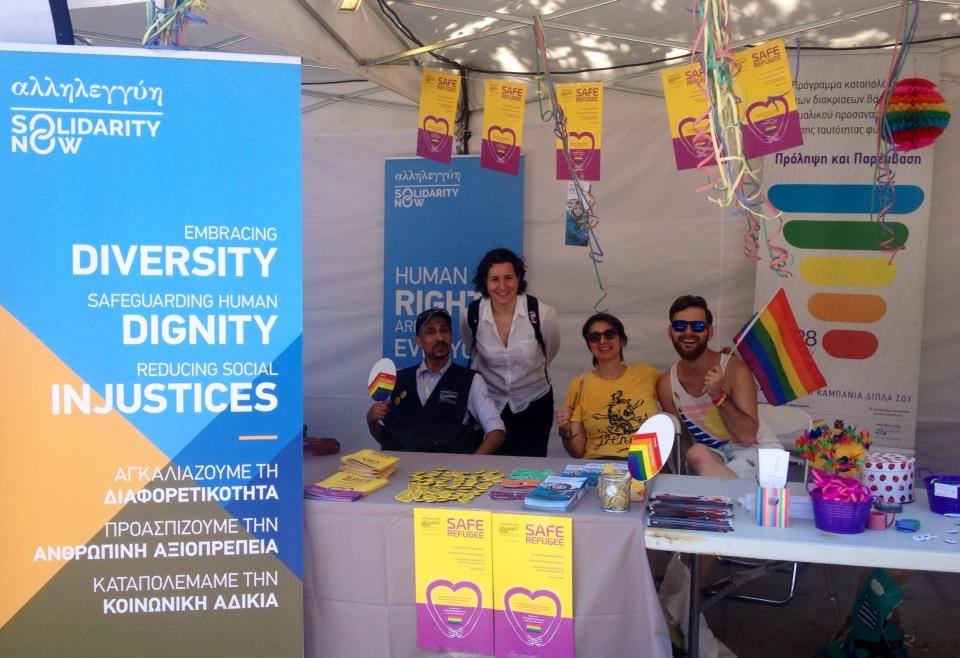
On Saturday, June 10th and during the three-day period, June 14th to 17th, SolidarityNow participated in Athens and Thessaloniki Pride, respectively, on the side of the LGBTI population.

The aim of the organization’s presence at the Festival was to stand by the LGBTI community and to present its own work on the protection and rights’ defense of the very sensitive population of the LGBTI refugees.

Operating under the principles of equality, respect, freedom of expression and solidarity, the organization implements, since November 2016, the “Safe Refugee” program, the specialized program for LGBTI refugees and asylum seekers who face double stigma; being both LGBTI and a refugee.  

This Festival provided the opportunity to join the voice of the Greek LGBTI community with that of the LGBTI refugee community through actions and things that unite people, all people, regardless of their origin, color, sexual orientation, social status. Music, colorful balloons, interactive awareness games, colorful informational material, and the cheerful general climate, were the means to highlight the joint requests of all for equality and respect.

Thousands of people visited the SolidarityNow kiosk, in both Athens and Thessaloniki, and had the opportunity to be informed about the “Safe Refugee” program, while their interaction with the organization’s people is a small step towards sensitization, against discrimination and in favor of acceptance and respect of human rights.

In SolidarityNow we believe that initiatives like these encourage societies to move ahead, to gradually become the open societies for which we work for, and in which we all have a position as equal members who deserve equal opportunities.


*In the framework of the specialized housing and support program, entitled “Safe Refugee”, SolidarityNow provides accommodation to LGBTI refugees in independent apartments in Athens and Thessaloniki. The program’s participants receive psychosocial support, legal aid, while they take part in educational and recreational activities; they are also part of a wider network that aims to improve their living conditions and support them while staying in Greece.

The Hosting and Accommodation Programs are developed by the UN Refugee Agency (UNHCR) and funded by the European Union Civil Protection and Humanitarian Aid (ECHO).

“You have to taste a culture to understand it” *

Giorgos Moutafis for SolidarityNow

*Deborah Cater, British travel and food blogger

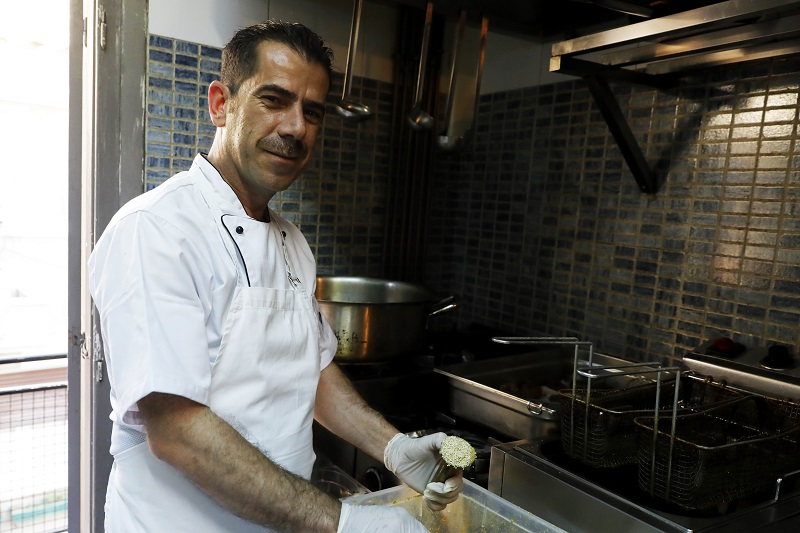
On the evening of June 19th, the Seychelles restaurant in Kerameikos had altered its catalogue adding Barshank’s dishes – humus, spicy lamb, tabbouleh, grilled chicken with spices and groats and mutabal. The same happened when Abdul cooked at the 7 Food Sins restaurant in Plaka, where the cook confirmed his reputation as the “king of falafel”!

Both sides ceased the opportunity to come closer to each other’s culture; the Greek public on the one hand and the chefs from other countries on the other; the chefs who live currently in Greece as refugees and/or asylum seekers. Among them, Barshank and Abdul, chefs, refugees from Syria, beneficiaries of the SolidarityNow housing and accommodation program.

All this became a reality for the first time this year, since the Refugee Food festival, which is organized by the UN Refugee Agency (UNHCR) in several European countries, came to Greece and more specifically in Athens!

It took five days, from 17th to 22nd June, for the five chefs who cooked in five different restaurants in Athens, their countries’ traditional dishes and literally charmed the audience. Some of the restaurants even needed to extend the days for the new chefs to satisfy the people who wanted to taste the flavors of the different countries, such as Syria, Iran, Somalia, Afghanistan.

The organization’s beneficiaries, firstly Barshank, on June 19th and then Abdul on June 21st, cooked for us Syrian spicy dishes, which were accompanied by their warm smile as they could not hide their happiness doing what they love. Cooking. They cooked for Athenians, delicacies from their own country, giving in this way a message of solidarity, respect and equality.

We wish to all the chefs who participated in the Refugee Food Festival to find their way to a peaceful and safe life and gain the opportunity to do what they love; besides, Abdul states that food and his relationship with it “is the ticket for a better future”!

Initiatives, such as the one by the UNHCR, will always be supported by SolidarityNow, since they are steps towards the next day; the one of social acceptance and integration of refugees and/or asylum seekers into the Greek community.

Abdul and Barshank were uniquely photographed and filmed by Giorgos Moutafis’ lens.

————————————————–

The best for last! Barshank shares a traditional recipe with the organization’s readers and friends:

Baba ghanoush | Kurdish version without tahini

We punch out the small round eggplant with a fork a and put it in the grill, until it blackens and shrinks. Then, we peel it and put the flesh in the blender until it becomes a pulp. Then we strain it.

Take a pan and pour some olive oil. Add 2 or 3 cloves of grated garlic. In the pan, we can add a whipped egg. Then, we add the pulp eggplant, paprika sauce, salt, pepper. We place the pulp on a dish and make a hole in the center. Add mint or other fresh herbs, olive oil and some slices of tomato to decorate the dish.


The Hosting and Accommodation Programs are developed by the UN Refugee Agency (UNHCR) and funded by the European Union Civil Protection and Humanitarian Aid (ECHO).

Joint letter on Racist Attack on a Romani Neighbourhood in the city of Menidi, Attica


Solidarity Now together with other organizations sends a letter of concern to the competent Greek and European authorities in response to the racist attack on a Romani neighborhood in  the city of Menidi. A full criminal investigation on these events which started on 10 June 2017 has not been conducted yet.


Τo:

Nikolaos Toskas

Alternate Minister of Interior and Administrative Reconstruction

4 P. Kanellopoulou St., GR-101 77, Athens, Greece

pressoffice@yptp.gr


Municipality of Acharnes, Yiannis Kassavos, Mayor

Filadelfeias Avenue, 87 & Bosda str.

PC 136 73

info@acharnes.gr


Lieutenant General, Konstantinos Tsouvalas

Chief of the Hellenic Police

4 P. Kanellopoulou St., GR-101 77, Athens, Greece

press@hellenicpolice.gr

Cc:

Álvaro Oliveira

European Commission Legal Officer, DG Justice

Rue de la Loi / Wetstraat 200 1049 Brussels

Belgium

alvaro.oliveira@ec.europa.eu


Pia Lindholm

European Commission Legal Officer, DG Justice

Rue de la Loi / Wetstraat 200 1049 Brussels

Belgium

pialindholm@ec.europa.eu


Dora Husz

European Commission Policy Analyst, DG Justice

Rue de la Loi / Wetstraat 200 1049 Brussels

Belgium

dora.husz@ec.europa.eu


Andreas I. Pottakis

Ombudsman of Greece

17 Halkokondyli St. 104 32 Αthens, Greece

ombudsman@synigoros.gr

press@synigoros.gr

Re: Racist Attack on a Romani Neighbourhood in the city of Menidi, Attica

Dear Sir/Madam,

We the undersigned organisations are writing to you in response to anti-Romani mob violence and arson attacks that began on 10 June 2017 in a Romani neighbourhood of the city of Menidi, Attica (Greater suburb of Athens).

According to information compiled from media sources[1], on 10 June 2017 an 11-year-old non-Romani boy was killed by a stray bullet of unknown source during celebrations on the occasion of the ending of the school year. A 23-year-old Romani man was apprehended as a suspect by the police and on 12 June 2017 was convicted to a suspended 40-month sentence for the use of a weapon[2]. In response, the local Roma community were collectively blamed for the death of the boy. In the immediate aftermath, an angry mob, of about 1500 participants, has gathered in the Romani neighbourhood of Menidi and thrown Molotov cocktails in front of the house of the 23-year-old suspect’s Romani family.

A video posted on social media[3] by far-right groups shows arson attacks on 12 June on the homes of the Romani suspect (2.20) as well as hundreds of supporters of the Independent Maeander Nationalists and Combat 18, marching and chanting “gypos, pigs, murderers”. The footage later (3.30) shows another arson attack on a second home belonging to the Romani suspect’s family and crowds chanting “gypos, cunts, shops of cops”. The video ends with a threat of more violence against the Roma in Menidi (8.55). Both homes were burned extensively[4] but no arrests have been made.

On 11 June the anti-Roma protest continued and outbreaks of violence occurred in Menidi. There was an attempt by the mob to break through police lines and attack the Romani inhabited area. During the rally, some people threw self-made firebombs at Romani houses destroying two of them. The police has responded with tear gas, triggering a clash with the mob.

On 12 June, an anti-Roma march was initiated in the area of Menidi. The rally lead to outbreaks of violence as the angry mob more threw self-made bombs and stones at police at the train station, in an area bordering the Romani neighbourhood. The police has responded with tear gas and stun grenades. At 10.30 pm the rally had reached the Romani inhabited area. The intervention of the police has so far stopped further outbreaks of violence against the Roma.

On 13 June, non-Romani residents of Menidi initiated anti-Romani riots in front of the Citizen Protection Ministry. When authorities reportedly failed to launch a criminal investigation, the Greek Helsinki Monitor filed a complaint with the Hellenic Police’s Division to Combat Racist Violence on 16 June. On 20 June, GHM has been briefly informed that Hellenic Police had launched a criminal investigation on these events.

We urgently call on your respective authority to fully investigate and prosecute (if appropriate) the individuals involved in this incident once order is restored. The clear presence of deeply entrenched anti-Gypsyism in the county requires that this be undertaken, not only to secure the rights of the individuals affected, but also for the protection of the entire Romani community. We would remind your office, it is indispensable to investigate the potential for racial motivation in order to fulfil your legal obligations under the EU Framework Decision 2008/913/JHA, particularly Article 8, as well as Article 14 read with Articles 2 and 3 of the European Convention on Human Rights.

We urge the Minister of Interior and the Mayor of Menidi to ensure the safety of its Romani citizens in Medini as Neo-Nazi groups rally continue threatening the life and security of the Romani people in the city and in the country. We call your respective authorities to address the issues of marginalization of Greece Romani citizens and the obviously heightened dangerous level of anti-Roma sentiment in the city and society.

Given the gravity of the situation, we in accordance with the applicable domestic and international safeguards regarding disclosure of personal data, requests, in accordance with article 5 (Access to documents—Πρόσβαση σε έγγραφα) of the Greek Administrative Procedural Code (Κώδικας Διοικητικής Διαδικασίας), Law 2690/1999 regarding the free access to information of public interest – your office to provide us with the following information in writing.

We, the undersigned organisations, would like to highlight that the information requested concerns the institutional response to alleged hate motivated incident rather than any data of a personal nature:

  1. 1. Has an ex officio investigation been launched concerning the violent arson attacks against the Romani community, and if so when? Has the complaint filed by the Greek Helsinki Monitor been addressed and if so when?
  2. What measures have been undertaken by your office to determine the cause(s) of the incident?
  3. Have any suspects been identified?
  4. Have witnesses been summoned to testify?
  5. Has anyone been accused of being responsible for this incident, and if so, what charges were brought against this person(s)?
  6. Has the highly likely racial motivation of the incident been investigated and / or taken into consideration during any investigations?
  7. What measures (if any) are planned, or have already been taken to rehouse the victims of the arson attack?
  8. What measures are envisaged to ensure the safety the Romani inhabitants in the Menidi neighbourhood?

We will be carefully monitoring the situation, and institutional responses. We are available for further information or clarification if it is needed. We look forward to your response via email to atanas.zahariev@errc.org, or by post to the European Roma Rights Centre, Wesselényiutca 16, H-1077 Budapest, Hungary.


Yours sincerely,

Đorđe Jovanović

European Roma Rights Centre


Panayote Dimitras

Greek Helsinki Monitor (GHM)


Vasilis Tsarnas

Coordinated Organizations and Communities for Roma Human Rights in Greece (SOKADRE)


Epaminondas Farmakis

Solidarity Now


Nafsika Papanikolatou

Minority Rights Group – Greece (MRG-G)


Read the letter here


[1] https://dithen2010.blogspot.hu/2017/06/an-anti-roma-pogrom-in-athens-short.html

[2] https://greece.greekreporter.com/2017/06/13/menidi-residents-demonstrate-at-citizen-protection-ministry/#sthash.KEj859qz.dpuf

[3] https://www.youtube.com/watch?v=qQq0Y5onv8w

[4] https://agonaskritis.gr/μενίδι-εκαψαν-και-τα-2-σπίτια-του-23χρονο/]

“A Fundamentally Different Approach is Needed”: Α Joint Statement


IDC Members and partners, including SolidarityNow, write to express our collective concern that, “A Fundamentally Different Approach is Needed” to the immigration detention of migrants in Europe.
In advance of a consultation with key civil society stakeholders from 22-23 June 2017 at the Council of Europe Headquarters in Strasbourg, over 30 national, regional and international civil society organisations have drafted a joint statement, which will be presented to the European Committee on Legal Co-operation (CDCJ) who is carrying out a codifying exercise on a detailed set of immigration detention rules based on existing international and regional human rights standards relating to the conditions of detention of migrants.

More info at https://idcoalition.org/ 

Read the joint statement here