Europe’s Refugee Opportunity

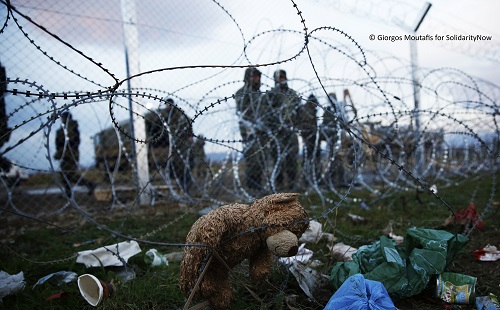
Giorgos Moutafis for SolidarityNow

By Emma Bonino, a former Italian minister of foreign affairs,
minister of international trade, and EU commissioner,
and a founding board member of the European Council on Foreign Relations.
Εurope’s so-called refugee crisis should never have become an emergency. Accommodating one million asylum-seekers should not be a huge challenge for the European Union – an area with 500 million citizens that welcomes more than three million immigrants every year. Unfortunately, the lack of a coordinated response is transforming a manageable problem into an acute political crisis – one that, as German Chancellor Angela Merkel has rightly warned, could destroy the EU.
Most EU member states are selfishly focusing on their own interests. This pits them against one another and has precipitated panic, putting refugees in even greater peril. A smart, comprehensive plan would calm the fears. Instead, Europe has preferred to search for scapegoats – and Greece is the latest to be targeted for blame.Greece has been accused of not doing enough to process and house refugees. And yet, even if the country were not crippled by economic crisis, it would be unreasonable to expect a single small country to bear the burden alone – especially in a year when more than 800,000 refugees are expected to pass through its territory. This is a European and global problem, not solely a Greek problem.
There is plenty of blame to go around. In Greece, George Soros’s Open Society Foundations, acting in partnership with European Economic Area and Norway Grants, anticipated the problems that the lack of a serious European asylum policy would create. In 2013, the partnership established an organization, Solidarity Now, run by the cream of Greek civil society. Solidarity Now needs just €62 million ($67 million) to care for 15,000 of the 50,000 refugees who need to be housed in Greece next year. And yet, though the EU has promised to spend €500 million to help Greece manage the crisis, some member states have failed to pay their share.

Read more here.
Refugee crisis: A threat or an opportunity?

Giorgos Moutafis for SolidarityNow

by Nicos C . Alivizatos
Antigone Lyberaki
Christos Rozakis
Anna Triantafyllidou*
The article was published in Kathimerini on 06/12/2015.

There is no point on simply saying “do not let the terrorists get in.” When you turn your back on every refugee, because he/she could be a terrorist, you turn your back on almost 20 million people. And when you turn your back on 20 million people, then we will all face a global crisis”.

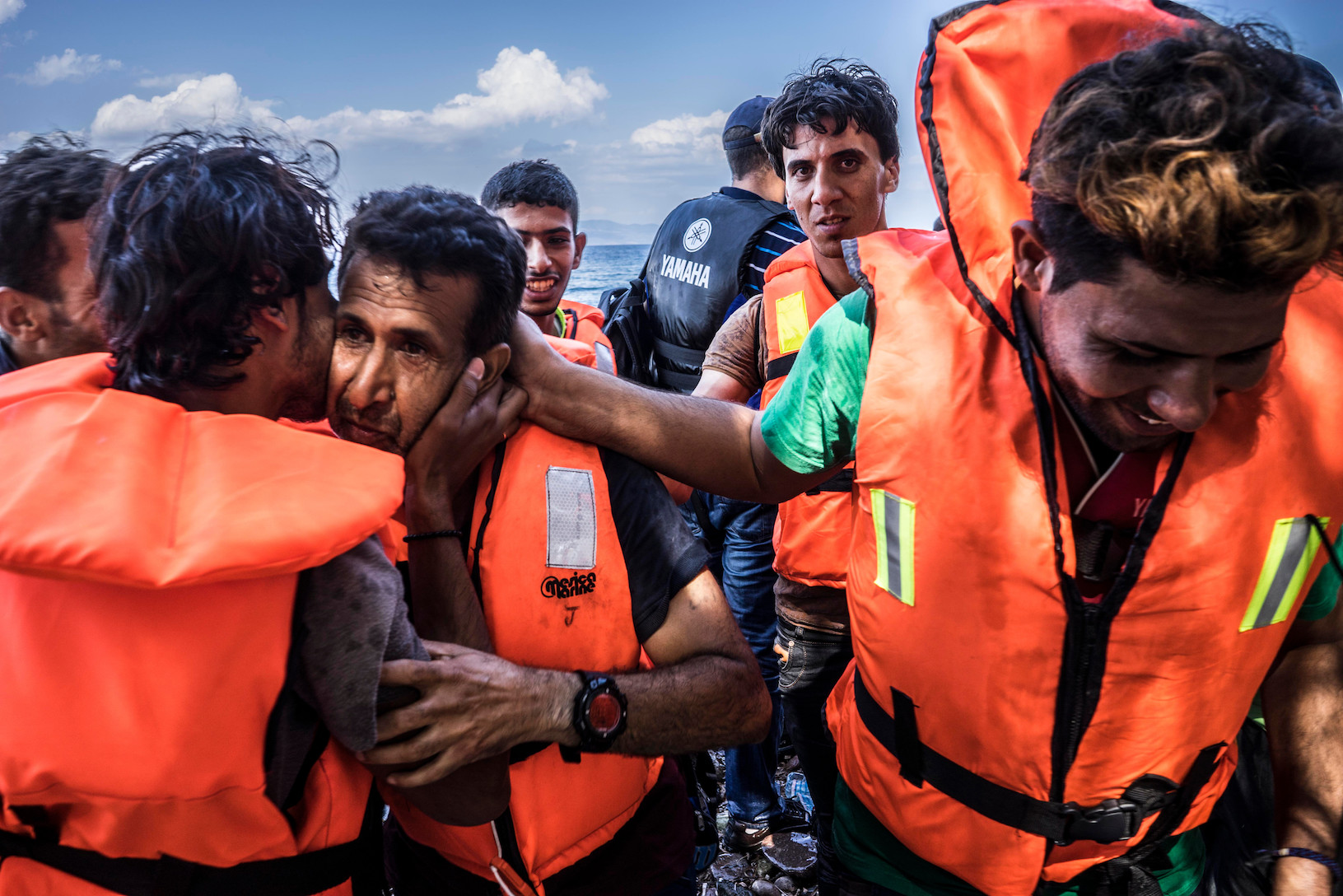
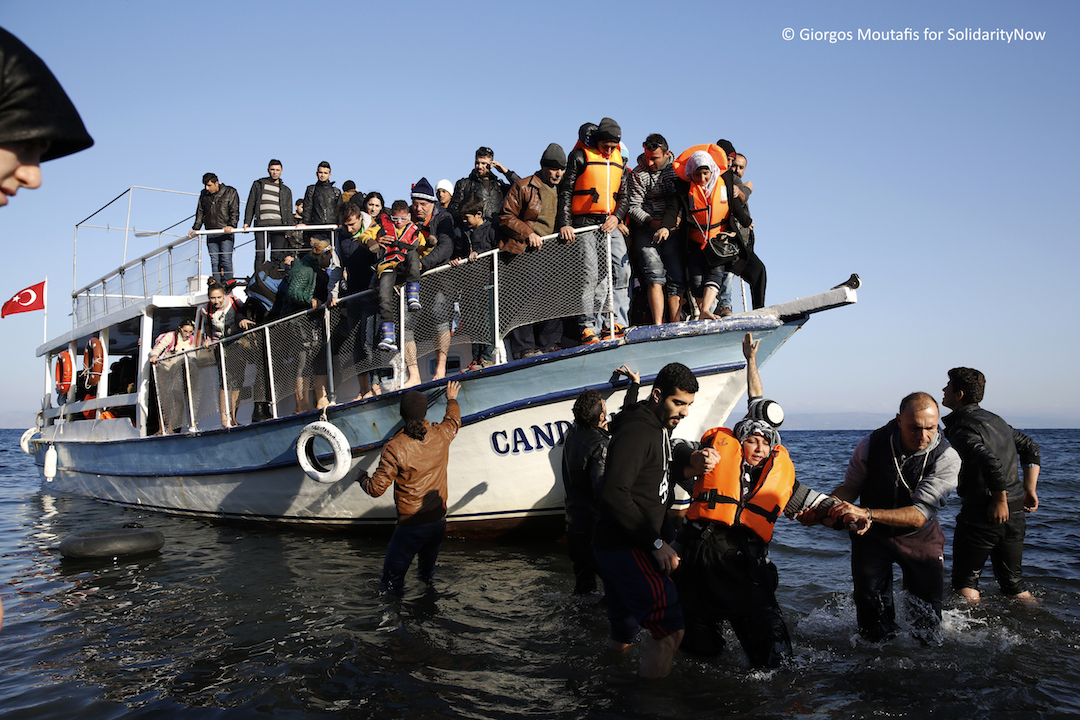
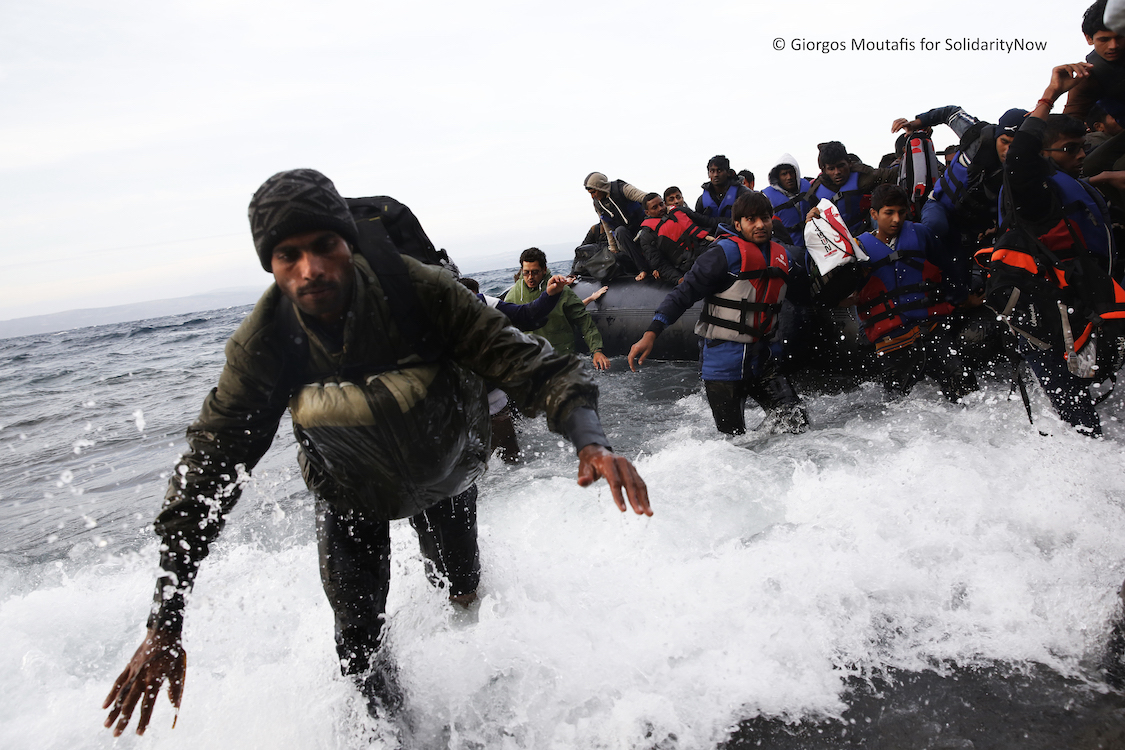
These are words of a volunteer who offers her services on the island of Lesvos. Since last January, more than 428,000 refugees have arrived on the island, seeking safety and an opportunity to live another life. The total number of refugees having arrived in Greece exceeds 730,000.

For Europe, the refugee crisis is gradually becoming an existential one. The dilemma is huge: if Europe leaves its external borders open, the Schengen Agreement will collapse and so will the fundamental principle of the EU, that of free movement of people. But if it closes its outer gates, this will destabilize countries such as Turkey, Lebanon and Jordan, which, until now, have welcomed millions of refugees. Besides, the financial support of Turkey and other countries to keep refugees in their territories – as decided at the recent summit of EU leaders – apart from being costly, is not a viable solution.
Until the conflicts raging in the Middle East, Africa and elsewhere are not resolved, Europe will be destabilizing, while at same time a million more people will be driven to despair and more fanatical positions. In any case, no wall around Europe is sturdy enough to prevent the influx of aspiring terrorists.

In Greece, the challenge of managing the refugee flow is huge. The greatest danger, however, that Europe is currently facing is the possibility of exiting the Schengen Agreement and other European countries closing their borders, one after another. If this happens, we will be forced, alone and isolated, to accommodate dozens if not hundreds of thousands of refugees indefinitely.
Unfortunately, the European plan to relocate 160,000 asylum seekers from Greece and Italy to other EU countries has not yet been implemented, and thus pressure on neighboring countries remains high. In Greece, the only official “hot spot” where refugees can be identified, registered, and take the necessary document to continue their journey, operates in Lesvos.
In Greece, only 1% of refugees arriving apply for asylum: since last January, the total number has not exceeded 9,000, and the authorities do not create any incentive for them: no accommodation, no food, no education and no employment opportunities.
It would be devastating to lose more valuable time and not directly promote the following three priorities: (a) set up and operate the “hot spots” – registration centers, (b) enhance the initial reception infrastructure and (c) develop long-term accommodation and integration facilities for some of the refugees.

According to the 17-point plan agreed by the EU leaders on October 25th, Greece must step up its efforts and respond quickly to the increased needs for the reception of refugees. This is where the contribution of civil society and organizations is much needed. For example, “SolidarityNow”, which, with the support of Open Society Foundations and the Norwegian government (EEA) and the valuable cooperation of humanitarian organizations such as Doctors without Borders, the International Rescue Committee and others, including local authorities, has developed significant actions for the assistance and immediate relief of refugees.
___________________
Mr. Alivizatos, Ms. Lyberaki, Mr. Rozakis and Ms. Triantafyllidou, are members of the Board of Directors of “SolidarityNow”.

Idomeni: Let’s not, once again, be tragically below par

Giorgos Moutafis for SolidarityNow

by Elli Xenou, Director of Programs, SolidarityNow
(article published in Huffington Post, Greece, 3.12.2015)

Border of Greece – FYROM, Idomeni. Old images come to my mind, trucks with medical supplies crossing the border, army, police and NGOs: the scene of another, previous crisis, the war in Kosovo and former Yugoslavia…
I recover the image from an inner need of mine to place my thoughts in order, to add a historical aspect to the crisis, when I hear and see images again of the area this past summer.

I am able recall the scene when it is replaced by a new one: thousands of people, children, women and chaos, shoving and violence, injuries, people screaming and crying when FYROM temporarily closed the exit towards Europe, at the beginning of this summer. This exit is still in the making, though, for millions of Arabs, Asians and Africans. This is the phenomenon that UNHCR calls “the big march” – that is, a great flow of populations escaping from a hectic, unsafe, and in fact absurd world, hearing towards the civilized and rational West.

I find it unnecessary to comment on whether or not the West actually lives up to the aforementioned positive characterizations. There have been many words, articles and analyses written about the West and its inferiority, anyway. But on top of that, comments are excessive since we can only be judged based on the results of our actions.

A temporary camp was created in the summer in Idomeni, through the contribution of the state, UNHCR, local bodies, and NGOs. This transit camp has allowed a smooth and dignified passage of thousands of people to FYROM and other host countries. An undeniable “success story” to address the humanitarian crisis faced by Greece and FYROM: a small triumph of a cross-border cooperation under emergency conditions and good organization in terms of volunteers, NGOs and international organizations cooperating in the field. All this has helped hinder the creation of bottlenecks and has facilitated both states in their work by providing basic support and services to the “people on the move”.

Being vulnerable to external factors over time and international politics, this organized approach to combat the humanitarian crisis – that is, the system which has worked so far in Idomeni -as many similar ones in other international crises- has been proven too weak to cope with increased flows, increased length of stay – meaning increased and more complex needs, confined populations and everything else that will be brought upon by closing the borders – especially if this becomes permanent with the raising of a new fence – and the advent of winter.

New tensions were created in Idomeni, in November 2015. While FYROM allows the passage of Syrians, Iraqis and Afghans, it closes the door on other nationalities trying to pass through, and go to Central Europe. The situation remains unsettled and the future looks uncertain.

Did this historical perspective of the crisis help me eventually make a conclusion?
The fact that the causes of crises are always complex and that the power players always prove to be below par, is rather obvious.
However, there is something that is not as obvious as it should be. And this is, -if not the humanitarian ideal- the humanitarian obligation, at least. It is the duty of all those involved to facilitate and ensure access to basic goods and services, under safe and decent living, food and health conditions, to all and to the Third Country Nationals (TCNs) that are located at or pass by Idomeni, on their way to other destinations. This should be an obvious basis for communication and a practical axis for direct intervention and action for all those involved in handling the crisis.

At the same time, there are other human and legal rights that TCN possess, according not only to international humanitarian law, but also refugee and immigration law: the status of international humanitarian protection, the right to seek asylum, the right to temporary residence etc. Here things get more complicated. International practices differ and the broader geopolitical developments constitute key factors in crisis management, such as the one we are now facing, which transcend the narrow range of humanism and ultimately evolve into international, political and social crises.
The humanitarian tradition of crisis management does not have much to offer on this second level. But it has much to require from the first.

As the temperature drops in Idomeni and hypothermia cases rise, dilapidated buildings of the nearby railway station remain closed. Before we think or work out complex solutions that require multilevel consensus, why can’t we agree on what is obvious – that is, agree to open these buildings and used them as temporary shelters for people arriving in Idomeni?
SolidarityNow has already asked the state and local authorities to allocate these buildings and has ensured its commitment to take care of their renovation and operation.

Let’s finally agree on what is obvious. Idomeni, Lesvos, Leros, the Dodecanese and the map only expands… There are no holistic solutions for these people, and this is not a failure of ours only as a country, but as Europe, as the Western World, as the one expected to ensure a better tomorrow. Let’s, at least, follow the example set by the residents of the areas who welcomed these people: let’s protect them by providing them with the basics. Let’s not be tragically below par.

Listen to My Story

(Ελληνικά) Giorgos Moutafis for SolidarityNow

Photo-journey of “SolidarityNow” for the refugee crisis, through social media
Athens, December 3rd 2015.

Starting today and for the next two months, “SolidarityNow” -in collaboration with the internationally-renowned photographer George Moutafis-, brings people and their personal stories to the forefront, amidst the refugee crisis. This photographic journey is titled “Listen to My Story” and focuses on the invisible protagonists of the unprecedented, for Europe, refugee / immigration phenomenon. And introduces us to 32 people, recording their 32 unique stories.

We listen to stories of people who are refugees, who are volunteers, who are active citizens, people who are stand beside thousands of desperate people who arrive in Greece, in solidarity. These people are our own everyday “heroes”. They are people who hope, who dare to dream when war sweeps everything around them, who find the courage to reclaim their lives, who generously lend a hand of help, who know how to share a plate of food with a smile, who give meaning and substance to the word solidarity .
“In this period of turmoil -with more than 720,000 refugees having arrived in Greece from the beginning of the year until today – and when Europe’s policies are weak and phobic, and actually very distant from the vision of a Europe with open borders, free movement and social inclusion, we wanted to focus on the faces – actors of this ongoing crisis, the true protagonists. They speak their own truth about what is happening», notes Sophia Ioannou, Head of Communication and Fundraising at “SolidarityNow”. She continues: “With strong images – portraits, we let people who are at the heart of the events -whether they are refugees, citizens exhibiting solidarity, or volunteers and municipal workers- submit us their own story. Our aim is to raise awareness, discourage complacency, and push for immediate solutions.”

“Listen to My Story” is introduced today to the general public through www.solidaritynow.org and our social media (Fb: SolidarityNow, Twitter: @Solidarity_Now).

Through the lens of George Moutafis, we will be traveling to Lesvos, Chios, Kos, Leros, Samos, Tilos and from there to Idomeni, and back again to Athens. We will travel where #SolidarityNow supports important organizations so that together we can provide shelter, food, warm clothes, clean drinking water, medical care and support to people arriving after a perilous sea journey while seeking safety and claiming their right to live.

#ListentoMyStory

Because these people have something important to tell us. Let’s listen to them!

Turning the Refugee Crisis into an Opportunity? Current Challenges for Greece and Suggestions for Action

Giorgos Moutafis for SolidarityNow, Eidomeni November 2015

Policy Brief by Anna Triandafyllidou
Professor, European University Institute, Florence, Italy
Member of Board of Directors, Solidarity Now

The Refugee Flows: An Apocalyptic Scenario

Despite being confronted with a severe economic and social crisis for the past six years, Greece has been faced with exponentially rising flows of asylum seekers and irregular migrants since 2013, and particularly during 2014-2015. None had predicted the dramatic escalation in asylum-seeking flows that took place during the first 10 months of 2015 and which are still in full swing.
By 13 November 2015, 666,502 people had arrived in Greece, mostly crossing from Turkey to the Aegean islands, and most fleeing war and violence in their home countries (Syria, Afghanistan, and Iraq, but also Pakistan and Somalia). In October alone, more than 200,000 people crossed the Mediterranean to Greece, many of them specifically passing through the island of Lesvos. During the same period (Jan to mid-November 2015), Italy received 141,777 people.

To read the whole report please press here.

The Slow-Motion Legal Disaster Unfolding within the Refugee Crisis


As refugees continue to be driven out of Syria, a legal crisis is taking shape throughout the region that parallels the humanitarian one.

Refugees leaving Syria face a bureaucratic nightmare that isn’t always readily apparent. For instance, when they depart their home countries, many leave behind their IDs, passports, and marriage and birth certificates. Then, because of lengthy and complex registration processes, some Syrians go on to marry in their host countries without proper documentation. Problems proliferate from there. Children are born “illegitimate” and divorces are legally impossible. Family, the crucial stabilizer of societies in tumult, runs the risk of breaking down.

These obstacles to marriage and birth registration, coupled with gender-discriminatory nationality laws in the region, are creating an urgent need for legal aid. This need is particularly pressing in countries like Jordan and Lebanon, which are at the front lines of the Syrian refugee crisis, yet haven’t ratified the 1951 Status of Refugees Convention or its 1967 Protocol.

To read the whole article press here.

Five ways Europe could save refugee lives this winter

Anna Pantelia

MYTILENE, 3 November 2015 (IRIN) – Currently on leave from the UN emergency aid coordination body OCHA, Greek humanitarian worker Fotini Rantsiou has spent the last three months as a volunteer on the island of Lesvos. As the death toll mounts in the Eastern Mediterranean, with stormy seas claiming the lives of at least 70 refugees in the last week of October, many of them children, the EU’s slow and fragmented response to the refugee crisis is looking increasingly ineffectual.

Months of summits and action plans have still not provided refugees with an alternative to putting their children in flimsy boats and handing over large sums of money to smugglers.

In a speech on Friday, following a series of fatal shipwrecks in the Aegean, Greek Prime Minister Alexis Tsipras told his parliament he felt “shamed as a member of this European leadership, both for the inability of Europe in dealing with this human drama, and for the level of debate at a senior level, where one is passing the buck to the other.”

To read the whole article press here.

Group Exhibition Art2Give


Group Exhibition Art2Give by the Blender Gallery and the KINARI Design 
to support children-migrants with the help of the «αλληλεγγύη – SolidarityNow»

Athens , 10 November 2015. The Blender Gallery in collaboration with KINARI Design and ETHOS Art will inaugurate on Thursday, November 19, 2015 the exhibition “Art2Give” during which works by contemporary American painters will be presented for the first time in Greece. The title of the exhibition is dedicated to the refugee crisis that has been worsening rapidly nowadays and for this reason, part of the proceeds from the exhibition will support the initiatives of  “SolidarityNow” for the relief of these vulnerable populations.

In this context, during the opening night there will be a raffle with tickets worth 25 euros each and two prizes : one lucky visitor will win artwork worth $ 3,000 while the lucky one will win a full service package including space remodeling, offered by KINARI Design.
All proceeds from the raffle and 10% from the sale of the artwork will be offered by “SolidarityNow” to support refugee children and their families.

The “Together for Children” Association and the Network of Migrant Women “Melissa” join their forces for refugee children


The “Together for Children” Association” and the Network of Migrant Women “Melissa”, with the support of the Migrant Integration Council of Athens, implement the project “A backpack for the Road” for refugee children.

The basic idea of ​​action arose from the need of basic products which are necessary for the journey of children and refugee families to their final destination.

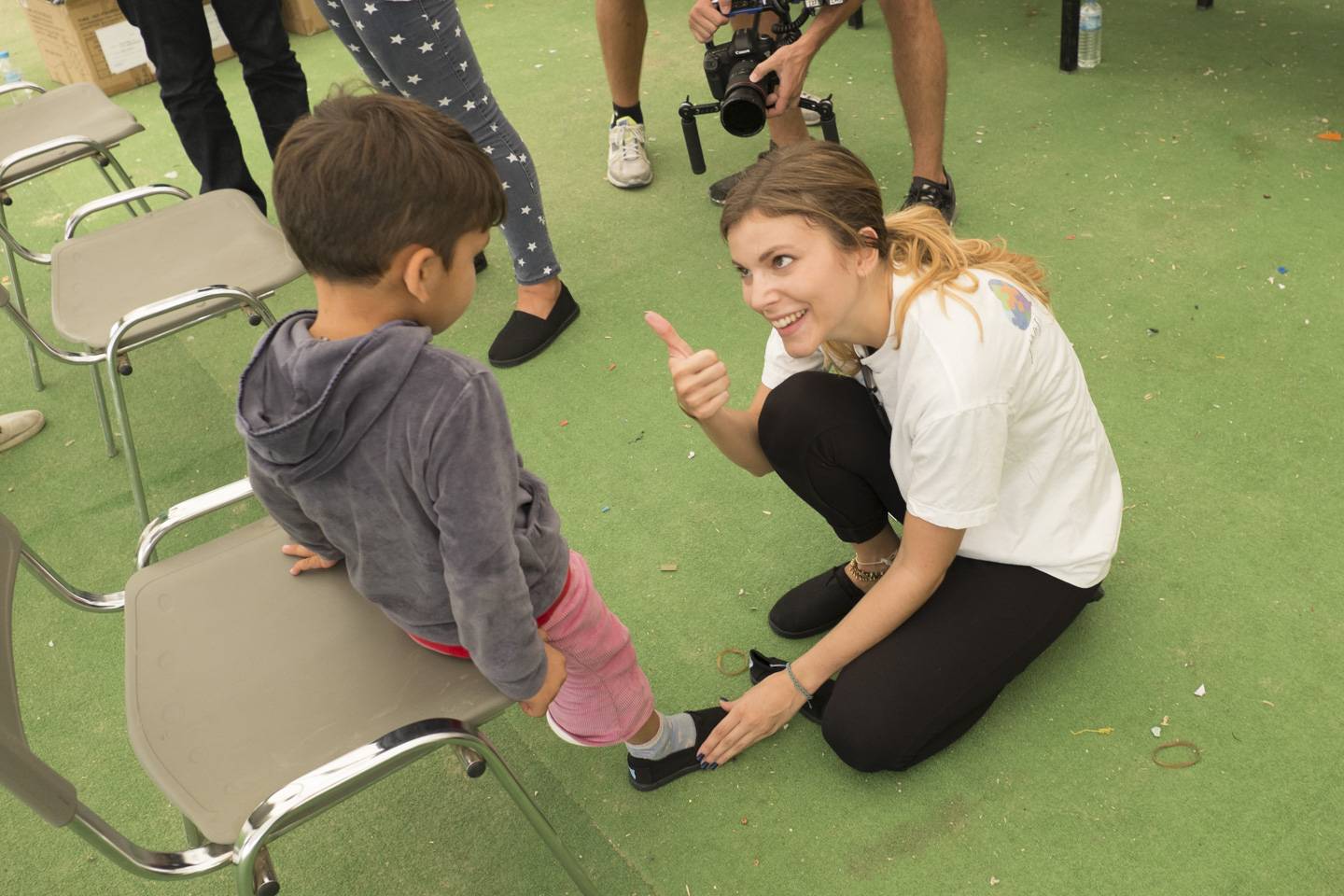
The “Together for Children” Association provides each child refugee a pair of new shoes, offered by TOMS, and in cooperation with the Network of Migrant Women “Melissa”, prepares backpacks containing items for personal hygiene, cereal bars, whistles, flashlights, first aid kits, notebooks, pencils, paints and small toys. The products in the backpacks are offered by companies and individuals.

Since mid-September, there have been more than 500 backpacks and 1,159 pairs of TOMS shoes delivered during visits to the Open Hospitality Centre in Elaionas and Galatsi, as well as at Technopolis of the Athens Municipality, whose space has served as a meeting point for refugee families from Syria.

This effort will continue and distributions will be made at regular intervals in cooperation with the accommodation structures and refugee communities, so as to provide practical support to the refugee children and families who have experienced the pain of war and uprooting.

Actions to relieve those affected by the crisis


“Europe’s borders are outside the area”, highlighted the Rapporteur of the Migration Committee of the Parliamentary Assembly of the Council of Europe, Andrea Rigoni, from Lesbos. Indeed, Europe’s borders perhaps stop right there, as the promised European solidarity was never manifested, while the number published by the UNHCR is staggering: More than half a million refugees and migrants have already arrived in Greece this year. Common realization? Even a few days after the first hotspot was established on the Island, images at the Center of Immigrant and Refugee Registration in Moria remain tragic.
But what is unfolding is actually not a refugee crisis, but primarily a solidarity crisis. And during this crisis, the only one who have successfully managed to face this solidarity challenge is civil society.
More specifically, Open Society Foundations (OSF) has been intervening for the last 25 years with specific actions and multiple programs to support immigrant and refugee populations in Europe. The founders of OSF fore sought the crisis and the upcoming humanitarian issue in Greece, stressing that Europe overall must reclaim its vision of a society based on solidarity.

Read the article by Kathimerini at the link below (available only in Greek):