fbpx

POREIA Theatre

Anna Pantelia

The theater Poreia will host an additional performance of the play “The Great Chimera” on Saturday, November 7th at 5.00pm

All proceeds will support the program of “SolidarityNow”
for refugee children

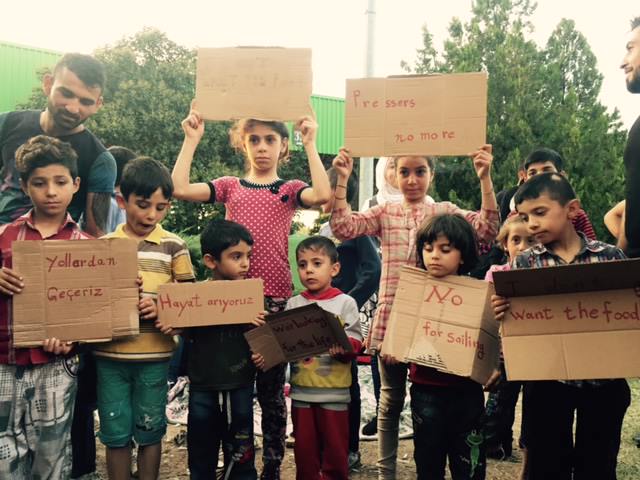
Athens, 29 October 2015. Children are always war’s greatest victims. And in this refugee crisis, they haven’t been an exception. It is estimated that every year, around 4,000 unaccompanied minors enter Greece. These children – whoa often only five or six years old –travel alone, are abandoned at the border, or lose every contact with their families. Children are a particularly vulnerable group as it faces risks such as exploitation by trafficking networks, child prostitution, or even difficulty to access shelter, food and basic services.

The theater Poreia will host an additional performance of the play “The Great Chimera” on Saturday, November 7th at 5.00pm and in cooperation with “SolidarityNow”, which contributes to the care and protection of unaccompanied minors, in their journey to reach a new, safe home.
All proceeds from this performance will be dedicated to a program that supports unaccompanied minors and single parent families to continue their difficult journey from our islands to Idomeni and from there, to other European countries.
The theater Poreia, the artists and the entire production team of the play “The Great Chimera” by M. Karagatsis (directed by D.Tarloou) will support these vulnerable groups with : basic necessities (rain boots, socks, sleeping bags, scarves, napkins, pampers, baby carriers, blankets etc).
* Note: All proceeds will be allocated to directly support this specific population. The proceeds will not cover the operational needs of “SolidarityNow”.
We empower solidarity in practice: step #2


After the first step which regards the emergency programs and that is being implemented by SolidarityNow under the “six-point response”, we now move on to the second step by designing new, medium-term actions, thereby enhancing solidarity in practice.
At SolidarityNow, we are true to our humanitarian work and our main purpose to support the populations that are most affected by the current refugee and immigration crisis. Therefore, we plan and are, in fact, ready to start piloting new, innovative programs that respond effectively and promptly to the urgent needs of the most vulnerable populations.
In this context, we seek to develop synergies and fruitful collaborations with institutions, organizations and donors that will allow us to develop together as soon as possible this strategic plan so as to meet the challenges of this unprecedented crisis and provide decent living conditions to populations that are on the move.
The strategic operational plan of SolidarityNow includes the following programs to be implemented:

Vulnerability Checkpoints in Thessaloniki
Create vulnerability checkpoints in Thessaloniki in order to identify and support the most vulnerable population groups, emphasizing on urban areas of Central Macedonia and Evros. The program activities focus mainly on humanitarian assistance for asylum seekers, providing beneficiaries secure temporary shelter, mediation, translation and access to services and programs.

«SolidarityNow» in Athens
By focusing on solidarity, SolidarityNow proposes a pilot voluntary hosting program for refugees and other displaced people, who lack the basic human right to housing. The primary goal is to give families of Syrian refugees and vulnerable people, who are on the islands and in the capital, living under unsuitable or poor conditions, the opportunity of a temporary accommodation in houses of local families, thus laying the basis for social cohesion between the local population and migrants.
The beneficiaries, supported by experienced personnel and via their association with the Athens Solidarity Centre and local networks of civil society, will have access to an full package of services such as primary health care, legal assistance, psycho – social support for children and families etc.

Solidarity Network Islands
The program aims to support the first reaction line of local solidarity actors on the islands to new population arrivals, thereby strengthening the operational capacity and advocacy for humanitarian principles governing fieldwork, based on facts and examples.
The program will implement specific guiding methods, tools and plans for responding to emergencies, will set forth actions to support community participation, mobilization and transparency, and will enhance the expertise of civil society in Greece.
More specifically, SolidarityNow – through the adoption of a communication channel with international organizations and the communities of the islands – will reinforce local solidarity actors and informal networks in order to expand this knowledge and integrate experiences in their communities. This way, they will be given the opportunity to implement a more comprehensive and targeted action plan that responds to the increased humanitarian needs of this period.

InfoREF
InfoREF (Information REFugee) is a multi-level information and communication network that uses the development of technology towards the benefit of third country nationals arriving in Greece, of humanitarian workers and of local, national and international media outlets.
Based on the active, nationwide network of partners, SolidarityNow mobilizes all available sources and intends to improve reception conditions and the journey of third country nationals, through the establishment of pilot network programs, software and applications, so as to address the information gap, the coordination challenges and the dissemination of news and activities on the field.

Additional 2 million euros for the relief of an increased number of refugees


Athens, October 19, 2015. Considering the urgent needs of refugees as winter is approaching, “SolidarityNow” proceeded with the decision to support the implementation of new, major programs and structures, with an additional funding of 2 million euros. The selection of projects and organizations was based on the “six points response” concept which SolidarityNow implements in order to respond promptly and effectively to the current crisis, while still covering long-term needs and priorities of the populations that are most affected.

«The “six-point response" is essentially an emergency plan in order to face, with our partners, rapidly and crucially, the immediate problems that the refugees confront as soon as they arrive in Greece», says Epaminondas Farmakis, Managing Director of SolidarityNow. He further explains: «We give priority to immediate relief, we ensure the populations' access through the use of mobile teams to health care, and we help speed up the asylum procedure for unaccompanied children. Through synergies, we respond in effective, integrated and complementary manner to the crisis –so that we do not again witness other tragedies, whose victims are always the most vulnerable of our fellow men».

In this context, and in an attempt to increase the ability of the state to address the humanitarian crisis and to speed up the process of registration of displaced people –as it often hampers the difficult conditions under which the refugees live -SolidarityNow supports the competent authorities throughout the country. Specifically:

®     First Reception Service
Support to the First Reception Service for the operation of two mobile units in Leros and Kos. The non-governmental organizations METAction and PRAKSIS, in cooperation with the First Reception Service will provide to refugees medical examinations, relief items, interpreting services and access to a wide range of services. The Service has to face the lack of reception services in the Dodecanese, while the project intends to improve the provision of water and sanitation at the First Reception Service in Evros.

®     National Asylum Service
Support to the National Asylum Service by hosting an office and staff at the Athens Solidarity Center that is operated by SolidarityNow since 2014. The program aims to accelerate asylum procedures and provide assistance and support to vulnerable groups from Syria such as unaccompanied minors and single parent families. At the same time, SolidarityNow supports the forthcoming needs and the operation of the regional offices of the Asylum Service in Patras, Samos and Chios.

Support of the Festival «Break the Chain», organized by the National Rapporteur on the occasion of the Pan-European Day against Human Trafficking, and held at Technopolis of the Athens Municipality (24-25 October 2015), in cooperation with PRAKSIS. The Festival aims to inform the public and raise awareness on issues related to trafficking and exploitation of people by people.

Simultaneously, SolidarityNow strongly committed to the promotion of civil society initiatives with the implementation of important projects, proceeds to support established international non-governmental organizations to undertake the following actions:

Support to the International Rescue Committee for the implementation of a program which includes ensuring protection to asylum seekers and vulnerable groups in Lesvos, for the launch of missions to provide direct and targeted support in emergency situations on the Greek islands, borders and Balkan countries, but also for the evaluation of the emergency situation in Turkey, as this will be formed in the winter, in order to facilitate a collective response to new, possible population arrivals in 2016.

Support to MdM for the operation of an “Open Polyclinic” in the city of Patras, which is the departure point of displaced populations. The Polyclinic offers free medical care to uninsured citizens, to people in need of international protection, but also to all those who do not have access to the healthcare system. Special care and attention is given to vulnerable groups (women, children and unaccompanied minors) and to the local health structures which need support.

Support to MSF for the implementation of a program aiming to maximize awareness and information provided to communities about populations entering Europe through the Eastern Mediterranean and the Balkan countries. The goal of the program is to open up discussions, address humanitarian concerns and dilemmas for the continuing efforts and the struggle of these populations for survival and dignity.

SolidarityNow is a network of people and organizations established in Greece in 2013 through the initiative of the Open Society Foundations. They work together to help those affected by the crisis the most. SolidarityNow supports groups and organizations of civil society that are active in Greece with programs and operates two Solidarity Centers in Athens (supported by the EEA Grants) and Thessaloniki, at which vulnerable groups of the population can receive free medical, legal and other services.

SolidarityNow operates by supporting synergies between civil society and governmental entities. Since the beginning of 2015, it has allocated the amount of ten (10) million euros to projects related to migration and the refugee crisis in Greece.

“Five myths about refugees”


The young men leaving Syria escape conscription. If humanitarian assistance to countries neighboring Syria and Iraq increased, flows of refugees will stop … “Five myths about refugees” is the title of an article from the “EFSYN” newspaper by Fotini Rantsiou, coordinator of the actions of #SolidarityNow Lesvos.

The article is available only in Greek if you want to read press here.

Migration crisis: “This is the last opportunity for EU to show solidarity”, by Epaminondas Farmakis, Managing Director, SolidarityNow


September 15, 2015. Together with our team we have visited all the islands affected by the migration and refugee crisis within the last months including Lesbos, Kos, Rhodes, Tilos, Samos and Leros. Due to the situation, I had the chance to visit Lesvos just a couple of days ago as it is the transit point for the refugee flows.

We feel so proud of our support towards these vulnerable populations but extremely frustrated that there are still no safe legal passages.

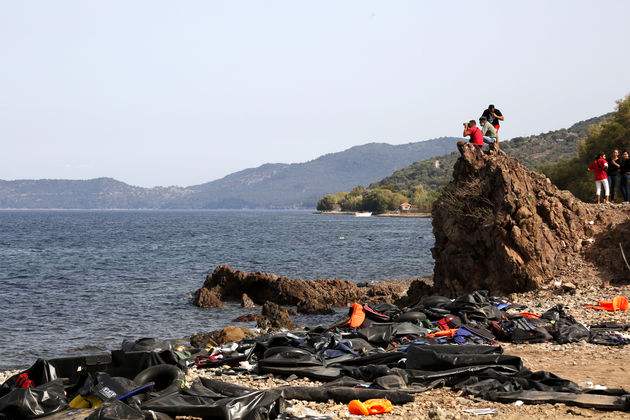
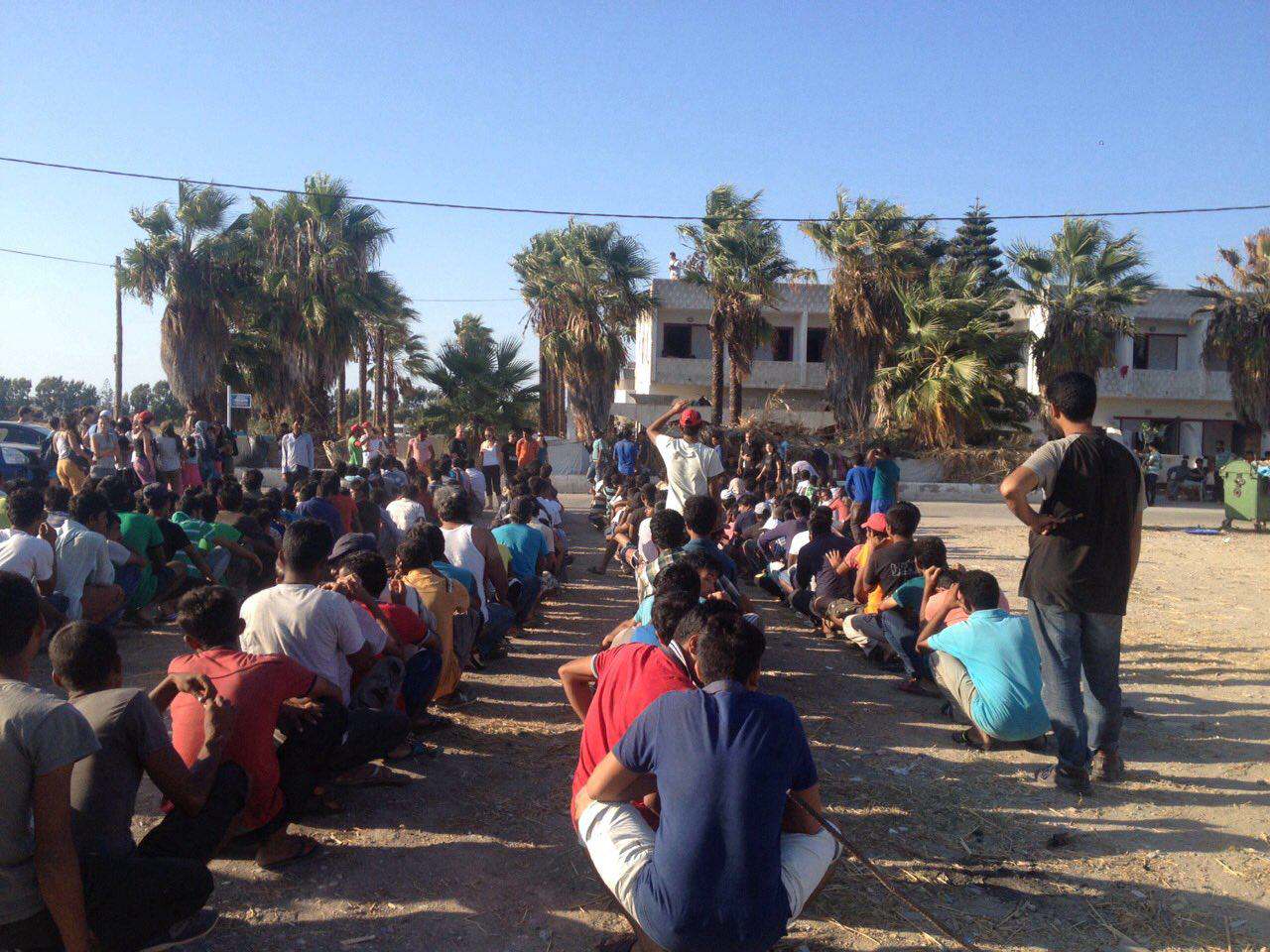
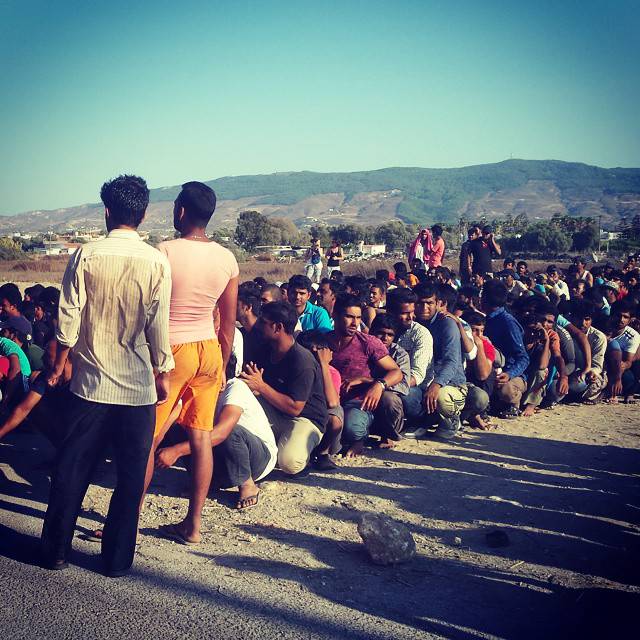
The situation remains post-apocalyptic in Lesbos; again, thousands of refugees being stranded on the island. It’s a double shock. The scale of the refugee flow and the arrival conditions as, in the absence of a proper transportation service, people were forced to walk 25 miles to the nearest small center of registration.

Urgent that relief is stepped up and all stakeholders acknowledge is that what is missing at the main entry islands of Lesbos and Kos and the exit point at Idomeni border area are the transit centers which we aim to establish with various partners and the support of Open Society Foundations /Open Society Initiative for Europe.

Arrival kits, transport facilities are all desperately needed on Lesbos. People will take their chances in rough seas over the winter with increased loss of life. The prime role of Lesvos as a migration route is largely an accident of geography. Turkey is so close that refugees have to cross as few as six miles of water to reach the island. And nearby Turkish shores are sparsely inhabited, making them ideal places for human traffickers to gather refugees and launch them in flimsy inflatable rafts.

While other Greek islands, like Kos and Chios, are also close to Turkey, the waters around Lesbos are relatively calm, making the crossing easier. And the maritime authorities in Turkey have cracked down on human smuggling farther south, according to Syrian smugglers in Turkey. That crackdown has not been as strict near Lesvos, where arrivals have skyrocketed to more than 50,000 last month alone. For most refugees, who are coming from Syria, Iraq, Afghanistan and elsewhere, Lesbos is a mere way station on the way to mainland Greece and farther afield in Europe, although the island’s isolation has at times hindered that journey. Earlier this month, a rise in arrivals and slow registrations led to a backup of more than 20,000 migrants on the island, nearly a quarter of its native population. The refugees protested the lack of services, blocking traffic and clashing with the police.

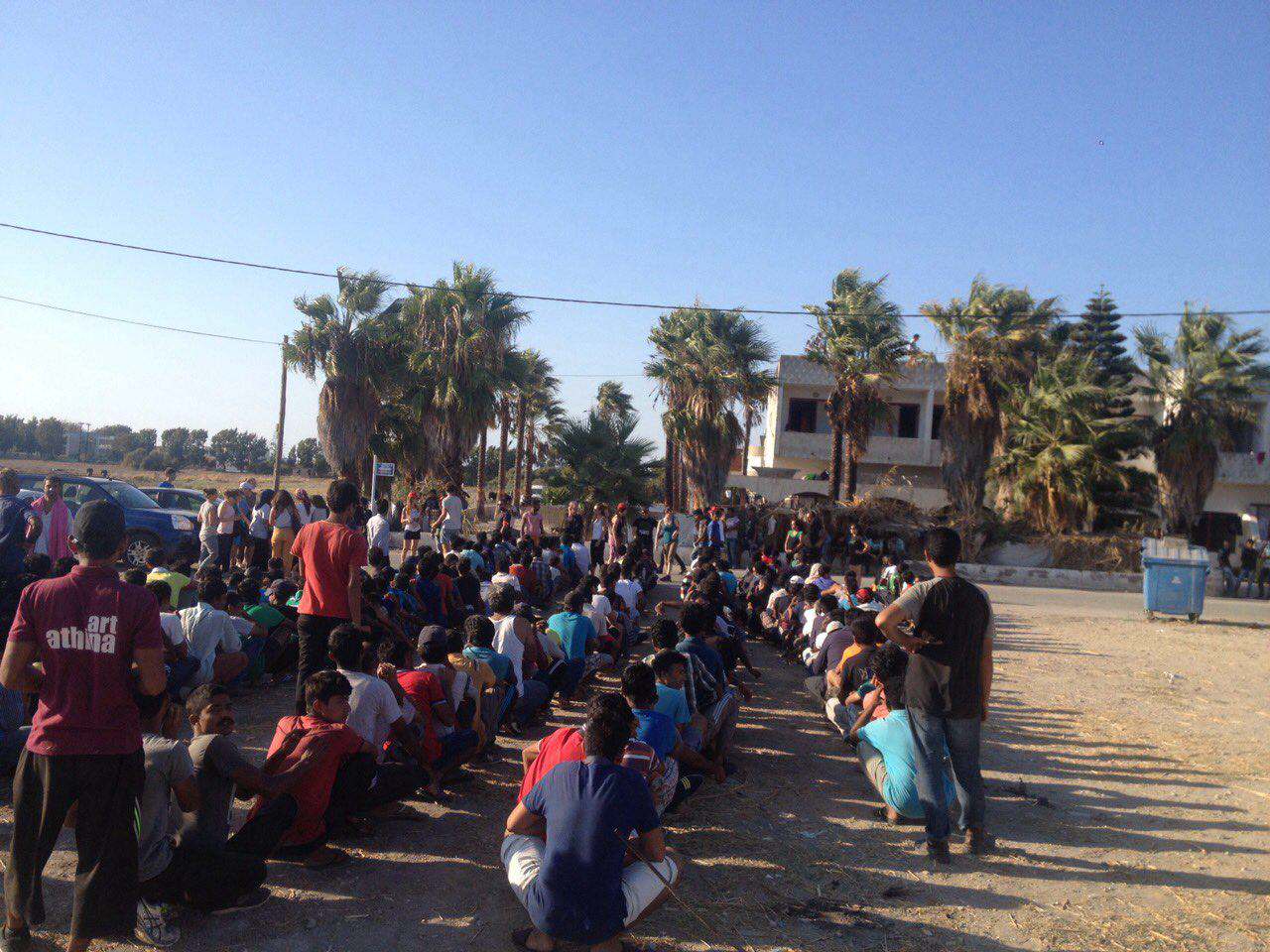
As I visited during the day, the streets were full of refugees speaking a variety of languages, lugging large backpacks and charging their phones for an outrageous fee at impromptu charging stations in cafes. Long lines form outside ferry company offices.

The European Parliament backed plans to relocate 120,000 refugees across member states to ease pressure on Greece (50,400), Hungary (54,000), and Italy (15,600). On a Ministerial level, the disagreement remains with objections from Denmark, the Czech Republic, Slovakia, Lithuania, Estonia, and the ambiguous position of Poland.

The proposal is for a mandatory relocation weighing each country’s capacity on the basis of GDP (40%), past asylum applications (40%), and the unemployment rate (10%). The countries participating will receive a subsidy of €6,000 per relocated person, including a 50% pre-financing rate to enable national authorities to act very swiftly.

Our advocacy has to grow stronger – refugees are not treated as human beings and children lose their lives at sea or lose their families during the crossings. This is not OPEN Europe; it is now separated not only by borders but by ideals and humane treatment of fellow humans. It is not illegal for someone to cross the border and request asylum.

But what needs to be done to handle this unprecedented situation?

We need to improve reception conditions in the southern Mediterranean, especially in Greece. This will require increasing search and rescue; providing financial and technical support to affected countries; and implementing a coordinated and rapid emergency response mechanism for recurrent refugee flows.

Increase safe, legal passages to and through Europe for refugees. This means expanding use of all possible tools for safe entry into Europe, including resettlement but also mechanisms like family reunification and humanitarian visas. The EU will also need to make it much easier for refugees to move safely from border countries to other member states, reforming or ideally replacing the Dublin System. Introducing air travel and rail service would be life-saving. Finally, the EU needs a comprehensive, common asylum policy with minimum standards of protection.

And most importantly, we have to address the reasons why people are fleeing to Europe. Working alongside other donors, the EU and member states need to greatly increase support for the countries outside Europe hosting the bulk of refugees. They should also commit renewed diplomatic and political muscle to solving conflicts and ending persecution.

This is the last opportunity for member states to show Solidarity or else the EU, already receiving high pressures from Russia and the terrible Ukraine situation, will start to dissolve.

Rebuilding the Asylum System, by George Soros


NEW YORK – The European Union needs to accept responsibility for the lack of a common asylum policy, which has transformed this year’s growing influx of refugees from a manageable problem into yet another political crisis. Each member state has selfishly focused on its own interests, often acting against the interests of others. This precipitated panic among asylum seekers, the general public, and the authorities responsible for law and order. Asylum seekers have been the main victims.
The EU needs a comprehensive plan to respond to the crisis, one that reasserts effective governance over the flows of asylum-seekers so that they take place in a safe, orderly way, and at a pace that reflects Europe’s capacity to absorb them. To be comprehensive, the plan has to extend beyond the borders of Europe. It is less disruptive and much less expensive to maintain potential asylum-seekers in or close to their present location.

Read more here.

EU migration talks: What EU governments can do to help solve the crisis (Anna Triandafyllidou)


EU ministers are meeting on 14 September to discuss measures aimed at tackling Europe’s migration crisis. To coincide with the talks, Anna Triandafyllidou writes on the key measures that are required to help manage the crisis. She argues that EU governments need to broaden their focus beyond the Mediterranean, recognise the mixed motivations that underpin migration, acknowledge the regional realities within individual countries, and better understand the booming smuggling business that facilitates migration routes.

The whole of Europe has been moved by the picture of three year old Alan Kurdi who drowned along with his five year old brother and their mother while trying to cross from Bodrum in Turkey to the Greek island of Kos on 1 September. It was as if Alan has suddenly given a wakeup call to governments and international organisations even though the Syrian refugee crisis has been evolving for well over three years now. Indeed before Greek authorities despaired at the arrival of over 150,000 refugees in the first 7 months of 2015, it had been Italy with its Mare Nostrum operation that had borne the brunt of arrivals both from sub Saharan Africa and the Middle East.

Migrants arriving to Lampedusa. Credits: Sara Prestianni / Noborder Network (CC BY 2.0)
It was probably a “death foretold” before Syrian refugees would be driven out of the Middle East region, where they had found temporary refuge in neighboring countries (Turkey, Lebanon and Jordan) in the hope of soon returning home. As the war continues and nothing is left but devastation, families gather their resources, and with the help of relatives already living in Europe or North America, try to move on to safe and prosperous countries where they hope they can build a future for themselves and their children.

This is a critical moment for Europe and the international community: both because the emergency has escalated and because European citizens have mobilized in a spectacular expression of solidarity and compassion. As a woman from Munich interviewed on television recently put it: “We have so much. We can share some of it with these people”. At the same time, local authorities and journalists warn that citizens distinguish between refugees that are welcome and considered as deserving assistance, and economic migrants in search of better life prospects that should be discouraged from arriving undocumented and should actually be returned as soon as possible to their own countries.

The Syrian crisis is one of the many expressions of a radically changing landscape in the field of international migration and asylum. There are epochal changes taking place, some of which have been noticed by politicians and policy makers, others which are slowly emerging mainly before the eyes of researchers and experts digging in the field. It is therefore worth summarizing these changes and suggesting some policy actions that the EU must consider in this new geopolitical and socio-economic context.