Ending homelessness – it can be done!


Europe on 23rd July 2020, in attendance of European Commissioner for social affairs Nicolas Schmit.

Shocking: Greece tops more than one “top worst” list EU-wide: homelessness is a reality for half of its unaccompanied minors, poor households and people with disabilities find it increasingly difficult to pay rent, and foreign nationals are by far more vulnerable to homelessness and housing exclusion.
According to estimates by the Foundation Abbé Pierre and FEANTSA, some 700,000 people face homelessness every night in the European Union, representing a 70% increase in ten years.
However, during the recent health crisis, the number of roofless people fell sharply in many countries thanks to the emergency measures to provide shelter for the most vulnerable among us. In Greece, within the context of the Covid-19 pandemic, some families seeking asylum were placed in temporary housing, but with confinement measures lifting, they were forced to leave their accommodation, leaving them vulnerable to homelessness again.
We have seen that it is possible to prioritise vulnerable groups and ultimately end homelessness if we really want to when we have the means to do so!
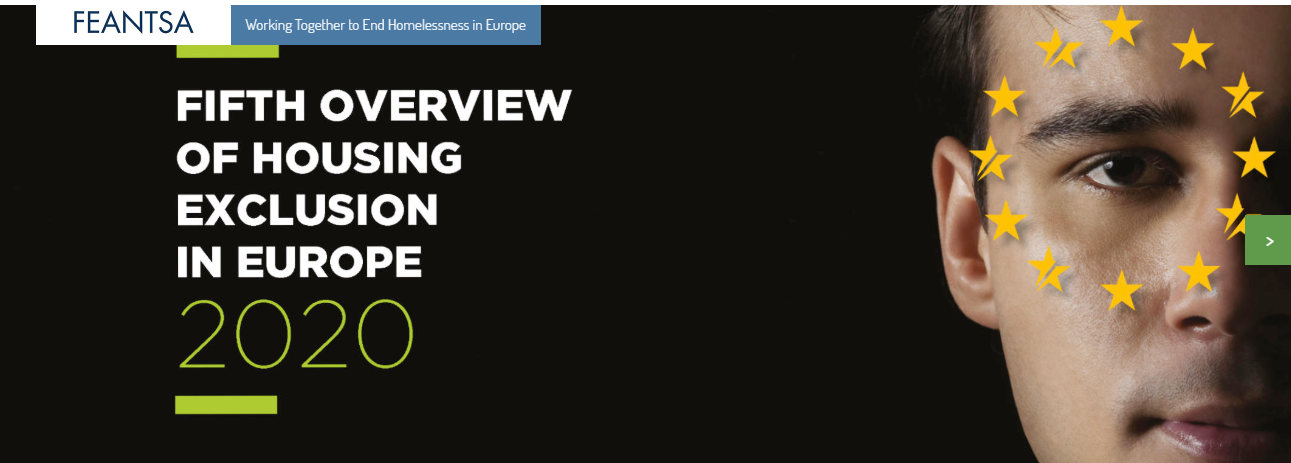
In this Fifth Overview of Housing Exclusion in Europe, the Foundation Abbé Pierre and FEANTSA have once again joined forces and shown that by mobilising 3% of the subsidies provided for in the Post-COVID Recovery Plan budget, the European Union and Member States are capable of immediately rehousing all homeless people across Europe in dignified conditions for an entire year.
Every year, our report focuses on a particular theme: this year, the Foundation Abbé Pierre and FEANTSA focused their attention on people in exile, who are over-represented among the homeless and whose fundamental rights, in particular access to dignified reception and accommodation conditions, are called into question at every stage of the asylum process.

Some numbers from the report:

•Children are particularly vulnerable to housing exclusion in Europe and specifically to overcrowded conditions. In Greece, 40% of all children live in overcrowded homes –that’s double the EU average.
•Half of unaccompanied minors living in Greece in March 2019 were reported homeless
•In the EU, Housing inequalities between poor and non-poor households are on the rise:poor households are eight times more likely to be overburdened by housing costs than non-poor households.
•90% of poor households and almost 40% of the total population in Greece are overburdened by housing costs. Greece has seen these numbers increase over 10 years, making it the “first-worst” in the EU. •In Greece, poor households spend more than 70% while the total population spends approx. 40% of their disposable income on housing costs. That makes Greece the least affordable housing market in the EU when it comes to housing its own population.
•EU-wide, Greece has the highest share of poor households with accumulated housing-related debt (19.7%).
•In Greece, non-EU nationals are twice as likely to be overburdened by housing costs as Greek nationals. Here, too, Greece is “first-worst” with 76.1% of non-EU nationals overburdened with housing costs.
•Non-EU nationals living in Greece are also twice as likely to be living in overcrowded housing in Greece as Greek nationals.
•EU-wide, Greece, along with Bulgaria, has the highest share of housing cost overburden amongst people with physical disabilities (34.5%), which doubled over the period of 2018–2010. That number goes up further when looking at the younger population: 1 in 2 young people with physical disabilities in Greece is overburdened by housing costs.
•Despite the increasing housing inequalities reported above, Greece has the lowest government expenditure EU-wide on housing construction and utilities (0.4%), and has the second-highest decrease in social protection expenditure when it comes to housing(-78.9% between 2007 and 2017).
After years of deep recession, a consequent drop in property prices, austerity policies within the context of increased European surveillance, a rising disparity between housing costs and falling income levels, the financialisation and commodification of housing have had obvious consequences on housing inequalities in Greece. It is high time the matter was given some urgent, but long-term attention.
The publication of this report comes at the end of a major health crisis that has led to an economic and social crisis. This is a major turning point and the Foundation Abbé Pierre and FEANTSA have high hopes that access to decent, affordable and adequate housing for all can be scaled up. Moreover, the European Commission appears to be paving the way for more decisive action in this area. Will Greece be part of the movement?

The 5th Overview of Housing Exclusion in Europe is available here.

About FEANTSA :

FEANTSA is the European Federation of National Organisations Working with the Homeless. With over 100 members, we are the only European NGO focusing exclusively on homelessness. FEANTSA has consultative status at the Council of Europe and the United Nations.

About Foundation Abbé Pierre:

Foundation Abbé Pierre is a major actor in the fight against homelessness and housing exclusion in France and advocates for a more just and human-centered society. The Foundation was established by Henri Grouès, known as “L’Abbé Pierre” and supports almost 900 projects annually both in France and internationally.
Greece: Organisations share recommendations for the best use of EU funds for refugees

Alexandros Avramidis for SolidarityNow

Athens, 14 July 2020 – Four Civil Society Organisations operating in the field of migration in Greece, published today a policy brief with recommendations addressed to national authorities about the best use of EU funds for the integration of asylum seekers, refugees and migrants in the country.

Despite availability of funds, efforts to integrate refugees and migrants in Greece have been limited and fragmented so far and for the government which came to power a year ago, integration does not seem to be high on its agenda. Complex funding procedures, limited collaboration and coordination between stakeholders and often lack of political will, are some of the barriers to the social inclusion of third country nationals, which when combined with exclusionary policies and heated debates at the political level, frequently lead to racist behaviours and even violence against migrants, refugees and those who assist them.

The fast-approaching next Multiannual Financial Framework (MFF) -Europe’s seven-year spending plan- is an opportunity for Greece to improve its social policies for everyone and revisit its integration approach and strategy for third country nationals. It is an opportunity that the country cannot afford to miss, especially following the Covid-19 crisis which will have an extremely negative effect on societies, economies and vulnerable groups, if appropriate responses are not adopted.

The policy brief by SolidarityNow; Generation 2.0 for Rights, Equality & Diversity; the Greek Forum of Refugees and Terre des hommes Hellas, suggests ways to improve the management of funds and programmes while it also takes a deep look into the three main aspects of integration -education and vocational training; employability and housing- and recommends specific steps and actions for their enhancement. All recommendations are the outcome of discussions among numerous stakeholders in the field of migration, including Greek national and local authorities, EU institutions, civil society actors and international non-governmental organisations, during a conference that took place earlier this year.

The organisations urge Greek competent authorities to take into account the proposed suggestions when submitting their proposals to the European Commission for the next funding period, and use available EU funds to ensure social cohesion and create a more inclusive society for all.

Download the policy brief here.

800 people were supported in 2020 by the Accounting Service at the Athens Solidarity Center

Moe Hashemi

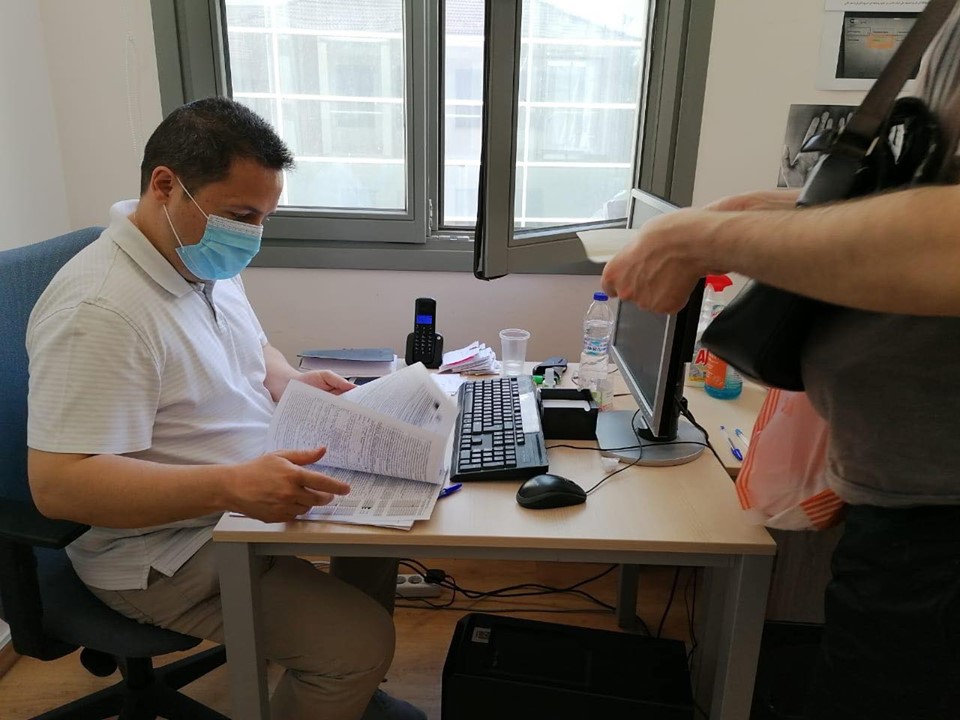
The period of the tax statements’ submission has started at the Solidarity Center, for everyone!

Preparing and submitting the annual tax declaration is not a simple matter for all people. This happens because they are not aware of the submission process but mainly because they are uninformed that from the fulfilment of this obligation derive many rights strongly linked to improving daily life; both for themselves and their families. In order to respond to the above described need, the Accounting Service operating -among other services- in the SolidarityNow Athens Solidarity Center actively supported more than 800 of our fellow citizens to claim a better quality of life from the beginning of 2020.

SolidarityNow’ s Solidarity Center in Athens (ASC) responds, through its free services, to every social need in an immediate and effective way. The main goal always remains to support and facilitate the most vulnerable population groups. This happened during the recent health crisis when we adjusted our activities due to the unprecedented conditions and this is happening now that the Solidarity Center is operating again with the physical presence of its workers and beneficiaries.

Accounting & Counseling service

We are going through the period of submitting tax declarations. For a significant percentage of people – Greeks and non-Greeks alike, filling a tax statement is a prerequisite for receiving benefits, insurance/security numbers and supporting documents, as well as other social benefits that are often the only income for them and their only ability not to be “invisible” citizens, but to claim their rights.

The Accounting & Counseling Service, which operates at the Athens Solidarity Center since April 2018, covers pro bono the needs of many of our fellow human beings, providing:

  • Counseling and guidance for municipal benefits, social benefits, debt settlements and
  • Accounting and tax support for individuals.

January – June 2020

From the beginning of 2020 until today (first semester), 800 people have benefited from the Accounting & Consulting Service, with 1 in 5 being Greek-speaking, 1 in 4 being Farsi-speaking and 1 in 3 being Arabic-speaking. In the framework of the Service’s operation and through its specialized staff, the following are offered: issuance and renewal of unemployment card, renewal of free card for the people with disabilities in public transport, issuance of VAT, debt settlement regulations, request for social electricity tariff, request and activation of personal code number (kleidarithmos), statements for accounts’ unseizability, application for benefits.

“It’s not just a tax statement or an application for a benefit. In our contact with the beneficiaries, and in order to offer them what they need, we learn about their lives. We are faced with so many different problems, so many different lives. Our first concern is to be close to the most vulnerable. Due to the pandemic, as soon as we returned back to the Solidarity Center, we called our elderly beneficiaries to let them know that we are here, close to them, and ready to welcome them again and help them be consistent with their obligations. Respectively, we informed, through the social media and in various languages, the beneficiaries who do not speak Greek. I feel that I offer a lot by practically supporting people who are most in need“, says Stelios Tsavalas, Head of the Accounting & Consulting Service.

Learn more about the Athens Solidarity Center and its free services at https://www.solidaritynow.org/kentro-allileggiis-athinas/.

**The Athens Solidarity Center is financed by EEA and Norway Grants, with HumanRights360 and CROWE Greece as the fund operator. The Center is also supported by the Municipality of Athens.

Finding work is easier with new technology to help migrants enter the job market


A new serious game application launches in time for World Refugee Day June 20, 2020

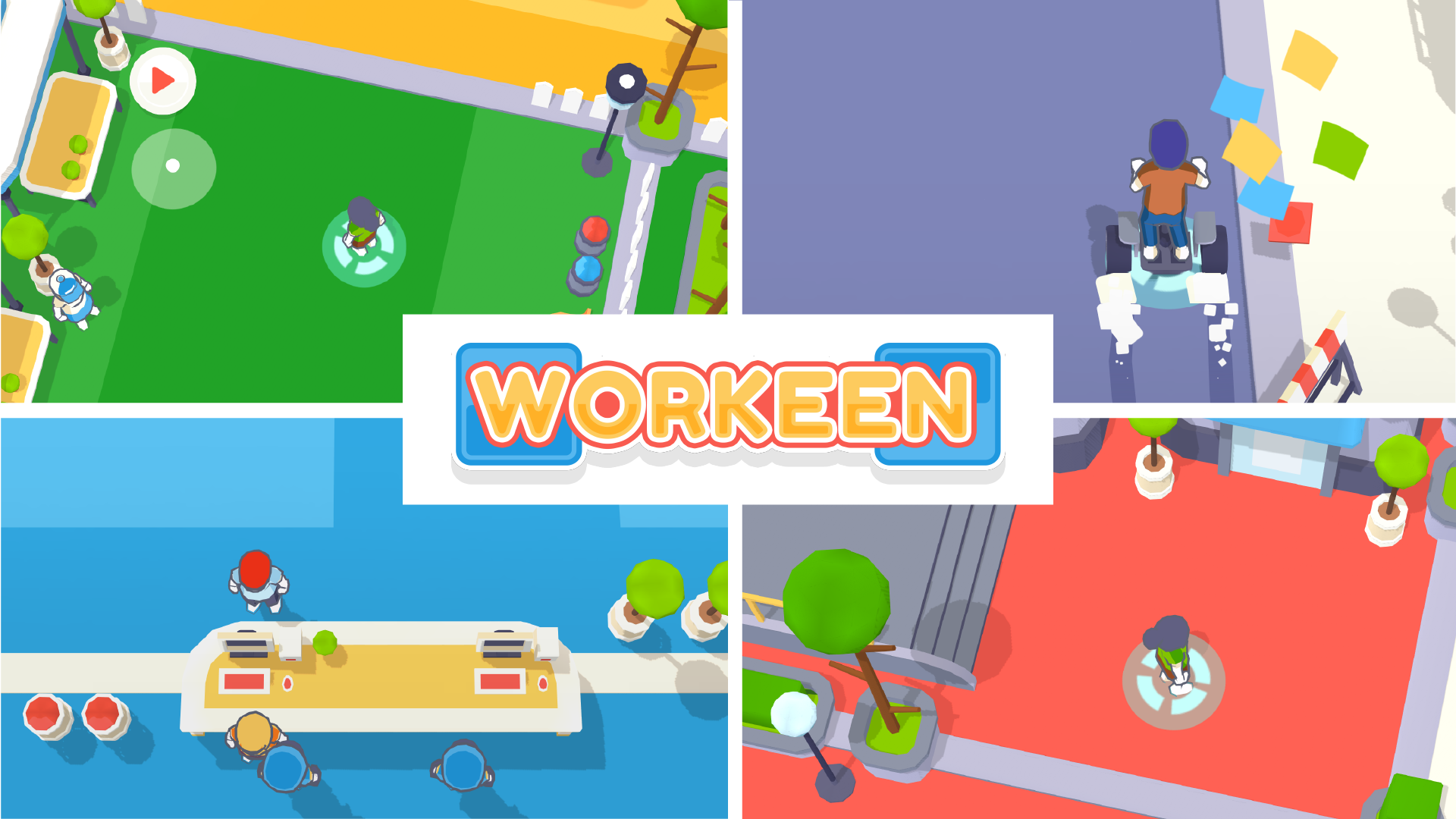
To mark World Refugee Day on June 20, 2020, a new application called WORKEEN launches to help migrants, asylum seekers and refugees gain access to the job market.

WORKEEN is a serious game application, created by a team of political scientists, sociologists, economists and software engineers based in seven European countries and in Canada, to provide practical guidance and hands-on soft-skills training for anyone entering the labour market for the first time. The application draws from the research conducted in the Horizon 2020 research project SIRIUS “Skills and Integration of Migrants, Refugees and Asylum Applicants in European Labour Markets” and is one of the first of its kind to offer interactive “training” that helps recently arrived migrant job seekers and EU citizens that are new entrants to the labour market, effectively obtain and start a job in their new country.

The application guides job seekers through the two stages of job search and workplace integration. It provides extensive information on how to adjust to new or unknown work and social environments and provides interactive gaming scenarios to help users develop the soft skills they need to be successful.

Stage 1) What you need to know and do to obtain a job offer

The first stage of WORKEEN helps the migrant, asylum seeker or the refugee follow all the necessary steps to secure an offer of employment. The application provides a checklist to help the user identify documentation they will need in their job search, such as their identity documents, language certificates, evidence of previous employment or education, and work permits. The user is then guided on how to present their skills and past experience through the creation of an online profile that is relevant to the new work and social environment they are entering.  WORKEEN leads users through the final stage of a job search, providing information on how to contact a placement agency, write a cover letter and curriculum vitae and prepare for a job interview.

Stage 2) How to succeed in your new role

Once the first stage is successfully completed, the job seeker can explore WORKEEN’s interactive activities to help them prepare to enter a new workplace. Stage 2 is designed to help new employees become familiar with their new country or new position so they may avoid unpleasant tensions. It also makes them aware of their rights and prepares them to address potential exploitation and abuse. Serious games like WORKEEN give participants training on such matters as etiquette at the workplace, gender issues, everyday habits, communication issues, dress code, as well as labour standards and regulations. WORKEEN creates scenarios to help users navigate challenging situations from simple miscommunication on everyday encounters with co-workers or supervisors to facing bullying or abusive behaviour in the workplace or rights’ violations.

The WORKEEN application is available on Google Play store for Android devices, free of charge. It can be used in individual or collective training sessions organised by employment agencies, migrant organisations and other stakeholders. Naturally, it can be directly downloaded by migrants, refugees and asylum seekers or anyone wanting to develop their soft skills to gain employment. The application is available in English, Arabic, Farsi and in six different European languages (Czech, Danish, Finnish, French, Greek and Italian).

**SIRIUS is an EU founded project which was launched in January 2018 and will run for three years. It is consisted of 11 partners from 7 countries and it builds on a multi-dimensional conceptual framework in which host country or political-institutional, societal and individual-related conditions function either as enablers or as barriers to migrants’, refugees’ and asylum seekers’ integration via the labor market.

#OurHeroes is a human storytelling project at the times of COVID-19


SolidarityNow launches new podcast series focused on the “invisible” role
of humanitarian workers in the field

 An Afghan man who managed to collect his documents and be granted asylum in Greece; a woman, victim of gender-based violence who found the strength to support other women of her community; a long-term unemployed who found a job; an unaccompanied minor who was taken to the hospital and received medical treatment. But who are the people behind these stories that supported their success? They are the humanitarian workers of SolidarityNow, the ones who continue providing vital services to those who need them the most.

The new podcast series entitled #Our Heroes made by SolidarityNow is dedicated to all the field workers, through which their voices and contribution will be heard. SolidarityNow presents its own “heroes” and “heroines” through their own stories the way they recorded and narrated them. Because in COVID times, these people do not give up and continue to support the most vulnerable. 

Since the beginning of the pandemic, through the quarantine period and still today, SolidarityNow’s programs and activities did not stop or pause; they continued adjusted to the new conditions and needs of our beneficiaries. “The organization’s readiness is a direct result of the swift action, ingenuity and good will of its teams who overcome their personal fears and work for the common good meeting the demands of the urgent conditions. Our personal invisible heroes, who fight every day for the obvious: equal rights, access to medical health, access to work”, states Antigone Lyberaki, SolidarityNow’s General Director. 

Listen to the episodes of the podcast series #OurHeroes, the stories of Evangelia, Konstantinos, Myrto, Vasiliki and Alexandra, Giannis, Marina, Grigoris, Evi and Katerina, some of the “heroes” and “heroines” of SolidarityNow. Their stories are moments of their daily life in the field: at the Open Accommodation Centers for Refugees and Migrants, at the Solidarity Centers and the Accommodation program (ESTIA).  

  • You can listen to the podcasts -that are being updated- at the link:

  • You can read their full stories -that are being updated- at the link:

https://www.solidaritynow.org/en/anthropines-istories/

* The Child Friendly Support Hubs project is implemented by SolidarityNow with the support of UNICEF and IOM Greece and funded by the European Commission.

* ESTIA, the Emergency Support to Integration and Accommodation programme, is implemented by UNHCR and funded by the Asylum, Migration and Integration Fund of the European Union.

* The Athens Solidarity Center is financed by EEA and Norway Grants, with HumanRights360 and CROWE Greece as the fund operator. The Center is also supported by the Municipality of Athens

SolidarityNow, amid COVID-19, creates new innovative training tools responding to the needs of vulnerable populations

Giorgos Moutafis for SolidarityNow

The organization adjusts its programs and continues to support people living in refugee sites. 

“Readiness, Creativity, Teamwork”: that is the motto driving the SolidarityNow efforts to continue its activities so as to respond to the intensive needs aroused in the times of COVID-19, for the people living in refugee sites. In addition to its presence in the field, the organization created and functions a series of new educational, entertainment and informational tools.

The “Child and Family Support Hubs” program is implemented by SolidarityNow with the support of UNICEF, the International Organization for Migration (IOM) and EU funding, at 14 refugee camp sites in Greece. Since the beginning of the health crisis, field teams providing daily legal, psychosocial, and educational support, have created several alternative training tools for the services they offer, in order to maintain their relationship with the beneficiaries. Specifically, SolidarityNow teams undertook the following activities:

  • created a digital podcast training channel entitled SolidarityNow rings a bell!, where children and adults can listen to a series of educational and entertaining messages
  • at the refugee sites of Ritsona and Malakasa, the teachers shifted the weekly delivery of printed exercises into an online format in order for adult and minor students to continue their lessons
  • at the Blue Refugee Center of SolidarityNow, in Thessaloniki, teachers continue the online lessons with the teenager students who have access to digital platforms
  • created 14 groups via Facebook (Fb groups) – one for each of the women’s community existing in each refugee site – through which women can communicate with the SolidarityNow specialized staff, seek advice on issues that concern them, spend their time creatively or even ask for dedicated assistance.

“The crisis caused by the coronavirus in everyone’s life, along with the initial shock and fear it triggered, led us all, and especially our teams working in the field, to become more inventive. Our goal was not to let the measures of social distancing lead to alienation, especially of our most vulnerable fellow human beings. With the help of technology, we have discovered alternative but also creative ways to continue our lessons and group activities in an online public ‘space’, while we have tirelessly continued to inform and provide psychosocially support to the most vulnerable, both remotely but also face to face when allowed, taking the necessary precautions”, says Christiana Kyrkou, Head of SolidarityNow’s Program at the refugee sites.
 

* The Child Friendly Support Hubs project is implemented by SolidarityNow with the support of UNICEF and IOM Greece and funded by the European Commission.


UNHCR, SolidarityNow and pod.gr join voices to provide information on Covid-19 to refugees and migrants in Greece, through a podcast series


UNHCR, the UN Refugee Agency, SolidarityNow and pod.gr are joining forces amid the pandemic to overcome language barriers and provide information to refugees and migrants in Greece through podcasts.

Podcasts are produced through collaboration between UNHCR, SolidarityNow and pod.gr, the first Greek platform that creates and distributes podcasts.  This cooperation aims to ensure ease of access to information about the response to and protection from Covid-19 to non-Greek speaking refugees and migrants. It also aims to disseminate information on the latest official announcements and new state measures, which affect everyone’s daily lives.  It should be noted that SolidarityNow and pod.gr have been cooperating since the beginning of the pandemic, with the launch of a podcast series in March.

This new, expanded partnership is creating seven informative podcasts. Already, three episodes titled “FAQs for Migrants & Refugees– Spread the News, not the virus” have been released, which focus on these subjects:

  • Instructions for home care of patients.
  • How you can protect yourself from Fake News, around the virus.
  • Gradual ease of lockdown measures.

All podcasts are available in five languages: Arabic, English, Farsi, French and Urdu. Anyone can listen to the episodes, provided they have access to a mobile phone and internet connectivity.

Moreover, with a view to safeguard the right of all people to information, even if they have no internet access, SolidarityNow and UNHCR cooperate on the production of a series of radio spots, covering the official state measures against Covid-19. Two radio spots have already been produced on:

  • State Announcement on the Ease of Coronavirus Restrictions
  • State Guidance on Worship and Ramadan in the times of the Coronavirus

In addition, UNHCR and SolidarityNow are collaborating on the translation of Coronavirus-related animated GIFs on coronavirus symptoms, use of face masks and social distancing.

You may listen to the podcasts,

At the YouTube channel and the website of SolidarityNow:

https://www.youtube.com/user/SolidarityNowGreece, https://www.solidaritynow.org/podcasts/

At UNHCR’s platform providing information to refugees and asylum seekers: https://help.unhcr.org/greece/coronavirus/podcasts/

At the Communicating with Communities inter-agency YouTube channel: https://www.youtube.com/channel/UCrM9R2KPFv409Oo6H9hyRTw/playlists

At the website of pod.gr: https://www.pod.gr/portfolio/faqs-for-migrants-and-refugees/

“How to listen” | Instructions for listening to podcasts:

The easiest way to listen to a podcast is on your mobile. Download from your Playstore any free application for podcasts, such as Spotify, Google Podcasts, Podcast Addict, Pocket Casts. Search for “pod.gr” through your podcast app and you will find all podcasts of the Pod team. If you have an iphone, the application is pre-installed on your device and has a purple icon. Open it and search for your favorite Greek podcast easily and quickly.

“SolidarityNow Rings a Bell!” is the New Educational Program that Invites Students to a Different Classroom!


In the midst of COVID-19, SolidarityNow launches a series of educational and entertainment podcasts and offers online courses

Athens, April 29, 2020

In the time of COVID-19, SolidarityNow is steadily continuing its operations on the side of the most vulnerable groups and creating new, alternative educational tools to provide lessons to both adult refugees and children.

The non-formal education offered by the organization with the support of UNICEF and IOM, at 14 open Accommodation Structures in Greece, has temporarily switched mode of operations to ensure the health and protection of the population living in camps and reduce the risks of spreading the virus.

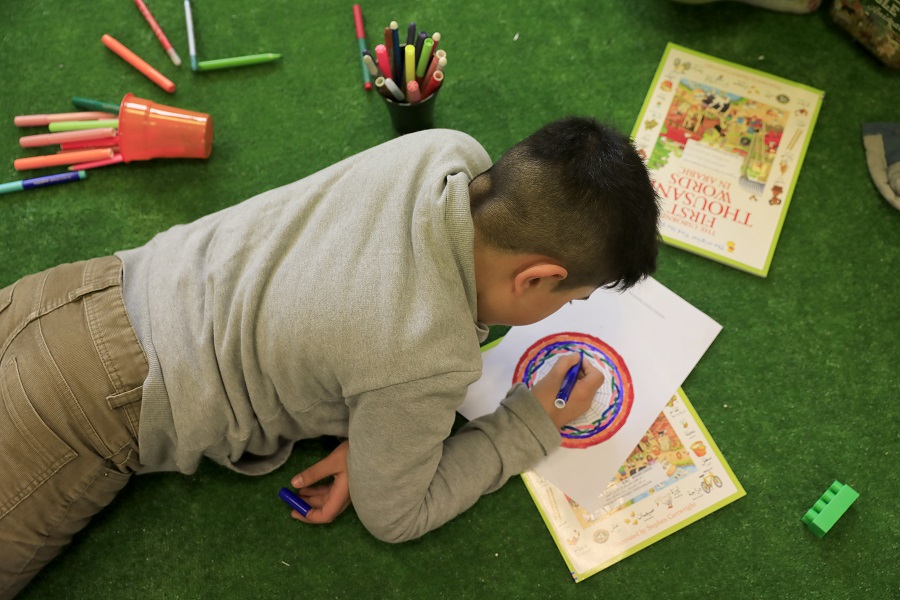
SolidarityNow’s educational team had to overcome many challenges such as the fact that it was not possible for students to be physically present in the classroom. With the aim of being “as close” as possible to children and their parents, SolidarityNow created a series of educational and entertainment podcasts/recorded messages. The name of this new educational tool is: “SolidarityNow Rings a Bell!”.

“Even under these challenging circumstances of physical distancing, we wanted to get as close as it gets to children and their parents and support them and spend time together creatively,” explain Vasso Katsomaliari and Domniki Georgopoulou, Coordinators of the organization’s educational activities, and continue: “Through this creative way of teaching, as SolidarityNow’s educational team, we help children and parents living in refugee camps to adjust to a new reality. At the same time, we motivate them to continue their education, but also suggest interesting ways of spending creative time together. The success of distance-learning depends on many different factors, but most of all, on the continuation of the relationship between teachers and students”.

The specialized teachers’ team of the organization, having cultivated a constructive relationship with the children, designed an educational tool that meets the specific needs and preferences of this group.

So, the bell… rings and familiar voices – the voices of their teachers – convey to children educational and entertaining “messages” in various languages. Fairy tales, songs, games, current news as well as many other topics that are intended to creatively engage the children and their parents.

  • You can listen to the podcasts at this link:

https://anchor.fm/solidaritynowringsabell?fbclid=IwAR0M-1InOCXIHPrBAWEqoQ4M0RbdiCAjsv979qh655UIYWTNgJLnaHw4D0Y


* The Child Friendly Support Hubs project is implemented by SolidarityNow with the support of UNICEF and IOM Greece and funded by the European Commission.

SolidarityNow’s New Edition: ”My Book” is a collection of poems, short stories, lyrics and paintings, created by migrants and refugees.


Through Art, people give shape to all the things that have defined them

The April 23rd is a symbolic date in world literature. It is the date on which several prominent authors, William Shakespeare and Miguel Cervantes died. UNESCO decided in 1995, to pay a world-wide tribute to books and authors on this date. On the occasion of this World Book and Copyright Day, SolidarityNow, presents you the “My Book” project. The “My Book” project is a collection of poems, short stories, lyrics, and paintings created by migrants and refugees, beneficiaries of SolidarityNow’s *ESTIA program.

Today, “My Book” is more topical than ever, because it reminds us that in every “pandemic” that can affect humanity – so each and every one of us – are the people and their creativity that give us the strength but also the belief that in the end, together we will succeed.

“Art is not a mirror to hold up to society, but a hammer with which to shape it”, wrote the poet Vladimir Mayakovsky. Armond, Ahmad, Ibrahim, Fatima and Abdul, Komel, Wasan and Sana, Zainab, Nakam, Majd and Ali, used words and colors to tell their own story about the past and the present, about what defined them and still does. “My Book” is also distillation of their thoughts, the expression of their fears and hopes for the future – their dreams to live a “normal” life again, free of labels and stigma.

SolidarityNow, through this new publication wants to highlight the artistic work of people who were violently forced to abandon their homeland and are trying to start a new life in another country. We must not forget that these people, along with their luggage, carry their knowledge and talents as well.

“My Book is certainly their book. But it is also Ours. It refutes in a simple way stereotypes and prejudice. The authors transcend their potential and they encourage us to follow. Thus, we can all do better than we thought we could”, stresses Antigone Lyberaki, General Manager of SolidarityNow.

You can read the book by visiting the links:

https://issuu.com/solidaritynow/docs/mybook_issue

https://www.solidaritynow.org/wp-content/uploads/2020/04/mybook_issue.pdf


* The artists were beneficiaries of SolidarintyNow’s Accommodation program, as part of the ESTIA programme – Emergency Support for Integration and Accommodation, is supported by UNHCR and co-funded by the Asylum, Migration and Integration Fund of the European Union.