“Step by Step”: SolidarityNow’s new program for Unaccompanied Children


We stand by the side of children aged 16+, in Athens and Thessaloniki

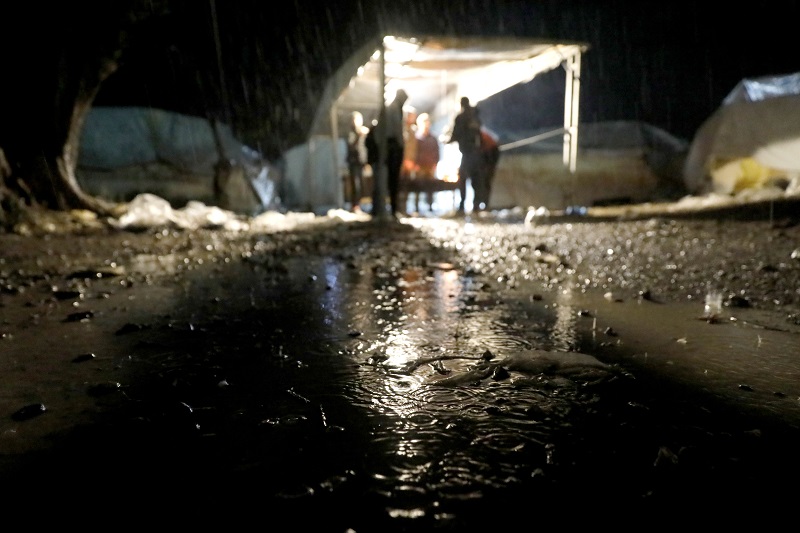
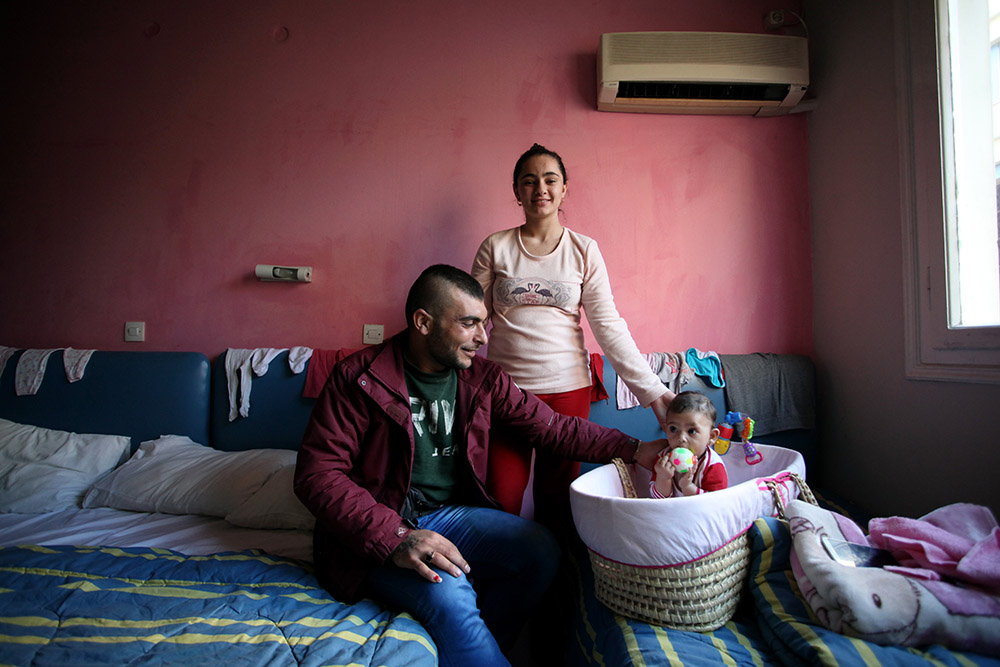
They took the first step: to leave their country, mostly due to violence, war, and conflicts. Then, they arrived in our country. Many of them were forced to live homeless for days, to hide, to avoid dangers, to work for survival. Some stayed for several months in accommodation structures, in Reception and Identification Centers, in overcrowded camps on the islands or on the northern borders, often under dangerous conditions. And luckily, many of them survived. Unaccompanied children in Greece in 2020. Now is the time for these children to take the next step. And SolidarityNow is next to them in order to help them stand on their own feet, empower them on the way to adulthood and enable them to claim their own independent life.

As of September 2020, SolidarityNow has begun to actively support one of the most vulnerable population’s groups, that of unaccompanied minors. “Step by Step” is the name of the new program “Supported apartments for Unaccompanied Minors aged 16+”, in Athens and Thessaloniki. The “Step-by-Step” program (MIS 5063334) is implemented in the framework of the National Program of the Asylum, Migration and Integration Fund, from October 1st, 2020 and for a period of 12 months, with the co-funding of Greece and the European Union. “Step by Step” is supported by the Special Secretariat for the Protection of Unaccompanied Minors and the Prosecutors for Minors and local competent Public Prosecutors.

SolidarityNow began the implementation of the “Step by Step” program, in order to stand by the side of unaccompanied children, who under very difficult conditions have to start a new life in a foreign country away from their own people and contributes to the overall effort of the state and Civil Society for their protection.

Unaccompanied minors are boys and girls under the age of 18 who are in the country unaccompanied by an adult responsible for their care and who have applied for or are about to apply for asylum. Unluckily, despite the efforts of the state and humanitarian organizations, the number of unaccompanied children in need of immediate and urgent support remains high.

According to the statistics by the National Center for Social Solidarity, the estimated number of unaccompanied minors in Greece until October 15, 2020 was 4,190, 92.8% of which are boys, 7.2% girls and 8.5% under 14 years. Many of the unaccompanied children are living in precarious housing conditions or are homeless.

“Step by Step” on the side of the Unaccompanied Children

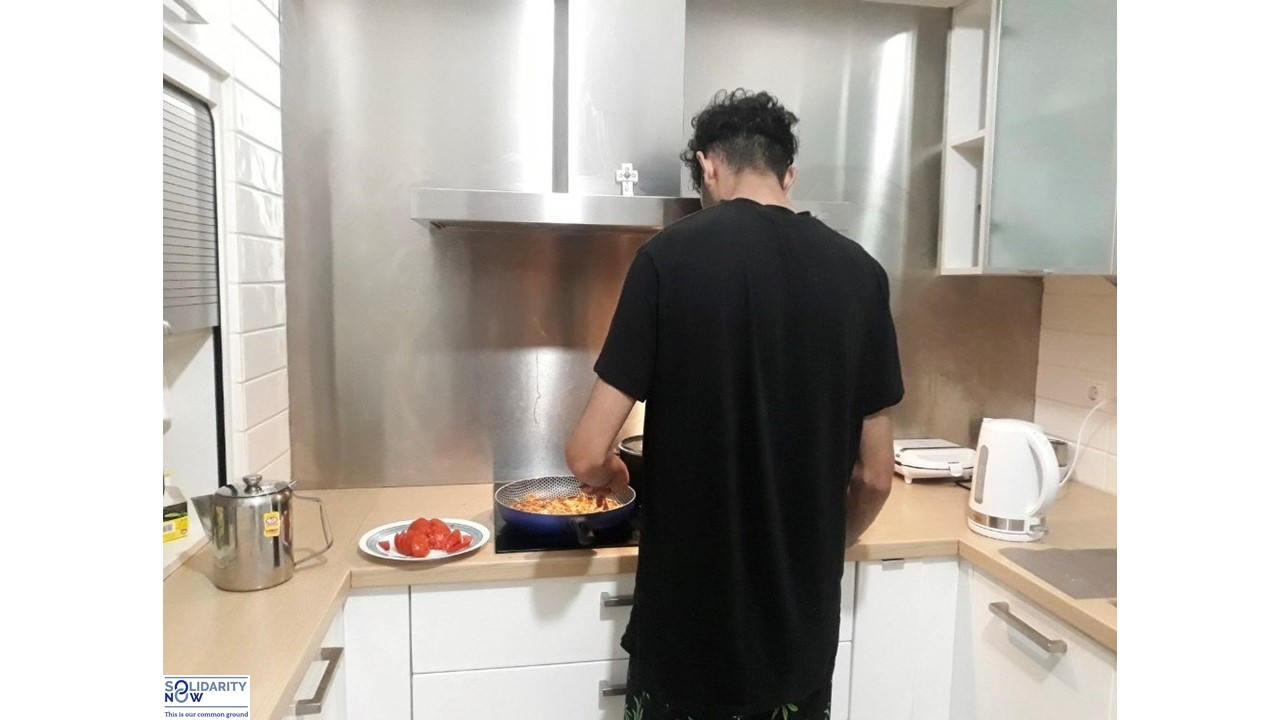
SolidarityNow offers an alternative form of care and living for unaccompanied children in supported apartments in the two biggest urban centers of the country. In addition to secure housing, the program focuses on the provision of expanded services by the organization’s trained staff.

The twelve (12) supported apartments, eight (8) in Athens and four (4) in Thessaloniki, function since October 2020 and have a capacity of forty-eight (48) beds. A total of 48 children will be accommodated, 44 of which are boys and 4 girls. The children are aged 16+ and come from countries such as Afghanistan, Iran, Pakistan, Egypt, and Syria.

The purpose of the program is, at the same time, to ensure and protect the fundamental rights of unaccompanied children. Furthermore, our goals are the individualized care and protection of children, the improvement of their abilities and skills, the one-to-one support in order to achieve their personal goals, the strengthening of their self-confidence and self-preservation so that they can become autonomous. In this way the children are supported towards adulthood and are led -step by step- to a smooth integration into the Greek society.

The SolidarityNow team in Athens and Thessaloniki, consisting of qualified workforce, provides children with:

– psychosocial support and personalized case management

– legal advice and facilitation of access to public services

– facilitation of access to medical care

– non-formal education and leisure activities

– interpretation and intercultural mediation

– access to employability guidance and skills enhancement, etc.

“SolidarityNow, with its long experience in supporting vulnerable groups, is launching a new program, which will support unaccompanied children towards adulthood, so that they can integrate smoothly and gradually into Greek society. We are excited to welcome the first children who enthusiastically express their desire to follow us step by step in a common path that will lead them closer to their dreams“, says Evdokia Bakalou, Project Coordinator in Athens.
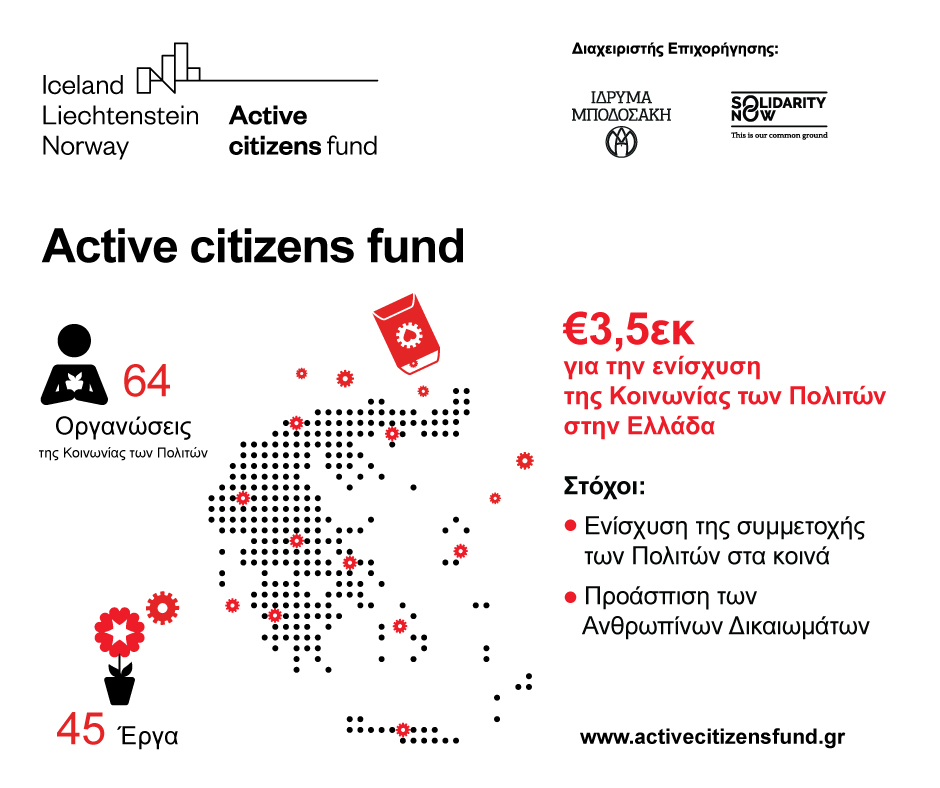
The “Step-by-Step” program (MIS 5063334) is implemented in the framework of the National Program of the Asylum, Migration and Integration Fund, from October 1st, 2020 and for a period of 12 months, with the co-funding of Greece and the European Union. “Step by Step” is supported by the Special Secretariat for the Protection of Unaccompanied Minors and the Prosecutors for Minors and local competent Public Prosecutors.

SolidarityNow celebrates World Teachers’ Day through “HELIOS” program’s achievements


Refugees’ Social Integration through Education

“Education is the second sun for people”, Plato.

More than 3,000 visits every month, 3 Integration Learning Centers, 3 cities -Athens, Thessaloniki, Ioannina-, 450 registered adult students, 180 people attend Greek language courses on a regular basis, 1,950 teaching hours, 7 on-line training courses as an alternative form of education.

All the above summarize the work being done by SolidarityNow in the context of the pilot integration program “HELIOS” (the word sun in Greek). “Our sun”, a modern and innovative program, implemented in cooperation with the International Organization for Migration (IOM) and EU support, is addressed to beneficiaries of international protection in Greece. “HELIOS” offers services aimed at promoting the independent living of people in the country and includes, among others: housing benefits, integration courses and employment support. On the occasion of the World Teachers’ Day, we celebrate the teachers and educators of SolidarityNow, as education is an integral part of the organization’s work and the only way forward and towards social inclusion.

“HELIOS” main goal is to empower people by providing them the opportunity to learn the Greek language; this is the first and essential step for their social integration in the country. The long-term goal of the program is to be the “second sun” for people who are given an opportunity to build a safer and better present and future by offering them equal opportunities and access to education.

The “HELIOS” program

SolidarityNow is a key implementing partner of the International Organization for Migration, in the framework of the “HELIOS” program, which began in June 2019 and includes courses of language and of other necessary skills, in three Integration Learning Centers in Athens, Thessaloniki and Ioannina. Each of the six-month course comprises of units related to the learning of the Greek language, the cultural orientation, the degree of work skill and readiness.

World Teacher’s Day

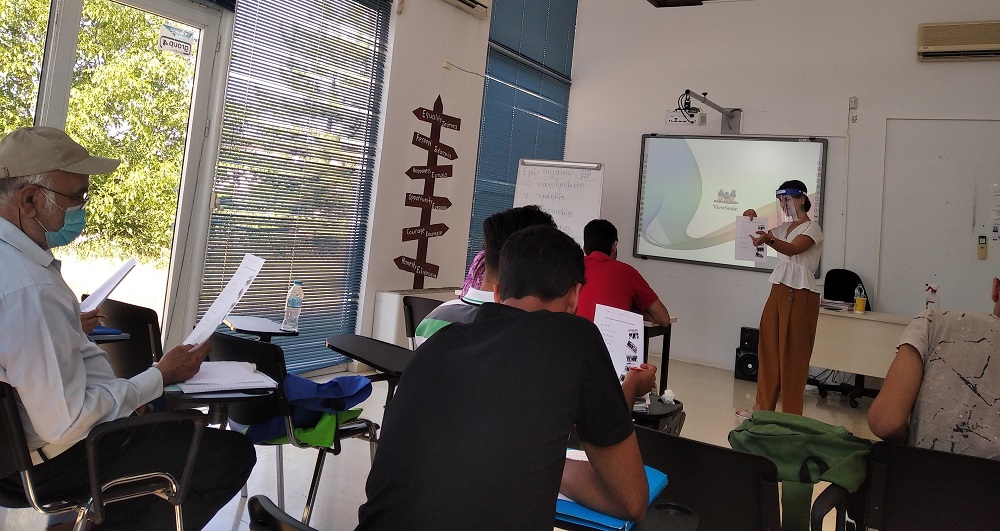
The teachers working for “HELIOS” are the foundation for its successful implementation; they are the ones who have undertaken the task of providing multifaceted education to the program’s beneficiaries. To date, in the three cities where the program is active, there are 450 enrolled in integration courses, 180 of which attend the Greek language courses.

In fact, the first certificates were recently awarded to the first graduates of the program at a small graduation ceremony that took place a few days ago in Athens.

Some interesting facts about the “HELIOS” program implemented by SolidarityNow, from June 2019 till today:

– over 3,000 visits monthly at the three Integration Learning Centers in Athens, Thessaloniki, and Ioannina

– 7 on-line training courses for learning the Greek language were created so as for the program to meet both the emergency caused by the coronavirus and the needs of people living far from the Integration Learning Centers. The online courses, through the digital educational platform “e-campus”, operate until today, effectively serving the beneficiaries’ different needs

– a Special Recreational Space for Children was created with the aim of facilitating parents during their lessons

– teaching hours exceed 1,900

– 45% of students are women and 55% are men

– the three main countries of students’ origin are Syria, Afghanistan, and Iraq.

Providing multidimensional education

The organization’s teachers do not provide only Greek language courses, but also courses related to several other topics. More specifically:

  • students participate in meetings to develop life skills, such as how to manage household finances and how to contact public services
  • courses are devoted to culture, history, geography, the political system, and basic law system of the country
  • students are empowered to enter the job market by learning to prepare their CVs as well as cover letters, how to look through job advertisements and present themselves in a job interview.

“The important role of teachers in the development of students and of the society is the core of the “HELIOS” program. Having the teachers by their side, the adult students seize the opportunity to become familiar, through properly planned actions, with the Greek way of life and culture in order to be supported on their way towards a smooth social integration. At SolidarityNow we provide educational and soft skills courses because in addition to language learning, we contribute to the creation of autonomous people. We want them to be able to live an independent life, in which they will be offered opportunities in both education and work, as well as in achieving equal and active position in society”, points out Antigone Lyberaki, General Manager of SolidarityNow.

“We promote interaction, cooperation and communication within the classroom to form the appropriate learning environment, which works cumulatively in the learning process. Every day we feel proud: for the two brothers from Afghanistan, who in six months managed to speak fluently Greek. For the mother who raises a child alone, learns Greek and managed to find a temporary job. For our young student who learns Greek, and now works as an interpreter. For our illiterate student from Iraq, who can now read and write in Greek and every day describes us the feeling of the joy he feels when he reads the signs on the street – when he knows how to live, as he says, without the need of others”, says Giannis Giantsidis, Education Specialist at the Athens Integration Learning Center.

*SolidarityNow is a key implementing partner of the International Organization for Migration, in the framework of the “HELIOS” program, which is funded by the European Commission – Directorate General for Migration and Home Affairs (DG HOME).

Solidarity and Support Initiative by SolidarityNow: Refugees on the side of locals after the Ianos cyclone in Karditsa


Food and essential items distributed to the victims

 Thessaloniki, September 30, 2020

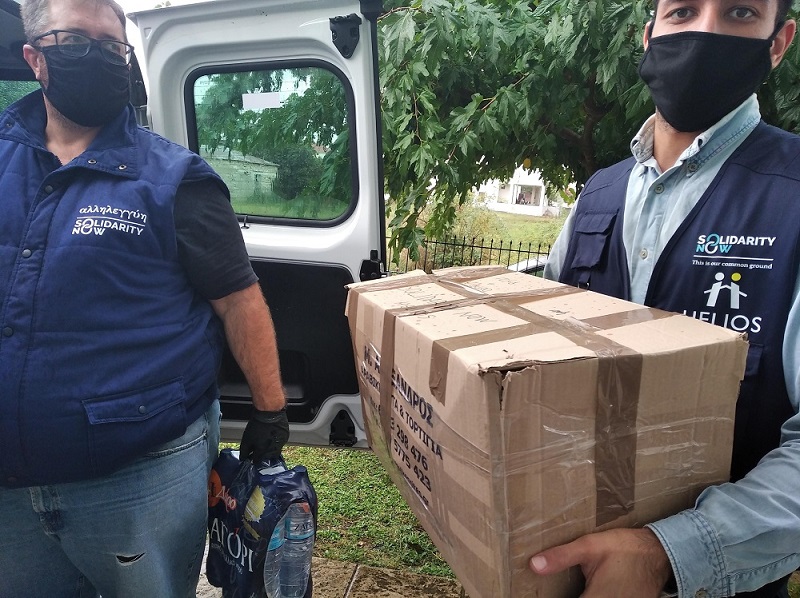
Karditsa is still counting its wounds after the catastrophic passage of cyclone Ianos, which left behind dead but also huge catastrophes -natural, social, economic-. SolidarityNow, in a symbolic gesture of solidarity and support for the people affected, has been collecting and donating essential items and dry food until the local community is back on its feet. The initiative and assistance was undertaken, coordinated and delivered by refugees and asylum seekers, all beneficiaries of the organization, as a sign of reciprocity to the country that host them but also as a practical support to the residents of the area affected by the severe consequences of the cyclone.

SolidarityNow’s mandate is to support the most vulnerable members of society, without discrimination, through innovative social actions. This time, the initiative for this action was taken by the students (recognized refugees) of the HELIOS educational program implemented by the organization, and their teachers.

SolidarityNow in collaboration with the International Organization for Migration (IOM), and in the framework of the implementation of the HELIOS program organizes integration and information classes within its Integration Learning Centers established across Greece (Athens, Thessaloniki, Ioannina). As part of the recognized refugees’ effort to learn Greek and make their first steps toward integration, their teachers explained them the difficulties faced by our fellow human beings in Thessaly due to the cyclone that hit the region.

The adult students were immediately sensitized and mobilized: in a very short period, food and essential items were collected by the students and teachers of the program at the three Integration Learning Centers of SolidarityNow and handed over to the Social Grocery Store of Karditsa. The students were immediately activated feeling the inner need to give back to the Greek society that has supported them throughout their reception. In addition to the Greek lessons in the Learning Centers, SolidarityNow promotes and strengthens the feelings of responsibility and solidarity in these people, who, in the future, will be active members of our society. The organization supports the development of its students and encourages them to act independently and with social sensitivities for a cohesive society.

Through the active presence of the HELIOS program teams and additionally to the learning of the Greek language, our aim is to connect the Greek society with the refugee population, but also to strengthen and encourage the communication between the two. In order to achieve coexistence, understanding and acceptance, the meaning and importance of the “other” must be first cultivated in our consciousness.

*HELIOS Integration Learning Centers (ILC) is a program implemented by SolidarityNow with the cooperation of IOM Greece and the support of the Asylum, Migration, and Integration Fund of the European Union (DG HOME).

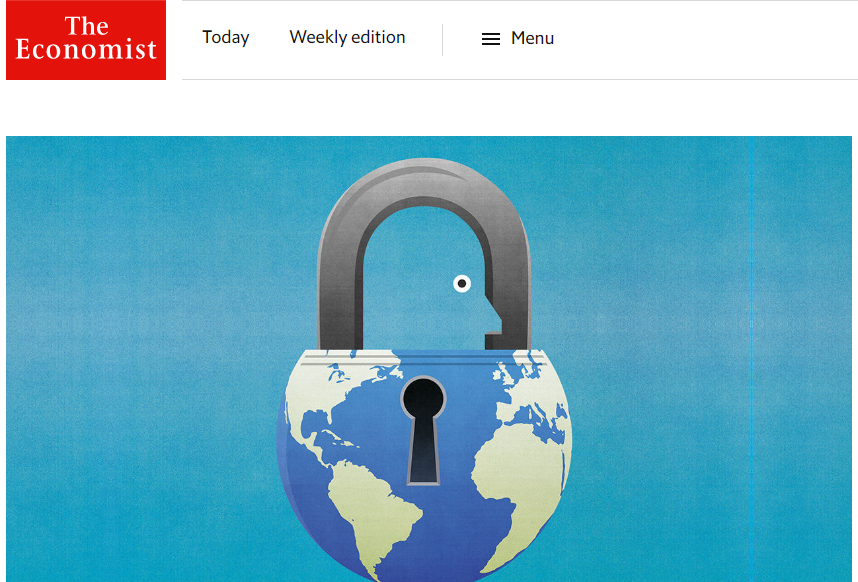
“Locked out: As the pandemic recedes, let migrants move again”, The Economist


Where it is safe enough to welcome tourists, it is safe enough for immigrants.

Every country in the world has closed or partly closed its borders since the pandemic began. In total, they have issued more than 65,000 restrictions on mobility. For some places, especially islands, border controls have bought valuable time to prepare for covid-19. But the costs of global immobility are immense (see article). Billions of cancelled journeys mean millions of jobs obliterated, lives blighted and dreams deferred. When bankers and tourists stopped flying to the United Arab Emirates (UAE), for example, the migrants who made beds and stirred soup were laid off. Foreigners without jobs are required to leave the Gulf, but lots of them cannot, because so many flights have been grounded. Globally, tens of millions of migrants have been stranded, burning through the savings they had hoped would lift their families out of poverty and put their children through school. Some have ended up begging; and since that is a crime in the UAE, several have been arrested.

Migration policy is far from the top of any country’s agenda just now. And with the coronavirus still raging, a return to normality will be impossible for some time. But governments will sooner or later have to grapple with an important question. As they gradually and fitfully open again for tourists and business travelers, will they also welcome migrants?

There are emotive reasons why covid-19 might make countries less willing to accept foreigners even after a vaccine is discovered and the pandemic is suppressed. People are scared: not only of this pandemic but also of the next. Many associate foreigners with disease. (Dramatic news stories, such as a boat full of covid-infected migrants crossing the Mediterranean, can feed this impression.) Suspicion of foreigners is why people who look Chinese have been harassed in many countries, and people who look African have been harassed in China. It is why President Donald Trump has boasted about banning Chinese travelers (even as he downplayed masks), and why one of the South African government’s first actions to curb covid-19 was to build a fence on the border with Zimbabwe (though the virus was already spreading in South Africa).

In addition, covid-19 has caused mass unemployment. Many voters believe that migrants take jobs from the native-born, and so would keep curbs on immigration even after other travel restrictions are loosened. Mr Trump is one of many politicians who make this argument explicitly. His executive order in June suspending most kinds of work visa was aimed at “Aliens Who Present a Risk to the us Labour Market”.

Both these fears are electorally potent, but neither is well-founded. Tourists and business travelers vastly outnumber migrants. In Britain, for example, the total number of arrivals last year was 60 times more than the number of immigrants who showed up. When it is possible to open borders to short-term travelers, it should also be possible to open them for migrants. Unlike tourists, people who plan to stay for years will not object to a two-week quarantine on arrival. The precautions that work best—social distancing, contact-tracing, handwashing, and testing—pay no heed to nationality. Nor does the virus.

The idea that more migrants means fewer jobs for locals in the long run is an example of the fallacy that the economy has a fixed “lump of labour”. As well as spending their wages, which supports new jobs, migrants bring a greater diversity of skills to the workforce, allowing the labour market as a whole to operate more efficiently. In the short term, rich countries may not need as many hotel or airline workers, but policymakers can tailor admission criteria to make sure that those who come meet local needs and can support themselves.

This is the opposite of Mr Trump’s nail-the-doors-shut approach. He has locked out skilled workers, internal company transfers and even foreign students, if they have not yet arrived and their courses are online. This is a recipe for a poorer, more insular America, where domestic firms cannot hire the best, foreign investors cannot send in technicians to unblock bottlenecks and brainy youngsters opt to study and settle in Canada.

Alas, America is not the only place where the pandemic has spurred nativists to clamp down. Italy is alarmed at Africans crossing the Mediterranean. Malaysia has pushed boatloads of Rohingya refugees back into international waters. The army chief in the Maldives has called migrant workers a security threat, not least because some date locals. South Africa temporarily closed migrant-owned shops in townships, forcing customers to walk miles to distant grocery stores, thereby spreading the virus.

However, even as covid-19 has immobilised the world, it is making some people appreciate the benefits of mobility. Many voters in rich countries have noticed that doctors are often migrants: 53% in Australia, 29% in America. The same is true of nurses, care-home workers, and virus-busting mop-wielders. When people bang pots for health-care workers, they applaud a lot of foreigners.

Migrants are also over-represented among those who make it possible for others to work safely and productively at home, by harvesting and processing food, delivering parcels, and fixing software bugs. They turbocharge innovation, too. Some 40% of medical and life scientists in America are foreign-born. Vaccine research depends on large teams of talents from all around the world. Half the big American tech firms were founded by a first- or second-generation immigrant. If the founder of Zoom had never left China, locked-down professionals might not even know what their colleagues’ bookshelves look like.

Open the windows, open the doors

Some countries may end up more open after the pandemic than they were before. Japan is allowing foreign “trainees”, as it calls migrant workers, to switch jobs. Britain will be less open to migrants from the EU, because of Brexit, but just offered residency to up to 3m Hong Kongers without a perceptible backlash at home (see article).

When the coronavirus is vanquished, migration will still be what it was before: a powerful tool that can lift the poor, rejuvenate rich countries and spread new ideas around the world. A pandemic is no reason to abandon it.

SolidarityNow welcomes the undertaking of the ESTIA Accommodation program for asylum-seekers by the Greek Ministry of Migration & Asylum and its commitment for the program’s smooth continuation


SolidarityNow continues to focus its actions on integration programs

Since 2016, SolidarityNow has been one of the key partners of the UN High Commissioner for Refugees in Greece. The partnership concerned the effective implementation of the *ESTIA program, with the aim of providing housing and a range of supporting services to asylum seekers in Attica, in the wider area of Thessaloniki and Ioannina in Northern Greece.

Since April 2016 and up to today, the organization has managed to support and empower more than 10,000 asylum seekers and refugees through the program. Many of the beneficiaries belonged to vulnerable social groups such as single-parent families, people with serious medical problems, people with disabilities, victims of torture, etc. During the 5 years of implementation, the program included different types of structures such as: housing in independent apartments, buildings, but also hostels and a specialized program for LGBTI asylum seekers and refugees. It is worth to be mentioned that through the ESTIA program, SolidarityNow has also supported more than 3,500 children.

The organization’s accommodation program has achieved its goal: to provide and ensure vulnerable applicants for international protection and refugees, not only decent living conditions in a safe environment but also access to high quality supporting services (interpretation, escorts to health and medical structures, support from experienced groups of social workers, psychologists and lawyers, educational activities, enrollment of children in public schools, etc.). The long-standing and long-term goal of Solidarity Now was – and remains – to ensure the people’s smooth integration and peaceful coexistence into the Greek society.

At the same time, in a period of severe economic recession, SolidarityNow along with other organizations and the authorities, taking into account the need to maintain social stability and cohesion and strengthen the acceptance and integration of the population, supported the local economy, mainly through renting apartments in urban centers. Also, many of the program’s beneficiaries were supported by our teams and made the next step; they learned Greek and managed to find a job, thus support their families, and integrate into Greek society and reality.

The recent undertaking of the program titled ESTIA II, now focused merely on housing, by the government and the Ministry of Migration and Asylum, is the reasonable next step, for the overall management of the refugee issue in the country. We, at SolidarityNow, express our willingness to support the program’s smooth transition processes in order to ensure, in every possible way, the unimpeded support of asylum seekers and refugees. At the same time, we express our concern for the maintenance of the services’ quality in the context of the new program based on its new terms.

At SolidarityNow, our core actions include the continuous efforts to improve, through our programs, the living conditions of the people we support. Facing the new challenges regarding refugees and migrants in the country, we continue our work focusing on the integration of vulnerable population groups: with training programs – language support -, supporting services aimed at connecting beneficiaries with the labor market, social interventions at neighborhoods related to the needs of the local community and the economy, concern and care of unaccompanied children. Programs that cover the entire arc that begins with addressing basic needs, to creating opportunities for social inclusion, building on people’s self-reliance and empowerment.

* ESTIA, the Emergency Support to Integration and Accommodation program, is implemented by UNHCR and funded by the Asylum, Migration, and Integration Fund of the European Union.