A new Child and Family Support Hub opens its doors to refugees and migrants in the City of Athens


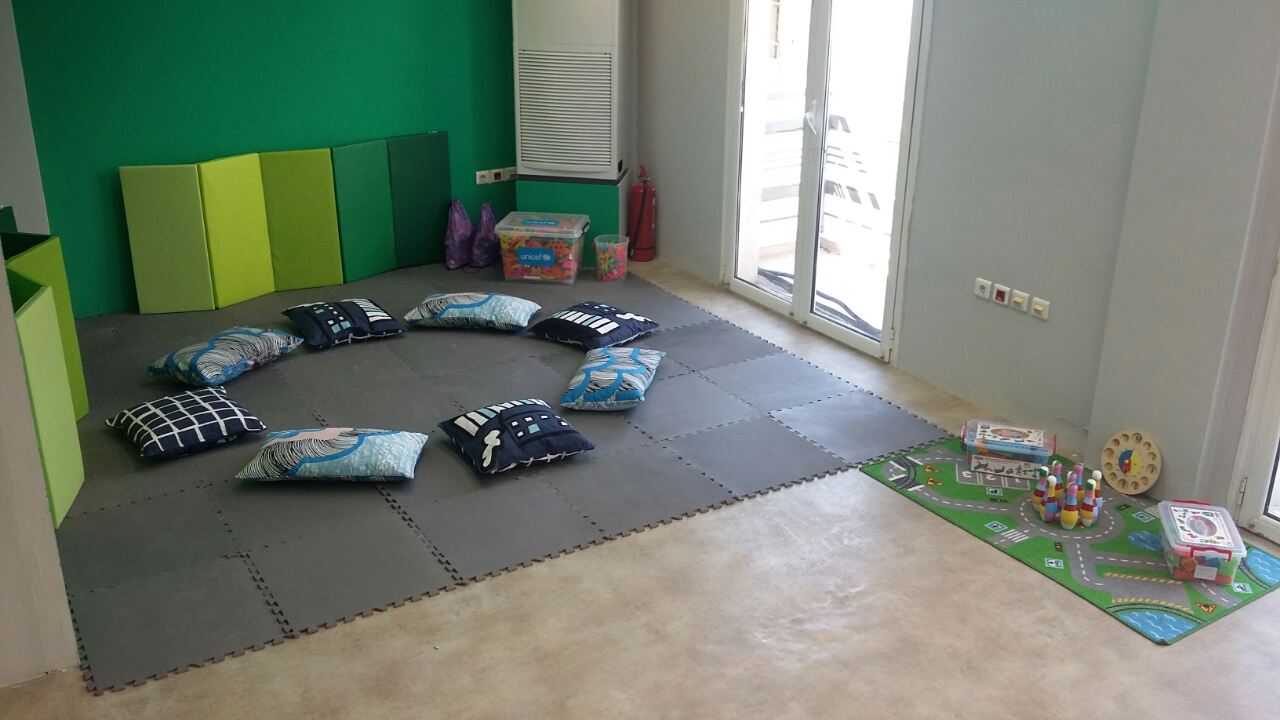
A new Child and Family Support Hub (CFSH or “Blue Dot”) is inaugurated today, as the result of the collaboration between the City of Athens, and more specifically the Department for the Support and Social Integration of Migrants and Refugees, and the NGO SolidarityNow. The initiative, which targets refugee and migrant women and children, is supported by UNICEF, with European Union emergency support funding. It forms part of a wider network of collaborations created by the City of Athens for the management of refugee flows and the development of a framework for the social inclusion of refugees and migrants.

Women and children constitute a significant part of refugee and migrant flows. They are considered as a group with specific needs, since they are more likely to be exposed to multiple forms of discrimination and exploitation. The City of Athens recognized the need to provide services to this population at an urban level and asked for UNICEF’s support, which, in cooperation with Solidarity Now, already operates seven Child and Family Support Hubs across Greece.

The CFSH aims at becoming a unique hub for the provision of psychosocial support to those who need it and for the promotion of their smooth integration to the Greek society. In particular, the following services will be offered at the CFSH, located at the third floor of the building on 45 Mezonos str.:

  • Information on issues of interest to the beneficiaries, such as hospital care, housing and material assistance.
  • Support to the process of introducing children to the Greek educational system.
  • Psychosocial, recreational and educational activities for minors, including creative groups aiming at promoting their socialization.
  • Identification and referral of vulnerable people to specialized services, including: families, children at risk with emphasis on unaccompanied children, people with disabilities or illness etc.
  • Psychosocial support and empowerment for women, with a focus on mothers, counseling on care issues and networking with services. The aim of the Center is to empower the beneficiaries, thus enhancing their role as mothers.
  • Support to women who have survived gender-based violence by providing counseling and interconnection with the necessary services.
  • Referrals to other services, when necessary.

The CFSH is staffed with qualified personnel by SolidarityNow and the Department for the Support and Social Integration of Migrants and Refugees, including social workers, psychologists, educators and interpreters. Additionally, the Hub will host scientific personnel of other organizations and services working with refugees and migrants. Moreover, it will provide child care to mothers, for the time period that they are consulting with the social workers.

The CFSH will complement the wider framework of services provided to refugees and migrants at the building on Mezonos street.

More specifically, in the framework of the ESF budget 2014-2020, the City of Athens will create two Migrant Integration Centers (MICs). One of them will be hosted on the ground floor of the Mezonos building and the other will be located at more distant areas of the Municipality. The MICs will be staffed with specialized scientific personnel and will aim to work as a “one stop services point” for anyone who requires information, guidance and support to cover a wide range of needs.

The CFSH will be interconnected with other initiatives and programs for refugees and migrants, as well as with the social services of the Municipality and of other institutions, constituting a place of protection and support.
Social integration is now the priority

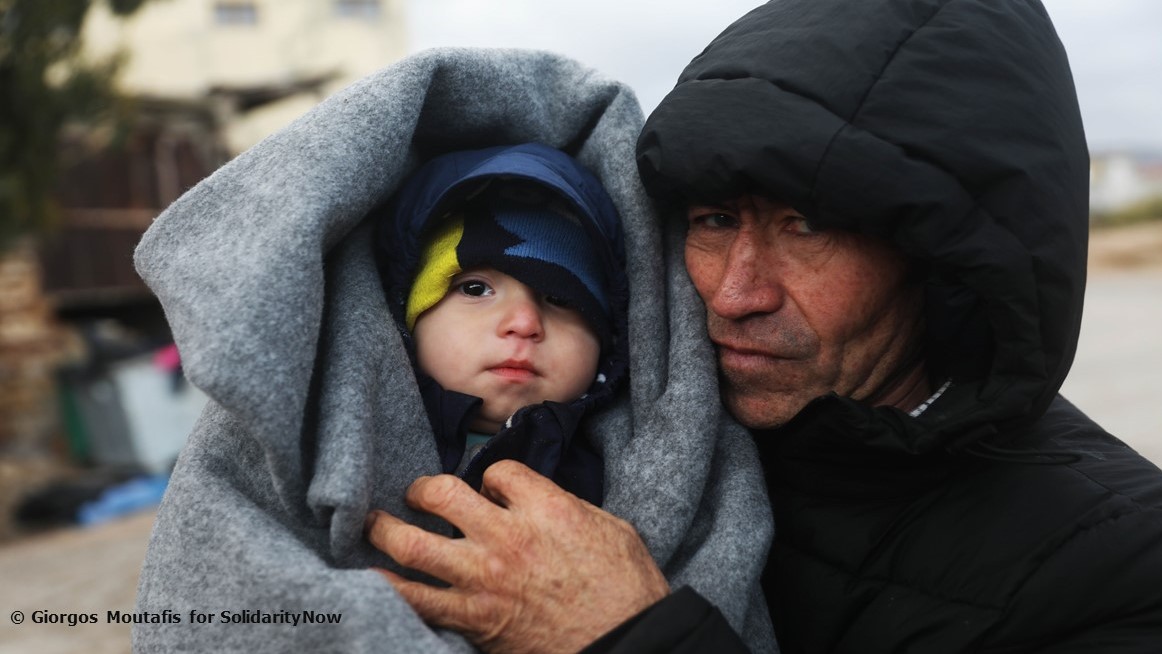
Giorgos Moutafis for SolidarityNow

World Refugee Day: SolidarityNow underlines the needs on the ground  for refugees living in Greece.

The celebration of the World Refugee Day finds our country at a crucial moment. At present, there are no more than 40,000 refugees in the Greek mainland; nevertheless, an unreasonably large number of them still live in camps under conditions that are anything but satisfactory.

SolidarityNow has already stressed out that social inclusion and integration should now be the priority, i.e. the primary access of these people to the fundamental goods of health, education, labor, etc. Only by this way we will be able to ensure the already wounded social cohesion.

Specifically, SolidarityNow requests:

  1. Direct plan for the evacuation and #close_the_camps and transference of the people to urban areas to become feasible the implementation of the integration policies.
  2. Unrestricted access for all, whether they are in the islands or in mainland, to the asylum process, while respecting all the procedural assurances deriving from national, community and international law.
  3. Access to the labor market for all asylum seekers (and the pre-registered ones).
  4. The registration of all children in the national education system to ensure their smooth socialization in the country.
  5. The unhindered access for all to the health system without discrimination
  6. Immediate activation of Asylum, Migration and Integration Fund to support the respective actions, focusing on the housing allowance for persons who are granted the refugee status and are therefore not eligible for asylum accommodation.

The refugees will live with us. The sooner we respond to this fact with integration policies, the better we will protect ourselves, the local communities and the cohesion of the Greek society.

Airbnb Partners with SolidarityNow To Launch New Platform Providing Housing for Refugees and Displaced Populations in Greece

Sophia Ioannou

New Technology Lets Anyone with a Spare Bedroom Open Their Home,
Help Address Global Refugee Crisis


Airbnb, the world’s leading hospitality company, in partnership with SolidarityNow, a pioneering Greek NGO working with migrants and refugees, launched Open Homes in Greece, a new platform that will make it easier for people to open their homes to refugees and displaced populations. Anyone can volunteer their space by visiting airbnb.com/welcome/refugees/.

The new platform connects Airbnb hosts who have offered to temporarily house displaced people at no cost with relief organizations and nonprofits that serve refugees and other people in need. Authorized organizations can use Open Homes to search and book free Airbnb listings for refugees and other displaced people in need. Starting today, SolidarityNow will match refugees and other displaced populations to available accommodation through the platform, and act as a liaison between guests, hosts, and Airbnb.

“It’s easy to feel powerless when you think about massive global challenges such as the refugee crisis, but there are things everyone can do that make a big difference”, said Airbnb co-founder Joe Gebbia. “The simple act of opening your home for a few nights can be life-changing for people who who’ve had to leave everything behind.”

Earlier this year, Airbnb set a goal of providing short-term housing over the next five years for 100,000 people in need around the world. The new platform will help achieve this goal by making it easy for relief organizations to book listings with hosts around the world who have offered to share their space with refugees at no cost. To date, 6,000 people have offered globally to open their home to a refugee at no cost.

There are approximately 35,000 asylum seekers in Greece with no access to accommodation besides camps. These include candidates for the European Union’s relocation program who have not yet secured accommodation through existing programs, or asylum seekers who are ineligible for relocation (and thus also ineligible for program placements). SolidarityNow and Airbnb hope to make a significant impact by placing thousands of these refugees in homes during this partnership.

“We are thrilled to pair SolidarityNow’s deep local expertise with Airbnb’s powerful community of hosts to provide housing solutions for refugees in Greece,” said Sofia Gkiousou, Airbnb’s Regional Policy Manager for Greece. “We look forward to this initiative not only providing shelter for those who have been forced from their homes, but also to foster a deeper community among refugees and Greeks.”

The partnership has been created with the support of Open Society Foundations, and in collaboration with the Radcliffe Foundation and the Ascend Initiative, a new philanthropic effort launched in Concordia last week.

“We believe this groundbreaking initiative will benefit guests, hosts, and the wider community alike”, said Epaminondas Farmakis, Executive Director of SolidarityNow. “We hope our partnership will enable local hosts to gain awareness of the plight of refugees and edge the wider community towards acceptance and smooth coexistence, as well as promote our longstanding goal to #closethecamps.”

“In the past, Airbnb staff worked directly with relief organizations to place refugees with hosts who volunteered their homes”, added Gebbia. “Now leveraging Airbnb’s core competency is easy for anyone who has a spare room or apartment and wants to connect with relief organizations and play a small role in tackling this global challenge.”

Airbnb’s mission is to create a world where anyone can belong anywhere and has worked to support refugees and displaced people for several years:

  • In the wake of Superstorm Sandy in 2012, Airbnb community members volunteered to house people displaced by the storm at no cost. The idea inspired the creation of Airbnb’s disaster relief program, which has since provided free temporary housing during 65 disasters around the globe to people in need.
  • To date, we have provided over 5,000 nights of free housing to relief workers working on the refugee crisis in Kos, Lesvos, Ionnina, Athens, and the Balkans.
  • Last year, we matched up to $1 million in contributions from our community to UNHCR to support their work with refugees.
  • Since November 2016, over 550 Airbnb hosts and resettled refugee families shared holiday meals to find common ground and to learn more about each other. Over the course of 2017 we will be expanding this initiative, enabling our community to offer warm meals and create new bonds with future citizens.
  • When policies that prohibited some people from entering the United States were enacted earlier this year, thousands of members of the Airbnb community volunteered to open their homes to displaced travelers.
  • Earlier this year, Airbnb pledged to contribute $4 million over the course of four years to the International Rescue Committee to support the most critical needs of displaced populations globally.

SolidarityNow is a network of organizations aiming to assist and support those most affected by the economic and humanitarian crises in Greece. Through the provision of services to both the local Greek and migrant populations, it seeks to restore the vision of a strong Europe based on solidarity and open values.

  • Since 2013 it has implemented 75 programs on human rights and social justice, protection of vulnerable populations, youth, and advocacy; one third of its programs are directly related to the refugee crisis. More than 65,000 persons in need have passed the previous year through the open-door policy Centers in Athens and Thessaloniki operated by SolidarityNow and funded by the Open Society Foundations.
  • Its staff combines expertise with deep local experience to ensure successful matching services, secure the safety and comfort of guests and foster a sense of community between hosts and guests.
  • It currently provides accommodation to 1,200 people through building and apartment rentals (hosted more than 3,700 people of concern during 2016), under the Accommodation project “Home for Hope” implemented with support from UNHCR and the EU. While provided services to more than 1,000 children in camps with the Blue Dots program funded by UNICEF.

World Refugee Day 2017 Event

Giorgos Georgiou

Commemorating World Refugee Day, 15 organizations invite the citizens of Athens «TOGETHER» with the refugees to an open discussion about the new reality of refugees after the most difficult journey of their life.

The event will take place from 18:30 pm until 21:00 pm
on Wednesday, June 21
in the garden café of the Numismatic Museum (12 Panepistimiou Str.)

The refugees themselves will narrate the next day, that of integration, the difficulties that they faced concerning their adjustment, as well as their hopes. They will also share their experience regarding their stay in Greece, their access to the healthcare system and education, as well as the conditions of access to accommodation and labor.

The refugees will also share artistic initiatives that they have created and participated in, as long as they are in Greece, which give them the strength to continue the most difficult journey of their lives, talking about the challenges of their new life. The event will be welcomed by the Deputy Mayor of the City of Athens, on Migrant and Refugee Affairs, Lefteris Papagiannakis. The journalist, Dimitris Aggelidis will coordinate the discussion. Screening of photos and videos of the organizations operating on the field during the refugee crisis as well as live traditional music by the refugee communities will bring the event “TOGETHER” to an end.

Athenians are invited and encouraged to actively participate in order to send a message of solidarity «TOGETHER».

This event is free and open to the public, supported by the Integration Council of Athens Municipality.

Press Release for June 21st
Médecins du Monde
Médecins Sans Frontières
Hellenic League for Human Rights
GCR
ActionAid
CARE
International Rescue Committee
Mercy Corps
Nostos
PRAKSIS
Save the Children
SolidarityNow
UNICEF
UNHCR, the UN Refugee Agency

Visit of representatives of the Norwegian Ministry of Foreign Affairs to the SolidarityNow Solidarity Center in Athens


Representatives of the Ministry of Foreign Affairs of Norway as well as the Ambassador of Norway in Greece visited on Friday, June 9th, the organization’s Solidarity Center in Athens, in the framework of the overall SOAM Program “Supporting Organizations that assist migrant asylum-seeking population in Greece”.

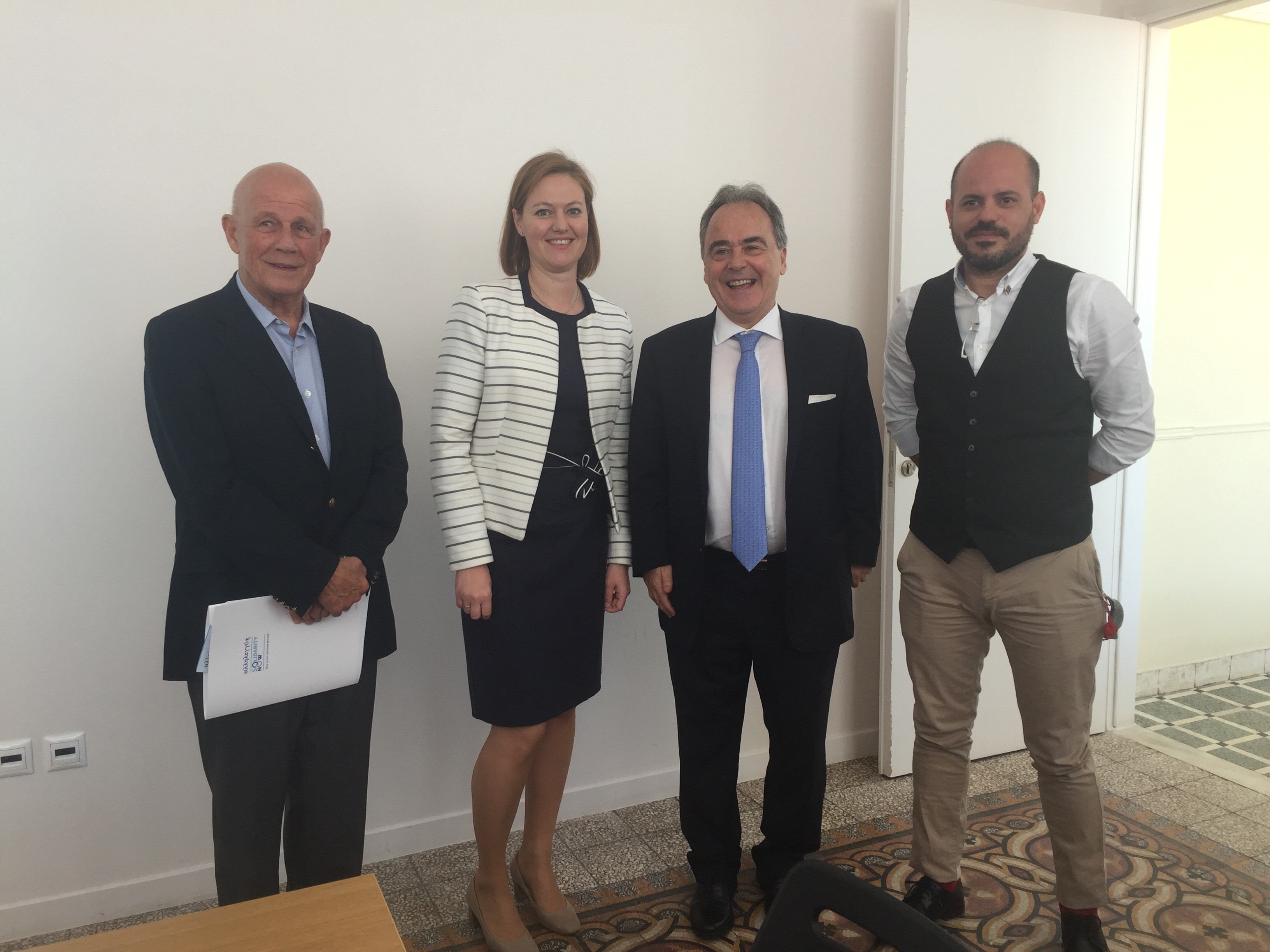
The President of SolidarityNow, Mr. Stelios Zavvos, welcomed Ms. Marit Berger Røsland, State Secretary of the Norwegian Ministry of Foreign Affairs, Mr. Jørn Eugene Gjelstad, Ambassador of Norway in Greece, Mr. Lefteris Papagiannakis, Vice Mayor of Athens and Mr. Dimitris Vlastos, President of Bodossaki Foundation, to the Solidarity Center. The ensuing discussion concerned the expansion of Norway’s support to Greece through the new EEA grants, focusing on the cooperation among all partners, including the civil society and municipalities.

“We are proud to have contributed through the EEA Grants – a unique platform of cooperation – to the humanitarian crisis in Greece. It was important for my country to take the initiative on this, while our support remains active. I am really impressed by what I saw today at the Solidarity Center and the work being done on it,” said Ms. Røsland, the State Secretary of the Norwegian Ministry of Foreign Affairs.

The President of SolidarityNow, Mr. Stelios Zavvos, stressed that: “Civil society has taken the lead in tackling the humanitarian crisis in Greece. People of different backgrounds worked together and managed to help our fellow citizens in need. A solid example of effectiveness is the SolidarityNow Center in Athens, which has so far provided more than 130,000 services to people with immediate needs. To accomplish this, we have successfully cooperated with the EEA Grants, the Norwegian Embassy in Greece and the OSF that contributed to the project, the Municipality of Athens, as well as with civil society organizations and institutions active in the Solidarity Center. On this occasion, I would like to thank you warmly, for what you have done so far and for your immediate response when we needed your help. Your contribution to our efforts to improve the lives of our most vulnerable fellow citizens has been and remains of significant importance.”

*Norway, through the EEA grants has provided invaluable support to Greece and the Greek civil society sector. The Solidarity Center in Athens was established and operates, through this grant mechanism, following an “open door” policy meaning it is accessible to all people, regardless of nationality, religion, ethnic origin. Through this grant mechanism


**The Athens Solidarity Center was funded through EEA Grants and the Embassy of Norway in Greece, since its start and until April 2016.

The Lack of Access to the Asylum Process is a wound for our Legal Culture


By Eirini Vlachou, lawyer, Head of Legal Service at the Athens Solidarity Center of Solidarity Now


The most important issue one thinks of when dealing theoretically or practically with the so-called refugee crisis in Greece and the EU, is the integration of recognized refugees into the labour market and the Greek and European society in general – integration of culture, language and values.

This challenge, which is approaching for all of us and which concerns not only asylum seekers but also third-country nationals living in Greece, is for many people the most important aspect of the issue. It is essentially a problem that does not yet concern as much as it should the state and civil society even though the management of many vulnerable people with multiple and serious demands, ranging from daily survival to the process of recognizing them as refugees in Greece, is now urgently required.

In this process, the most important problem for asylum seekers in Greece is the lack of information about their rights in the country, but also about their obligations, procedures, deadlines, etc. Even people who have been in Greece for a long period of time and may have been pre-recorded, fully recorded, detained, or even interviewed to be recognized as refugees, often find out for the first time what a request for international protection means shortly before or even after their first instance interview.

A serious problem is the almost impossible – at least in Attica – access for asylum seekers to the Asylum Service if it is not the day of their interview or the day of the renewal of their Asylum Seeker’s Card. As a result, they fail to obtain information even on matters of major importance, such decisions on their international protection request or other equally important issues, for example progress of family reunification requests under the Dublin Regulation.

This established situation has led applicants to seek the assistance of lawyers and advisers to simply accompany them to the Asylum Service or to provide them with a lawyer’s note so that they can reach the entrance of the Service. The issue of access to the asylum procedure is not a simple administrative problem. It is linked to the very core of the right to international protection: this is the basis on which countries are legally considered as safe or not for asylum seekers and the basis on which this country’s tomorrow citizens are “trained” to be either frustrated and unable to take responsibility or to have a sense of respect towards the rule of law of the host country.

However, the most important problem the refugee population in the country is facing right now- and with it, all professionals and volunteers in the refugee sector – is the situation on the islands; caused by the EU-Turkey deal, the problematic implementation of the agreement marked a year in March 2017. In the predominant cases of Lesvos and Moria, which have been the subjects of domestic and international research, but also on other islands, people have been wedged for months in inhumane and even dangerous conditions for their lives, without substantial access to the asylum process – the latter being a very important problem for our legal culture. Asylum seekers on the Greek islands are not allowed to go to the mainland to have their asylum claims considered there except in specific cases of vulnerability judged on-the-spot. Some are just waiting for their return to Turkey, a safe third country according to the EU-Turkey deal, many are leaving illegally to other European countries with traffickers who demand huge sums of money, in the hope that something positive will happen at the place they end up to, while others just leave for Athens and the mainland with the same hope. The ones who have no hope, commit self-immolations or go on a hunger strikes as an ultimate attempt to be heard.

Besides the obvious humanitarian risk and, in many cases, the already manifested danger to public security and social peace and besides the increasing racist attacks against refugees, what is particularly important for the legal world is the access to the asylum process for refugees on the islands. More specifically, the problem concerns the totally problematic imposition of the geographical constraint which is appropriate only for detention and in conflict to the to date rights of asylum seekers who should only be restricted and/or detained in very special circumstances and under specific conditions; and ultimately it concerns the separation of the state regarding the examination of asylum claims in the mainland and on the islands, while the Asylum Service is unified. After all, detention of asylum seekers on the islands after the first rejection of their request and up to the second instance of their judgment is very common.

As time passes, the problems are deepening and developments in Turkey are far from justifying its designated status as a safe third country. Fortunately, institutions are reacting with the European Court of Human Rights being the leading one; the Court recently accepted an Iranian refugee’s claim for protection and banned, at least temporarily, his deportation to Turkey. This development is particularly promising at a time when the messages from Greece and Europe were and are, the acceleration by any means of the asylum process, with parallel reductions to the rights of asylum seekers which can even lead to the limitation of the possibility for appealing rejection decisions on asylum applications.

Those who believe that Justice can teach, they have something to hope for: a shift of the European and Greek legal order to the requirements of international law for the rights of asylum seekers.


“Stranded in Samos”: SolidarityNow presents in a 360o documentary, the story of Najeem and his family in Samos

Sophia Ioannou

“For how long will I be longing you

For how long will I be crazy away from you, my homeland”

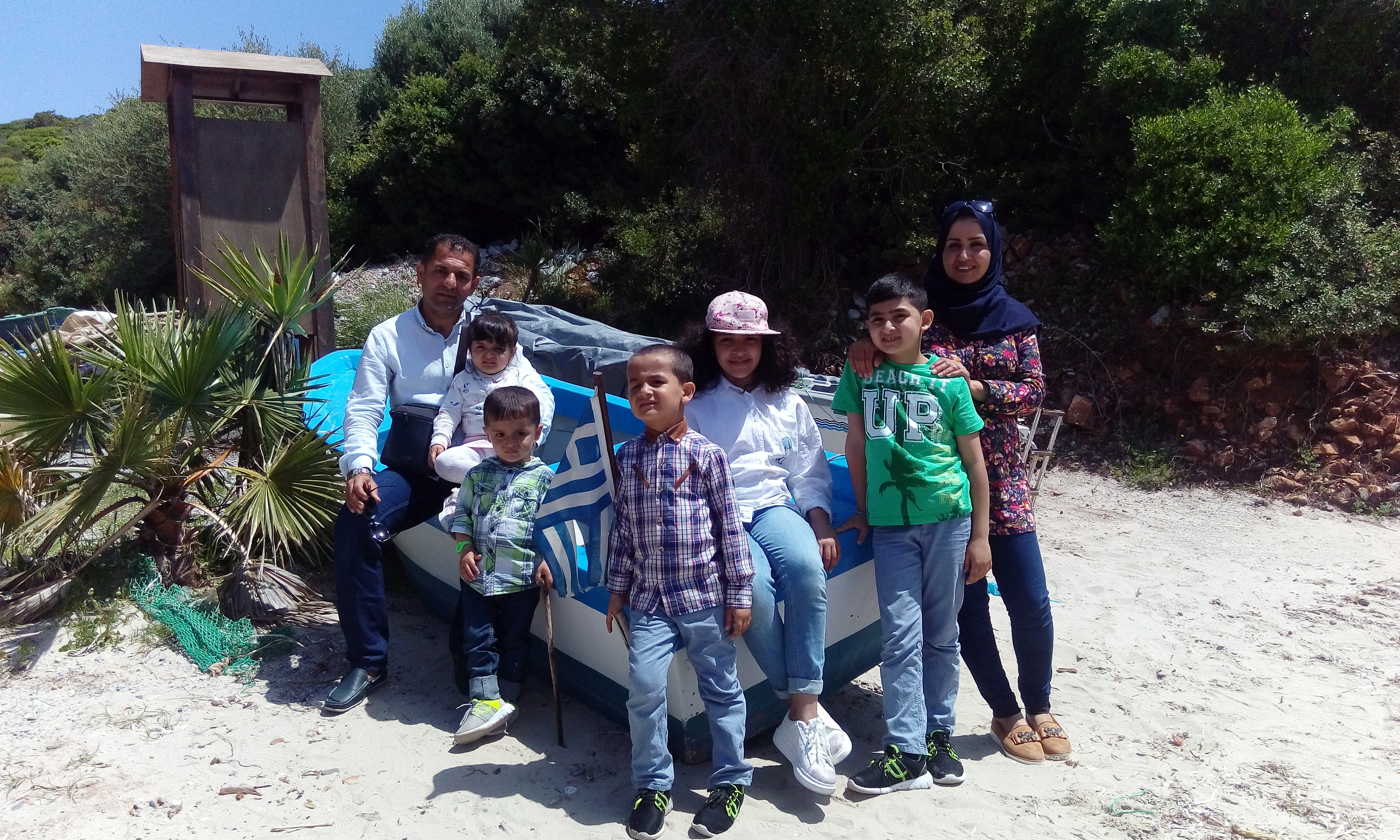
With these lyrics, from an old traditional song of his country, Najeem, a refugee from Iraq, begins his tour in the Samos camp where he currently lives. By holding the camera of SolidarityNow, he presents us his life today, introduces his family members, talks about the difficulties of his everyday life in the camp, and confides us his concrete plans for tomorrow.

SolidarityNow, continuing to document the situation and the living conditions in refugee camps, travelled to Samos and presents the second 360o documentary entitled “Stranded in Samos” (duration 3′.45”) produced in collaboration with the award-winning photojournalist Giorgos Moutafis.

Najeem’s story is the trigger for SolidarityNow to state openly through a documentary, and underline once again, the urgent need for the closure of camps and the immediate transfer of vulnerable populations into independent housing structures in the mainland, under safe conditions.

Today, the 39-year-old Najeem is trapped with his family, his wife Sheema and their five children, at the Samos camp for refugees who arrive on the island. The members of Najeem’s family are among the approximately 1,500 refugees and migrants who have been living in the camp for months; some of whom have been in the camp for more than ten months. A camp originally designed to offer accommodation to no more than 700 people.

The “protagonist” of the documentary holds the camera and confronts us with the contradictions of his life today: the cruel and often violent everyday life he experiences in the camp as opposed to the freedom and beauty of a sea trip with his family. And he talks about the past in Iraq, his present in Samos and his dreams about a safe future in Greece where he has lived in the past. Najeem is optimistic. His love for his family is presented in the documentary of SolidarityNow and this is his strength for the future. Besides, they have almost made it; they are all healthy and together. He is now looking forward to acquiring the necessary documents that will allow them to leave the camp and live in human and decent conditions.

However, the delays in the process of examining asylum applications in the reception islands remain and become even more difficult due to the imminent termination of employment contracts with NGOs, operating in hotspots, that have been evaluating refugees applying for asylum.

More than year after the EU – Turkey agreement, and many refugees have been abandoned in the Greek islands; thousands of people remain stranded, living under poor and often insecure for their health conditions, facing an uncertain present and an even more uncertain future.

PRESS RELEASE #FutureInterpreters: SolidarityNow has launched a new innovative training program for community interpreters

Paul Cohn

We train tomorrow’s interpreters… today!

Is Arabic, Farsi, Dari, Sorani, Kurmanji your mother tongue? Do you also speak Greek or English? Would you like to be trained as a community interpreter or intercultural mediator? #FutureInterpeters, the new program by SolidarityNow, addresses refugees, asylum seekers and migrants living in Greece. The empowerment and acquisition of professional skills is the first step towards their inclusion in the labor market, as well as the social integration of this vulnerable group.

SolidarityNow, with the support of the Guerrilla Foundation and in collaboration with the Society for the Care of Minors and the PanHellenic Association of Professional Translators Graduates of the Ionian University, organizes a comprehensive training program for community interpreters in Athens and Thessaloniki.

The program’s objectives are to:

– enhance participants’ skills,

– prepare in the best possible way the participants for the provision of community interpreting services in various fields such as asylum proceedings, healthcare, court and legal settings, as well as in other fields where similar needs arise,

– link participants with labor market needs.

The result of the program is twofold – 105 people will be trained in order to become tomorrow’s community interpreters and intercultural mediators. The new acquired skills will allow participants to provide support to refugees, migrants and asylum seekers in our country, in a range of procedures towards social inclusion or on the way to their preparation for relocation to another European country.

If you meet the following criteria, you can apply here by May 31st and be one of the Future Interpreters:

– Participants must have mother tongue one of the following languages: Farsi, Arabic, Dari, Sorani, Kurmanji etc.

– Participants need to be residents of Athens or Thessaloniki.

The maximum number of participants in both cities is 105.

Program’s content

The program includes intensive training sessions on the practices and methodologies of community interpreting and intercultural mediation, with all training sessions exclusively provided by skilled professionals.

The training consists of 96 hours (1.5 month) and includes the following sections:

  • Introduction to the concept and techniques of Intercultural Mediation
  • Introduction to the concept and techniques of Translation
  • Introduction to the concept and techniques of Interpreting
  • Greek language support course
  • Interpreting in health settings
  • Legal/court interpreting
  • Interpreting in asylum proceedings

Trainings are provided free of charge.

Certification

Following successful completion of the course and examination in the different modules, a certificate of attendance will be provided by the Panhellenic Association of Professional Translators Graduates of the Ionian University (PEEMPIP).

Link with SolidarityNow’s Employability Services

The trainings will be linked from the beginning of the program with Solidarity Now Employability Programs based in Athens and Thessaloniki Solidarity Centers.

Courses will take place at the two Solidarity Centers:

– Athens Solidarity Centre (2, Domokou st. and Philadelphias st., Larissa Station).

– Thessaloniki Solidarity Center (29A Ptolemaion str.)

For more information contact us at training@solidaritynow.org.

mind the fact: new festival in town


mindthefact, the new Athens cultural festival will take place from 26 to 29 May and its aim is to bring together the people living next to us.

On Friday 19 May, at 6.30 pm mindthefact in cooperation with SolidarityNow will meet you at Larissa Station with … balloon faces!

The passers-by will paint their own balloon, they will be photographed with it and take it with them – a funny companion!

SolidarityNow supports cultural and entertainment initiatives that aim to bring together people living in the same city but having different backgrounds, interesting, living conditions. We envision an open society, a diverse social fabric where different people harmoniously coexist, with their capabilities and diversities, and where they can grow and learn from each other.

The neighborhood of Larissa station is an important solidarity hub for SolidarityNow, since the organization’s Athens Solidarity Center which is open to all vulnerable populations (Greeks, migrants, refugees) since 2014, and has already provided 130,000 free services to approximately 55,000 fellow humans.


mindthefact
See here the full program of the festival

RACIST VIOLENCE RECORDING NETWORK PRESS RELEASE: ATTACKS AGAINST ASYLUM SEEKERS ON LEROS


The Racist Violence Recording Network (RVRN) condemns the attacks against Palestinian, Syrian and Iraqi asylum seekers, including a trans woman, that took place last week on Leros. According to the RVRN recordings, six (6) distinct attacks were perpetrated between midnight of May 2nd and the evening of May 4th. Three (3) incidents took place within a short period of time and targeted groups of persons on their way to the Reception and Identification Center (RIC), at Lepida. In the majority of the incidents, the victims report that they were attacked by motorcycled groups of persons using sharp and other objects. In one incident, a pregnant woman declared that she was targeted due to her hijab. In most of the cases, the victims were hospitalised, while the police were notified and some of the victims gave a deposition.

The RVRN recalls that the modus of taking the victims by surprise and the attacks by motorcycled groups against small groups of refugees on their way to Lepida was recorded and reflected in the 2016 Annual Report. Hence, it seems that it is a practice that reappears when circumstances allow it. It raises serious concerns that the facts of these cases indicate that these are organized attacks with a predetermined modus operandi and motivation.

The RVRN reiterates that in some sensitive areas where the host community, as well as trapped refugees and migrants, are under pressure, inertia or tolerance towards racist attacks with a view to reduce tensions may encourage impunity. As the problems related to the management of the refugee and migrant population remaining in uncertainty at the entry points for a long period of time increase, the risk of a rise in racism increases as well. However, these problems do not justify the perpetration of or the impunity for racist attacks.

The RVRN through its members stands by the victims and will continue to provide them with any possible assistance, including legal aid. The RVRN will monitor the investigation of these cases and will help the authorities to combat racist violence and to investigate the racist motivation of these cases. Finally, the Network RVRN urges the Greek authorities to take all appropriate steps so as to ensure that the victims receive all appropriate support and protection.