PRESS STATEMENT: 15 NGOs Decry New Policy Limiting Asylum Seekers in Exercising their Right to Appeal

Giorgos Moutafis

On 9 May 2017 Solidarity Now and 14 more NGOs urge the Greek Government to immediately reverse the recent policy excluding asylum-seekers on the Greek islands who appeal negative asylum decisions from the possibility of participating later on in the International Organisation for Migration’s (IOM) Assisted Voluntary Return and Reintegration (AVRR) programme and forcing those who wish to participate to forego their right to appeal.

The organisations are concerned that the new policy has both a coercive effect on an asylum seeker’s decision to appeal a negative decision, thereby jeopardizing the right to a fair asylum process as provided by EU law, and also on their decision to return to their country of origin. In addition, this policy presents a high risk of refoulement, given that it can result in asylum seekers with strong asylum claims, who may nevertheless have received a negative first instance decision, to drop their right to appeal. The 15 NGOs also give recommendations

The joint statement includes recommendations to the relevant authorities to enable safe, dignified, and sustainable return for all migrants.


15 NGOs urge the Greek Government to immediately reverse the recent policy excluding asylum-seekers on the Greek islands who appeal negative asylum decisions from the possibility of participating later on in the International Organisation for Migration’s (IOM) Assisted Voluntary Return and Reintegration (AVRR) programme and forcing those who wish to participate to forego their right to appeal. The decision follows the direction set by the recommendations in the European Commission’s and Greek Government’s Joint Action Plan on the European Union (EU) – Turkey Statement of 18 March 2016, which aims to limit the steps in the appeals process and remove so called “administrative obstacles to swift voluntary return”.

IOM’s AVRR programme provides migrants who cannot or no longer wish to remain in a host country with the support to return and reintegrate into their country of origin. According to IOM, “voluntariness remains a precondition for all its AVRR activities.”[1]

In direct contradiction to this precondition however, the recently announced policy restricts access to AVRR on the Greek islands as of early April, by dictating that, upon receipt of a negative first instance decision (i.e., inadmissible or rejection on merit), asylum seekers are provided with a choice: appeal this decision as per their right under Greek, EU, and International Human Rights law,[2] or forego their right to appeal and benefit from the AVRR package (which includes €1,000). If they ultimately choose to exercise their right to appeal, they lose the opportunity for future AVRR, and if their appeal is negative, they face deportation to Turkey. This policy is not applicable for those on the Greek mainland who remain eligible for AVRR after having appealed their negative asylum decision. Under the new policy, individuals are meant to be given five days to decide. However, nongovernmental organisations (NGOs) have already received reports of people being pressured, without allowing time to consult with a lawyer, to make the decision on the spot.

We are concerned that the new policy has both a coercive effect on an asylum seeker’s decision to appeal a negative decision, thereby jeopardizing the right to a fair asylum process as provided by EU law, and also on their decision to return to their country of origin. In addition, this policy presents a high risk of refoulement, given that it can result in asylum seekers with strong asylum claims, who may nevertheless have received a negative first instance decision, to drop their right to appeal.

This new policy is the latest in a series of steps being taken to make access to asylum in Europe more difficult, as outlined in numerous NGO reports[3]. Europe has a long history of commitment to protecting and upholding human rights, and has the means to fulfill its responsibility to provide international protection for people seeking it through procedures that are not prejudiced, do not discriminate, and do not apply duress to influence the outcome. Instead, these measures would limit the number of people who appeal, pressuring people in need of international protection to give up their claim. Seeking to manage migration at the cost of undermining or compromising asylum norms, sets a dangerous precedent for the rest of the world to follow.

Everyone applying for asylum should be able to exercise their right to an appeal without foregoing the opportunity to seek AVRR at any point during and after the asylum process. Any person deciding to return home with the assistance of IOM should be able to do so free of duress and in full respect of their basic human rights. Any policy suggesting otherwise threatens to not only jeopardize the integrity of the AVRR programme, but also the asylum procedure in Greece and in turn, the right to asylum in Europe.


RECOMMENDATIONS:

Any decision to exercise the right to appeal or to benefit from AVRR must be voluntary and non-coerced. IOM’s AVRR programme should be available to all migrants at any time to enable safe, dignified, and sustainable return, whether or not they have applied for asylum.  As such:

  • The Greek Government should reverse the recent policy limiting a person’s eligibility for AVRR.
  • The Commission should urgently assess compatibility of this practice with EU asylum law and the right to an effective remedy.
  • IOM and UNHCR should work together and more vigorously with the Commission and Greek Government to assess the impact of the new policy on asylum seekers’ decision-making, to ensure that the AVRR programme and its implementation under this new policy does not jeopardize the right to claim asylum and protection.
  • The Commission and Greek Government should put in place monitoring and accountability mechanisms to monitor the asylum procedures on the Greek islands, including those that allow for migrant feedback directly to the Greek Ombudsman.
  • The Commission and Greek Government should meet regularly with UN agencies and NGOs to allow for feedback on how policies may impact people and their rights. Consultations should take place regularly before policies are enacted so as to ensure they will not be harmful.

Signed by:

  1. ActionAid
  2. Advocates Abroad
  3. Amnesty International
  4. CARE
  5. Diotima
  6. Greek Council for Refugees
  7. Greek Forum of Refugees
  8. Human Rights Watch
  9. International Rescue Committee
  10. Jesuit Refugee Services
  11. Legal Centre Lesbos
  12. Norwegian Refugee Council
  13. Oxfam
  14. Save the Children
  15. Solidarity Now 

[1] https://www.iom.int/assisted-voluntary-return-and-reintegration

[2] Greek Law 61 of 4375/2016; Article 46 of the EU Asylum Procedures Directive which follows the wording of Article 47 of the EU Charter of Fundamental Rights. The directive requires EU Member States to allow applicants to remain in their territory until the time limit to lodge an appeal has expired as well as pending the outcome of an appeal. The right to appeal within the ICCPR Article 2 Para 3.

[3] ‘The Reality of the EU – Turkey Statement: How Greece has become a testing ground for policies that erode refugee protection  – IRC, NRC, Oxfam; ‘A Blueprint for Despair: Human Rights Impact of the EU-Turkey Deal’ -Amnesty International; `A tide of self-harm and depression – The EU-Turkey Deal’s devastating impact on child refugees and migrants’ – Save the Children.
Refugee Crisis and Integration

Steven Tagle

by George Kanaris, Social Services Coordinator at SolidarityNow’s Athens Solidarity Center.

The integration of the newly arrived refugees is one of the biggest challenges that the Greek society will face in the coming years.

Quite a big part of the currently residing in Greece refugees will be relocated in other countries, another big part will be rejected and sent back to their countries of origin. Still an important proportion of the presently asylum seekers will be granted with asylum and will be settling down in Greece.

How ready the Greek society is to integrate these people and make them part of their own society? At what extent are we prepared to accept them and create a fertile ground for them? Is there any chance for the masses of Syrians, Iraqis, Pakistanis and Afghanis and all the other nationalities to become Greek citizens and have equal rights and obligations with the Greek nationals? This is a very complex subject and no easy answer is available for the all above questions.

Many different factors must be taken into consideration e.g. the deep crisis that the Greek society faces the last decade without any clear solution soon, the cultural gap between the country of origin and the host country, the differences in language, religion, mentality that many times prevent or even hinder the integration.

Still, what is our role as host community and what are we doing to facilitate the process and create favorable conditions for their becoming equal members of the Greek society, safeguard their future and prevent them from discrimination and social and professional isolation? One more time, the answers are not easy to articulate.

Despite the difficulty and complexity of the topic, we will try to set priorities and highlight the different aspects that should be taken into consideration when we talk about integration of the refugees.

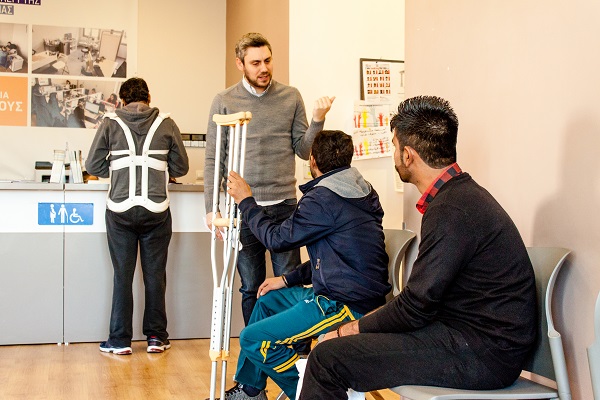
The very first step in settling somewhere is the languages and communication. When discussing integration, learning the language of the host community is often the first topic to come in mind. Language skills is the key enabler to do all the other things necessary to start a life, like attending schools, looking for a job or interacting with host communities. Education and job opportunities are very often hindered because of the language barrier.
The second step in settling somewhere is the access to public services in building a state – citizen relationship and generating trust in government and other institutions. Asylum seekers and recognized refugees need additional support to access services such as housing, healthcare and schooling at the beginning of their integration process, as they don’t have the same facilities as locals do. Stability is key for them to start thinking about moving ahead with their lives. They need stability during and after the asylum procedure, with access to decent accommodation so that they can then look for a job or start studying the local language. The relationship with host communities is a cornerstone for their integration. Refugees are often treated disrespectfully and unfairly because of discriminatory attitudes and prejudices of the host community based on their culture and religion. The cultural gap and the lack of tolerance and openness to accept and integrate the different hinders the integration. After all integration is all about proper behavior, dignity and acceptance. Treating the foreigners with humanity and respecting their cultural and religious differences, trying to understand them and making them part of our own community.
Job access and activity opportunities is another significant factor for the integration. The refugees as anybody else need economic independence which is very difficult to achieve because of legal or qualification barriers. On the top of that easy access to activities like sports, language learning and training facilitates the integration and changes the routine that becomes depressingly monotonous after months, triggering psychosocial problems. People stay idle all day for a long period either waiting desperately for the answer of their asylum request or for their relocation. They don’t adopt any activity or invest any energy, in the local language for instance, as they don’t know which will be their destination country. This uncertainty and state of limbo in between different countries and cultures doesn’t help them to feel part of the community and be integrated in it. The often-traumatic experiences of refugees on their way from the country of origin renders safety, peace and security a priority in the destination country. Nevertheless, this is frequently difficult to guarantee. Being stranded in camps and squats, trying to survive many times under inhuman living conditions, they feel that the rule of law doesn’t apply to them and they have nowhere to report abuses, fights and other forms of violence. Tensions between communities and a general lack of security provisions make them feel unsafe and abandoned. They even blame the host community for increasing tensions and resentment between communities and different tribes because of perceived differences in treatment between nationalities.
Finally, the social bonds and connections is a primal aspect of the integration of refugees. The presence of family and friends is indispensable when it comes to settling anywhere. Family reunification is often their priority and waiting for this kind of major decision is preventing them from looking to the future. The presence of social bonds and connections is helpful for smooth integration but when it comes to refugees it usually becomes particularly difficult who are often physically isolated from cities and other hubs of human activity. Overall, a sense of uncertainty is preventing the refugees from moving ahead with their lives and hoping for a better future.
The prospects for integration of many asylum seekers and refugees seem low in reception countries and there is lack of long term planning by government authorities on this issue so far. However, ideas for better integration need to involve refugees themselves so they feel a sense of ownership. It would give an awareness and acceptance of the difficulties involved and allow authorities, agencies and organizations to work together with the refugees in developing solutions, rather than them being mere recipients.

Finally, the integration of refuges depends a lot on our own preparedness, cultural sensitivity and openness as host community and individuals. It depends a lot on our capacity to understand, respect and accept. And ultimately that becomes a process of self-awareness and discovery of our own limits. 

Cash4Solidarity: the first step towards integration and coexistence

(Ελληνικά) Giorgos Georgiou

SolidarityNow implements the Cash4Solidarity program for the beneficiaries of
its Home for Hope program


SolidarityNow supports the most vulnerable people in any way. How? By strengthening, empowering, and enabling them to take back control over their lives, with dignity and self-sufficiency.

To achieve this objective, SolidarityNow is implementing the cash transfer project|Cash4Solidarity, for all the beneficiaries of its Hosting and Accommodation “Home for Hope” project, with the support of the UN High Commissioner for Refugees and funded by the European Union Civil Protection and Humanitarian Aid.

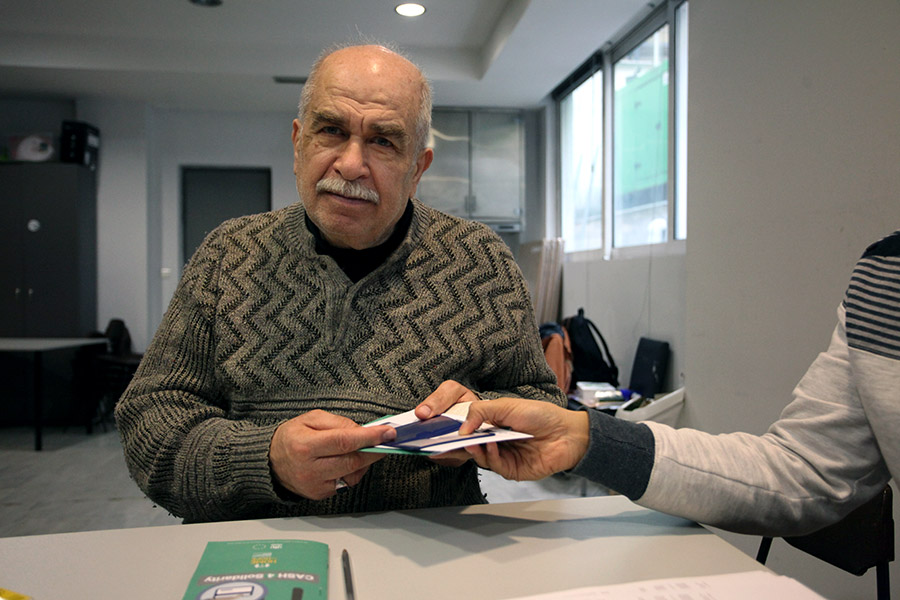
The cash transfer project via the use of prepaid cards|Cash4Solidarity, which since November 2016 to April 2017 is implemented in collaboration with Western Union, goes a step further than simply providing in-kind support to the refugees. Through this program, the beneficiaries are provided with the freedom of choice to allocate the assistance provided where they deem most appropriate, based on their actual needs, thus strengthening their self-confidence while also supporting a smooth integration pathway towards an autonomous life.

From November 2016 to date, almost 900 prepaid cards have been distributed, to support more than 2,100 SolidarityNow beneficiaries, who are being accommodated in the various facilities of the organization.

All the beneficiaries hosted in SolidarityNow accommodation structures are eligible to receive assistance through Cash4Solidarity – as each individual or family unit receives one prepaid card, with the amount provided determined solely based on:

  • the number of the family members and
  • the type of the accommodation structure (catered versus non-catered facilities)


The total amount provided so far (November 2016 – April 2017) to support this vulnerable population through the Cash4Solidarity program has surpassed 670,000€, with 82€ provided on average per beneficiary/month.

In the scope of the Cash4Solidarity project and in order to educate beneficiaries on the use of the prepaid cards and the ATM machines, SolidarityNow has put in place a multilevel awareness and informational campaign that includes:

  • information sessions with audio-visual content for our beneficiaries, to provide all the necessary instructions for the everyday use of the cards
  • multilingual informational leaflets
  • design and launch of a dedicated Cash4Solidarity microsite and
  • dedicated support services to all cardholders, provided through specialized SolidarityNow teams.

The positive impact of the Cash4Solidarity program is multifold and relates both to the beneficiaries directly, as well as to the local communities where the hosting and accommodation structures are situated. Associated benefits include, among others:

  • being able to directly meet the actual and shifting needs of the refugees
  • being able to cover special dietary needs (due to health problems, or different culture)
  • supporting the local economy, as the funds are being spent on the local market
  • contributing to the change of the paradigm for the refugees, by local population
  • contributing towards the social integration of the refugee population, by empowering individuals to make their own decisions for their own lives.

“In SolidarityNow we advocate for the closure of the refugee camps and the relocation of people to the mainland, in urban accommodation structures and under conditions of normality and co-existence with the local population; the Cash4Solidarity program is the vehicle to provide what is needed the most: enhancement of their dignity. It supports freedom of choice. By supporting their dignity and self-confidence, we take the first step towards their social integration – regardless of whether they leave for another EU member-state or stay in Greece – to take back control over their own lives“, said Epaminondas Farmakis, Managing Director of SolidarityNow.

SolidarityNow aims to expand the Cash4Solidarity program, giving access to all vulnerable population groups – Greeks, refugees, migrants, asylum seekers – with the sole criterion being their vulnerability.

*The prepaid cards program | Cash4Solidarity is implemented by SolidarityNow with the support of UNHCR and funding by the European Union Civil Protection and Humanitarian Aid.

Be a #Future Interpreter(s) now!


SolidarityNow, with the support of the Guerrilla Foundation and in collaboration with the Society for the Care of Minors (SMA) and the Panhellenic Association of Professional Translators Graduates of the Ionian University (PEEMPIP) organizes a comprehensive training programme for community interpreters and cultural mediators in Athens and Thessaloniki.

Participants

  • The participants must be native in Farsi, Arabic, Dari, Sorani, Kurmanji etc. and also be proficient in the English or the Greek language.
  • Residents of Athens and Thessaloniki.
  • Number of participants in both towns: 105

Training’s objective and content

The programme includes intensive training sessions on the practices and methodologies of community interpreting and intercultural mediation, with all training sessions exclusively provided by skilled professionals.

The aim of the programme is to prepare in the best possible way the participants for the provision of community interpreting services in various fields such as asylum proceedings, healthcare, court and legal settings, as well as in other fields where similar needs arise.

The training consists of 96 hours (1.5 month) and includes the following sections:

  • Introduction to the concept and techniques of Intercultural Mediation
  • Introduction to the concept and techniques of Translation
  • Introduction to the concept and techniques of Interpreting
  • Greek language support course
  • Interpreting in health settings
  • Legal/court interpreting
  • Interpreting in asylum proceedings

Link with SolidarityNow’s Employability Services

The trainings will be linked from the beginning of the programme with Solidarity Now Employability Programmes based in Athens and Thessaloniki Solidarity Centers.

Certification

Following successful completion of the course and examination in the different modules, a certificate of attendance will be provided by the Panhellenic Association of Professional Translators Graduates of the Ionian University (PEEMPIP).

Duration

Training consists of 96 hours (1.5 month). The specific days and hours will be announced to the participants in due course.

Location

  • (Athens) Athens Solidarity Centre (2, Domokou st. and Philadelphias st., Larissa Station).
  • (Thessaloniki) Thessaloniki Solidarity Center (29A Ptolemaion str.)

Cost

Trainings are provided free of charge.

For more info, you may contact training@solidaritynow.org


“A piece of political vandalism the Hungary plan that could shutter the Central European University”


How the international and local press covers the attacks on civil society in the country


The severe attack towards the Civil Society organizations that takes place in Hungary aiming at undermining their credibility, and the parallel effort to limit the operational independence of the educational system, is extensively covered through the mass media in Europe and Greece. In the article published on the news site, www.politico.eu, entitled “Hungary threatens Soros-financed university”, the President of the University, Canada former politician, scholar and author, Michael Ignatieff, featuring this issue “as a matter of international interest”.

The Hungarian Parliament has passed a law that, if implemented, will lead to the closure of Central European University (CEU), based in Budapest, while the same law refers to the “transparency of organisations receiving foreign funds”; according to the Hungarian government, NGOs and the University – founded in 1991 by George Soros – are “foreign” organisations. Hungarian Prime Minister, Viktor Orbán, is attacking the founder of the University and supporter of some of the organizations, while the government claims that there is no question of personal confrontation, since everything is part of the plan to reform the country’s education system.

On the other hand, thousands of Hungarians protested at the beginning of April in Budapest, defending the University’s operation, with the slogan “we will not remain silent“; the protesters consider this law as an “attack on freedom in education” and have called on Hungarian President János Áder, to apply his right to exercise VETO and not to vote.

An extensive article in the British newspaper The Guardian entitled “Thousands protest in Hungary over threat to Soros university“, supporters say for the decisions of the Hungarian government: “They want to completely undermine and eliminate what is left of the Civil Society. The method, the lack of dialogue, the efforts over many years for the abolition of all democratic institutions – this cannot be our future or the future of our children“.

The New York Times describe the effort to close the University as “political vandalism” in Palko Karasz’s article “Hungary Plan that could shutter Soros’s University is called ‘political vandalism’“. Frans Timmermans, First European Commission Vice-President, states to the New York Times that “the University of Budapest should be able to work undisturbed“, whereas on April 28th, representatives of the Civil Society Europe will have a meeting with him trying to find a solution.

The Civil Society Europe takes the initiative and invites the NGOs in Europe to vote against the targeting of Hungarian organizations.

Furthermore, international bodies such as the European Humanist Federation (Fédération Humaniste Européenne), The Conference of INGOs (International Non-governmental organisation) and IFEX (International Freedom of Expression) support the Civil Society Europe initiative.

– The EHF joins European Civil Society in expressing solidarity to Hungarian NGOs

– The Conference of INGOs calls on Hungary not to adopt draft Act (Bill T/14967) undermining freedom of association  https://rm.coe.int/CoERMPublicCommonSearchServices/DisplayDCTMContent?documentId=090000168070bfbb / Opinion prepared by the Expert Council at the request of the Conference of INGOs of the Council of Europe, April 2017

– Hungary’s foreign funding bill a transparent attack on civil society


**Civil Society Europe (CSE) brings together 28 European networks of civil society organisations (CSO) working towards regenerating the European project around the shared values of Equality, Solidarity, Inclusiveness, and Democracy.

Sign the petition: In solidarity with people in Hungary


SolidarityNow, as one of the dynamic representatives of the European civil society, expresses its support for the Civil Society Europe (CSE) network and its initiative to gather support signatures for the Hungarian NGOs that have recently been targeted by the government given the bill on the “transparency of organizations receiving foreign funds”. At the same time, we wish to express our deepest support for the people who have taken the streets of Budapest to protest against this renewed attack on basic freedoms in Hungary.

We also call for you to join our voice and give strength to the European civil society organizations by signing the following petition to support the organizations that are daily fighting for the defense and protection of basic human rights.

Read and sign the text of the CSE Declaration HERE

George Soros: The ideal enemy


On the occasion of the unilateral war declared by the government of the Hungarian Prime Minister Victor Orban – and former Soros Foundation scholar – towards George Soros, the acclaimed French newspaper Le Monde devotes its central theme to the personality, life and work of the reputable economist and humanist, illuminating the truths and myths and basically the accusations that are being made against him at times, thus composing an “ideal enemy” who is otherwise struggling to establish open and fair societies throughout the world the world.


 Read here the full text of LE MONDE article


Hope found a home and received creativity awards for it!


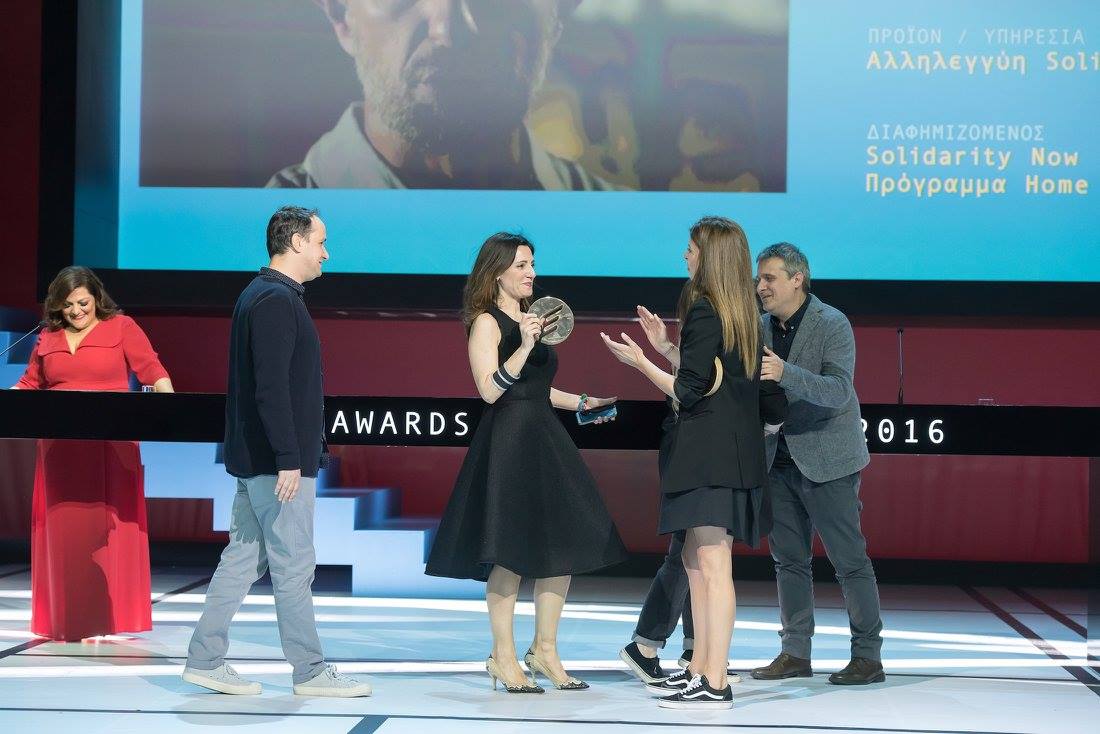
4 Ermis Awards for the “Home for Hope” awareness campaign of SolidarityNow


Athens, April 6th, 2017


The awareness campaign implemented by SolidarityNow, with the support of the UNHCR, dedicated to the hosting program entitled “Home for Hope” was honored with four creativity prizes in the Ermis Awards for 2016.

This year’s award night revealed four important distinctions for SolidarityNow and the advertising company Soho Square, the people of which inspired and designed the campaign pro bono. More precisely, the Home for Hope campaign aimed at informing, raising awareness, and encouraging people to “open their home” and host refugees who lack shelter, for a short period; the campaign received:

Social messages category

The golden award for the complete campaign with the key message “Banish Fear”

The silver award for the campaign’s radio spot and

Two bronze awards for the campaign’s TV spot

The awareness campaign was launched in September 2016 and was completed at the end of December 2016; the campaign was rolled out to the public through various actions:

  • The program’s website homeforhope.gr
  • The TV and radio spots entitled “Banish fear!”
  • The print and electronic media ads
  • The digital campaign through the organization’s social media
  • The promotion of the campaign at Metro and HSAP stations

Since the initiation of the hosting and accommodation program, from April 2016 and until its completion in December 2016, more than 700 refugees found shelter in the homes of permanent residents in the country, both in Athens and Thessaloniki.

“This award is a special honor and recognition for the work implemented by SolidarityNow for the people who most need our support and solicitude. It is important, at a time that the migration issue is declining and forgotten, as non-urgent, and at a period when racism and xenophobia are testing our society, to honor awareness and sensitization campaigns that make us feel slightly uncomfortable; asking us to react, to leave the fear behind us and put our solidarity into practice. This campaign has succeeded in doing just that: it motivated people to open their houses and host refugees“, notes Sophia Ioannou, Head of Communications at SolidarityNow.

We thank Soho Square Team and Fos Productions with the help of which we managed to motivate people to banish fear, open their homes and host refugees!

*Ermis Awards is the only body awarding creativity in communication in Greece and is organized every year by the Hellenic Association of Communications Agencies.

SolidarityNow submits petition tο the European Parliament


Imperative the investigation of EU funding for Greece

 to manage the refugee crisis

 Athens, April 4th, 2017

On Monday, March 13th 2017, SolidarityNow submitted a petition to the European Parliament (Committee on Petitions – PETI) requesting that it investigates the connection between European Union funding in Greece and the dismal reception conditions for individuals seeking international protection. The petition draws the urgent attention of the Parliament to the mismanagement of EU funds by Greece, which has left people to live in degrading and deplorable circumstances, resulting in the avoidable deaths of several individuals.

The EU has allocated over €1 billion to Greece to help the country bring its asylum system into compliance with its human rights obligations; however, despite substantial funding, the country has failed to establish reception conditions that comply with these obligations. The petition highlights the substandard conditions and the deficiencies of funding implementation by Greece and requests meaningful inquiry into this situation, including a hearing before the PETI Committee, and the possible evaluation of the situation by the European Court of Auditors and the European Anti-Fraud Office (OLAF).

In order to provide more immediate and sustainable relief to individuals suffering in inhumane living conditions, we recommend that the EU funding earmarked for reception is shifted towards camp alternatives, such as apartment rental schemes and hosting programs, which are more cost-effective and provide more dignified conditions for those seeking refuge.

“Of course, the EU institutions are aware of the situation in Greece”, notes the Managing Director of SolidarityNow, Epaminondas Farmakis. “With a peculiar and well-known doublespeak, the Commission takes advantage of the administrative chaos and the inhuman conditions prevailing in the islands to convey the message of deterrence. Not only does Europe know, but it also finds it convenient. And here lies the real issue: not only do they know, but the situation actually suits them. That is why it is the duty of civil society to inconvenience the EU and ask them to be responsible with human lives and the funding allocated from European taxpayers”.

SolidarityNow remains deeply concerned with the mismanagement of EU funds by Greece and the dire situation that such mismanagement has created. We urge the Parliament to take due notice of this petition to ensure that urgently needed measures are implemented as human life is at imminent risk. We strongly advocate for an expedited review by the Parliament of the situation in Greece with an aim of ensuring that proper reception standards are attained as soon as possible.

Read here the full text of the petition


For more information, please contact:

Natasha Arnpriester, Legal Research Coordinator

natasha@solidaritynow.org

Eleni Takou, Senior Advocacy Officer

eleni@solidaritynow.org

Aya Burweila, Senior Researcher & Public Policy Officer

aya@solidaritynow.org

Valia Savvidou, Press & Events Officer

valias@solidaritynow.org – tel 210 6772500

“Stranded in Souda, Chios” SolidarityNow records in a 360 video, the struggle of a refugee family for survival in Chios

Photo: SolidarityNow

SolidarityNow utilizes the new technology and process in the production of audiovisual material 360o to record and highlight the negative and often inhumane conditions under which the refugees live; the refugees trapped for months in the reception camps of the Greek islands. The organization’s goal is to high-point the existing major problem and underline the urgent need for the camps’ closure and the direct transfer of vulnerable populations in safe structures of the mainland.

The panoramic video (360°) “Stranded in Souda, Chios” of 3’25” duration was produced in collaboration with the award-winning photojournalist Giorgos Moutafis. The video enables viewers to engage to the 51-year-old Adulla everyday life, who was forced to leave her city, Kobanî in Syria, because of the war and is trapped for the past seven months, in Souda camp in Chios, along with her four children. Viewers will become part of the family’s life and the ongoing effort for survival along with their fear for the future.

The 51-year-old Adulla, with Syrian origin, has come to Greece along with four out of her eleven children. Her 17-year-old son was killed in Lebanon. Adulla and her children were forced into a constant “hide and seek” to escape from ISIS. They managed to escape from Lebanon and after the murder of the 17-year-old son returned to Syria to be found later in Iraq and today in Chios.

Adulla’s family is one among the 700 refugees currently residing in Souda camp, whereas more than 3,500 refugees have passed from Chios only during the first months of 2017. “We live everyday by the day, by the hours. We don’t have hot water, we sleep on the floor, we are afraid”, Adulla says.

Several times Souda camp has turned into a “battleground”. The groups of extremists, with stones and flaming objects have tried to impose and expel the refugees. Very often, refugees are forced to spend the night outside the camp for fear of attacks, seeking a safe place until dawn.

One year after the EU – Turkey agreement and many refugees has been abandoned in the Greek islands; thousands of people remain trapped, living under poor and often insecure for their health conditions, facing an uncertain present and an even more uncertain future.